
Turn fabric scraps into meaningful gifts with easy charity sewing projects! You can stitch fleece scarves, cotton hospital blankets, sturdy library bags, school pouches, kitchen aprons, walker bags, and machine-washable lap quilts using simple seams and durable thread. Prewash fabrics without fragrance, skip bulky trims, and check each group’s rules first. Package items cleanly and label sizes for faster sorting. Best of all, a snug comfort quilt can bring warmth when life feels upside down—keep going for more ideas and tips.
Key Takeaways
- Sew comfort quilts, rescue bedding, and fleece scarves using durable, washable fabrics that provide warmth and reassurance in shelters.
- Make hospital baby blankets and NICU-style receiving blankets from soft 100% cotton, avoiding buttons, lace, bulky trim, and loose threads.
- Create practical mobility gifts such as wheelchair lap quilts and reinforced walker bags that support comfort, independence, and daily routines.
- Donate useful everyday items including library totes, school supply pouches, and community-kitchen aprons made with sturdy, easy-care materials.
- Confirm each organization’s size, fabric, laundering, labeling, and packaging requirements before sewing or delivering donations.
Comfort Quilts for Shelters
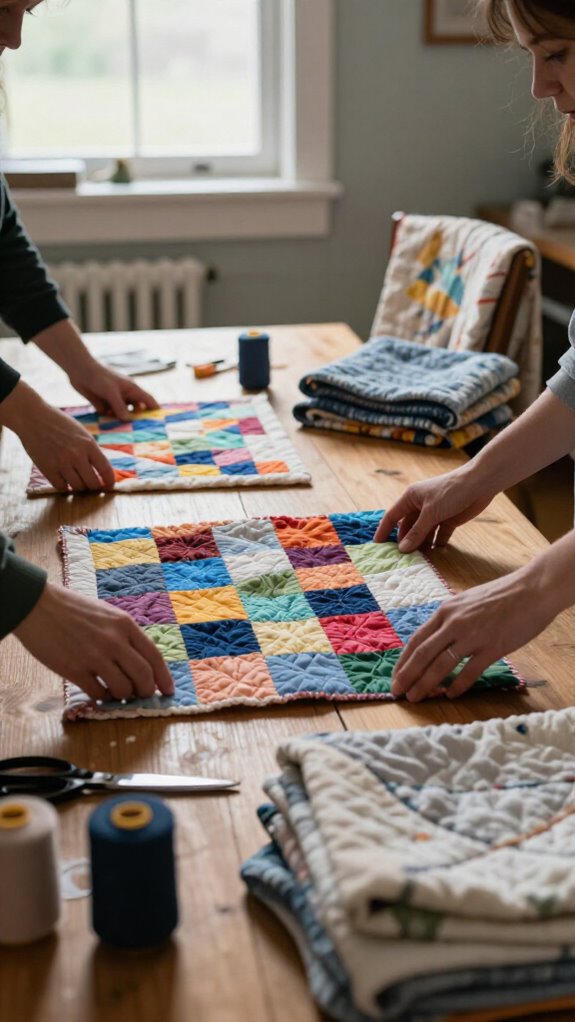
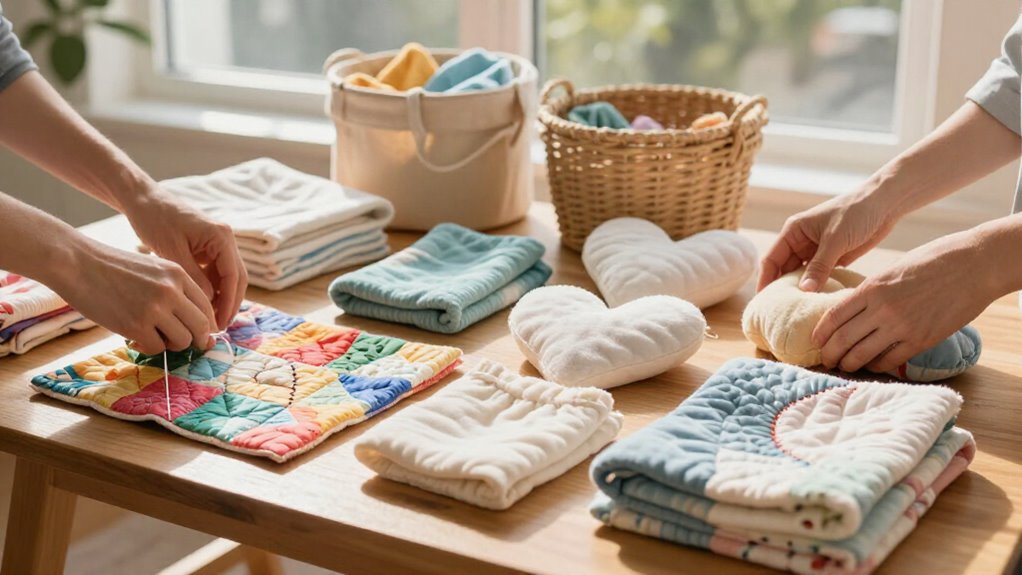
Comfort quilts can give someone a small but potent piece of comfort when life feels upside down, and shelters often need them ready to use right away. You can help neighbors facing crisis feel welcomed with a warm, practical quilt—what a meaningful stitch!
Choose durable cotton or cotton blends, batting, and strong thread. Focus on fabric durability: use tight quilting stitches and simple patchwork that survives frequent washing without drama.
Next, check the shelter’s donation guidelines before cutting fabric. Ask about size, machine washing, scent-free laundering, and delivery needs.
Here’s the winning finishing touch: add a simple care label and deliver small batches, making each quilt easy to share!
Baby Blankets for Hospitals
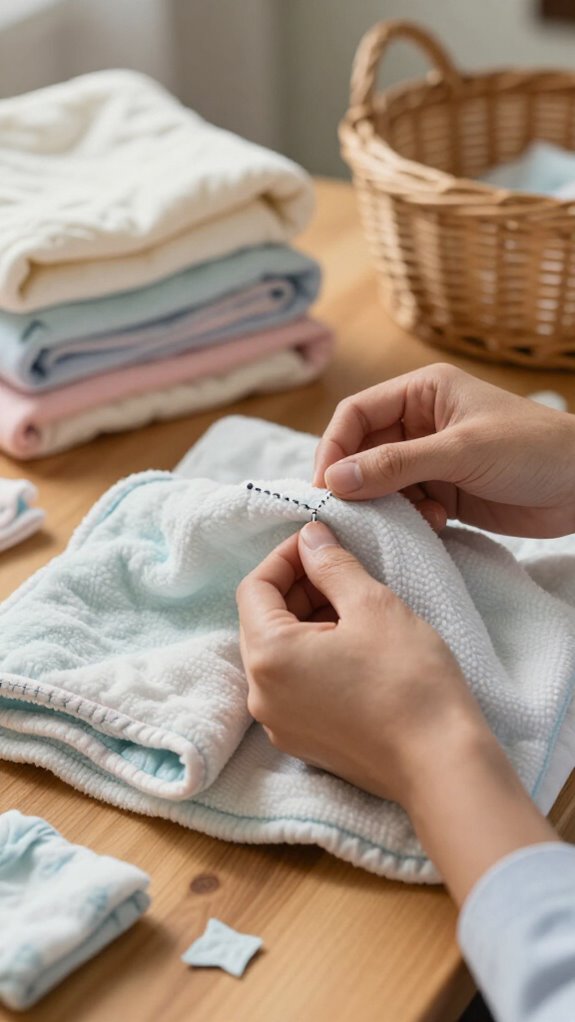
Baby blankets can bring a soft, cheerful touch to a hospital stay, and you don’t need skilled skills or pricey supplies to make a useful gift—hooray!
Join fellow makers by checking donation guidelines before you cut fabric.
A simple cotton blanket feels cozy, costs little, and supports fabric safety.
- Choose soft, breathable 100% cotton.
- Skip buttons, lace, and bulky trim.
- Sew securely hemmed edges.
- Wash fragrance-free, then dry completely.
- Bag and label it if requested.
Call first to confirm handmade items, sizes, thickness, and intake hours.
You’ll avoid guesswork and help staff use your gift right away.
That neat, clean package? It’s a tiny welcome hug!
NICU-Inspired Receiving Blankets
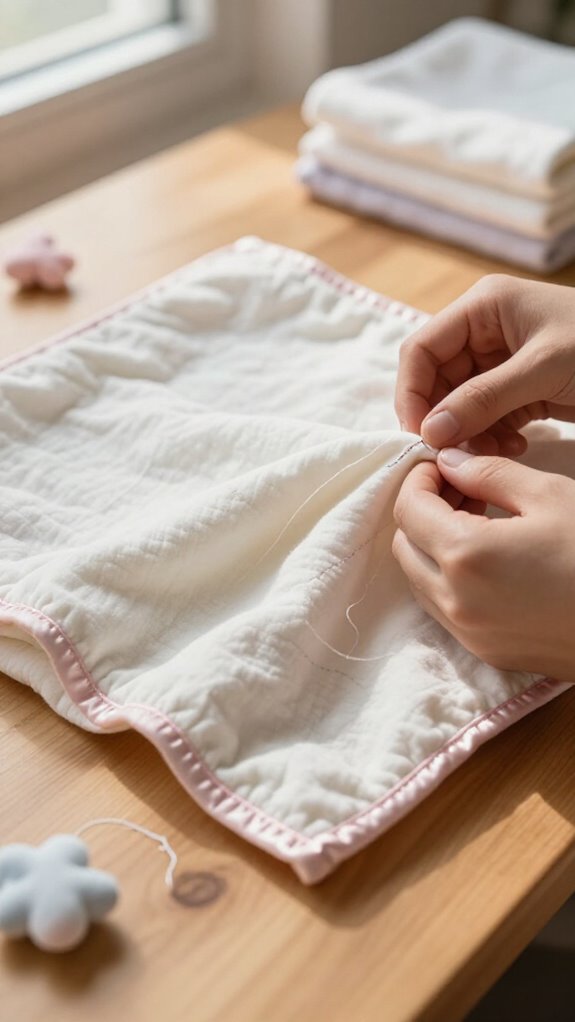
NICU-inspired receiving blankets are small but mighty projects, giving you a simple way to sew something gentle, useful, and full of care—no elaborate gadgets required!
Start with Fabric sourcing: choose soft, pre-washed 100% cotton flannel or jersey. Cut 18-by-18 to 24-by-24-inch squares, then use quality thread and double-stitch the seams.
Finish edges with a turn-and-stitch or double-fold hem, keeping corners flat and thread-free. Plain colors or subtle prints work beautifully—tiny patients don’t need a circus!
Before donating, ask your NICU about materials, sizes, and laundering guidelines. Your careful check can help make sure this cozy, breathable blanket reaches a baby instead of being turned away.
Wheelchair Lap Quilts
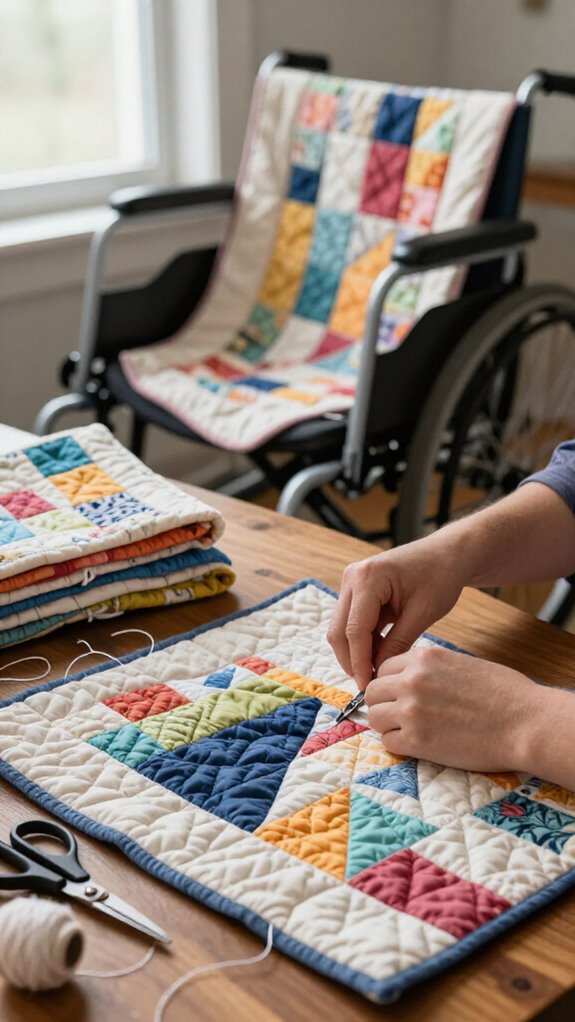
For a project that brings warmth beyond the nursery, try sewing a wheelchair lap quilt—small enough to manage, yet wonderfully useful every day! You’ll create comfort that helps someone feel included.
- Choose breathable, machine-washable cotton.
- Layer a cotton top, batting, and backing.
- Quilt closely to prevent sliding.
- Confirm sizes and donation guidelines first.
- Finish edges securely for frequent washing.
Prewash fabrics, then stitch durable seams for wheelchair safety. A slightly fuller quilt can resist slipping, and approved ties or straps may help, too. It’s beginner-friendly, budget-conscious, and practical—like a cozy hug that won’t wander off!
Your careful stitches become a daily reminder that someone’s community cares.
Walker Bags for Seniors
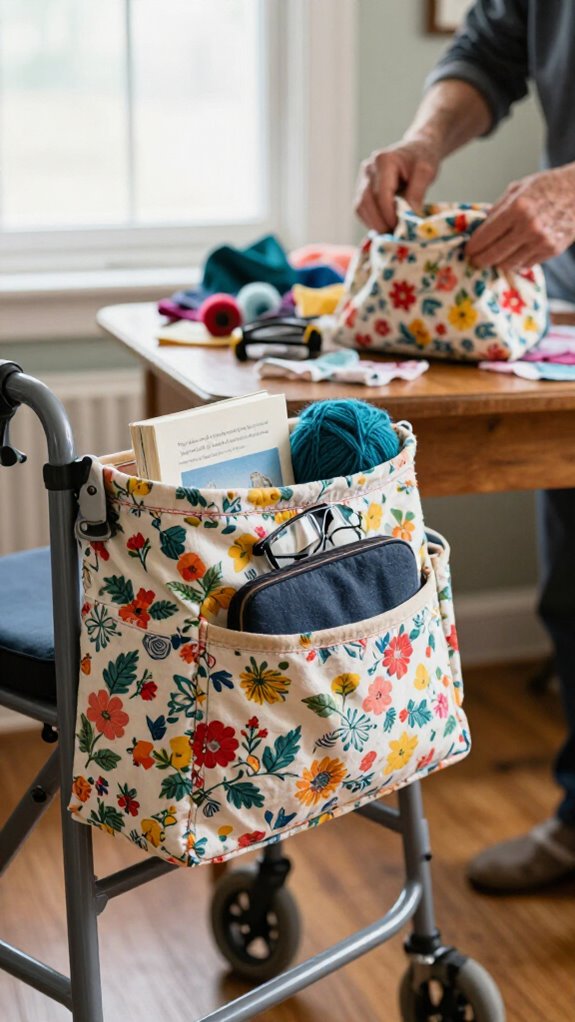
A walker bag may look simple, but it can make everyday trips feel much easier—no more balancing tissues, a water bottle, and a snack like a tiny circus act!
You can sew one from cotton canvas or denim, with sturdy straps, adjustable closures, and a light lining. Reinforce the top, side seams, and strap points with box-and-X stitches so it handles daily use.
For walker bag accessibility, keep seams smooth and test that nothing blocks wheels or folding parts. Then call ahead for care center matching; centers can tell you which sizes they need.
Your careful stitching becomes a practical welcome from the community!
Sensory Fidget Quilts
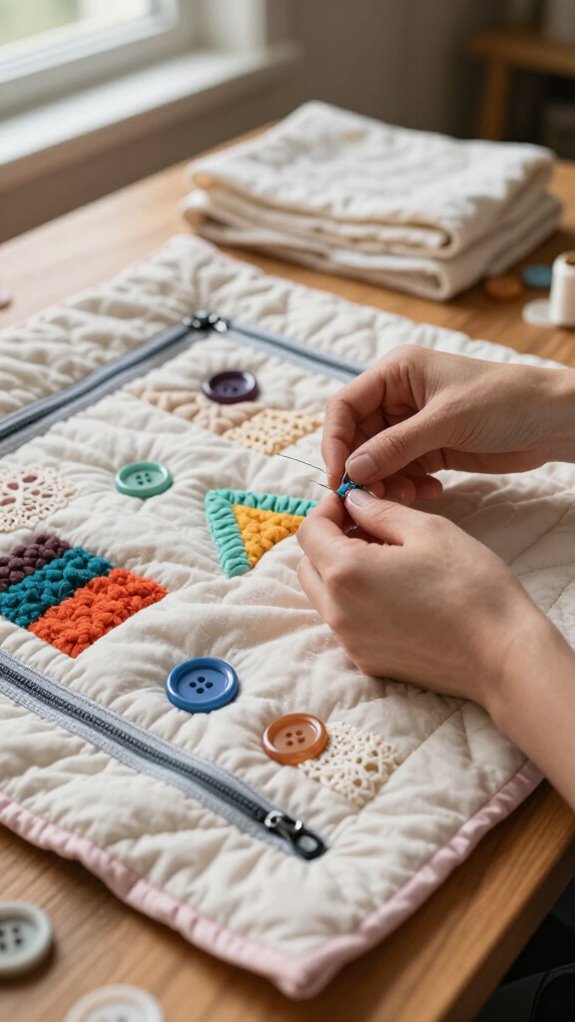
Sensory fidget quilts offer a cozy, hands-on kind of comfort, giving recipients soft textures and gentle activities to uncover when they need to self-soothe.
You can help someone feel included with washable cotton, batting, and securely stitched details—small quilt, big heart!
- Check charity size and rules first.
- Add crinkly panels or worry strips.
- Stitch raised appliqués for touch.
- Reinforce ribbons, Velcro, and zipper pulls.
- Prioritize texture safety: no loose parts!
Layer batting to keep sections flat through frequent washing.
Start simple; it’s affordable and beginner-friendly.
Your strongest touch? Edge-sew every attachment, then reinforce stress points.
That extra care helps your quilt stay safe, soft, and ready for many calming moments.
Pillowcases for Donation Drives
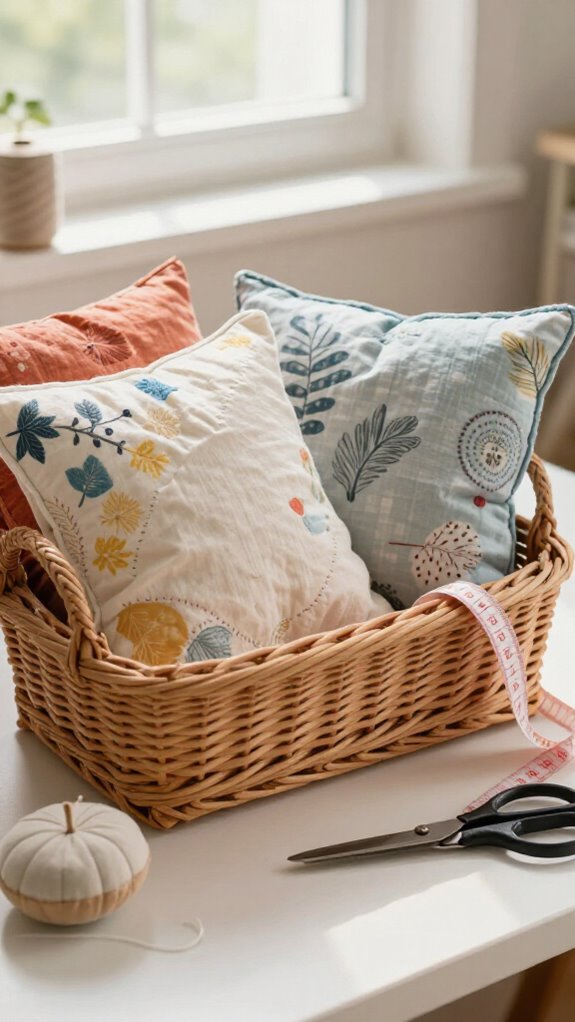
Pillowcases may seem simple, but they can bring a bright burst of comfort to children spending long days in hospitals—what a meaningful sew!
Choose a group such as Ryan’s Case for Smiles, then check its current rules.
Many request 100% cotton, pre-laundered without scented detergent.
Fabric sourcing tips: look for cheerful cotton sales, but skip bulky trims—laundry has enough drama!
For Sewing for beginners, use a basic pillowcase pattern: cotton, thread, and a few straight seams.
Pre-wash, iron, cut batches, and match prints with friends for a cozy sewing session.
Finish seams securely for repeated washing.
Your bright stack can quickly become a welcome gift in a child’s hospital room.
Drawstring Hygiene Bags
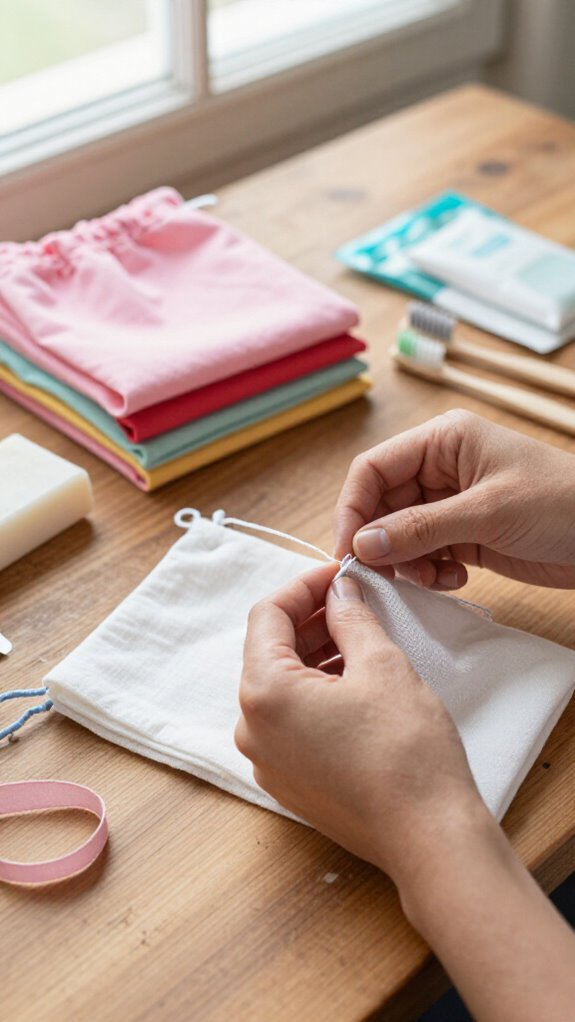
Drawstring hygiene bags are a small, practical sew that can make daily necessary items easier to carry and keep together—soap, shampoo, wipes, or period products won’t wander around loose in a backpack again!
Join fellow makers by checking needs first; supply sizing and fabric sourcing can make your gift truly welcome!
- Sturdy cotton or ripstop fabric
- Washable lining or water-resistant material
- Rectangular panel, cut to requested dimensions
- Hemmed top with a drawstring casing
- Backstitches or bar-tacks at casing ends
You’ll stitch the bottom seam securely, thread the cord, and create a useful little bundle fast. Ask about scent-free rules, too—your careful finish helps shelters, clinics, and school programs share essentials with dignity!
Reusable Tote Bags for Food Banks
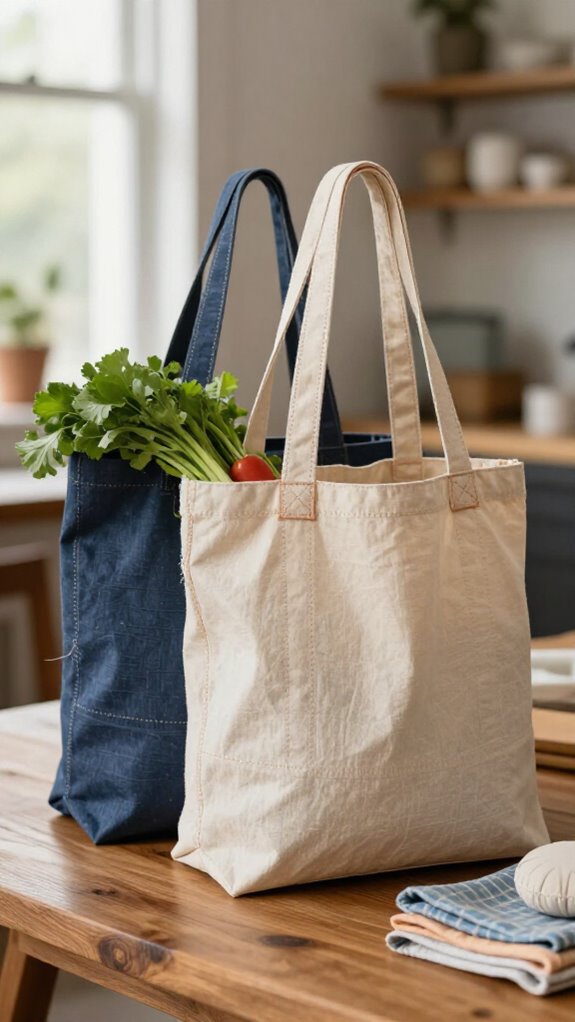
After small hygiene bags, you can sew something ready for a much bigger job: reusable totes for food banks! You’ll help neighbors carry groceries with dignity, while joining a caring community effort.
Check food bank guidelines first, then gather canvas, denim, or thick cotton duck. Pre-wash natural fibers so surprise shrinking doesn’t turn your tote into a lunch bag!
Cut simple panels, add fusible or sew-in interfacing to support the body and handles, and use strong straight seams with secure top hems. Follow fabric care tips so every bag stays machine-washable.
Here’s the key move: stitch an X-in-a-box where each handle meets the tote. Those little stitches help carry heavy cans, again and again!
Pet Blankets for Animal Shelters
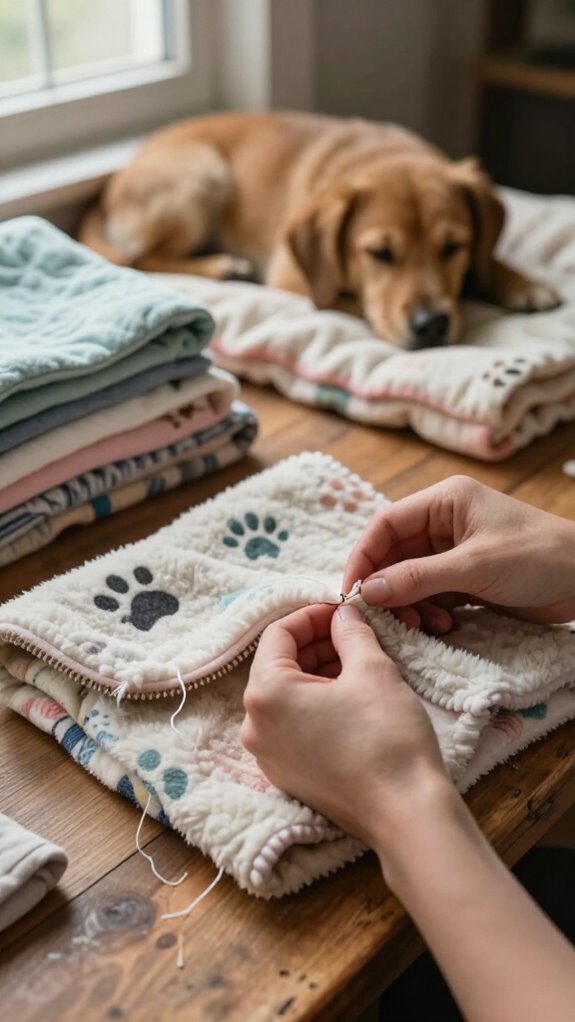
Pet blankets give shelter animals a soft, familiar spot to rest during a stressful time, and they’re wonderfully beginner-friendly to sew—yes, even if your stitching isn’t runway-ready!
Join fellow makers with a quick shelter supply check before you start.
- Cut crib-size or 30-by-40-inch pieces.
- Choose washable cotton, fleece, or heavy flannel.
- Pre-wash fabric to stop shrinking and bleeding.
- Hem woven edges; fleece usually needs no finish.
- Ask about new vs used fabrics and add an optional tie.
You’ll create cozy, stackable comfort staff can grab during intake.
Best of all, your simple blanket may become a frightened pet’s first soft welcome—what a lovely way to belong!
Small Pet Beds for Rescue Groups
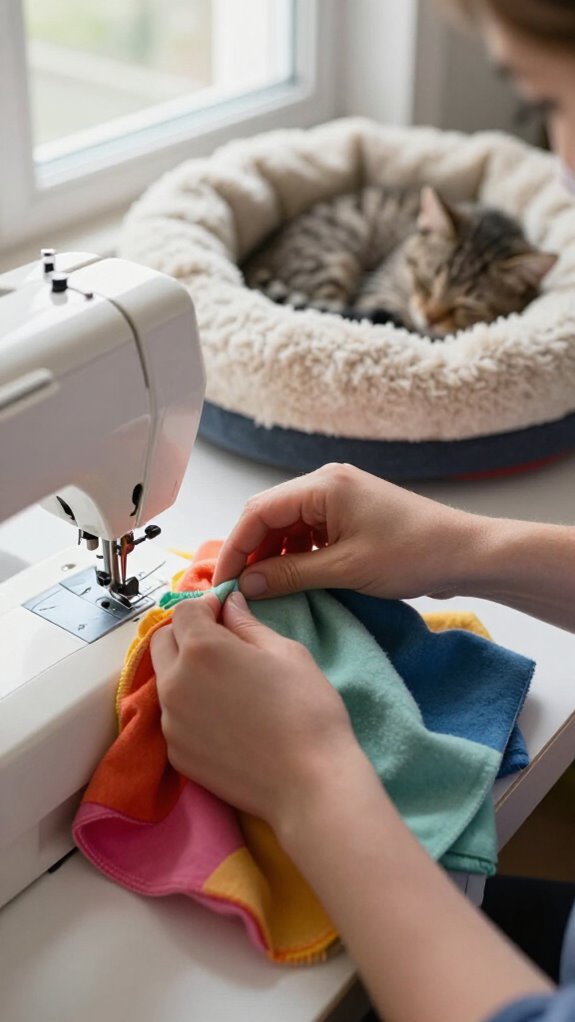
Small pet beds turn a little fabric and stuffing into a cozy “safe spot” for kittens, young cats, or tiny dogs—and they’re surprisingly quick to make!
| You’ll need | Why it helps |
|---|---|
| Canvas, washable lining | Durable rescue bedding |
| Fiberfill | Soft, non-clumping support |
| Double stitching | Stops leaks and sliding |
Check with your rescue first for dimensions, fabric rules, and cleanliness standards. Then sew sturdy outer panels, add high-loft polyester fill, and box the corners for washable comfort. Label each size before delivery—your little bed can welcome a nervous new friend into the group!
Warm Winter Scarves
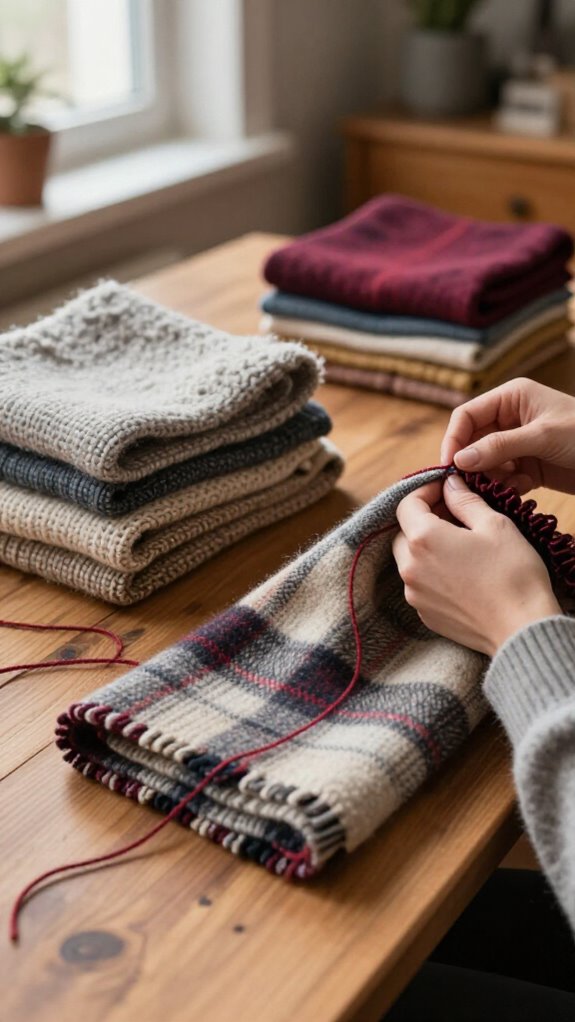
Warm winter scarves are a cheerful, beginner-friendly charity project—you can turn soft fleece or knit fabric into cozy neck warmth with just a few straight seams!
- Choose low-fray fleece or knit.
- Cut 6–10 inches wide, 50–70 inches long.
- Use clean, washable fabric scraps.
- Finish edges with a double-fold hem.
- Check winter demand and safety checklists.
You’ll create scarves that wrap comfortably over coats and hold up through repeat washing. Skip strong detergent scents if the organization requests it.
Your small sewing session can help shelters, patients, and pediatric units feel part of a caring community—pretty amazing for a rectangle of fabric!
Children’s Library Bags
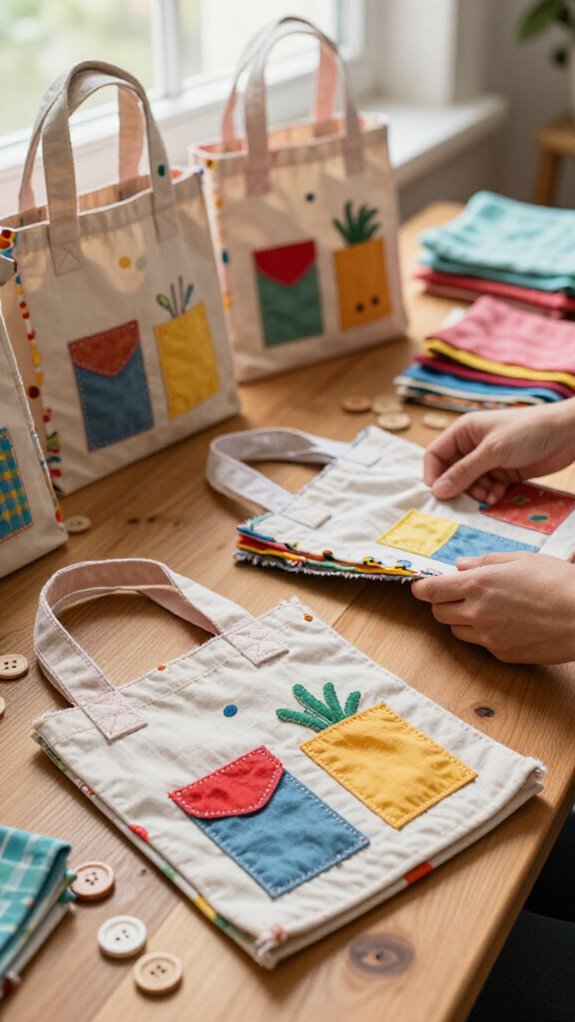
After sewing cozy scarves, you can put that same caring energy into children’s library bags—sturdy little totes that help kids carry picture books, reading logs, and “check-out” treasures with pride!
Choose cotton duck or reinforced canvas, then cut a roomy shape that fits picture books without bending pages. Sew boxed seams around durable tote handles, because kids may swing them like tiny superheroes!
Add a patch pocket for bookmarks or use pocket labeling systems to keep reading logs organized. It’s beginner-friendly, affordable, and wonderfully useful.
Before donating, ask a local library, school, or children’s hospital about sizes and materials. Your bags can help young readers feel included in the library adventure!
School Supply Pouches
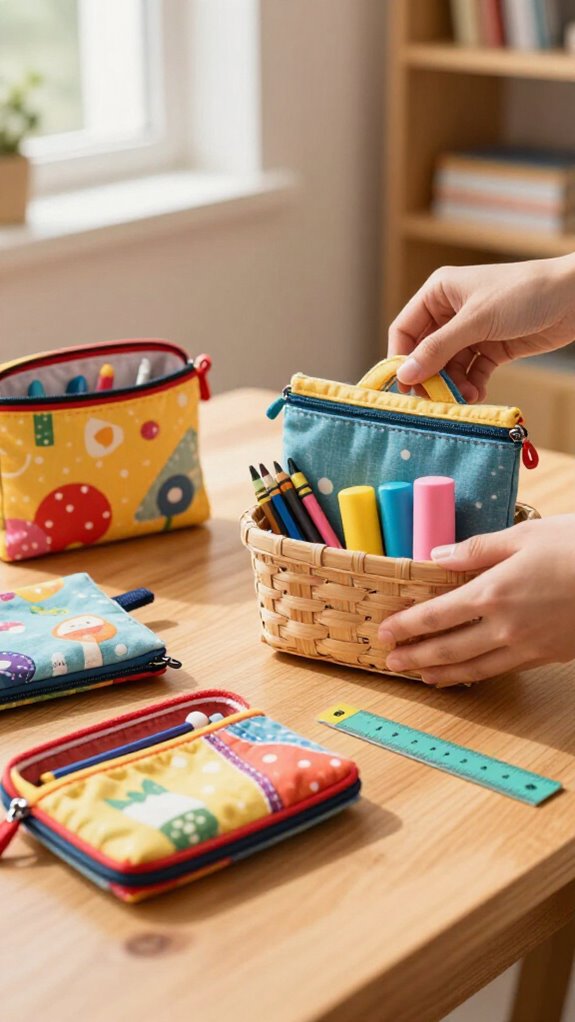
School supply pouches turn a few sturdy scraps and a zipper into a useful gift that students can pack, unzip, and use every single day—pretty great for such a simple project!
You’ll share practical Sewing basics while helping students feel prepared and included. Choose washable materials, then machine-stitch for lasting use.
- Cotton canvas or twill outer fabric
- Lightweight lining to stop snags
- A 22–26 cm zipper, if requested
- Boxed bottom or reinforced side seams
- Interior pocket or elastic ruler loop
Cut, stitch, turn, and topstitch—done! Check the charity’s size rules first. That little elastic loop can hold a glue stick, which is a surprisingly big win on busy school days.
Simple Aprons for Community Kitchens
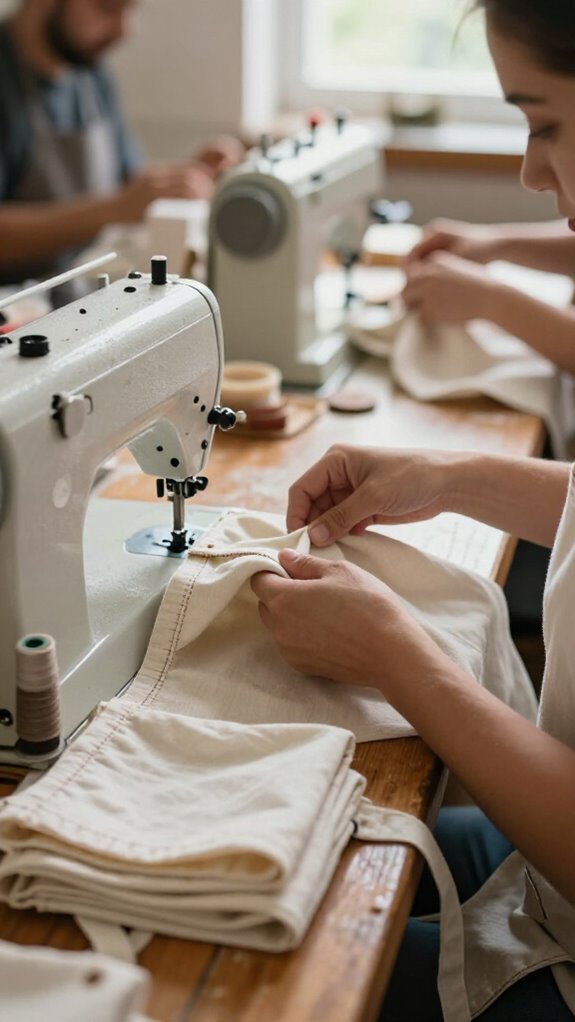
Simple aprons for community kitchens are a cheerful, beginner-friendly way to help volunteers stay clean, organized, and ready to serve—no elaborate sewing skills required!
Choose sturdy, easy-care cotton or twill, and pre-wash it so shrinking won’t surprise anyone later. Cut a knee- or mid-calf-length design with a waistband or ties for quick sizing.
Add seam finishing, a deep front pocket, and perhaps a towel loop—small details that keep busy prep stations humming!
Backstitch and use box-X stitching at strap points for durable closures that survive frequent washing.
Before donating, ask the kitchen about preferred tie lengths and pocket styles.
Your apron can become part of a welcoming volunteer uniform!
Fabric Hearts for Care Packages
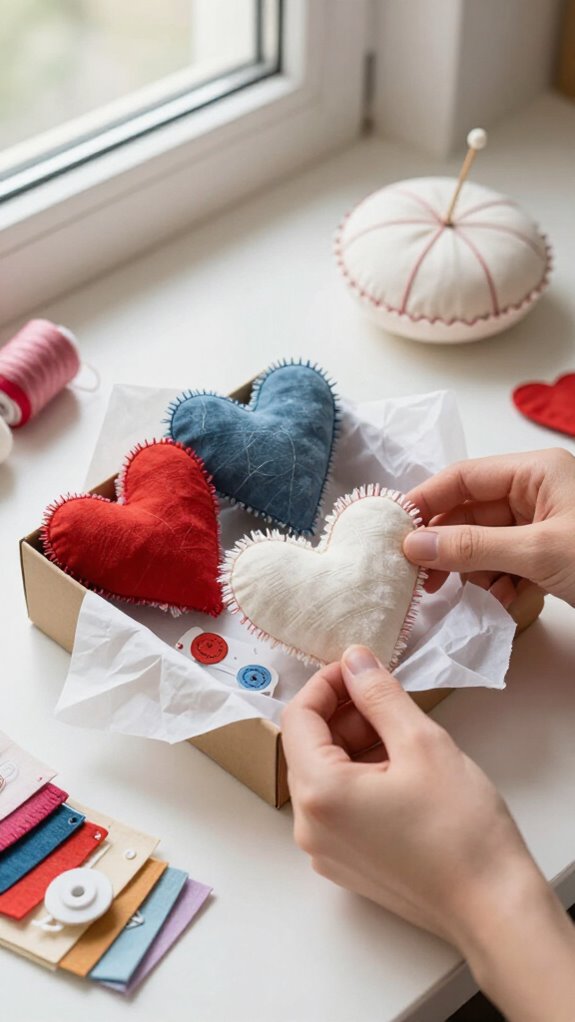
Fabric hearts tuck a small burst of comfort into a care package, and you can stitch them from leftover 100% cotton or quilter’s cotton in colors that feel warm and cheerful—no stylish fabric required!
- Cut two hearts, right sides together.
- Sew, leaving a small opening.
- Turn, press, and topstitch neatly.
- Add thin batting or interfacing for shipping strength.
- Include three to five with a note and useful supplies.
Follow organization choice guidelines, including pre-washed, unscented fabric rules.
Your storage tips can be simple: keep finished hearts clean, flat, and dry until packing. These tiny shapes say, “You belong here,” without taking up much room—pretty powerful for a scrap-bin project!
Memory Pillows for Families
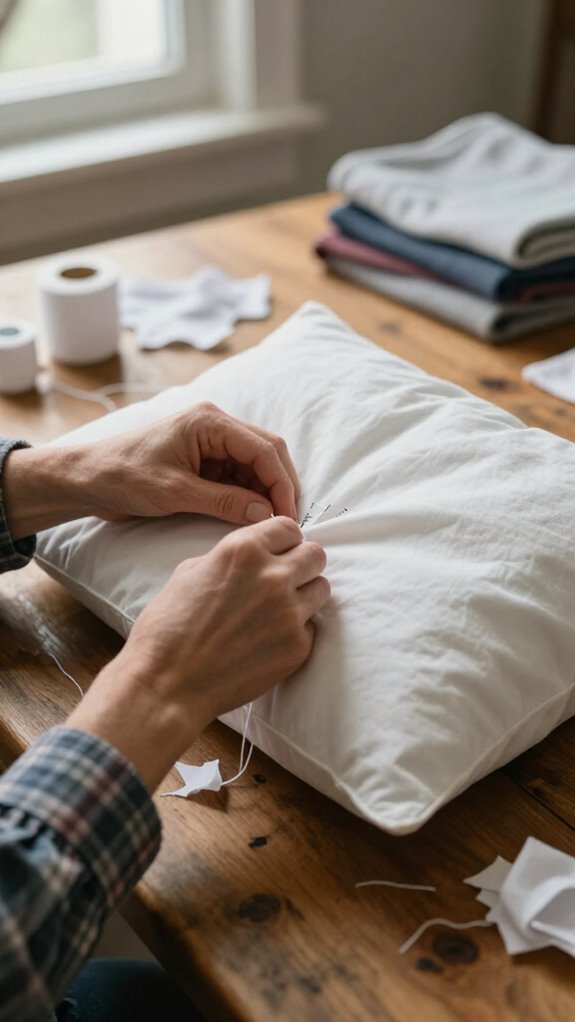
Memory pillows turn a beloved baby blanket, favorite shirt, or special piece of fabric into a soft keepsake a family can hold close when words don’t quite help.
Before you sew, check the program FAQ.
Charity sewing logistics matter: use clean, unscented fabric, match the requested size, and confirm whether they want a washable, removable cover.
Cut the meaningful fabric for the front, add sturdy backing, sew secure seams, then use a new pillow insert.
It’s beginner-friendly, affordable, and deeply personal—no elaborate tricks required!
Shelter volunteer training can also explain delivery rules.
Best of all, your careful stitches help someone feel remembered, welcomed, and less alone.
Comfort Totes for Hospital Visits
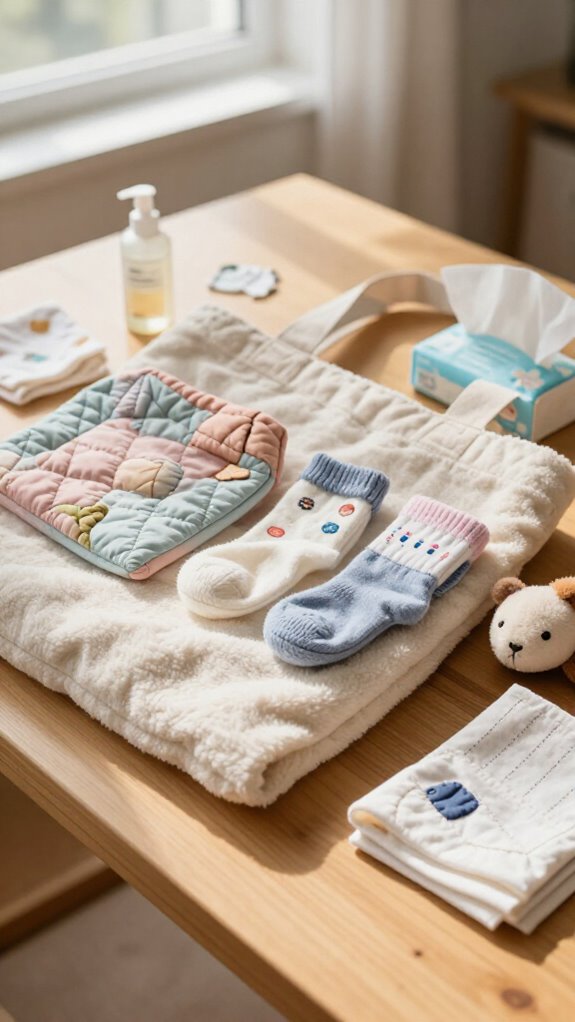
A thoughtful handmade gift can do more than hold supplies—it can bring a little calm to a long hospital day. You can sew a simple, welcoming tote that helps patients and families feel supported.
- Use cotton canvas or quilting cotton.
- Add fusible interfacing for strength.
- Sew pockets for tissues, lotion, and chargers.
- Reinforce handles with an X-in-a-box stitch.
- Follow donation guidelines before gifting.
Choose neutral 100% cotton fabric, then wash it with unscented detergent. Fabric care matters: include “machine wash cold, tumble dry low” on an encouragement card.
A zippered pocket is the surprise hero—no runaway lip balm! Your small stitches can help someone feel part of a caring community.
Reusable Shopping Bags for Community Events
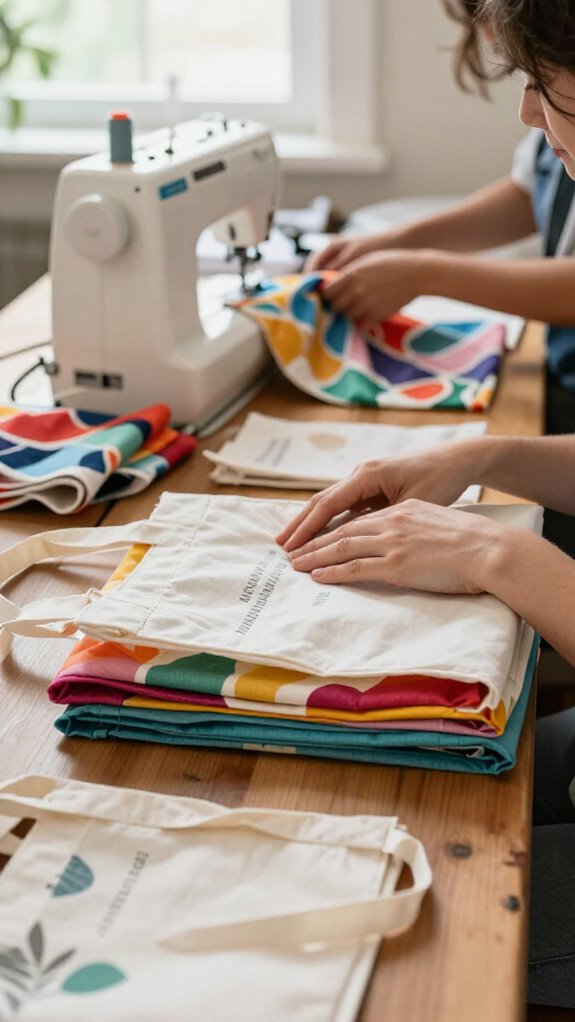
When community events need useful donations, reusable shopping bags are a cheerful, beginner-friendly sew that can carry groceries, toiletries, or a mountain of school-drive supplies—because someone always brings more than expected!
Choose canvas, denim, or heavy cotton, then pre-wash it so your bag won’t shrink after donation wash cycles. Sew simple handles and boxed corners; it’s affordable, quick, and perfect for group sewing days!
Add a small care note: machine wash cold, then tumble low or line dry, for minimal bag maintenance and caregiver friendly handling.
Here’s the strength secret: stitch an X inside a box where each handle meets the bag. Your donation can keep serving your community!
Handmade Pillowcases for Shelter Residents
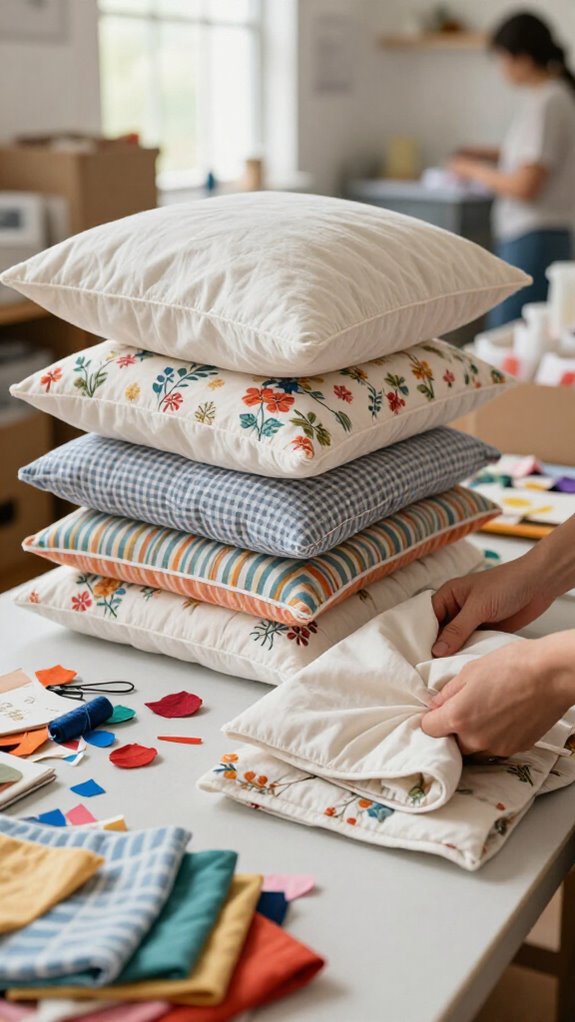
Pillowcases offer another practical way to sew comfort into a community donation—small, soft, and surprisingly meaningful! You can make a welcoming difference with beginner friendly sewing and a simple panel-and-casing design.
- Confirm the shelter’s size, material, and acceptance rules first.
- Choose 100% cotton, all-new fabric that’s machine washable.
- Pre-wash it without scented detergent for fragrance-free softness.
- Use easy sizing for standard pillows and stitch the end closed.
- Add shelter safe closures, like a snug casing or removable top flap.
Your finished case creates a secure, breathable pocket that stays put through busy days—no pillow escape acts! It’s a useful gift that helps residents feel cared for.
Personalized Fabric Gifts for Community Programs
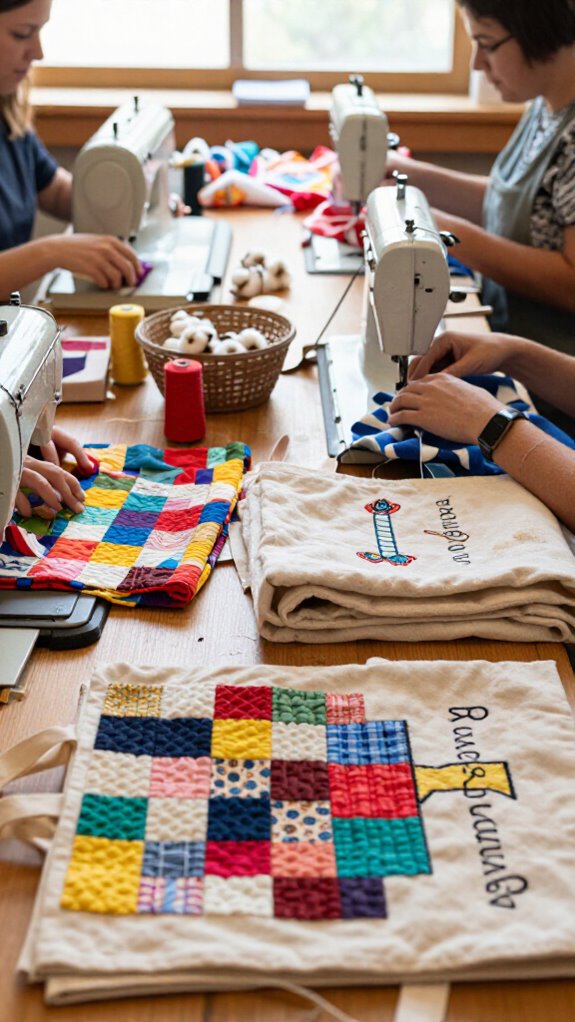
Personalized fabric gifts let you match a simple handmade item to the people who’ll use it, turning basic fleece, cotton, or yarn into a bright spot in someone’s day!
| Make | Personal touch |
|---|---|
| Fleece throw | Choose colors or sizes |
| Knit hat | Add a cheerful name tag |
Confirm accepted items, sizing, climate needs, and packaging rules before your seasonal craft begins. Donation tracking helps your group celebrate every finished piece!
For hygiene programs, sew pad-carrying purses with encouraging notes. Pillowcase dresses and shorts offer easy group sewing, too. Here’s the surprise: a simple embroidered tote or chemo cap can feel like a warm welcome—just follow the program’s fabric guidance!
Choosing Washable Fabrics for Donations
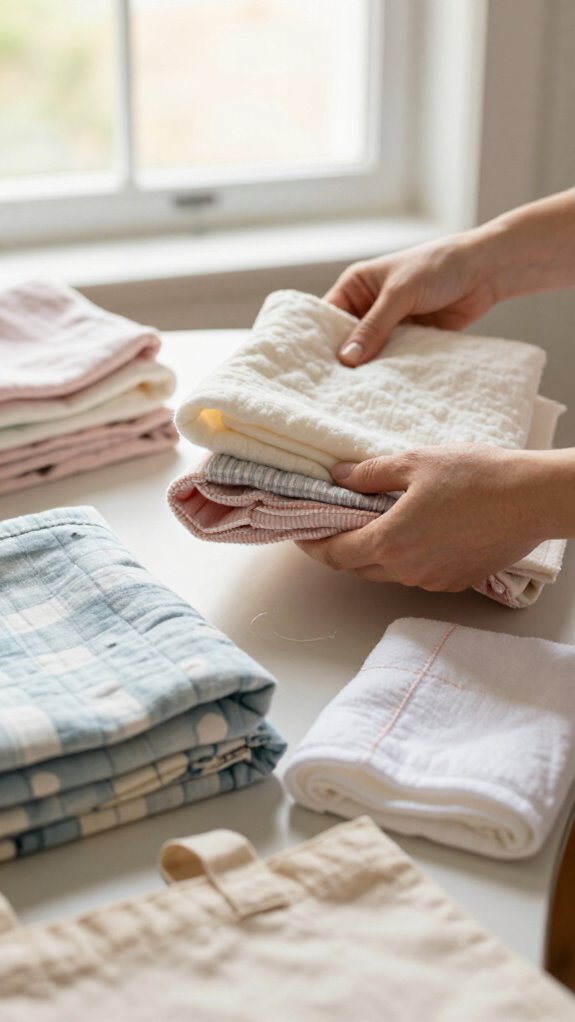
Durable, easy-care fabric gives every donated item a better chance to stay useful, wash after wash—huge win! Your thoughtful choices help recipients feel supported, not stuck with fussy laundry.
- Choose machine-washable, dryer-safe cotton broadcloth, flannel, or jersey.
- Pick tightly woven quilter’s cotton or pre-shrunk knits for lasting shape.
- Avoid silk, rayon blends, acetate, and dry-clean-only fabrics.
- Pre-wash with fragrance-free detergent; sensitive skin will thank you!
- Use colorfast testing methods: wash a small swatch first to catch bleeding.
These Fabric durability tips make your sewing circle’s gifts dependable. A quick pre-wash prevents surprise shrinkage later—because tiny shirts shouldn’t become doll clothes!
How to Package Handmade Donations
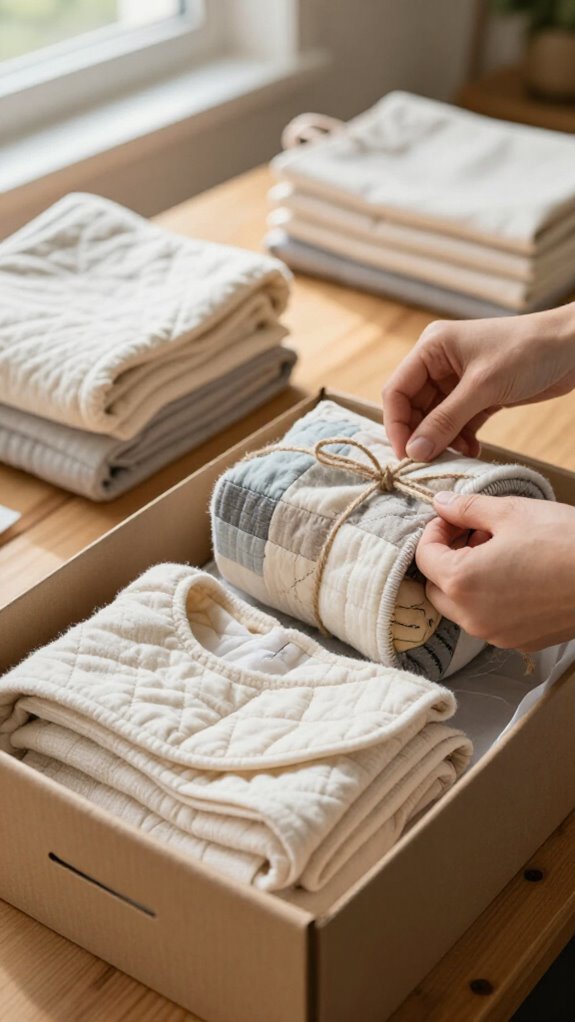
Smart packaging helps your handmade gifts arrive clean, organized, and ready to share—what a difference a little prep makes! You’re helping your sewing community shine!
| Pack this | Why it helps |
|---|---|
| Clean breathable bags | Keeps items fresh |
| Item labels | Speeds sorting |
| Packing slip | Meets donation standards |
| Size bundles | Eases distribution |
After Fabric testing, list materials and notes, such as “prewashed, unscented.” Bundle hats, scarves, and pillowcases separately, then use folded boxes or flat bags to control shipping costs. Roll blankets instead of wrestling bulky boxes—your tape dispenser will thank you! Seal finished pieces only, and check current needs before mailing during busy times.
Finding Local Organizations That Accept Sewing Donations
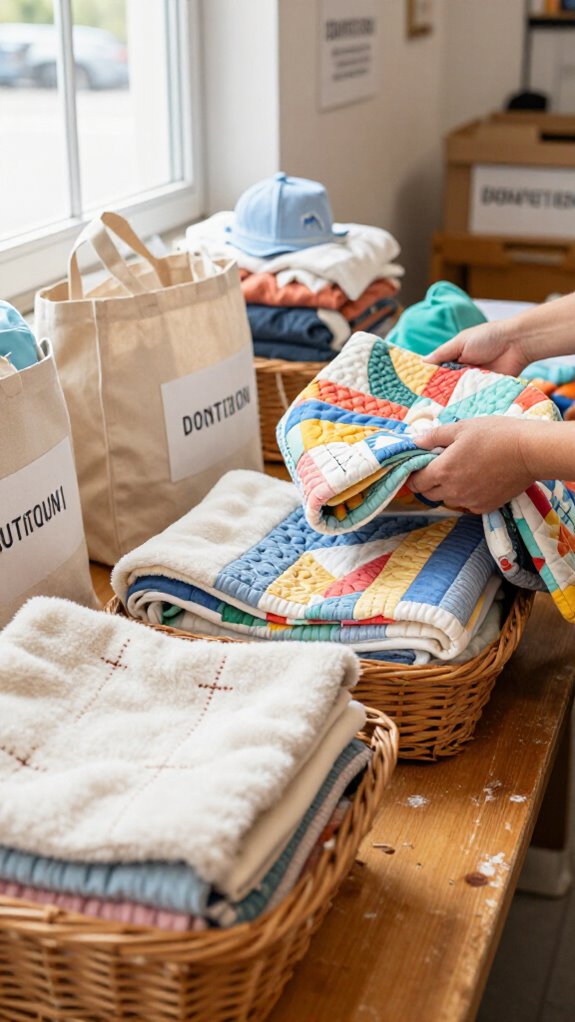
Start close to home: search JustServe, Idealist, or Create the Good with your ZIP code to spot groups that distinctly request handmade items—what a satisfying treasure hunt!
Use Sewing group directories, too, and connect with neighbors who sew for a shared purpose.
- Email first; confirm handsewn items are welcome.
- Ask for needed categories, like pillowcases or chemo scarves.
- Check neighborhood donation requirements for cotton or new materials.
- Learn whether items need unscented pre-washing.
- Choose ongoing needs, then look into national programs with local chapters.
You’ll avoid overflowing a closet somewhere—oops!—and help your stitches reach people who truly need them.