

I’ve got 19 smart, stylish tricks to make a small living room feel bigger without losing comfort. Start with light paint, sheer curtains, and mirrors opposite windows to boost brightness. Choose leggy, modular furniture, nested tables, and storage ottomans to save floor space. Mount shelves and cabinets, use corner units, and layer rugs to define zones. Add tall plants and a calm, consistent color flow, then declutter with baskets for a tidy look—keep going and you’ll find even more practical tips.
Key Takeaways
- Use light, cohesive colors (soft whites, creams, pale grays) on walls, ceilings, and large furniture to reflect light and open the room.
- Choose multi-functional, leggy furniture (storage ottomans, modular sofas, nesting tables) to save floor space and improve flexibility.
- Maximize natural light with sheer curtains, clear window sills, and mirrors opposite windows to visually expand the space.
- Install wall-mounted storage and floating shelves to free floor area while keeping items organized and decorative.
- Define zones with area rugs, mix furniture heights, and keep décor minimal to maintain flow and perceived spaciousness.
Smart Furniture Selection
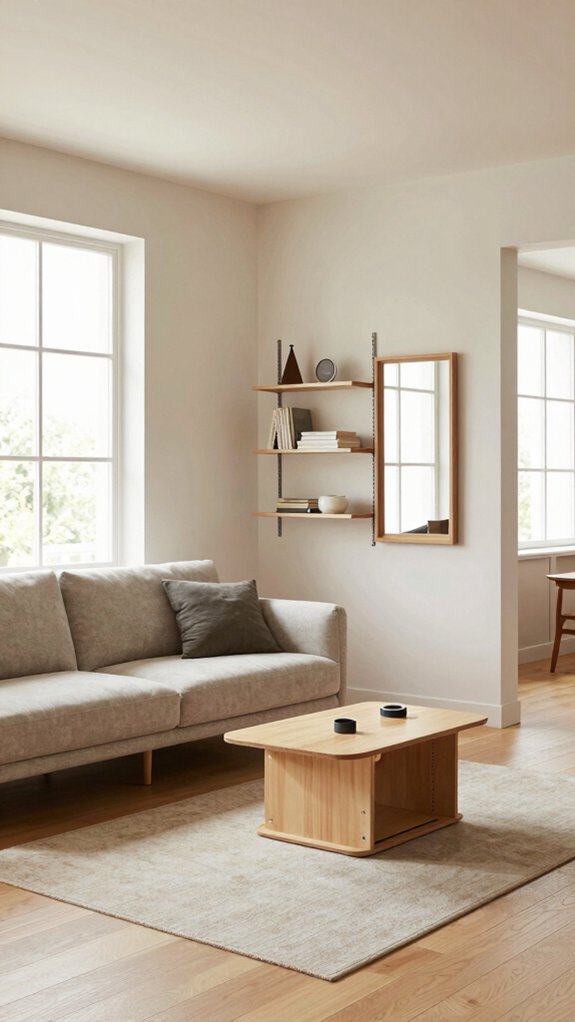
I love choosing multi-functional pieces because they help a small living room feel uncluttered and purposeful. Pick a storage ottoman or a coffee table with hidden compartments for stashing blankets and remotes, and consider a sleeper sofa or a bench with cubbies so one piece does double duty without crowding the space. For flexible seating, swap a bulky sofa for lightweight chairs that you can move around, and if you need a perfect fit, think about custom pieces to match your room’s exact dimensions.
Multi-functional pieces
One of the smartest moves I’ve made in small living spaces is choosing furniture that does double duty, and you can do the same without sacrificing style. I lean toward multi purpose furniture—ottomans with hidden storage, coffee tables that lift into dining height, and sleeper sofas that welcome guests. Pick compact designs with legs so light flows underneath; leggy pieces make the room breathe and look larger. I also recommend modular sofas, nesting tables, and beds with drawers to flex for work, play, or sleep without clutter. Start by listing your daily activities, then choose one or two dual-purpose pieces to cover them. Rearranging modular items is easy, so you’ll feel in control and at home even in a small space.
Light Color Palette
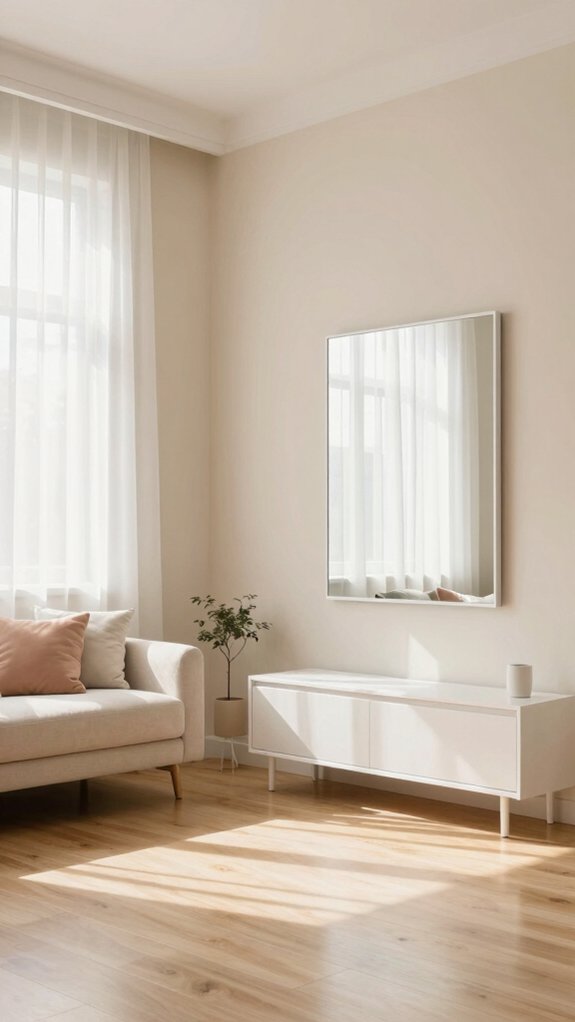
A light color palette can work wonders in a small living room, and I’ll show you how to make it feel larger, brighter, and more inviting. I love using light shades like soft whites, creams, and pale grays because they reflect natural light and open the room up. Keep the scheme cohesive with two or three colors so it feels calm and connected.
- Choose a primary wall color in a soft white or pale gray for an airy base.
- Add pastel tones in pillows or curtains to warm the space without overwhelming it.
- Paint the ceiling a shade lighter than the walls to create extra height.
- Use light-colored furnishings and rugs to reinforce the airy feel and keep everything harmonious.
These small choices make your room feel welcoming and shared.
Space-Saving Seating
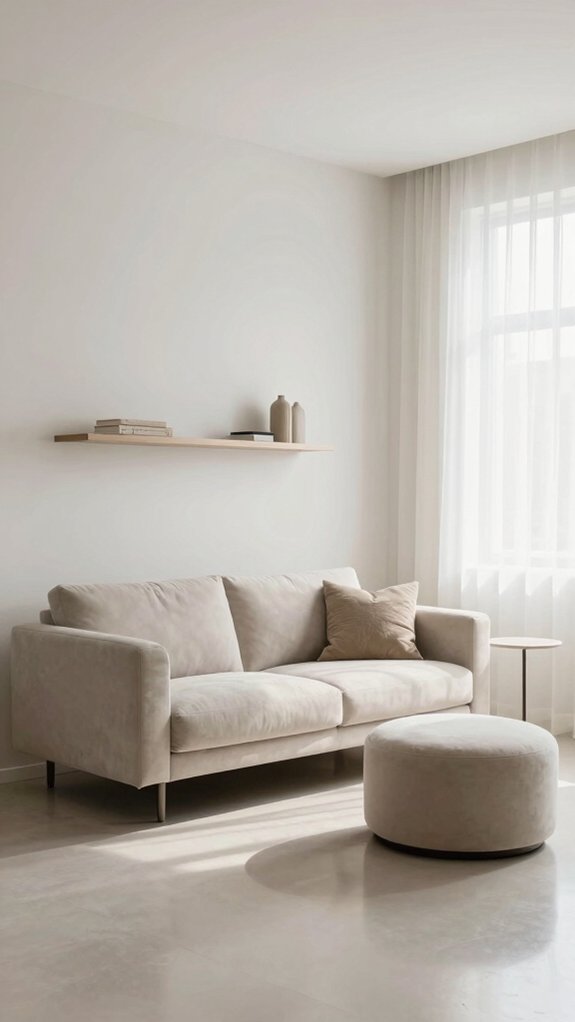
Space matters, so let’s make every seat pull its weight without crowding the room. I like lightweight, leggy chairs and slim-profile furniture because they keep sightlines open and help friends feel welcome. Mix a compact sofa with smaller seating items, or choose ottomans that double as stools and storage to stay tidy and flexible. For conversation, try a circular seating arrangement with four chairs — it invites connection and keeps traffic flowing.
| Option | Benefit | Tip |
|---|---|---|
| Leggy chairs | Open feel | Easy to move |
| Ottoman | Multi-use | Hidden storage |
| Compact sofa | Cozy hub | Keeps scale small |
Play with chair styles and placements so everyone feels included without clutter.
Wall-Mounted Storage Solutions
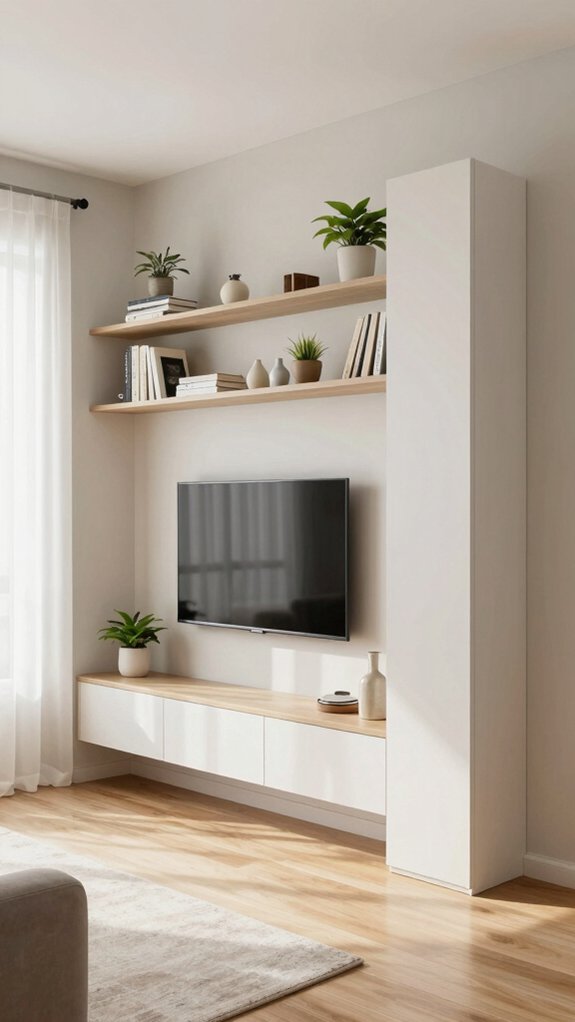
Because vertical real estate is often the best untapped asset in a small living room, I like to bring storage up onto the walls where it frees the floor and clarifies the layout. Wall mounted cabinets and modular shelving let me tailor storage to what I actually own, so everything feels intentional and shared, not chaotic. I recommend mixing closed and open pieces for neatness and display.
- Install floating shelves for books and plants to keep the floor light.
- Use wall mounted cabinets to hide media clutter and seasonal items.
- Add modular shelving units that you can reconfigure as needs change.
- Incorporate hooks or a pegboard for bags, keys, and rotating artwork.
These choices create order, invite connection, and make the room feel larger.
Mirror Placement for Depth
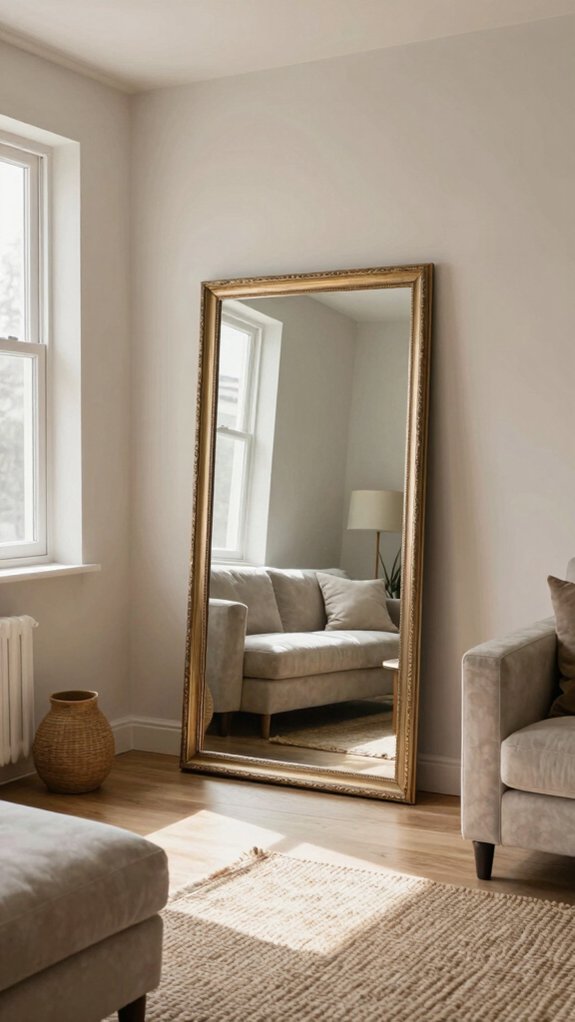
I like to create strategic reflection zones in a small living room by placing mirrors where they catch and bounce light, like opposite a window to double natural brightness. I often mix one large statement mirror with a few smaller decorative ones at varying heights to add depth, draw the eye up, and make the ceiling feel taller. Try arranging mirrors to reflect light-colored walls or a favorite cozy corner so the room looks bigger and more inviting without changing the layout.
Strategic reflection zones
When you’re working with a small living room, adding mirrors is one of the quickest ways I’ve found to make the space feel brighter and deeper, and you don’t need to cover every wall to get the effect. I use reflection techniques that feel intentional, not overwhelming, so our space invites everyone in.
- Place a large mirror opposite a window to double natural light and immediately open the room.
- Hang mirrors at varying heights to add depth and playful movement in a cozy layout.
- Create a gallery wall of smaller mirrors as a personal, decorative focal point that still reflects light.
- Add mirrored furniture like a coffee table to subtly amplify brightness without stealing warmth.
Think of mirror arrangement as a friendly structure that expands belonging.
Vertical Design Focus
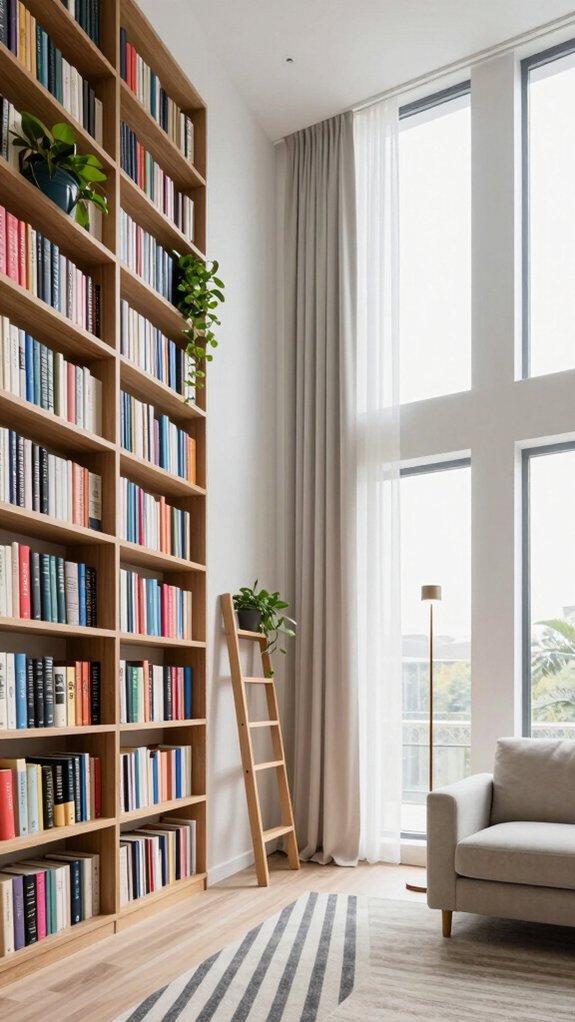
Though small living rooms can feel cramped, focusing upward lets you stretch the space without rearranging your whole layout. I start by adding vertical shelving to draw the eye up; tall bookshelves or slim storage units store things neatly while making ceilings feel higher. Next, I hang artwork and mirrors from floor to ceiling to reflect light and add depth — a mirror opposite a window really opens the room. I also use wall-mounted planters or a vertical garden to bring in greenery without eating floor space, which makes the room cozier and lived-in. Finally, mounting curtain rods near the ceiling and choosing furniture with slim, raised legs boosts perceived ceiling height and keeps the floor visible, so the room feels airier.
Minimalist Decor Styling
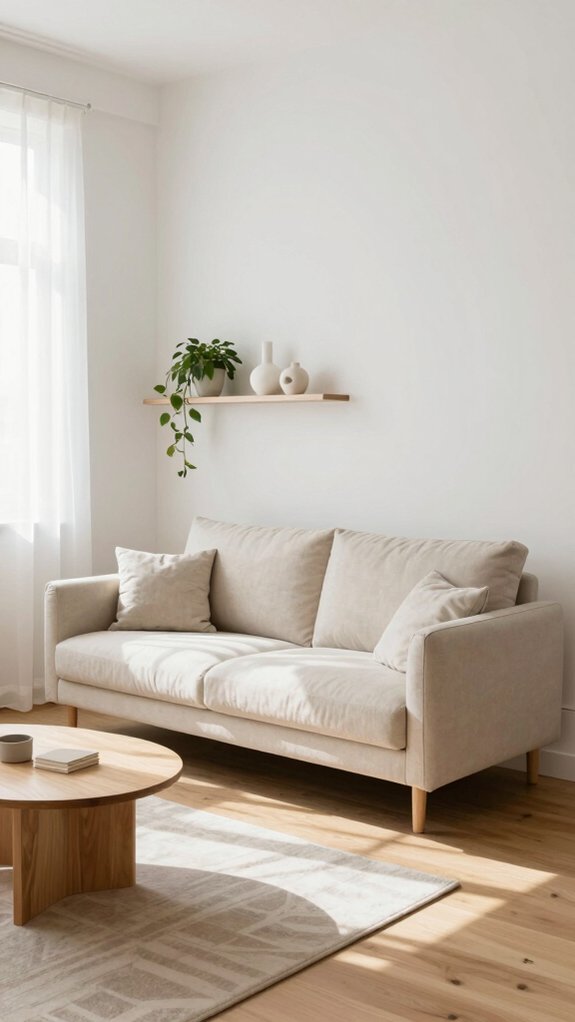
Because a small living room thrives on clarity, I like to start minimalist styling by choosing a tight color palette — soft neutrals, a few light shades, and one accent color — and sticking to it across walls, rugs, and cushions. I aim for belonging: every piece should feel chosen, not clutter. I balance function and calm with multi-functional furniture and leggy designs that keep the floor visible and airy.
- Embrace minimalist art: one simple piece above the sofa anchors the room.
- Remove extras: declutter surfaces so breathability shows.
- Pick storage ottomans and slim tables for hidden utility.
- Practice texture layering with subtle patterns, throws, and a woven rug.
These steps make the space feel open, cozy, and intentionally ours.
Floating Shelves Usage
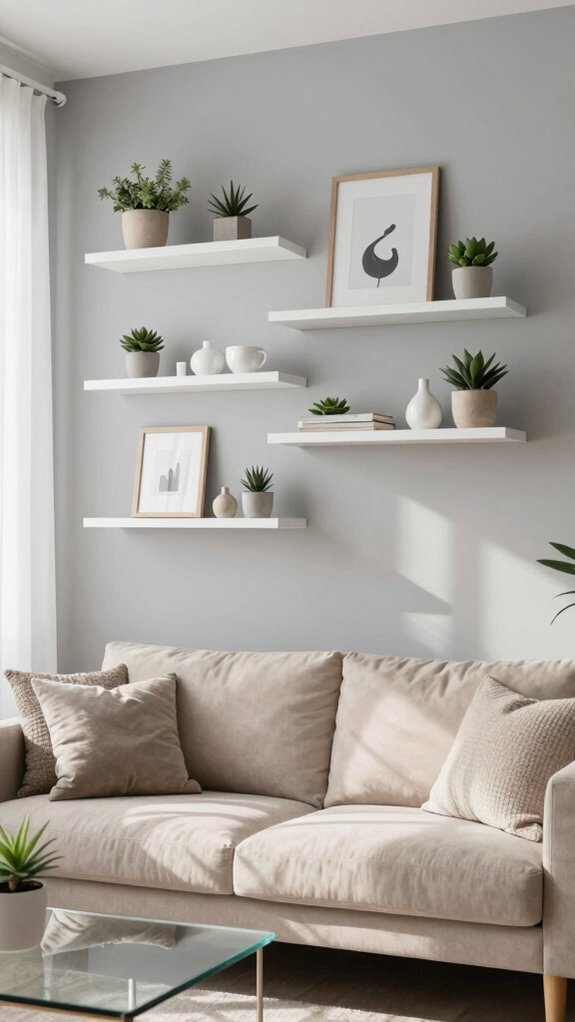
If you want to make a small living room feel taller and less crowded, floating shelves are one of the smartest tricks you can use: I like them because they lift storage off the floor, show more visible floor space, and keep the room airy without sacrificing function. I’ll walk you through floating shelf placement and decorative item selection so you feel confident. First, stagger shelves at varying heights to draw the eye upward and emphasize vertical space. Use lightweight, minimalist shelves near windows to bounce natural light. Keep items sparse: a couple of books, a plant, and one framed photo per shelf prevents clutter. Finally, balance left and right walls so the room feels shared and welcoming, not crowded.
Compact Coffee Table Ideas
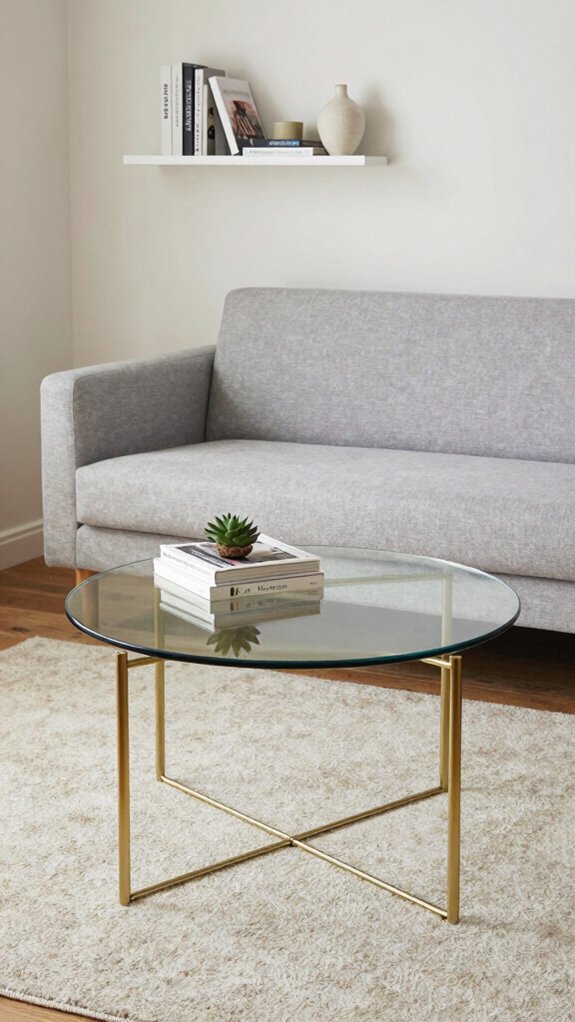
One of the easiest ways to keep a small living room feeling open is to choose a compact coffee table that acts light and looks light, and I’ll show you how to pick one that balances style and function. I want you to feel at home, so think about pieces that invite movement and connection.
- Go for a glass top or open base to let sightlines pass through, making the room feel airier.
- Prefer round shapes or oval tables; softer edges improve flow and prevent crowded corners.
- Look at multifunctional tables with hidden storage or that convert to ottomans for flexible seating.
- Choose narrow designs and a low profile to save space and keep the layout balanced.
These choices create comfort and room to breathe.
Area Rugs to Define Space
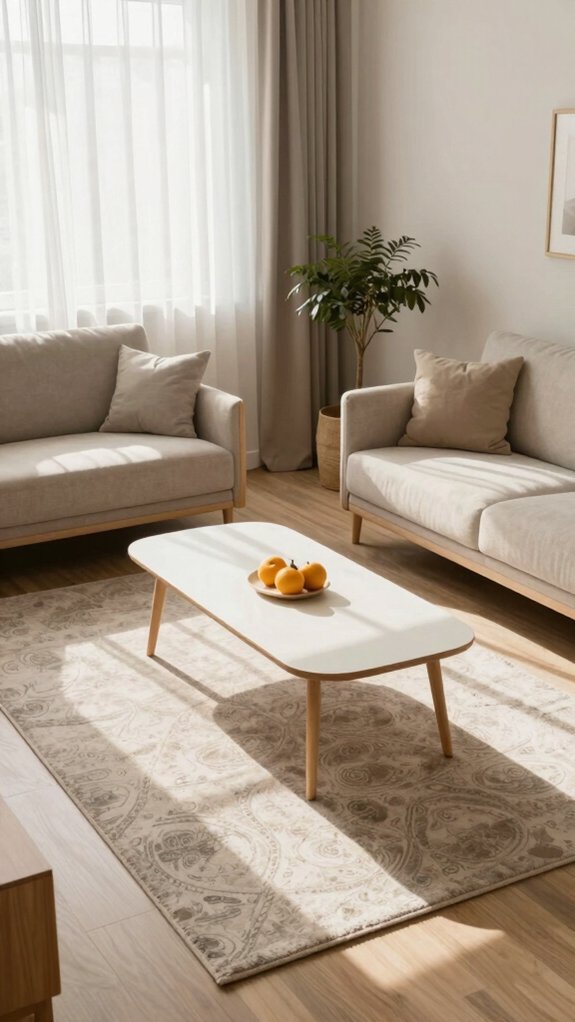
After you’ve picked a coffee table that keeps sightlines open, I like to use an area rug to anchor the seating and distinctly define the space; it makes the room feel intentional instead of scattered. I often begin by measuring so at least the front legs of sofas and chairs sit on the rug — that sizing trick ties pieces together and opens the layout visually. For rug color choices, I favor light hues or subtle patterns to keep an airy vibe, but textured neutrals add warmth without shrinking the room. Try rug layering techniques: place a smaller patterned rug over a larger neutral one to add depth and a personal touch. These steps help different zones feel purposeful and welcoming.
Natural Light Maximization
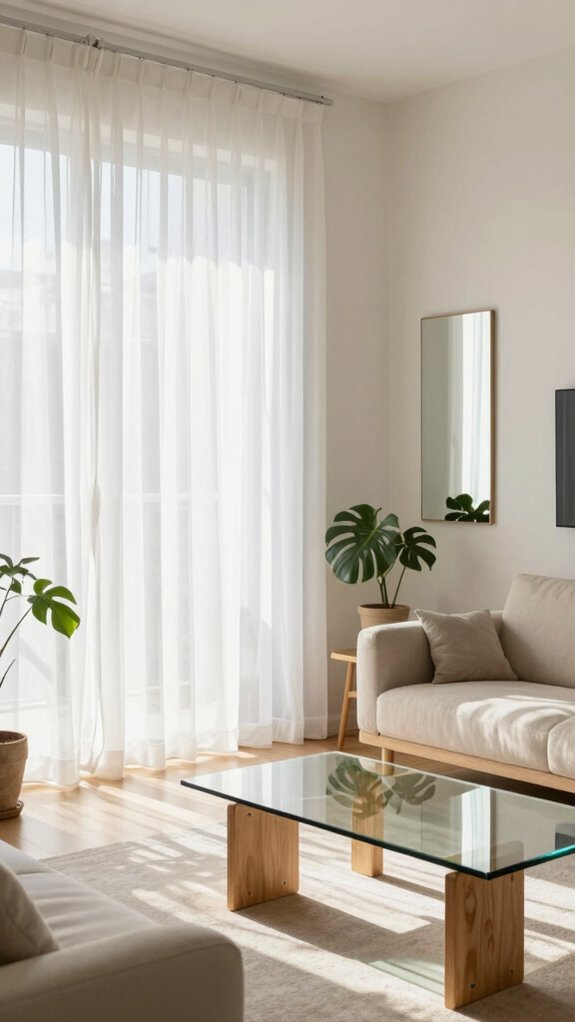
Because natural light can make a small living room feel twice as big, I focus first on ways to let it flow freely through the space. I pay attention to sunlight angles so morning or afternoon glow reaches the room without glare, and I pick window treatments that improve rather than hide light.
- Use sheer curtains to allow privacy while letting sunlight angles and warmth in, creating an airy, welcoming vibe.
- Place a large mirror opposite a window to bounce light and double perceived space, especially near seating where we gather.
- Paint walls and ceilings in soft, light colors to reflect natural light and open the room visually.
- Keep window sills clear and choose lightweight furniture that won’t block light sources, so everyone feels included in the brightness.
Slim Profile Lighting
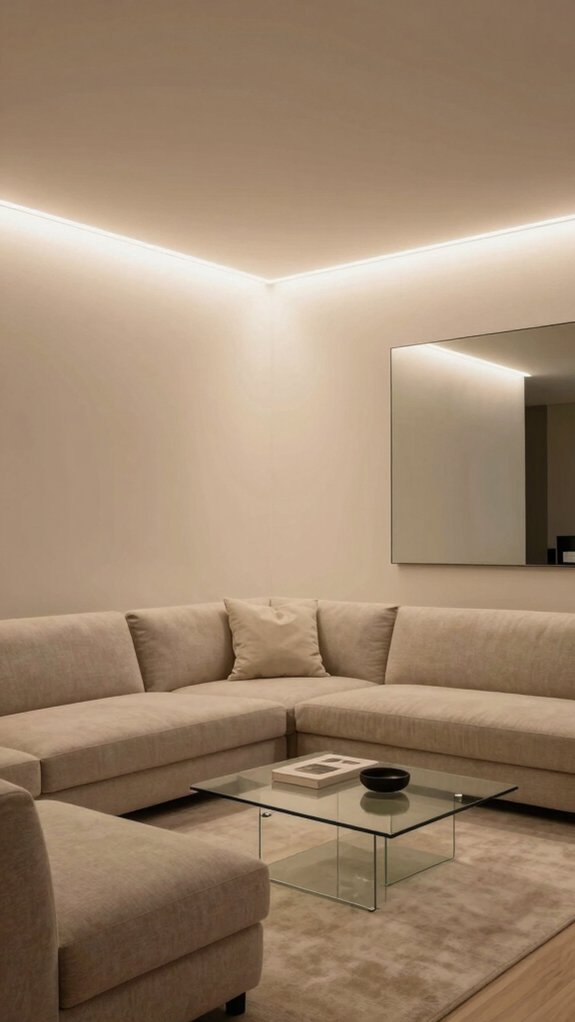
Something as simple as a slim light fixture can change how roomy your living space feels, and I’ll show you how to choose and place them so they help instead of crowding the room. I like flush mounts and narrow pendants because they keep ceilings clear and reduce visual weight, so the room feels open. Add LED strip lights under shelves or behind the TV for soft ambient lighting that won’t take up floor space. Choose transparent or open designs to spread light farther without bulky forms. Wall-mounted sconces free surfaces and lift the eye, creating height. For flexibility, use adjustable slim floor lamps for reading corners. These small choices invite comfort and connection while maximizing your usable space.
Corner Space Utilization
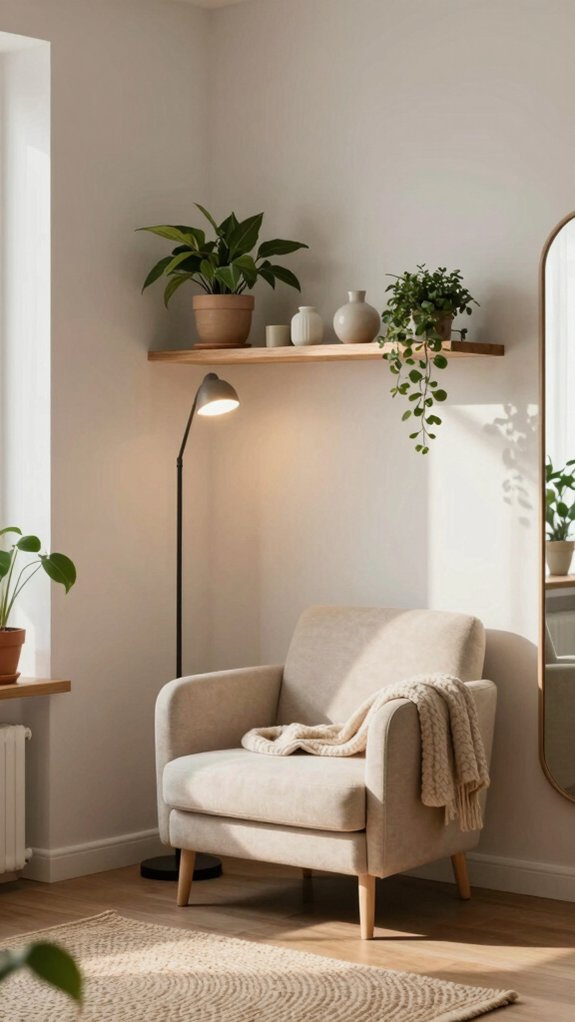
When you look at a lonely corner, try thinking of it as an extra room waiting to happen—I often do, and that small shift in mindset helps me spot simple fixes that add function without clutter. I like to start with corner shelving to lift storage off the floor and display books, photos, or baskets that make the space feel lived-in. A corner sofa or compact sectional can welcome guests without blocking traffic, and I compare layouts to see which angle opens the room most.
- Use a tall corner shelving unit to enhance vertical space and avoid floor clutter.
- Choose a snug corner sofa to create a cozy conversation nook.
- Fit a small corner desk for focused work without stealing space.
- Add a floor lamp or plant stand to brighten and soften the area.
Foldable and Stackable Furniture
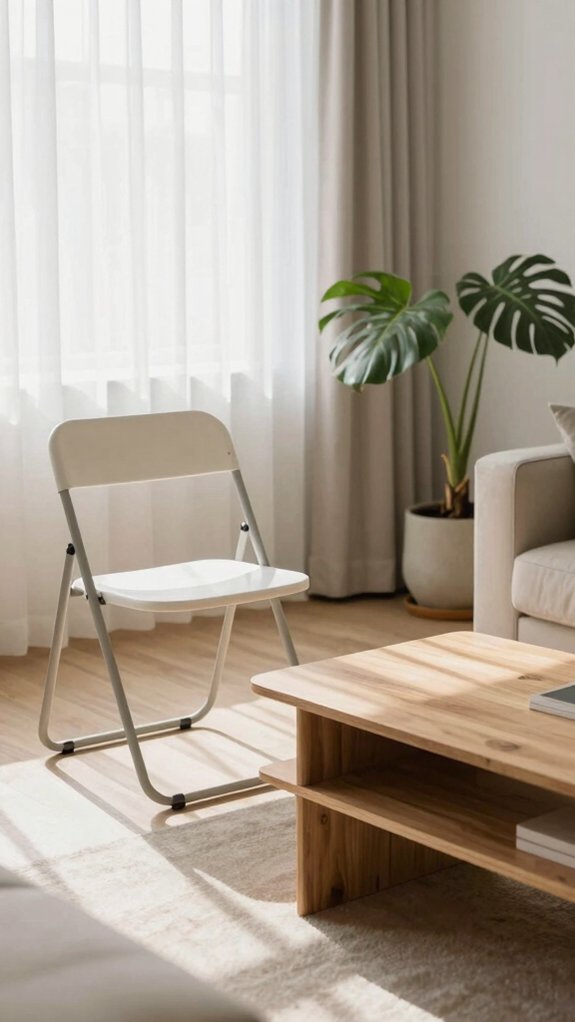
If you want a living room that shifts with your needs, foldable and stackable furniture is a quiet superhero—I’ve used it to turn crowded evenings into roomy hangouts and weekday routines back into uncluttered calm. I keep foldable chairs handy for guests; they tuck away flat and free up floor space when we don’t need them. For small gatherings, stackable tables and stools work like modular friends: combine them for a coffee surface, separate them for extra seating, then nest them when the party’s over. Choose lightweight, durable pieces so you can move things yourself, and invest in quality so they last without looking cheap. Start with one or two versatile pieces, then add more as your needs and style grow.
Visual Balance in Layout
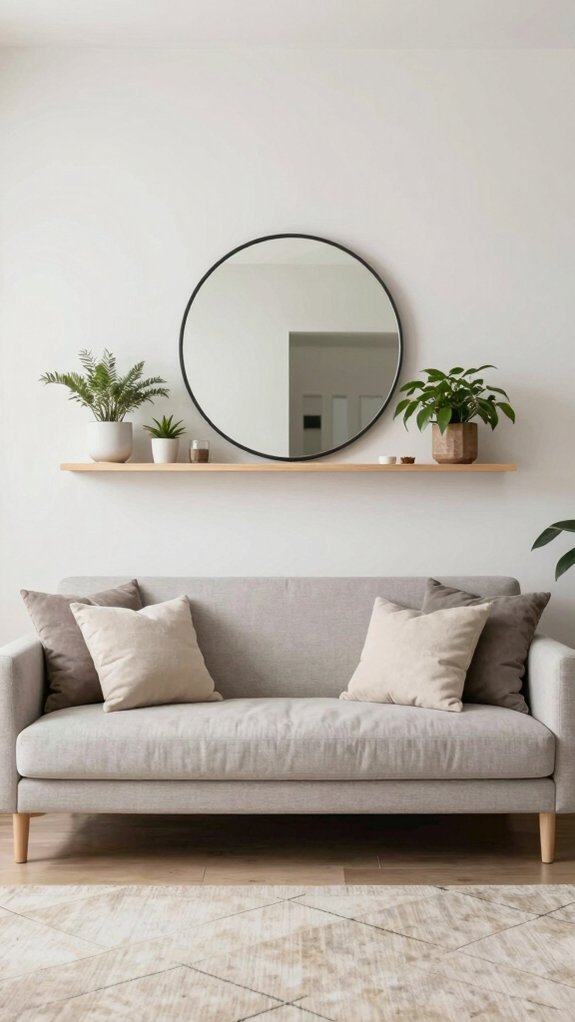
Because balance makes a small room feel intentional instead of cluttered, I like to arrange pieces so visual weight spreads evenly across the space—pair a bulky sofa with a slim console or a tall plant on the opposite side, and you’ll avoid one heavy corner that drags the eye. I focus on furniture arrangement that creates aesthetic harmony and flow, so everyone feels welcome and relaxed. Practical tips I use include:
- Use an area rug to define zones and keep seating feeling cohesive.
- Mix heights: low sofa, taller shelving, and lamps to lift the room visually.
- Choose multi-functional pieces like storage coffee tables to cut clutter.
- Float furniture from walls to improve circulation and openness.
These moves make small rooms feel balanced, intentional, and inviting.
Indoor Plants for Small Spaces
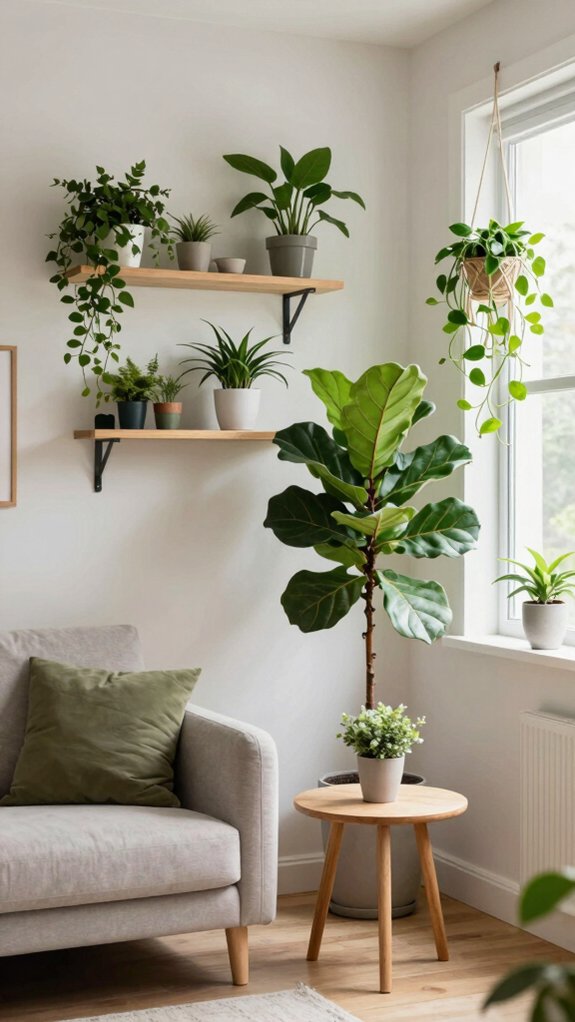
I love using tall, narrow plants like snake plants or fiddle-leaf figs in a small living room because they give height without eating floor space. Place one in an empty corner or next to a slim side table, or use a slim planter on a windowsill so the greenery draws the eye upward and makes the room feel bigger. They’re low-maintenance, work in limited light, and pair nicely with hanging succulents or a trailing pothos for texture and variety.
Tall and narrow plants
A slim plant can be a tiny design hero in a small living room, and I’ll show you how to use tall, narrow varieties to make your space feel bigger and brighter. I love snake plants and dracaenas because these plant varieties add height without stealing floor space. They lift the eye, tricking the room into feeling airier and taller.
- Place one near a sofa corner to draw the gaze upward.
- Mix textures—spiky, glossy, arching—to add depth.
- Choose according to light: some tolerate low light, others like bright spots.
- Pot on a slim pedestal to emphasize vertical lines.
I’ll share simple maintenance tips so busy people can keep these plants thriving and feel at home with their choices.
Consistent Color Flow
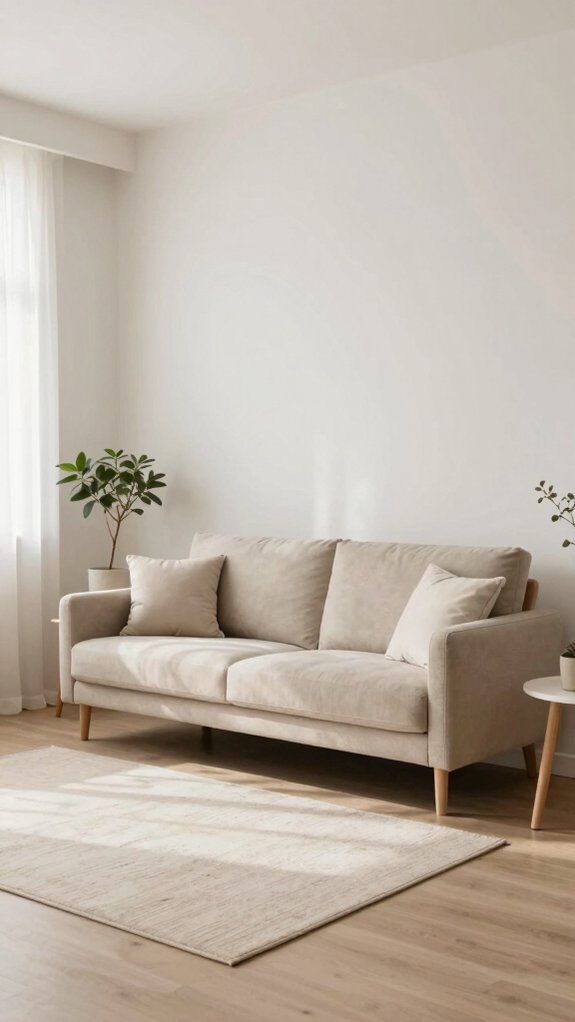
When you want a small living room to feel larger and calmer, keeping a consistent color flow will make a big difference—I’ll show you how to do it without making the space look boring. I use color psychology to guide choices: light neutrals reflect natural light and open the room, while two or three main colors keep things peaceful. Start with a base neutral on walls and add furniture in deeper or lighter shades of the same hue for depth. Bring in one or two accent colors through pillows and art to create cohesive aesthetics without clutter. Keep continuity across walls, rugs, and accessories so the eye travels smoothly; that uninterrupted flow makes the space feel bigger and more welcoming.
Decluttered Styling Approach
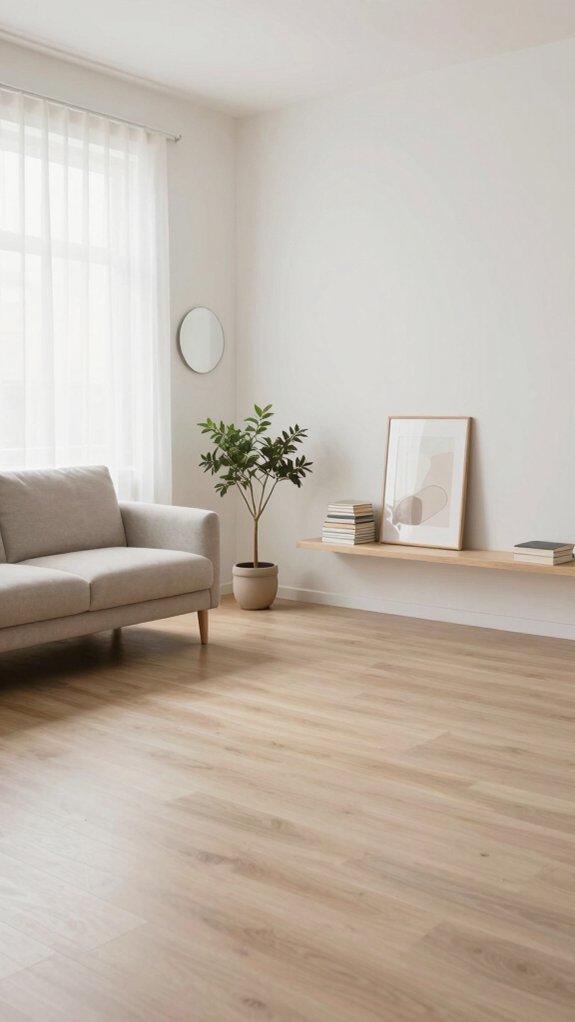
Because clutter eats visual space, I like to start small living-room styling by clearing surfaces and tuning what really matters — that simple step instantly makes the room feel larger and calmer. I embrace a minimalist mindset and invite you to join me; together we assess belongings, keeping only what’s useful or meaningful. That organized aesthetics goal guides storage choices and object limits.
- Sort regularly: donate, store, or toss items you don’t use.
- Use baskets and built-in shelves to hide necessities and keep surfaces clear.
- Choose three meaningful decor pieces instead of many small trinkets.
- Keep pathways open so movement feels easy and rooms breathe.
Start small, celebrate progress, and enjoy a cozier, more welcoming living room.
Personal Touches Without Overcrowding
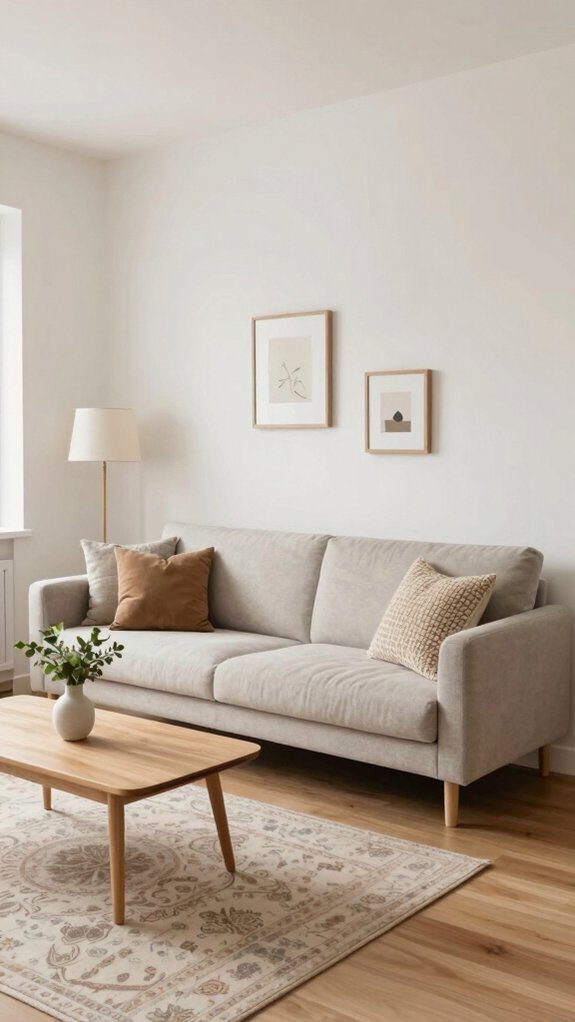
Now that surfaces are pared back and pathways clear, I want to show you how to bring personality into your small living room without crowding it. Start by selecting a few meaningful pieces that truly reflect your personal memories—one framed photo, a travel keepsake, and a small handmade object. Use a cohesive aesthetics approach: pick two or three soft tones and let personal items follow that palette so everything feels unified, not busy. Store extras in stylish baskets or boxes so memories stay accessible but out of sight. Hang a small gallery of your own prints rather than many artworks, and layer texture with one or two throw pillows and a blanket for warmth. These choices celebrate who you are while keeping the room calm and welcoming.