

I love mixing iconic mid‑century pieces—think Eames lounge, walnut credenza, and Noguchi table—with clean lines, teak accents, and a sputnik light to make a room feel both timeless and comfy. I keep a neutral base, add bold pillows or art, layer textured rugs, and use plants to soften angles. I balance vintage finds with a few new items for function, keep pathways clear, and choose warm wood tones for cohesion. Keep going and you’ll pick up practical layout and styling tips.
Key Takeaways
- Choose iconic mid-century pieces (Eames lounge, Noguchi table, wishbone chair) to anchor function and timeless style.
- Use warm wood tones like walnut and teak with leather and metal accents for a grounded, harmonious palette.
- Favor clean lines and organic shapes, keeping decor minimal and pathways clear to preserve airy flow.
- Install statement lighting (sputnik or globe pendants in brass) to add sculptural focus and adjustable ambiance.
- Layer vintage abstract art and large indoor plants to add personality, scale, and natural warmth without clutter.
Iconic Mid Century Furniture
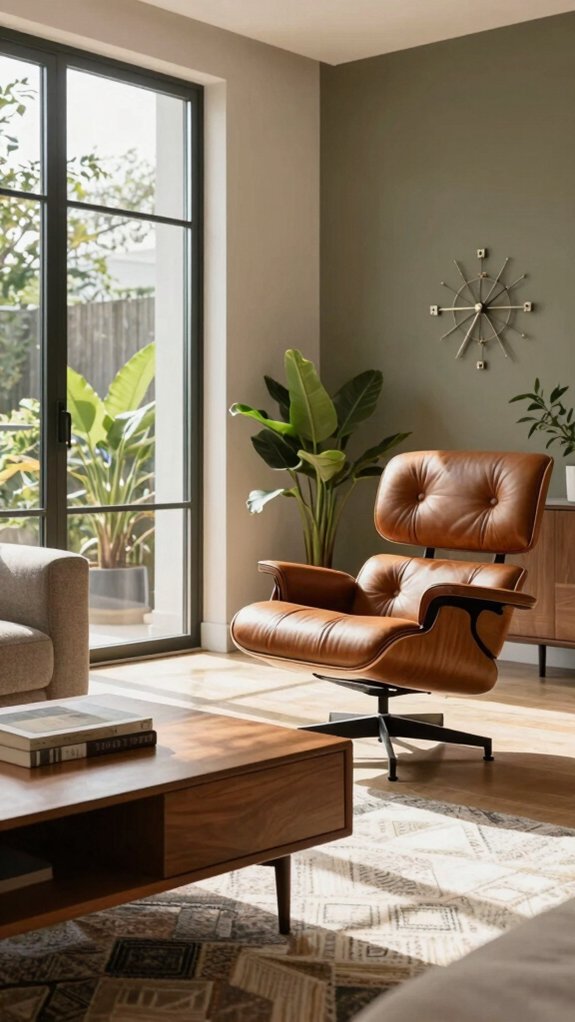
When you bring mid-century furniture into a living room, you’re inviting pieces that balance comfort and artful simplicity, and I love how they make a space feel both lived-in and stylish. I usually start with an anchor like an Eames Lounge for ergonomic comfort and relaxed elegance, then add a Noguchi Table to introduce sculptural function and open sightlines. A Wishbone Chair brings handcrafted charm and lightness, and together these pieces invite people to linger. I suggest pairing them with pops of vibrant colors in pillows or art to keep the room cheerful without overwhelming its calm lines. Think about scale and circulation—arrange seating so conversation flows easily, and choose durable materials that welcome daily use.
Wood Tones and Natural Finishes
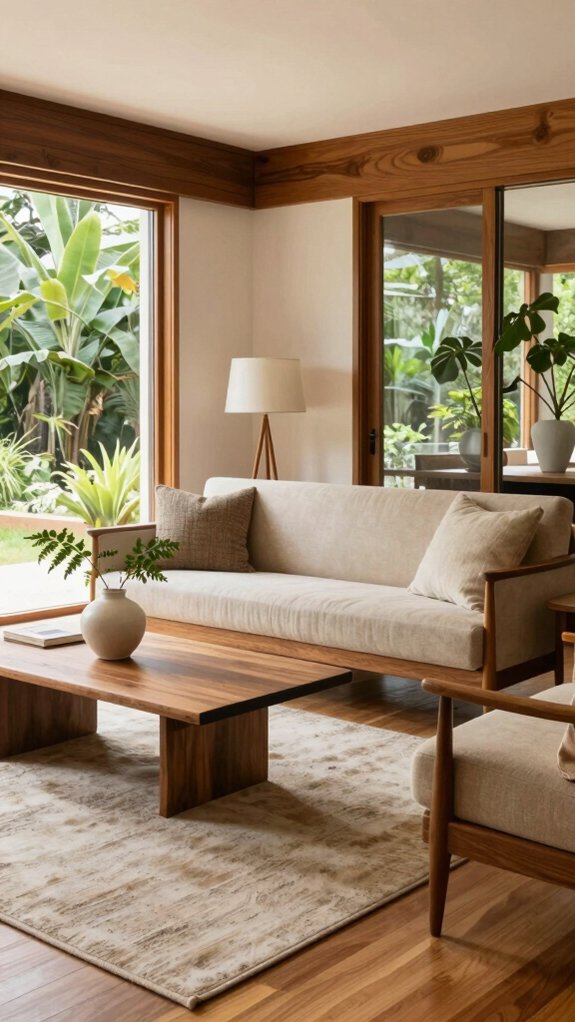
I love using walnut and teak as the backbone of a mid-century living room because their warm, rich tones instantly make a space feel cozy and grounded. I usually pair a darker walnut sofa frame or sideboard with teak coffee tables or shelving to create contrast, and I recommend sticking to matte or satin finishes so the wood grain really shows. Try balancing a few darker pieces with lighter wood accents and simple fabrics to keep the room harmonious and inviting.
Walnut and teak emphasis
One of the simplest ways I bring mid-century warmth into a living room is by leaning on walnut and teak pieces for their rich tones and natural finishes. I choose walnut for deep, chocolate hues and teak for golden warmth, and together they create a cozy, grounded palette that welcomes everyone. Look for furniture craftsmanship in joints and grain matching; clean lines and tapered legs reveal true mid-century character. Prioritize wood sustainability by seeking FSC-certified or reclaimed pieces so your choices feel responsible as well as beautiful. Mix a walnut sideboard with a teak coffee table, add leather seating and metal accents, and balance storage with display. Small steps—swap one piece at a time—and your room will feel authentic and inviting.
Clean Lines and Organic Shapes
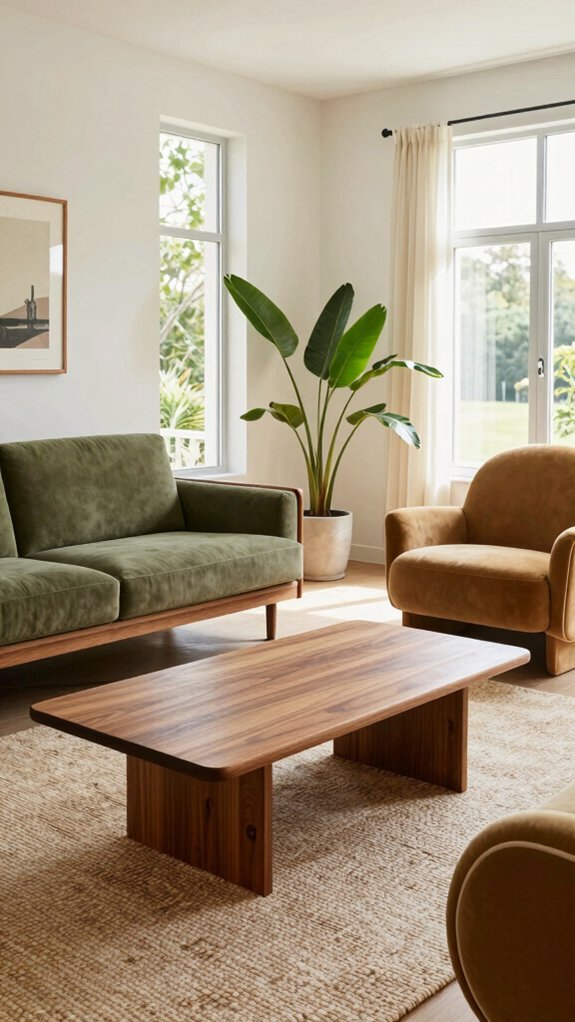
Because clean lines give a room a calm backbone and organic shapes bring in warmth, I like to mix both when I’m planning a mid-century modern living space. I aim for symmetrical balance so the room feels like it welcomes everyone, and I pair contrasting materials—like a sleek walnut sofa frame with a soft curved boucle chair—to show personality without chaos. That blend keeps function first but invites lingering conversations.
| Element | Tip |
|---|---|
| Furniture silhouette | Choose straight-legged sofas with rounded accent chairs |
| Materials | Mix wood grain with plush textiles |
| Layout | Mirror pieces for balance |
| Flow | Keep pathways clear for movement |
Use iconic pieces as anchors, then add soft curves to make the space cozy and inclusive.
Statement Lighting Fixtures
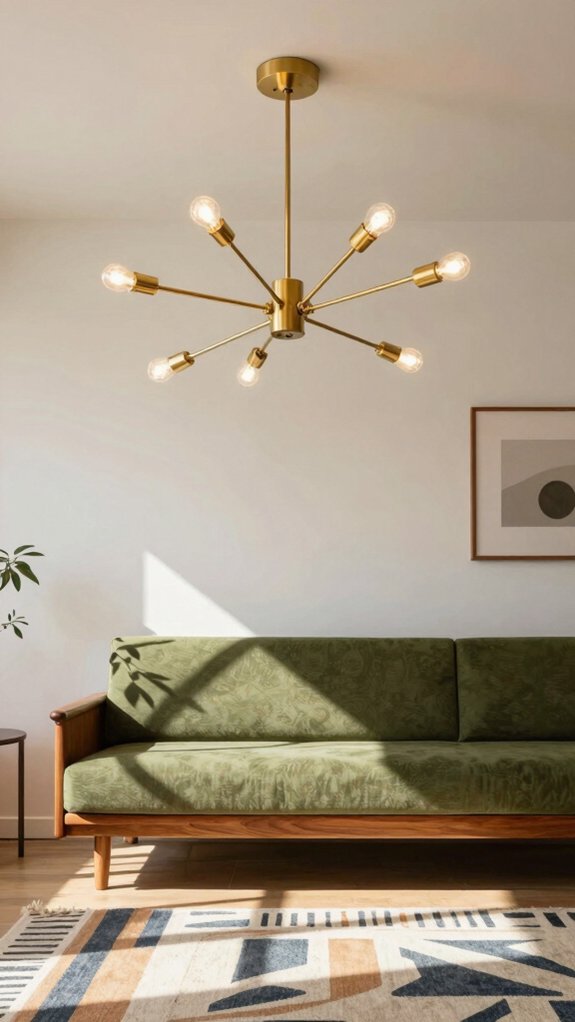
I love how sputnik and globe lights instantly become the room’s centerpiece, so I often suggest starting with one bold fixture to set the tone. Pick a brass sputnik for a sculptural, mid-century punch or choose clustered opal globes for a softer, more modern glow, and balance either with low-profile furniture so the light can shine. For flexible use, look for pieces with adjustable arms or multi-directional bulbs so you can switch between bright task lighting and cozy ambient mood.
Sputnik and globe lights
When I want a living room to feel both dramatic and cozy, I reach for a statement fixture like a Sputnik or a globe light because they instantly set the mood and define the space. I love pairing Sputnik styles with warm brass or chrome to echo the Space Age optimism, and I use Globe variations in frosted glass to soften corners and invite conversation. Both become focal points and help everyone feel at home.
| Fixture | Tip |
|---|---|
| Sputnik | Use as central chandelier above seating |
| Globe | Place over side table or reading nook |
| Brass finish | Adds retro warmth |
| Chrome finish | Feels crisp and modern |
Choose materials that match your palette, and balance bold shapes with cozy textiles.
Neutral Base with Bold Accents
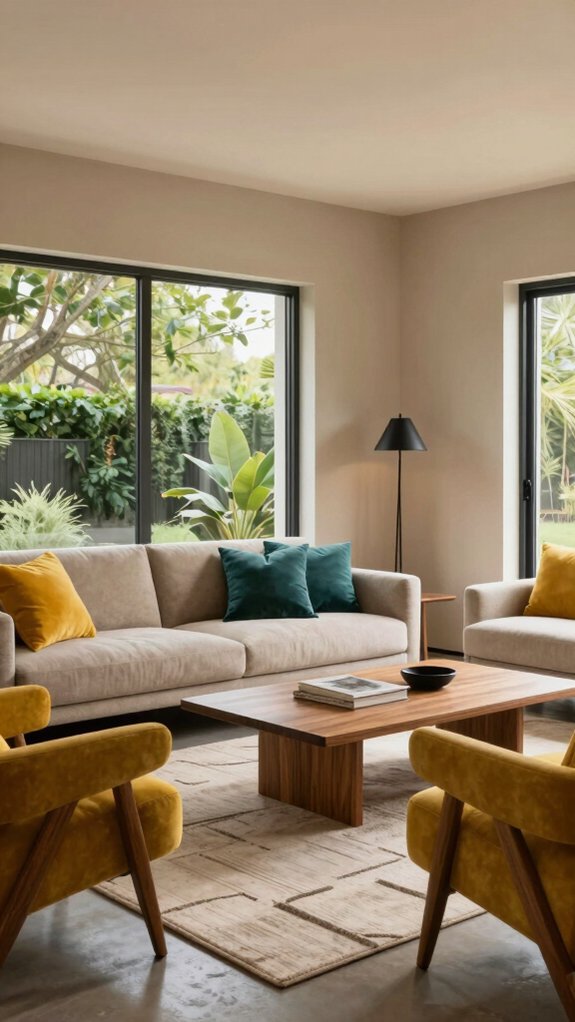
If you want a living room that feels calm but still has personality, I start with a neutral base—think white or warm off-white walls and light wood floors—and then layer in bold accents that can be changed as tastes shift. I like bold color combinations like mustard yellow with teal to energize a serene space without overwhelming it. Here are practical accent decor tips I use to keep the room cohesive and welcoming:
- Swap throw pillows in geometric patterns for easy seasonal updates.
- Add a statement armchair in a vibrant hue as a focal point.
- Choose an area rug with bold accents to ground the seating area.
- Use artwork that repeats your accent colors for unity.
- Pick a striking coffee table or lamp to tie the scheme together.
Low Profile Sofas
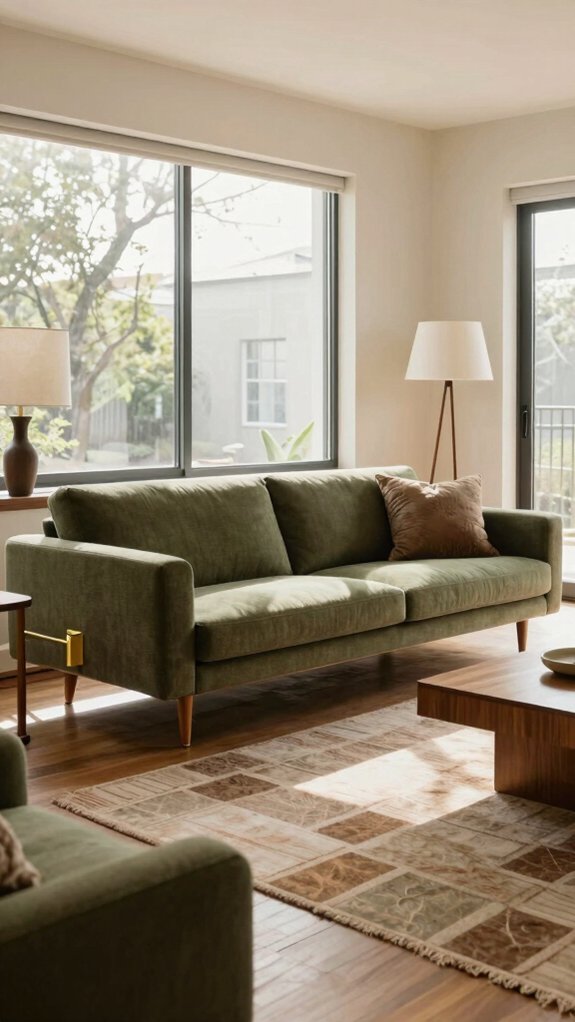
A low profile sofa makes a room feel open and stylish, and I find it’s one of the easiest ways to give a mid-century modern living room its signature look. I love how sleek lines and tapered legs create a welcoming, airy feel that invites people to sit and stay. When choosing sofa materials, think about durability and touch: rich leathers read classic and warm, while soft velvets add a cozy, slightly luxe vibe. Pick a streamlined form so the piece anchors the room without overpowering it, especially in open-plan spaces where visibility matters. I recommend testing cushions for comfort and checking leg height to keep flow consistent; small details make the whole room feel thoughtfully joined.
Geometric Patterns
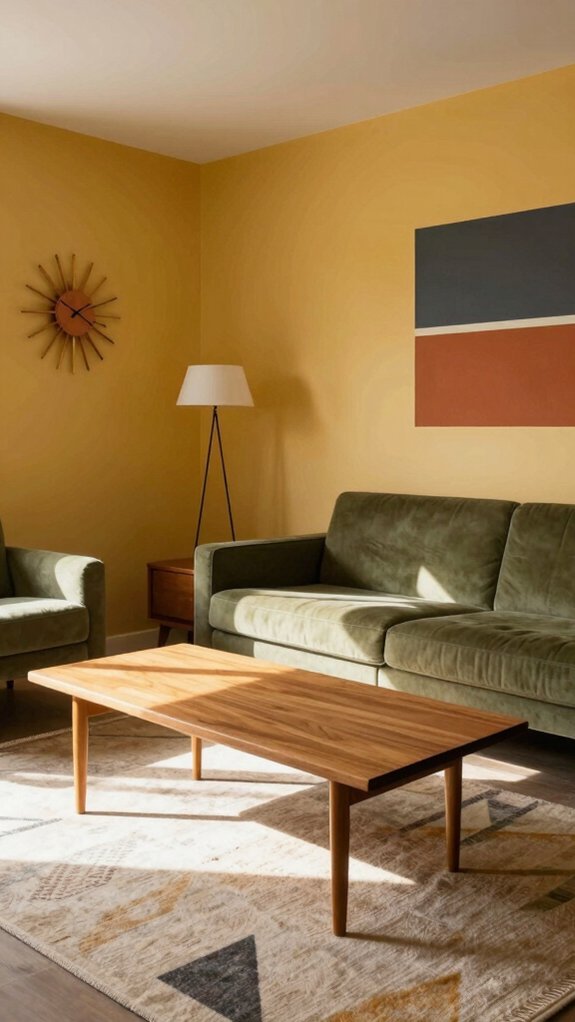
After you’ve picked a low profile sofa, geometric patterns are a great way to add personality without crowding the room — they play nicely against sleek lines and tapered legs. I love how geometric balance keeps a space feeling intentional; you can mix playful motifs without chaos if you plan layers. Start simple, then add one bold piece.
- Use a patterned rug with triangles or diamonds as the anchor.
- Add two or three throw pillows that echo shapes but stay in solid backgrounds.
- Hang art with circles or angular prints to draw the eye upward.
- Let one statement chair carry a small-scale motif for contrast.
- Balance patterns with organic plants and plain wood finishes.
These steps help us create a welcoming, cohesive mid-century look.
Retro Color Palette
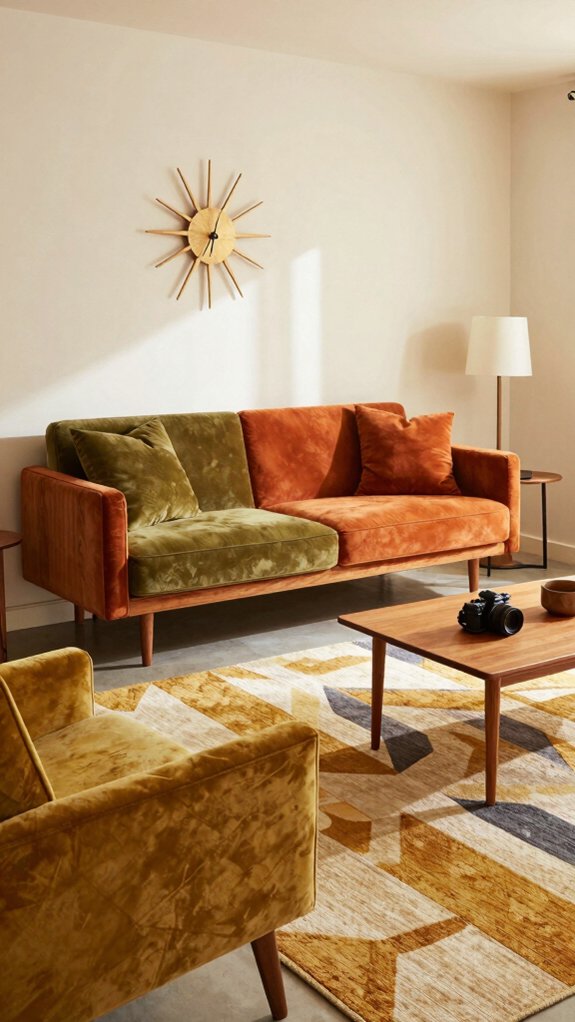
I love using a retro color palette to give a mid-century modern living room personality, and I often start with mustard, olive, and burnt orange as my core trio. I’ll balance those bold hues with warm browns or taupe on larger surfaces, then add mustard or burnt orange throw pillows and olive accents in art or a rug to let each color shine without overwhelming the space. For a cohesive look, I pair these colors with rich wood tones and throw in geometric textiles to echo the era’s style while keeping the room comfortable and modern.
Mustard, olive, burnt orange
When you mix mustard, olive, and burnt orange, you get that unmistakable mid-century warmth that feels both nostalgic and fresh, and I’m excited to show you how to use it in your living room. I love how these color combinations bring nostalgic elements into a modern home, making it feel like you’re part of a welcoming club.
- Use mustard pillows or a rug to add cheerful contrast.
- Anchor the room with olive-painted cabinets or a sofa for a natural, calm base.
- Add burnt orange throws and art as rich accent points.
- Pair with teak or walnut furniture to strengthen mid-century vibes.
- Introduce teal or brown sparingly to balance and update the palette.
Follow these tips and you’ll create a cozy, timeless space.
Minimal Decor Styling
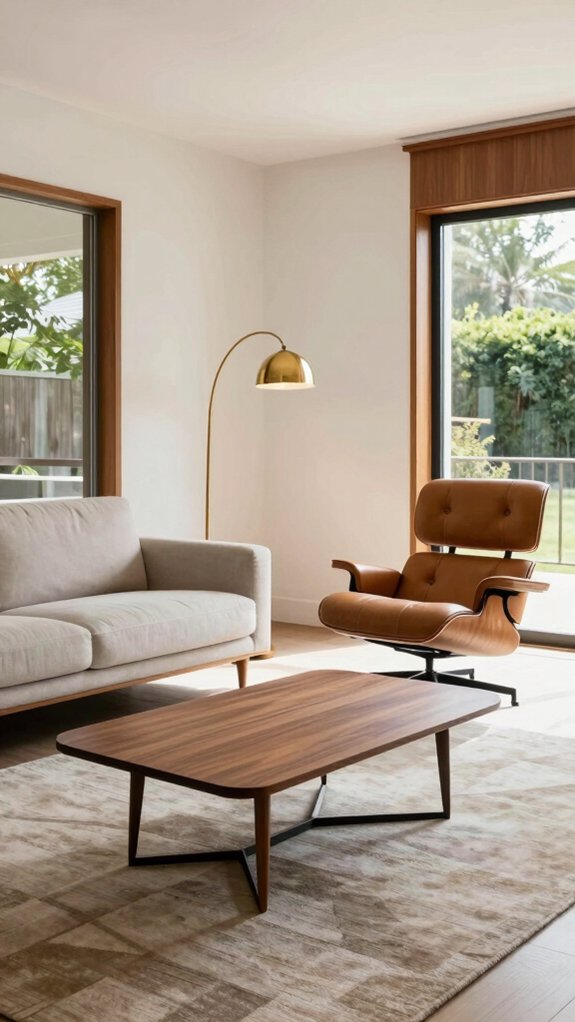
Because less really can be more, I like to start minimal decor styling by picking a few standout pieces that do the heavy lifting—think a sculptural leather sofa or a timeless credenza—so the room feels purposeful, not empty. I choose a warm palette, natural materials, and textures that invite company, and I add statement lighting like a brass sputnik to anchor the space. I use minimalist accessories and functional decor that serve a purpose and show personality without clutter. Big plants soften lines and bring life. Below is a quick guide to balance simplicity and warmth:
| Piece | Purpose | Tip |
|---|---|---|
| Sofa | Anchor | Choose sculptural form |
| Credenza | Storage | Keep surfaces clear |
| Light | Focal | Scale to room |
| Plant | Softness | Pick low-maintenance variety |
Functional Layout Design
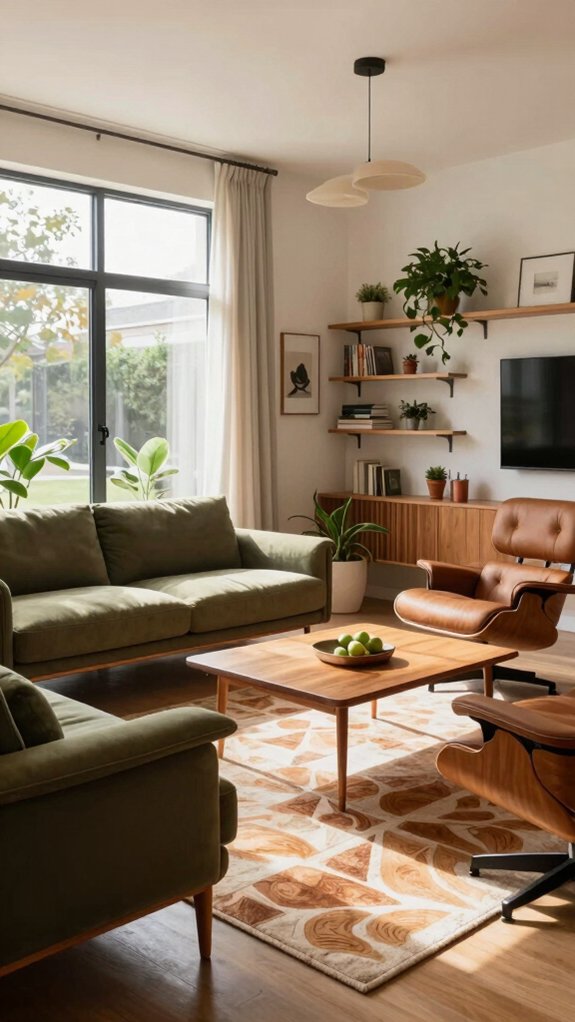
I love keeping a Mid‑Century living room open and airy because it makes moving around and chatting with friends feel effortless. Start with low‑profile sofas and chairs placed in small conversational groups around a low coffee table, and leave clear pathways so light and sightlines stay uninterrupted. You can also use tall plants or a storage ottoman to gently separate zones without blocking the flow, which keeps the room practical and welcoming.
Open and airy flow
If you want a living room that feels open and effortless, start by thinking about flow—how people move through the space and how light travels across it. I focus on open space interactions and natural light integration to make rooms breathe, placing low-profile furniture so pathways stay clear and sightlines stay long. I want you to feel welcomed, so I choose pieces that invite gathering without blocking conversation.
- Use large windows or sliding doors to connect indoors and outdoors.
- Pick low, clean-lined sofas to keep sightlines open.
- Add nested tables or storage ottomans for flexible function.
- Arrange seating to define zones without building barriers.
- Keep clutter minimal to preserve airy movement.
These steps create a warm, social, and timeless mid-century flow.
Vintage Art and Wall Decor
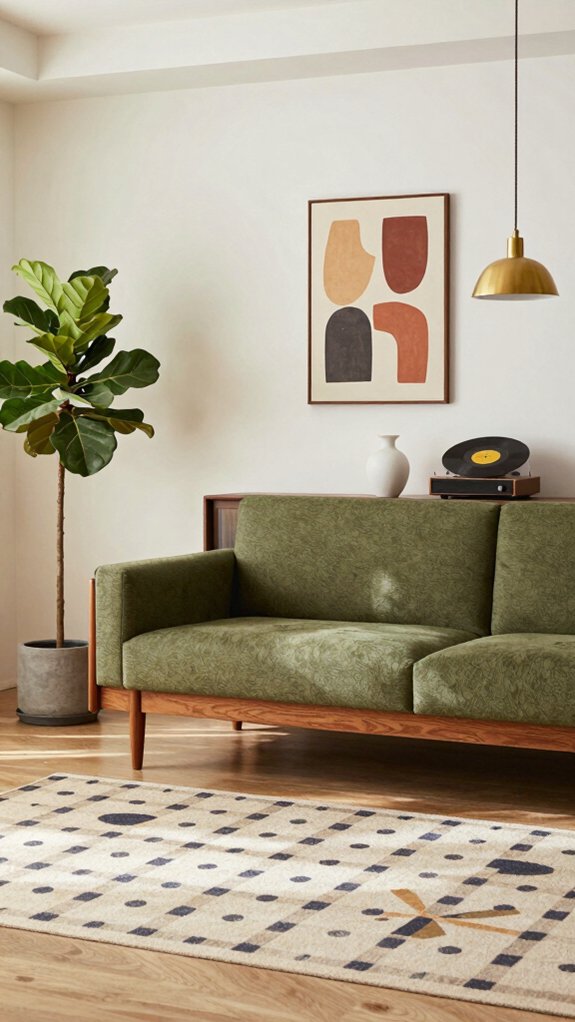
When I think about bringing vintage art and wall decor into a mid-century modern living room, I focus on pieces that tell a story and play well with the room’s clean lines. I choose vintage aesthetics that mix abstract paintings, iconic prints, and geometric pieces to echo the furniture’s shapes. Frame travel photos or shell art as a gallery wall so your personal touches are visible and cohesive. Add a vintage mirror with an interesting frame to bounce light and open the space. If you want authenticity, include work tied to designers like Eames or Saarinen—one standout piece goes farther than many small items. Arrange with balance: vary scale, keep negative space, and aim for a calm, connected display.
Mid Century Coffee Tables
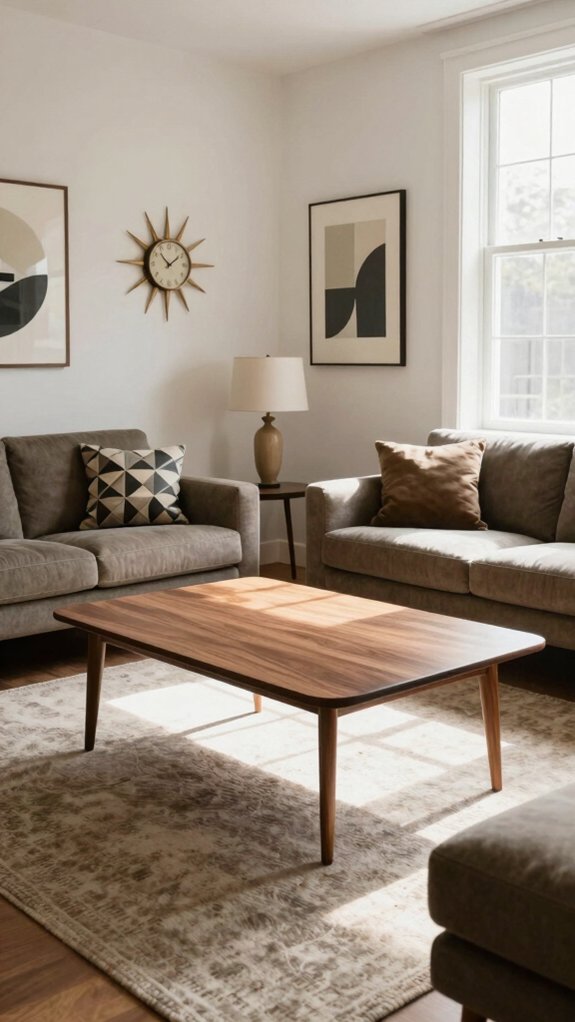
A good mid-century coffee table can anchor the whole living room, and I’ll help you pick one that suits both the furniture and your daily habits. I love how tapered legs, organic shapes, and clean lines create calm—choose walnut or teak for warmth, or mix glass and metal for light. Think about scale: low-slung sofas pair best with low tables, and combined storage keeps the space tidy.
- Look for asymmetrical forms or geometric patterns as design inspiration.
- Prioritize durable materials if you entertain often.
- Consider vintage restoration when a find has age but solid bones.
- Match wood tones to other pieces for cohesion.
- Use a simple rug to define the table area and invite lingering conversations.
Indoor Plants as Decor
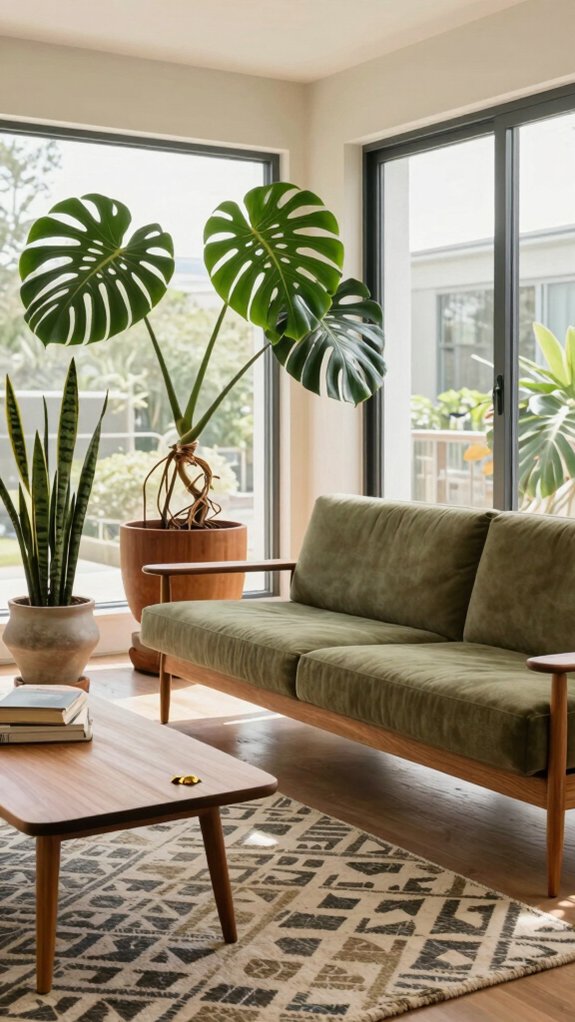
I love using architectural greenery like fiddle leaf figs and monsteras to anchor a mid-century living room, because their tall, sculptural shapes echo the era’s clean lines and organic curves. Place a large plant near a sofa or beside a credenza to soften sleek furniture and add height, and pick geometric or natural-material planters to tie the look together. They brighten the space, help the air feel fresher, and make your room feel both lively and balanced for relaxing or entertaining.
Architectural greenery
Because mid-century modern thrives on the meeting of clean lines and natural warmth, I like to bring in architectural greenery to soften edges and add life to the room. I want you to feel welcome and capable of creating a space that breathes. Big plants like fiddle leaf figs or monstera become focal anchors, while small pots add texture. Natural planters — ceramic or wood — tie into warm mid-century tones and keep the look cohesive.
- Position large plants near windows for bright, indirect light.
- Use smaller plants on shelves or side tables as accents.
- Match planter materials to furniture tones.
- Rotate plants for even light and growth.
- Learn simple plant care and indoor gardening routines.
These choices boost air quality and visual harmony.
Mix of Old and New Pieces
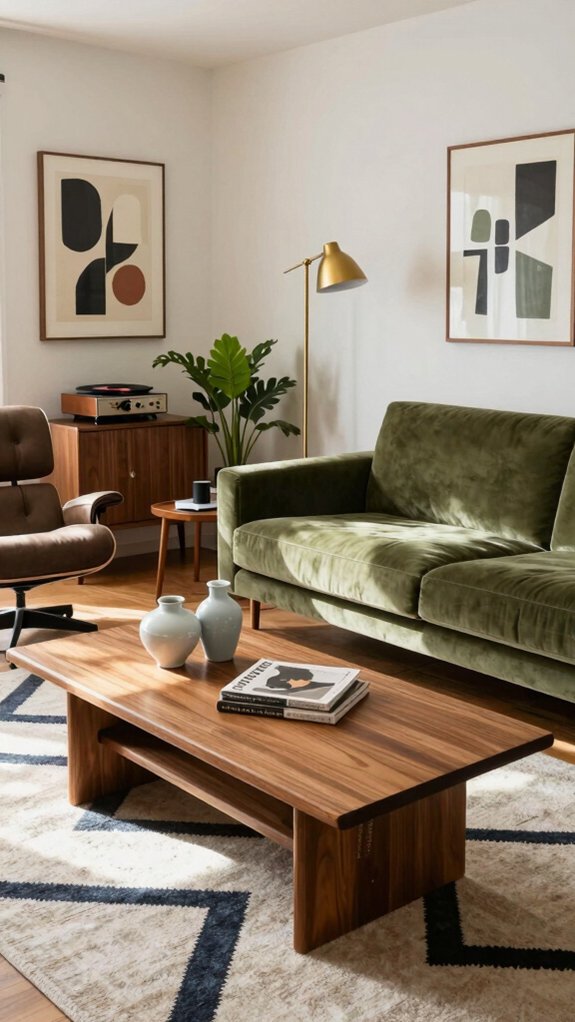
When you mix vintage mid-century pieces with fresh, modern finds, you get a room that feels lived-in and alive, and I’ll show you how to balance both without clutter. I start by choosing one anchor vintage piece — maybe an Eames lounge or a statement credenza — then place sleek, minimalist furniture around it so the room breathes. Use vintage accessories sparingly: a lamp, a clock, or artwork from your collection to tell a story without overwhelming. Pair warm woods and rich leathers with modern textiles on cushions and throws to link eras. Add a bold lighting fixture, like a sputnik chandelier, above simple seating for drama. Aim for harmony: contrast shapes and materials, repeat a color, and edit often so each piece earns its place.
Textured Rugs and Fabrics
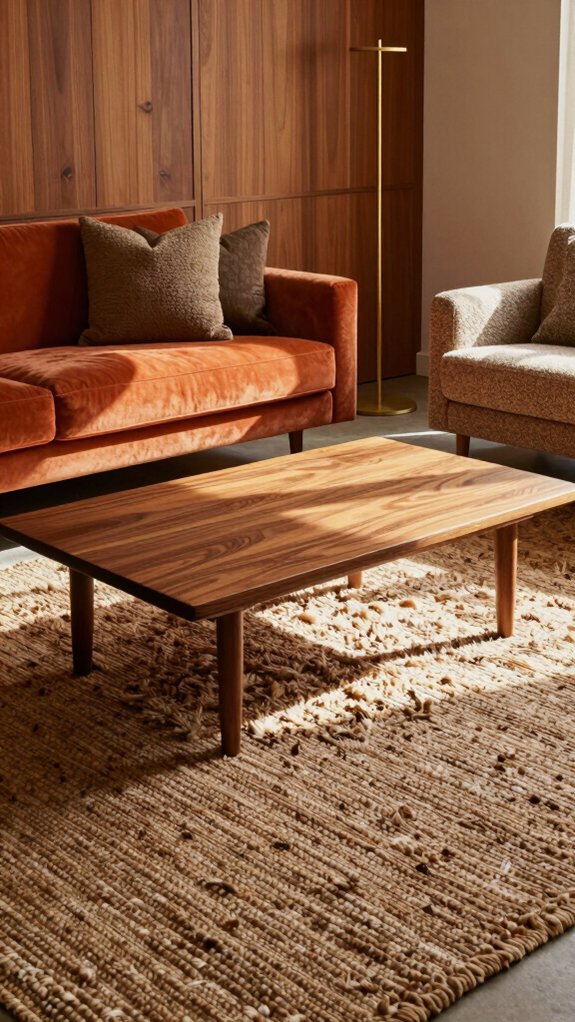
You’ve already got a mix of old and new pieces that set the room’s personality, so now let’s bring in texture to make the space feel cozy and complete. I love using layered textures to give depth without clutter. Start with a textured rug as your anchor—shag or woven for warmth, or jute for an earthy touch. Then mix fabrics on furniture to create tactile contrasts that feel intentional and friendly.
- Choose a geometric rug to echo mid-century shapes.
- Pair velvet cushions with leather chairs for contrast.
- Add woven throws for softness and visual interest.
- Use natural fiber runners to balance sleek legs.
- Keep colors cohesive to unite different textures.
These choices make the room feel both stylish and belonging.
Warm and Inviting Atmosphere
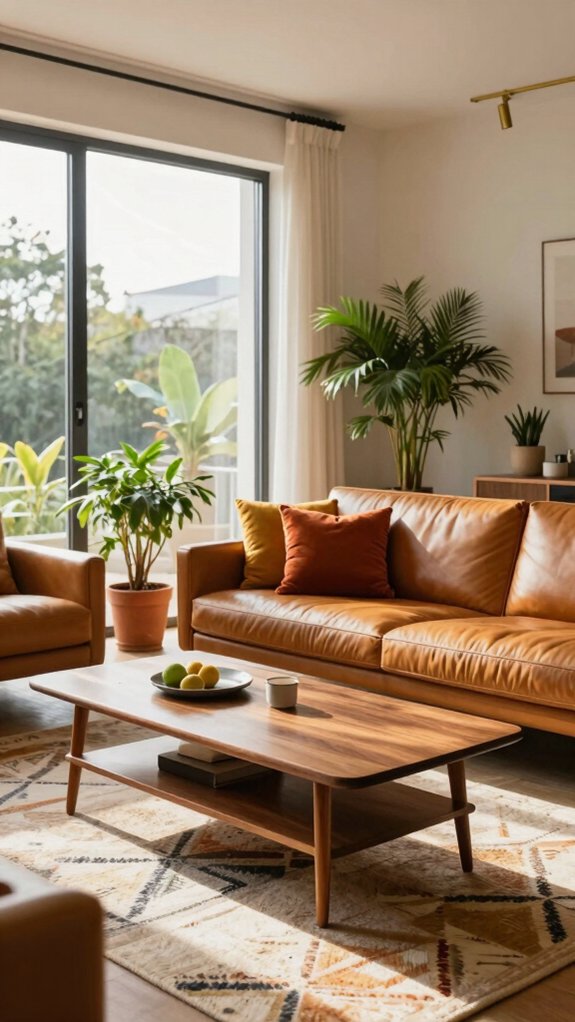
To make a mid-century living room feel warm and inviting, I focus first on rich wood tones and comfy textiles that work together, not against each other. I choose walnut or cherry furniture to ground the room, then layer cognac leather and soft velvet for comfort. Big windows matter — they let in light that lifts those warm hues and makes spaces feel airy yet cozy. I create cozy corners with a low lounge chair, a warm throw, and a small brass sconce for reading. For color, I add mustard or terracotta pillows and art as inviting accents, so the room feels lived-in but intentional. Statement pendant lights finish the scene, casting a friendly glow that welcomes everyone.
Timeless Design Details
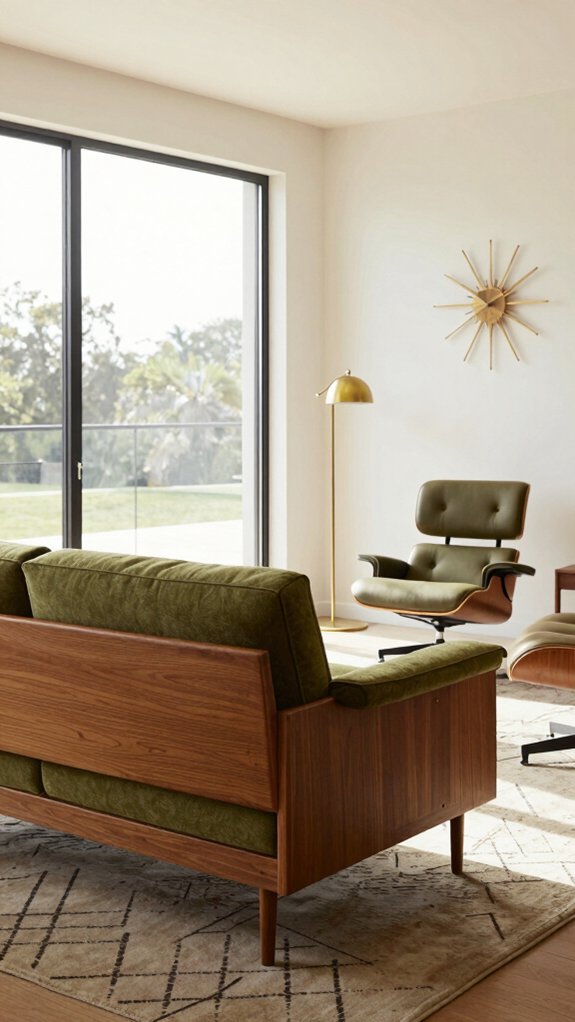
I like to carry the warm, lived-in feeling from the last section into the small design choices that make a mid-century living room feel timeless. I focus on pieces that speak softly but distinctly: low-slung sofas with tapered legs, an Eames Lounge Chair if you can, and teak sideboards that age beautifully. I pay attention to color theory so earthy palettes support bold accents without fighting them, and I arrange furniture for spatial balance so the room breathes and invites conversation.
- Choose iconic silhouettes for instant character.
- Use warm woods and muted tones as a backbone.
- Add one statement light to anchor the space.
- Let large windows guide furniture placement.
- Mix function and art for lasting appeal.
These choices make the room feel like home.