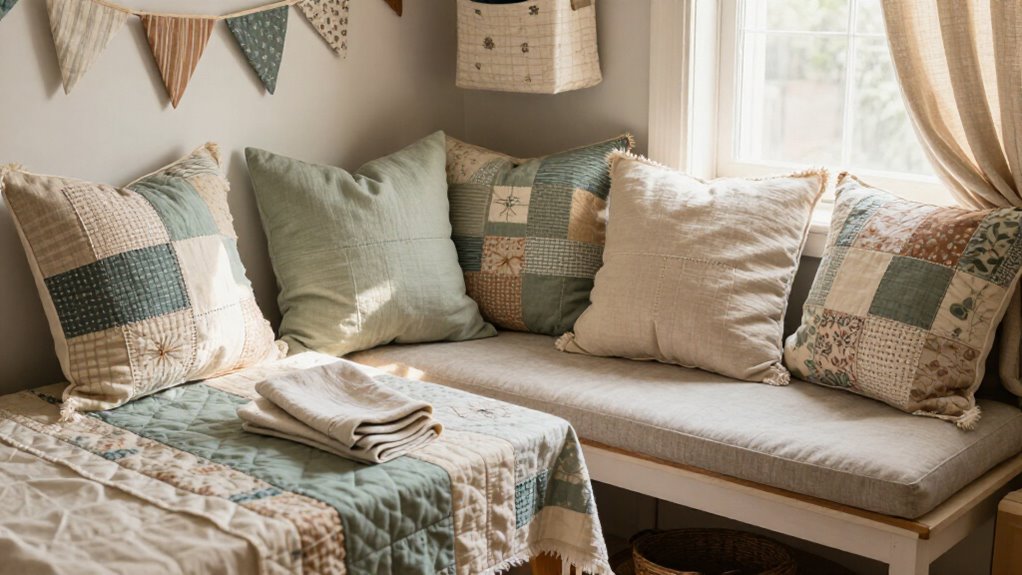


A living room accent wall can quietly fix a bad layout by giving your eye one clear stop, wow! Start with the fireplace, sofa wall, or built-in niche, then use paint, wallpaper, or trim to make it feel intentional. Want easy? Try plaster, paneling, or one bold patterned wall with calm sides. In small rooms, the sofa-facing wall often wins. Add simple lighting, and the whole space feels smarter, warmer, and less wobbly—there’s more to adjust next.
Key Takeaways
- Put the accent wall on the fireplace, built-ins, or main seating wall to create a clear room focal point.
- Use one bold wall and keep surrounding walls calm to avoid visual clutter in awkward layouts.
- Add texture with plaster, stone, or paneling around the hearth to soften hard edges and feel built-in.
- Use darker or richer color on the focal wall to ground light, airy rooms and stabilize proportions.
- Try two-tone paint, molding, or one-wall wallpaper to define zones without overpowering the whole room.
How an Accent Wall Fixes a Bad Layout
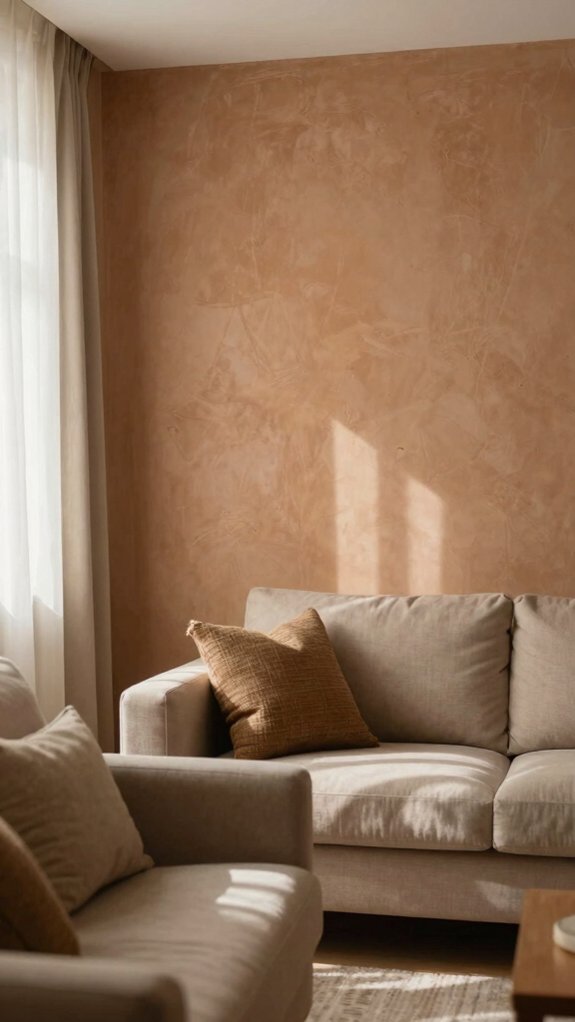
If your living room feels a little off, an accent wall can quietly pull the whole thing together! You can start by choosing the wall with the fireplace, built-ins, or main seating, so your room sightlines land where you want them. That simple move boosts focal balance and gives the space a friendly center.
Next, use visual zoning to tame awkward open layouts or high ceilings. Try plaster around a firebox, paneling behind a sofa, or molding that climbs upward, all with paint, trim, or wallpaper. If the wall plane still feels tricky, a grasscloth inset or single-wall wallpaper keeps the fix small, smart, and welcoming.
Anchor the Living Room With Color
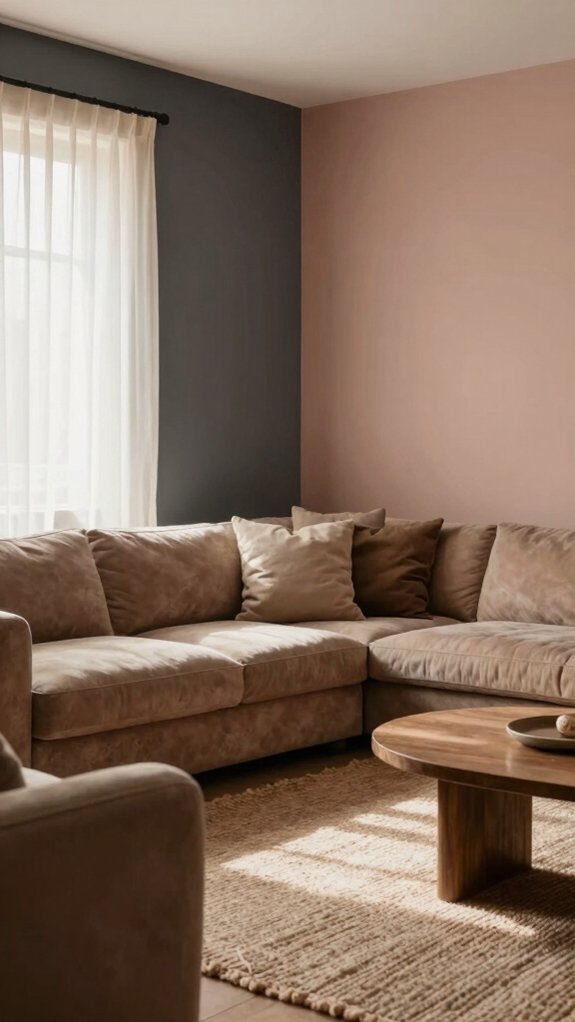
You can anchor your living room with a bold color by the fire, turning that spot into the room’s clear “main stop” and making the whole layout feel less wobbly—nice, right?
If your walls are light and airy, go deeper and richer for contrast, but if they’re already midtone or dark, choose a shade a few steps lighter so the space still breathes.
Tie the accent into colors you already have, like a blue-and-white scheme, and you’ll get better flow fast, plus a room that feels pulled together instead of randomly scattered.
Bold Color By The Fire
The fireplace wall can do a lot of heavy lifting in a living room, so it makes sense to let it take the lead! You can build Color harmony around it with bold paint, stone, or plaster, then use tonal balance to keep it calm, not shouty.
Try a soft plaster edge around a marble surround, or wrap the whole fireplace zone in one rich shade, and suddenly the room feels gathered.
If your layout feels awkward, this anchor gives everyone a clear place to land.
Tie the color to wood, dark trim, or natural textures, and voilà—your space feels like it belongs.
Colorful Walls, Better Flow
A fireplace wall can set the whole mood, but color can do even more, especially when a room feels a little wobbly or oddly split! Pick the wall you see first, and give it visual contrast with a deeper shade if the other walls stay light. That keeps focal balance and helps your space feel joined up fast.
If your room runs open, paint behind the sofa group so the seating zone feels friendly and sure of itself.
For trickier layouts, use color in a niche, shelf wall, or textured strip.
Those framed touches build spatial connection and keep seamless sightlines, too.
Use the Fireplace as the Focal Point
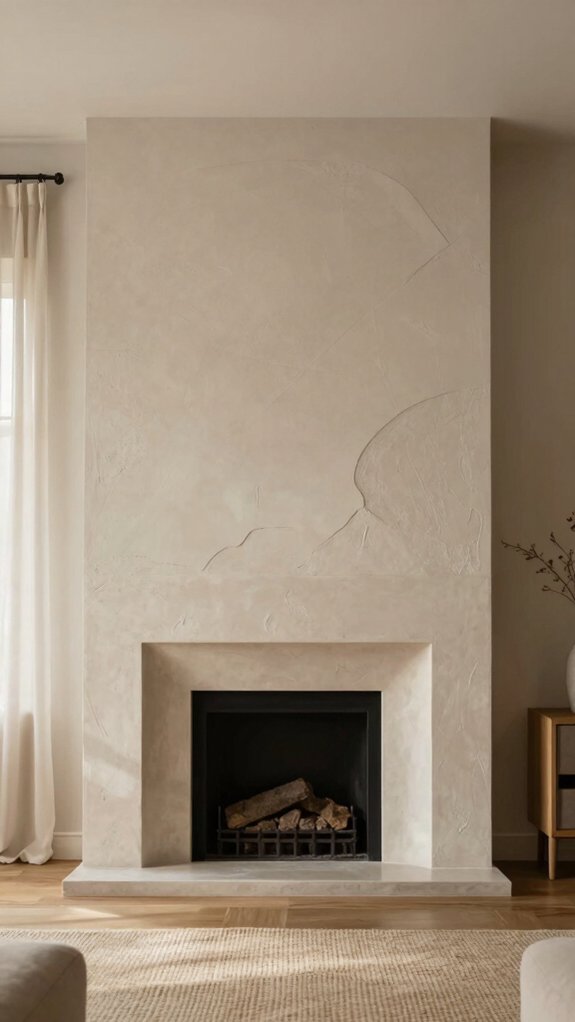
Ever notice how one fireplace can instantly boss the whole living room around? Let it lead, and you’ll feel like you finally belong in the space. Create ceiling height drama with a tall stone run, or balance symmetry carefully with matching sconces and simple shelves.
If your room feels awkward, build the accent wall around that hearth, not beside it. A stone wall that wraps the fireplace reads finished and calm, while a full-wall extension still works when it frames the fire as the star.
You’re not hiding a bad layout, you’re guiding every eye home, with cozy style and zero fuss.
Soften a Fireplace Wall With Plaster
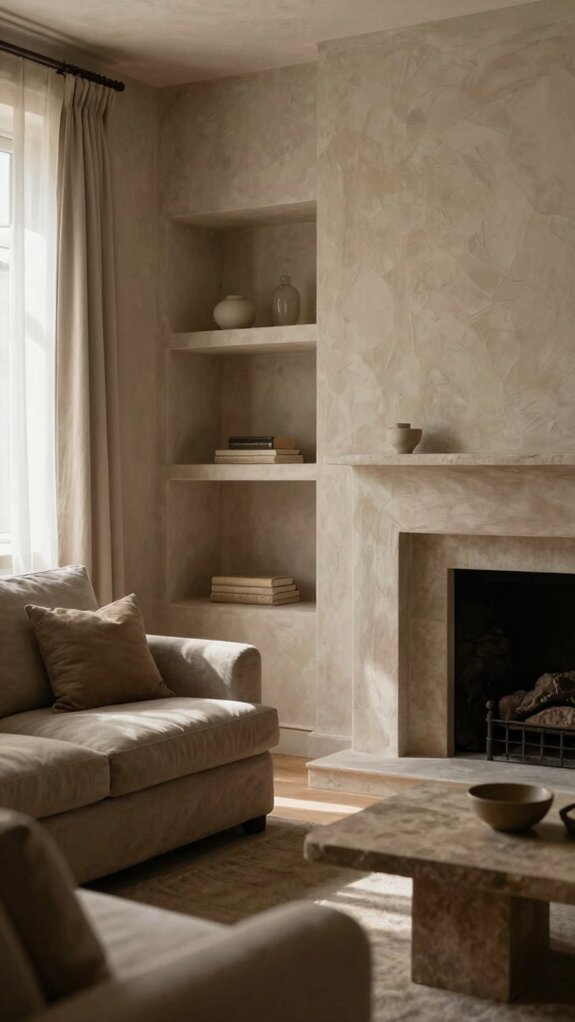
If your fireplace is already running the show, plaster can make it look way more relaxed and polished, not louder.
| Tip | Why it helps |
|---|---|
| Plaster the fireplace mantel zone | Softens hard edges |
| Match color balance to the wall | Keeps things calm |
| Use ceiling lighting wisely | Helps the finish glow |
You don’t need a full-room redo, just frame the firebox in plaster and let room scale feel easier. Start with a basic finish coat, a trowel, and patience, then blend the marble surround so it reads as one cozy, crafted moment. Nice, right? It adds depth, quiets visual clutter, and gives your layout a friendly anchor.
Add Cozy Cabin Vibes With Stone
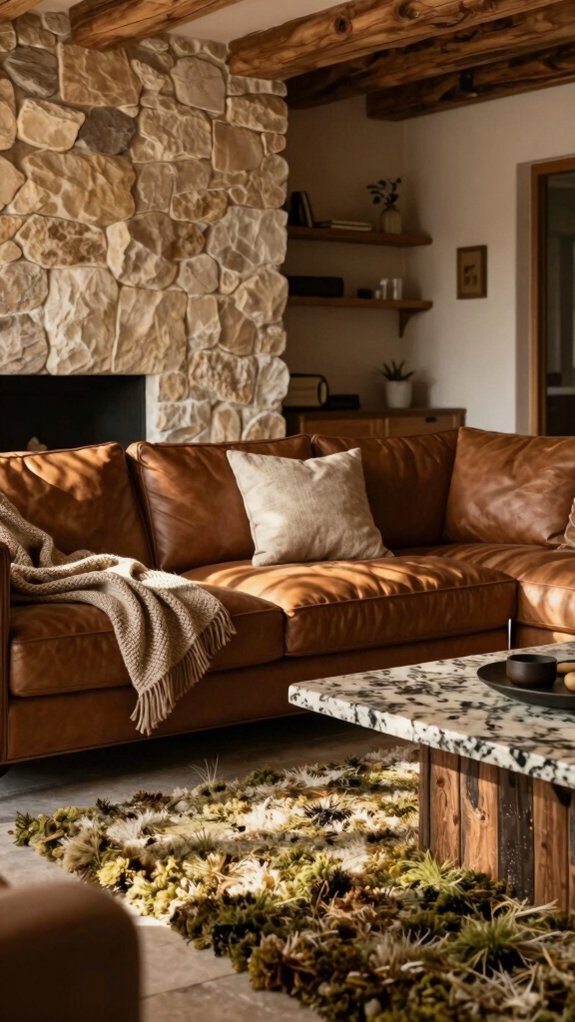
Stone can give your living room that cozy cabin feel fast, especially when you use it as one bold accent wall.
You can wrap it around the fireplace area, keep the rest of the finishes simple, and let that rugged texture do the heavy lifting—instant warmth, no lumberjack costume required!
Best of all, a stone wall pulls the eye to one calm focal point, so an awkward layout starts feeling way more grounded and intentional.
Stone As Focal Point
Around a fireplace, a full stone wall can do more than just look pretty, it can quietly pull a tricky living room into shape!
You get an instant focal point, and that stone texture feels cozy without making the room busy.
Try a stone surround with a plaster edge if you want the fireplace to stay front and center, not bossy.
Add reflective lighting nearby, and the surface glows softly at night.
It’s a beginner-friendly update, and it can cost less than a full remodel.
Best part? The room starts to feel centered, welcoming, and a little like your favorite cabin getaway.
Rustic Warmth With Texture
You won’t need to move a sofa, just let the wall work. That’s the magic—quiet, sturdy, and oddly welcoming.
Wallpaper the Fifth Wall
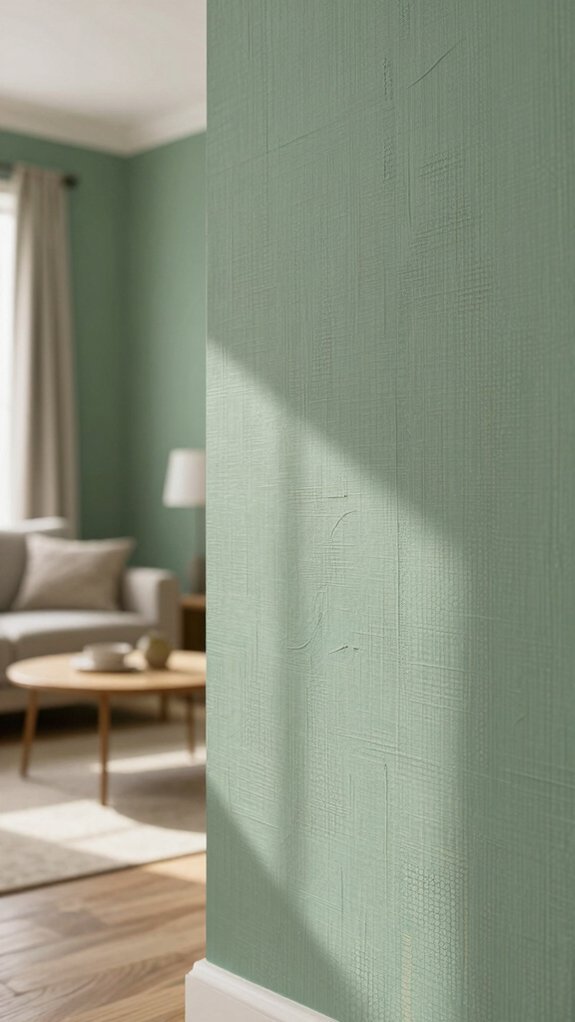
A ceiling can do a lot more than just sit there and hold up a light fixture, and wallpaper is one of the easiest ways to give that “fifth wall” a little personality!
You can create Fifth wall balance with a calm blue-and-white print, or add Grasscloth texture for a cozy, gathered feel. Grab peel-and-stick wallpaper, a ladder, and a smoothing tool, then measure, cut, and press it up—easy, right?
Keep the pattern in step with your room so it feels chic, not shouty. If full coverage feels bold, frame one section for a mural-like look.
Smart, stylish, and oh-so-welcoming!
Try a Wallpaper Mural Behind the Sofa
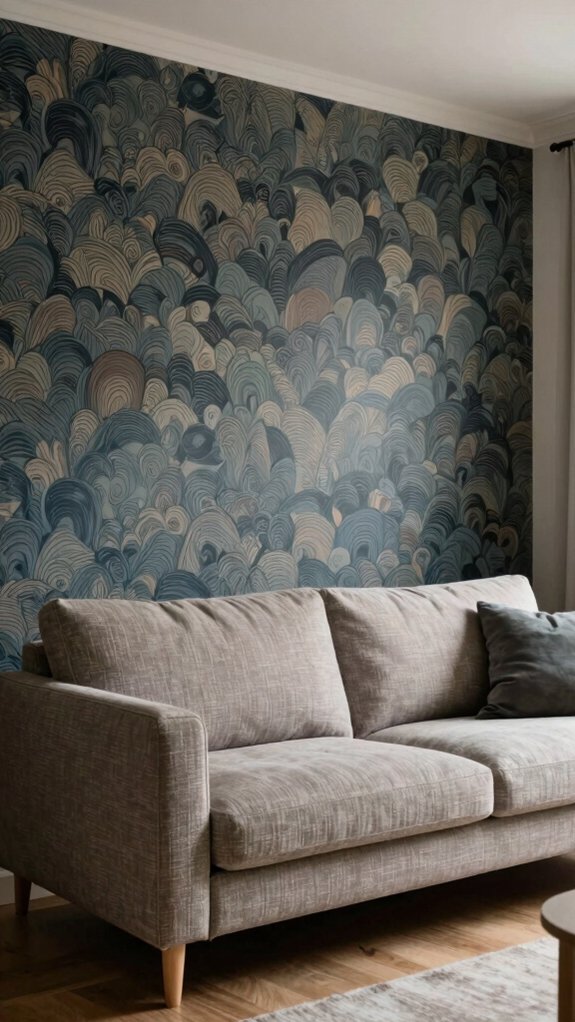
Try framing the sofa wall with a wallpaper mural that acts like a focus point, so even an awkward layout starts to feel planned and polished—nice, right?
A scene or botanical mural can add rich texture without piling on extra decor, and it keeps the room feeling light instead of crowded.
For the best effect, keep the nearby walls simple so the mural reads like art, not visual noise, and your sofa zone feels cozy, calm, and totally pulled together.
Frame The Sofa Wall
When the sofa wall feels oddly bare or just plain awkward, it can help to treat it like a mural wall and give it a big moment with wallpaper that looks like a scenery or scenic view—instant focal point, zero extra clutter, and no need to cram in another chair just to “balance” things out!
- Pick a calm scene with cohesive color.
- Match pillows or lamps to echo it.
- Keep coverage on that one wall, not everywhere.
- Add texture layering for a softer, tucked-in feel.
You’ll spend less, skip the redesign drama, and still make the room feel like it belongs to you.
At night, pull drapes wide, and wow, the wall becomes your cozy backdrop!
Add Mural-Like Texture
Sometimes the fastest way to make a sofa wall feel “right” is to give it a mural-like wallpaper moment! You don’t need full coverage; a mural behind the sofa can turn that zone into the sofa focal and make your layout feel chosen, not accidental.
Pick a textured mural-style wallpaper, paste, a smoothing tool, and a tape measure. Hang it where your eye lands, then trim clean edges.
The texture pattern adds depth, while jewel-toned pillows or a throw keep the look calm and friendly.
Best part? It’s beginner-friendly, fairly affordable, and it quietly fixes awkward flow with style.
Keep The Room Airy
With a wallpaper mural behind the sofa, you can make the room feel open and pulled together at the same time—pretty neat trick, right! You’re not stuffing in more furniture; you’re creating a wall within a wall that feels like it belongs with you.
- Pick a scenic mural for a breathable palette.
- Center it where your sightline balance lands.
- Add layered lighting to soften the scene.
- Finish with soft drapes at night for a cozy shift.
This keeps your space airy, like a friendly view just showed up to help. It’s budget-smart, easy to install, and it works!
Bring the Outdoors Into the Living Room
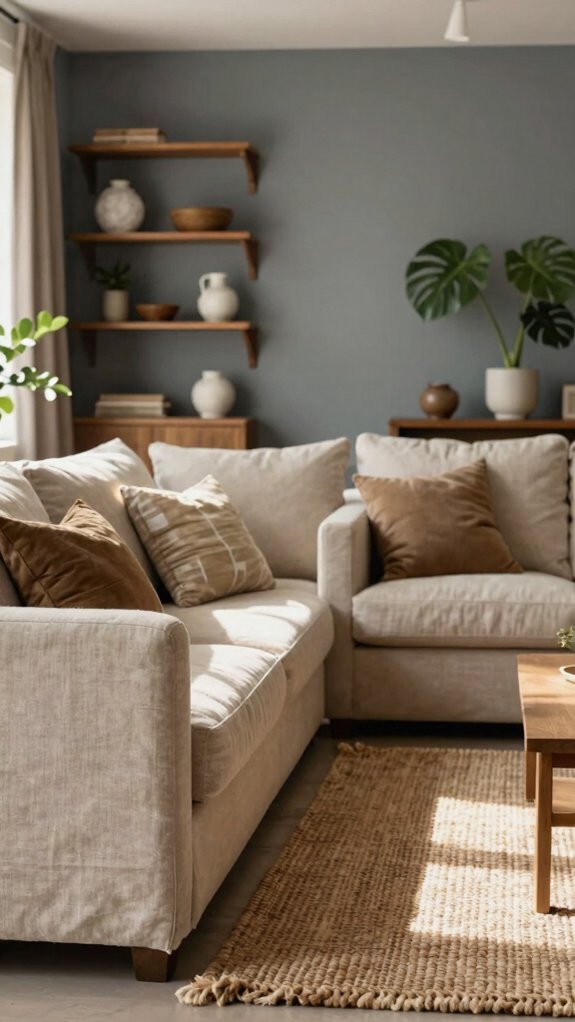
Want your living room to feel a little more alive, even if the layout’s being a bit stubborn? Try botanical or scenic wallpaper for natural calm and layout balance, and skip extra wall art—nice, right?
Choose a garden view or scenery scene, especially if you’ve got real windows nearby; it makes the room feel intentional, like it belongs to the view. Add draperies for a soft textural tuck-in at night, and the wallpaper becomes a cozy backdrop instead of a busy show-off.
Want more depth? Bring in grasscloth or other organic textures on the ceiling or focal wall for cohesive flow.
Warm Up the Space With Wood Paneling
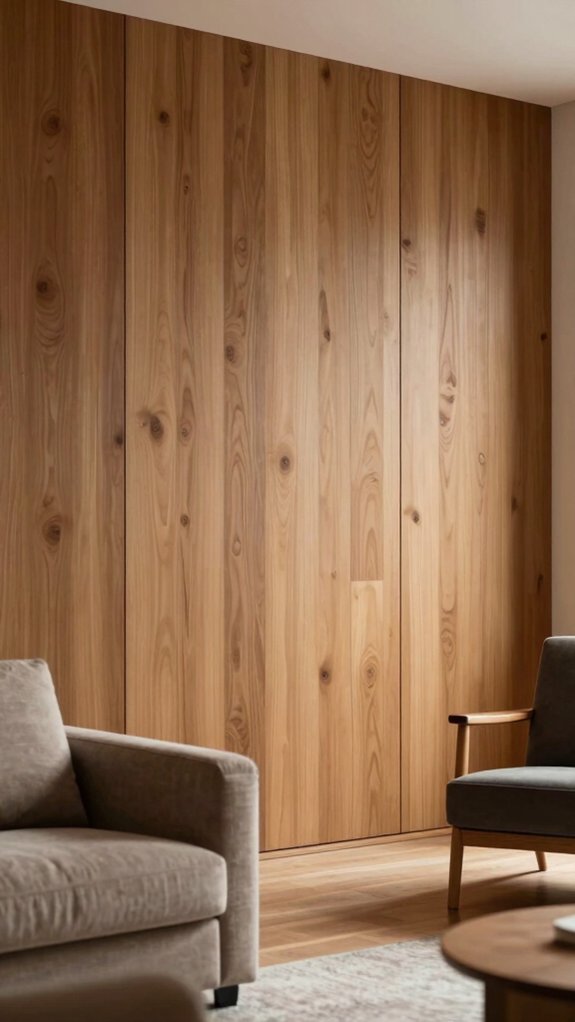
Want to warm things up fast? Try vertical wood panels, because they can make your room feel taller, calmer, and a lot more intentional, even if the layout is acting a little weird.
For a cozy, polished result, go with honey-toned or light Scandinavian wood, and use it as one clean backdrop so the space stops juggling a bunch of random focal points—nice, right?
Vertical Wood Panels
If your living room feels a little flat, vertical wood panels can work like a sneaky design trick—they add height, warm up chilly open layouts, and make a weird wall feel way more intentional, nice!
- Try clever placement near your main focal point.
- Use light, Scandinavian tones for a fresh look.
- Let the texture balance out plain walls.
- Stretch the paneling upward for subtle ceiling framing.
You can use slim boards, a level, and a nail gun, then install the panels in steady lines. The result? Your room feels taller, calmer, and oddly more put-together, like it finally got the memo.
Cozy Panelled Warmth
Wood paneling can do more than just warm up a wall, it can make a living room feel like it finally found its shape! Add trim details, and you’ve got instant polish without a big remodel.
Try slat paneling that climbs onto the ceiling, using simple boards, paint, and nails, to add height and make things feel finished. Or build a floor-to-ceiling backdrop behind your sofa or TV, and watch clutter fade fast.
If you want softer balance, layer soft textiles, like a velvet pillow or rug, against light wood for that cozy, gathered-in feeling. Unexpected, right?
Add Texture Without Adding Clutter
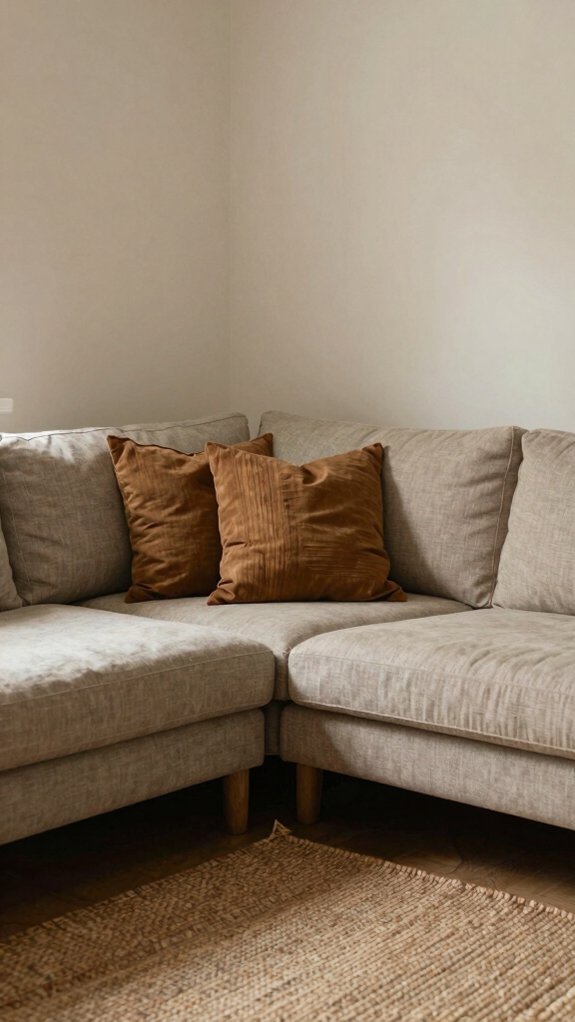
Around the fireplace is the easiest place to bring in texture without making the room feel busy, and that’s a pretty great trade-off!
You can make your layout feel calmer and more like home with just one strong zone.
- Try textured plaster calm around a marble surround: a trowel, patch mix, and a weekend.
- Add stone framed warmth on one wall: adhesive panels, a level, and patience.
- Keep nearby shelves simple so the texture can breathe.
- Pick cozy-cabin cues that feel comfy, not fussy.
That one textured spot pulls eyes in, softens noise, and makes your room feel gathered, welcoming, and ready for company!
Go Bold With a Full-Wall Stone Finish
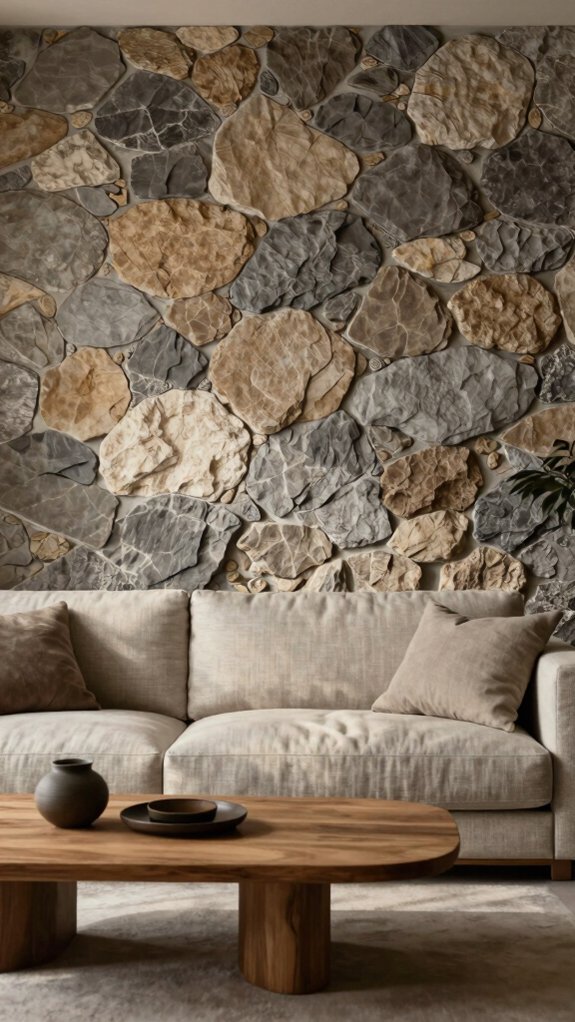
When you want the room to feel more grounded, a full-wall stone finish can do the job in a big, cozy way!
You can balance stone texture with soft rugs and relaxed seating, so the wall feels strong, not heavy.
Use simple materials: stone veneer, adhesive, and a clean edge around the fireplace.
Step one, maintain warm palette**** nearby with wood, cream, or clay tones.
Step two, extend stone framing past the firebox.
That helps unify sightlines and center a wonky layout.
Best part? It’s bold, but it still feels like home, not a castle dungeon!
Frame an Awkward Layout With Molding
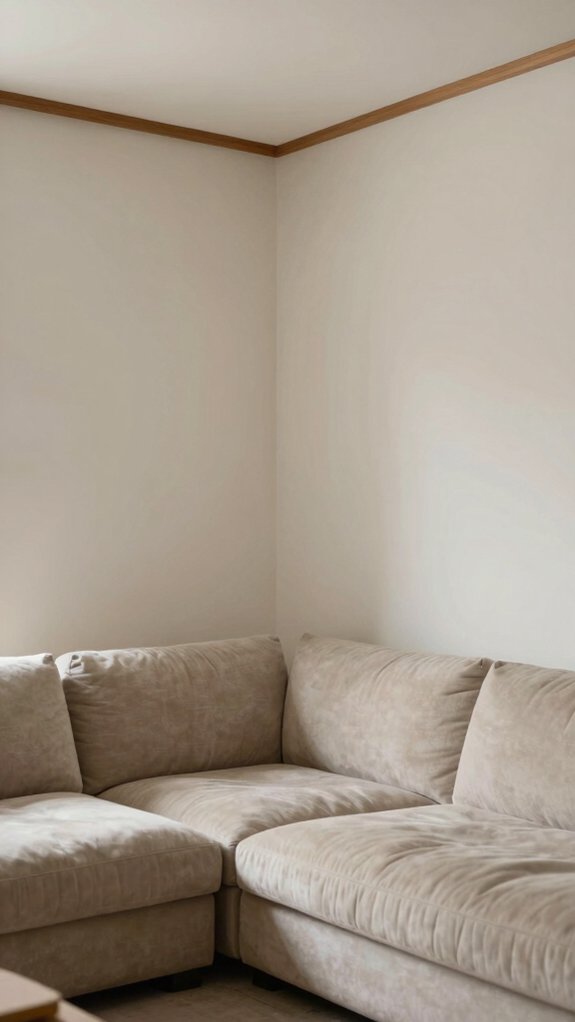
By drawing molding just around the awkward part of the wall**, you can turn a weird layout into a design moment** that looks intentional—pretty sneaky, right! You’re not hiding the flaw, you’re giving it a frame, like art with better manners.
- Add picture-frame molding, then fill the inside with neutral grasscloth.
- Paint the trim a confident contrasting color, like Herb Garden.
- Run the molding all the way to the ceiling for better scale proportion.
- Carry dark paint onto ceiling trim for lighting tricks that sharpen edges.
This selective move feels warm, polished, and welcoming, and it can cost less than a full remodel.
Extend the Accent Wall Into the Entry Sightline
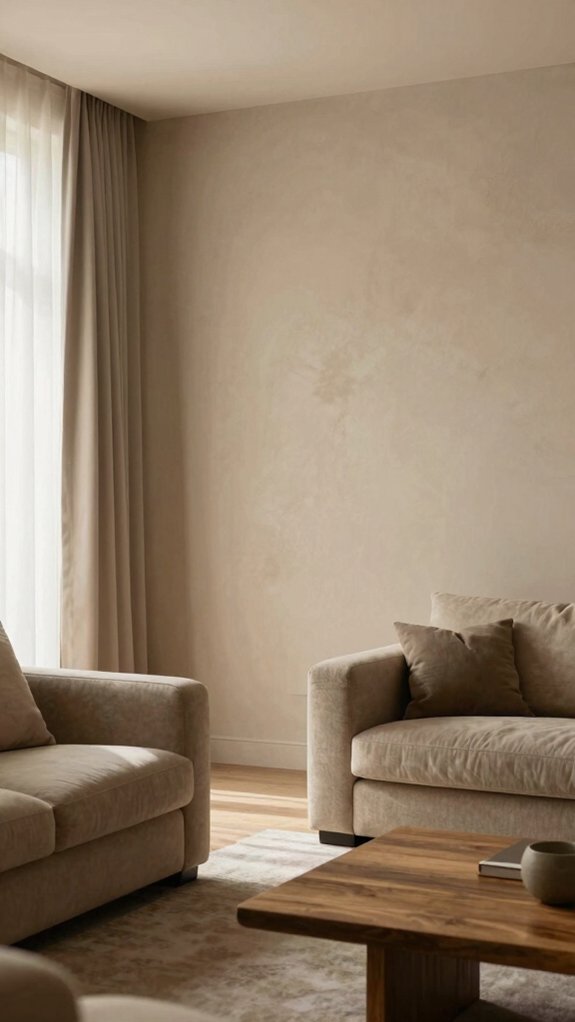
Extending your accent wall into the entry sightline can make a whole room feel instantly more put together, and honestly, it’s a little magic trick for awkward layouts! You don’t need a remodel, just carry the same paint, stone, or framed wallpaper look from the living room into the doorway view for visual continuity.
Keep the entry sides calm and let the wall do the talking. That creates sightline symmetry, entry balance, and strong focal emphasis right where guests look first.
If your fireplace anchors the room, wrap that finish around it so the change feels polished, not pieced together.
Easy win, big welcome!
Try a Two-Tone Living Room Wall
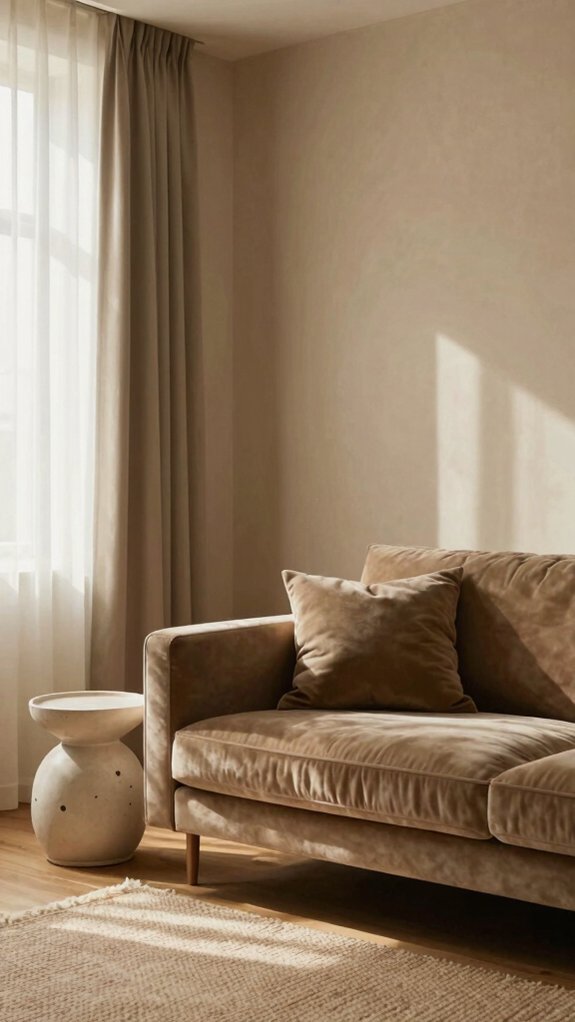
A two-tone living room wall is a sneaky-good way to fix awkward proportions without making the room shout about it!
You get color balance by giving the fireplace zone a deeper shade and keeping the rest soft, so the room feels like it belongs together.
Use paint, painter’s tape, and a roller, then mark your split line.
- Keep the upper area light
- Ground the focal point below
- Guide the eye toward seating
- Match built-ins or stone
This simple move gives sightline guidance, costs less than a full repaint, and feels polished fast.
Nice, right?
Balance Bold Pattern With Solid Color
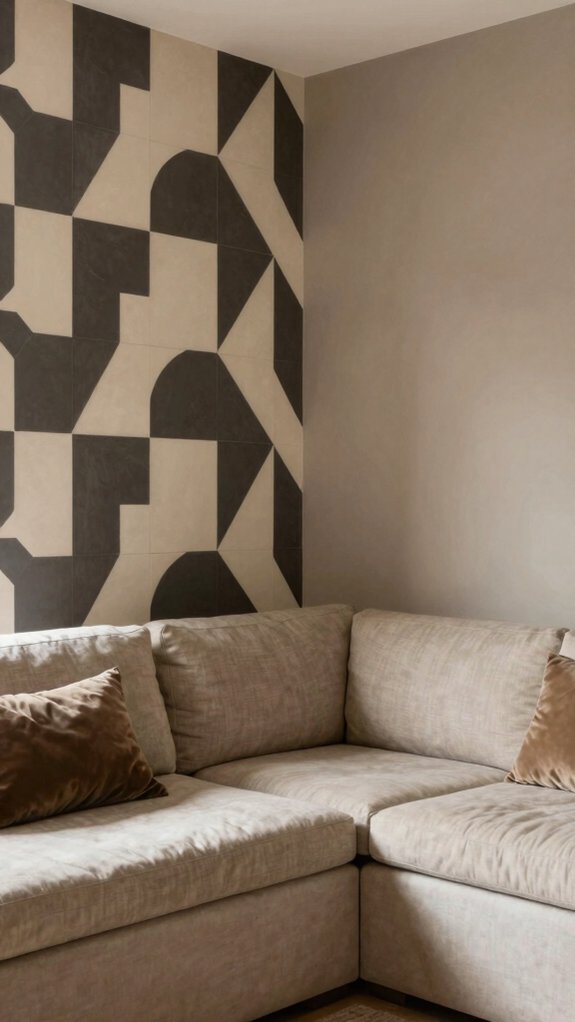
Start with one bold pattern, then let it take a breather on a solid-color wall—wow, that little pause keeps the room from feeling like it’s yelling at you!
You can use geometric wallpaper or a mural on one wall, then keep the rest calm and neutral so your eye knows where to land.
Mix the scale wisely, too: a loud pattern plus a simple backdrop feels crisp, balanced, and way less chaotic than wallpapering every inch.
Pattern, Then Pause
Bold pattern can save a tricky room, but only if you give it room to breathe! Start with pattern hierarchy: choose one accent wall, then let the others rest. That creates a visual reset and keeps your space feeling like it belongs together, not like a wallpaper store sneezed.
- Use patterned wallpaper on one window wall.
- Frame a headboard, fireplace, or desk nook.
- Keep nearby walls solid and calm.
- Add rich upholstery for depth.
In awkward layouts, confine the print to one architectural surface, then pause with solids. You’ll get impact, not chaos, and that’s a win!
Let Color Ground It
When your room’s layout feels a little off, color can step in like the friend who quietly straightens the picture frame! Put your boldest paint behind the fireplace or main focal point, then let the surrounding walls stay lighter. That contrast gives you Paint depth and subtle grounding without shouting.
If you love pattern, keep it on one wall, and pair it with solids, soft textiles, or artwork tones you already own. It’s cheap, easy, and beginner-friendly.
In a pale room, choose a deeper accent for lighting balance; in a darker one, go lighter for furniture alignment. Nice, right?
Mix Scale Wisely
If color is already helping your room feel more grounded, the next trick is scale, because a pattern that’s too loud in too many places can make a room feel like it’s wearing three ties at once! You don’t need every wall to shout.
Use texture pairing with a bold accent, then let the other walls stay calm so the room feels like yours.
- Pick one big patterned wall
- Use solid paint around it
- Limit busy art nearby
- Plan visual boundaries with trim
Try grasscloth beside a graphic print, and your space can maintain room calm while still feeling warm, welcoming, and totally put together!
Use Mural-Like Wallpaper for Depth
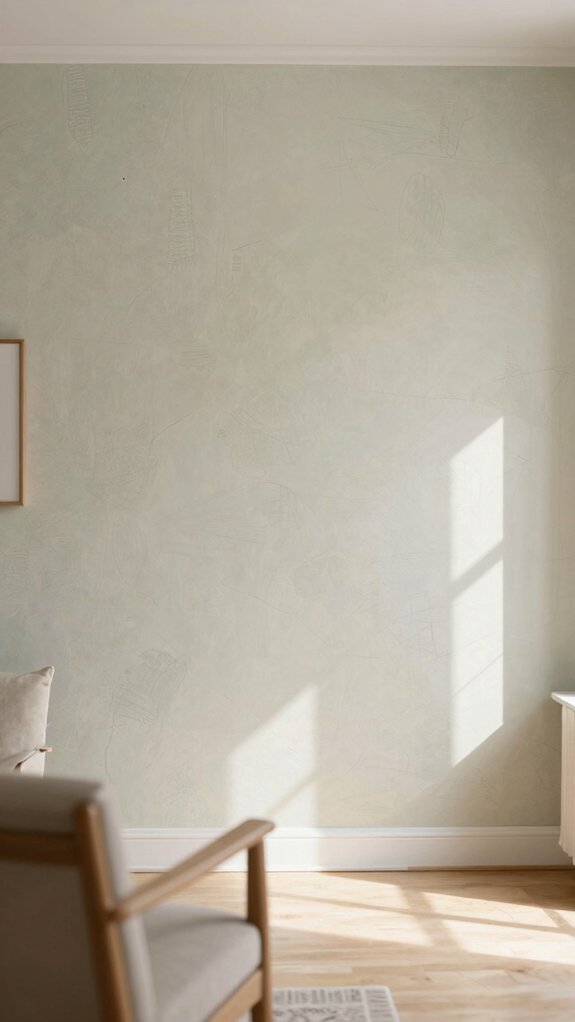
A mural-like wallpaper can work like a clever visual trick, especially on the wall that feels a little “off,” because it stretches the room with depth and gives your eye somewhere nicer to land.
You can frame it like art, almost like a window, and the whole room starts to feel more put together.
For easy success, choose textured, upholstery-like prints, then add Pattern scale balance with small geometric accents and calm texture layers.
Nice, right?
This combo feels cozy, not busy, especially when jewel-toned fabric joins the party.
Best part: one wall can deliver big impact without a big remodel or a big bill.
Choose the Right Wall for a Small Space
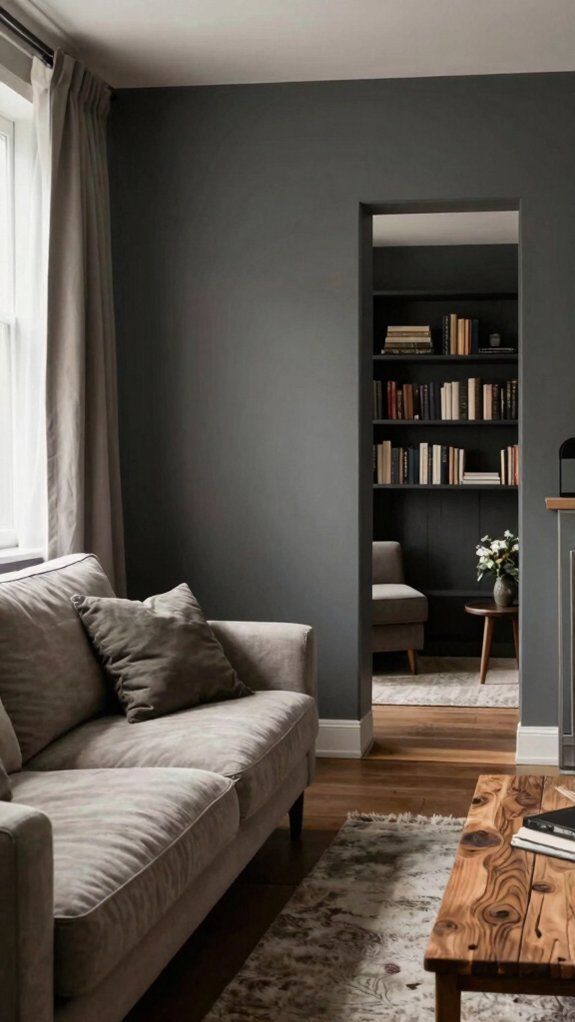
Ever notice how one wall can quietly rescue a whole small living room? Pick the wall your eye finds first, and let it become your layout anchor. That’s smart focal wall selection, and it keeps the room feeling friendly, not cluttered!
- Fireplace wall? Use it.
- Main seating wall? Great choice.
- Built-in niche? Even better.
- Sofa-facing wall? That’s the winner.
When the space feels tight, one strong accent breaks up the view and guides people in. A partial treatment, like a framed panel, can add shape without shrinking the room. Nice, right?
Mix Paint, Wallpaper, and Art
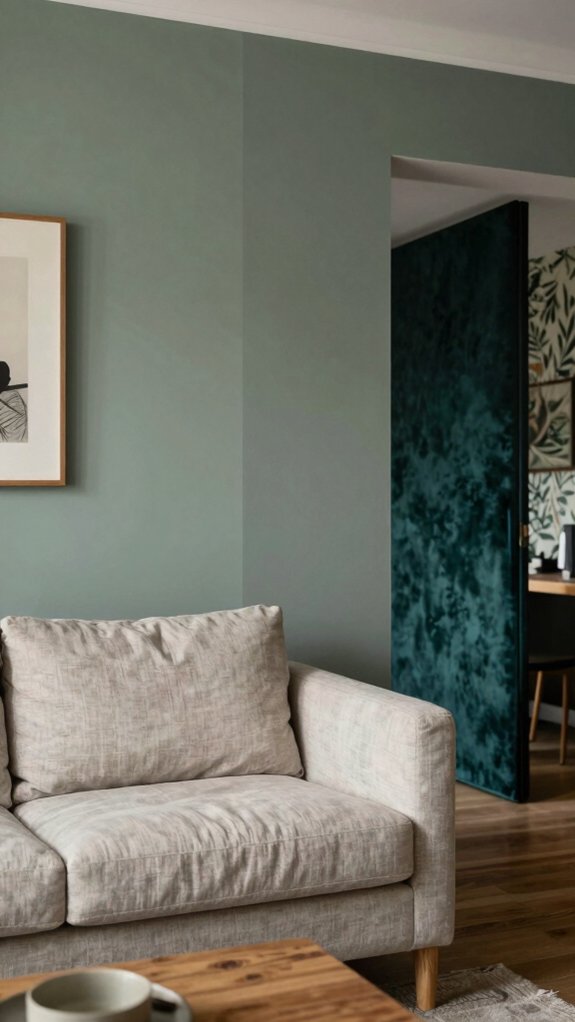
Once you’ve got the right wall picked, the fun part starts: you can mix paint, wallpaper, and art to make a bad layout feel way more deliberate—almost like the room finally got its act together!
Start with paint to seat the fireplace or main focal point, then add wallpaper on just one wall, or even one section, for contrast and texture.
Next, hang art like a mini gallery, mixing small and large frames so the eye has a clear place to land.
With smart lighting and placement, you’ll steer attention, hide awkward lines, and make the room feel like your people actually planned it.
Make the Wall Feel Built-In
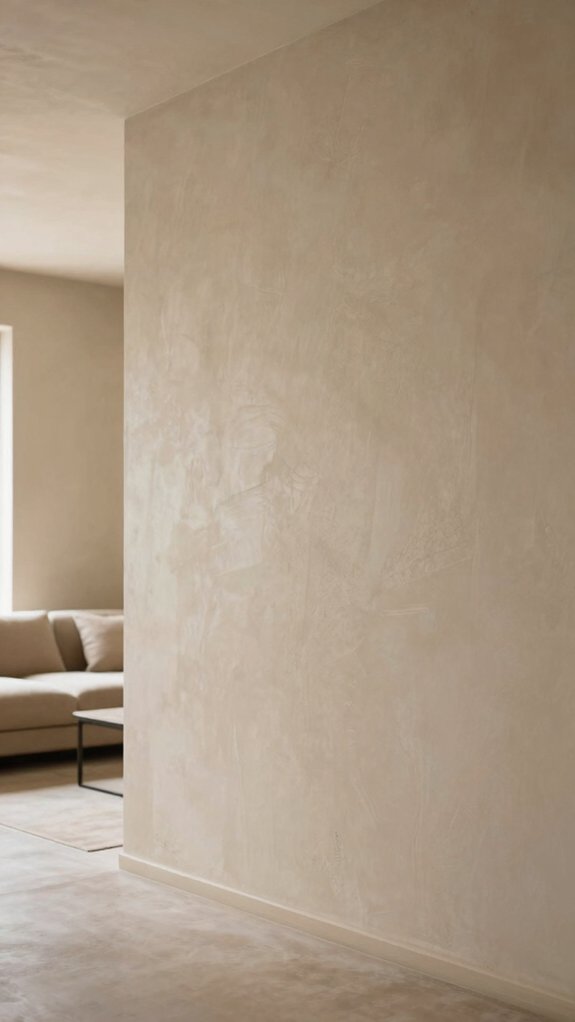
To make an accent wall feel built-in, start by treating it like the room’s anchor, not just a pretty backdrop. You’re giving the space a place to belong—nice, right!
- Frame the fireplace with plaster or marble for a soft, custom look.
- Add full-height stone or masonry so the edges feel finished.
- Repeat the texture around the surround for Proportion balance.
- Use warm Lighting harmony to make every line glow.
Try one simple DIY upgrade: pick stone veneer, adhesive, and a level, then install a framed focal section. It’s beginner-friendly, costs less than custom millwork, and can make your layout feel centered, cozy, and steady.
Avoid Common Accent Wall Mistakes
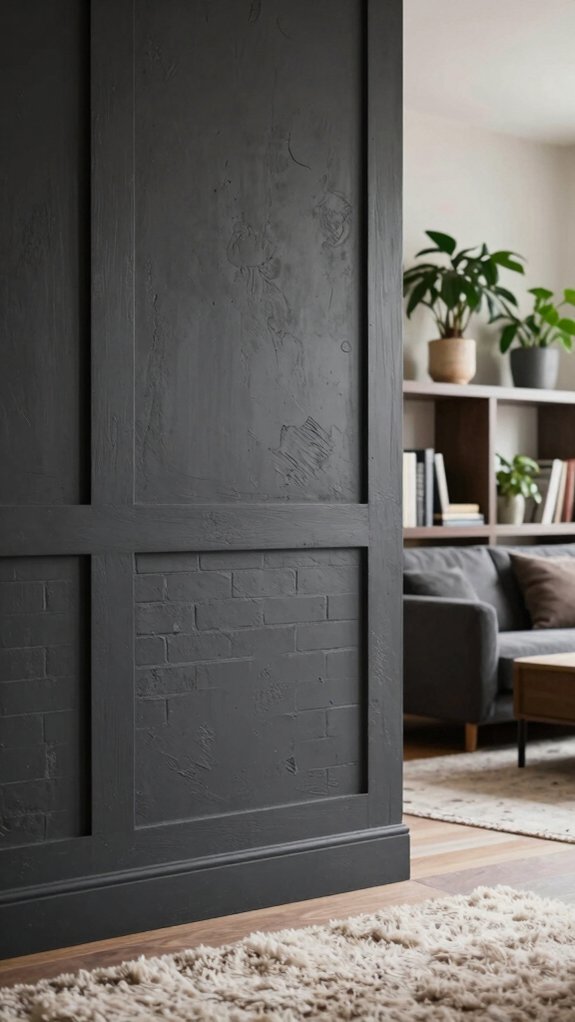
What’s the fastest way to make an accent wall work harder for your layout?
Start with sample first planning, and choose the wall your room already treats like a star, fireplace, built-ins, or the wall behind a gallery wall.
Don’t splash bold wallpaper everywhere; one wall is plenty, especially with high-impact pattern scale.
Keep Paint finish balance in mind, and use lighting contrast so the feature feels deeper, not flat.
If the surrounding walls are dark, go a few shades lighter.
Better yet, place the wall where eyes land first.
That’s the sneaky fix, and it feels effortless!