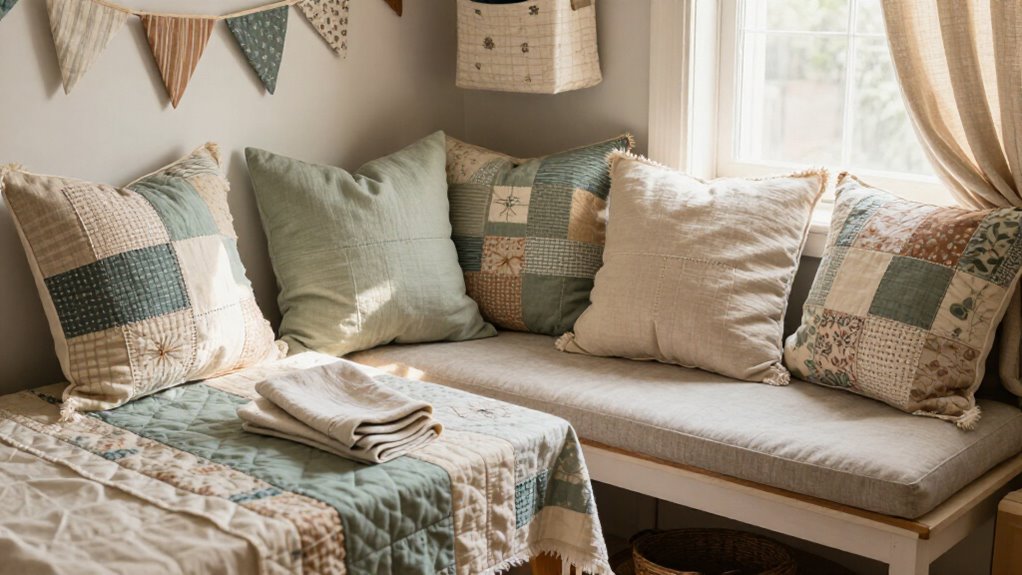
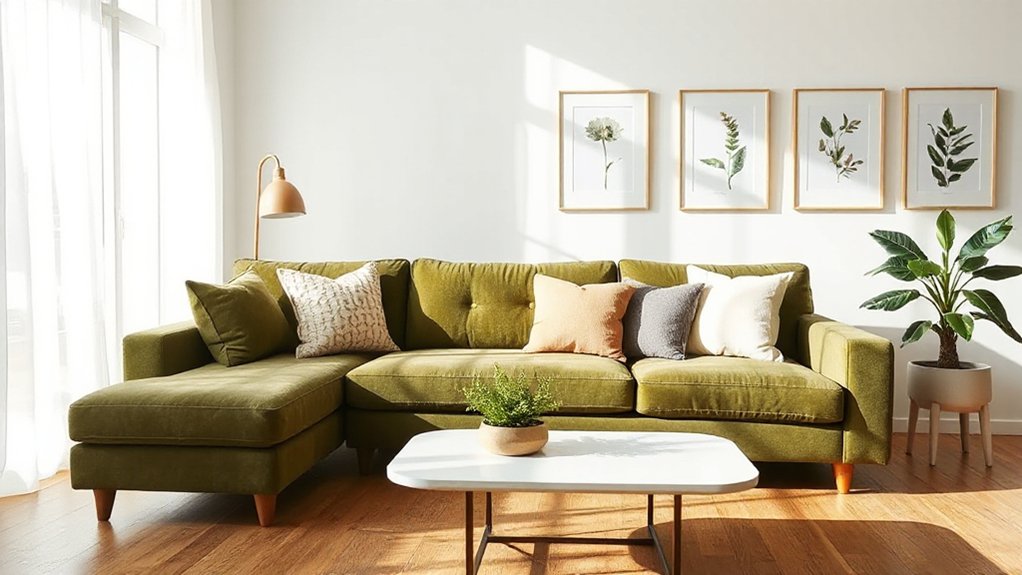

I’d pick a green shade based on mood and light—sage or mint for calm, emerald for drama—and pair it with warm neutrals like cream or soft gray so the sofa pops without yelling. Add oak or walnut pieces, textured pillows in beige, mustard or navy, and layered throws for depth. Use a wood or glass coffee table with plants and books, choose modern or vintage lines to match your life, and try space-saving layouts; keep going to see specific combos.
Key Takeaways
- Pair a sage or emerald couch with warm neutrals (beige, cream, soft gray) to keep the room fresh and balanced.
- Match wood tones to your green shade: light oak for airy looks, walnut for richer, grounded rooms.
- Layer textured pillows and throws—start neutral, add mustard or deep navy accents for contrast and depth.
- Use warm earth-tone accessories (terracotta, woven rugs, ceramics) to anchor the green and add natural cohesion.
- Optimize small rooms with lighter greens, vertical storage, mirrors, and a compact coffee table for openness and flow.
Choosing the Right Green Shade
How do you pick the perfect green for your couch?
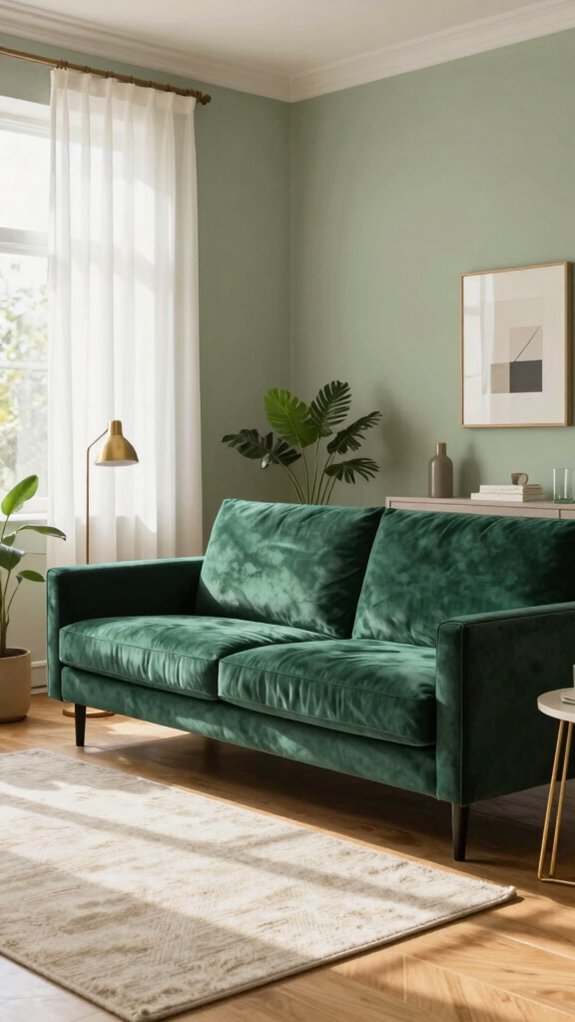
I start by thinking about color psychology and what I want to feel in the room. If I want calm and openness, I lean toward lighter greens like sage or mint; they make a space feel airy and relaxed.
For a bolder, dramatic feel, I choose emerald or forest green to anchor the room and add depth.
I also consider natural light—north-facing rooms can mute greens, so richer tones work better there, while bright rooms handle pale shades easily.
For shade selection, I test swatches in different spots and times of day, comparing how each hue changes.
That way I pick a green that truly belongs in my home.
Neutral Wall Pairings
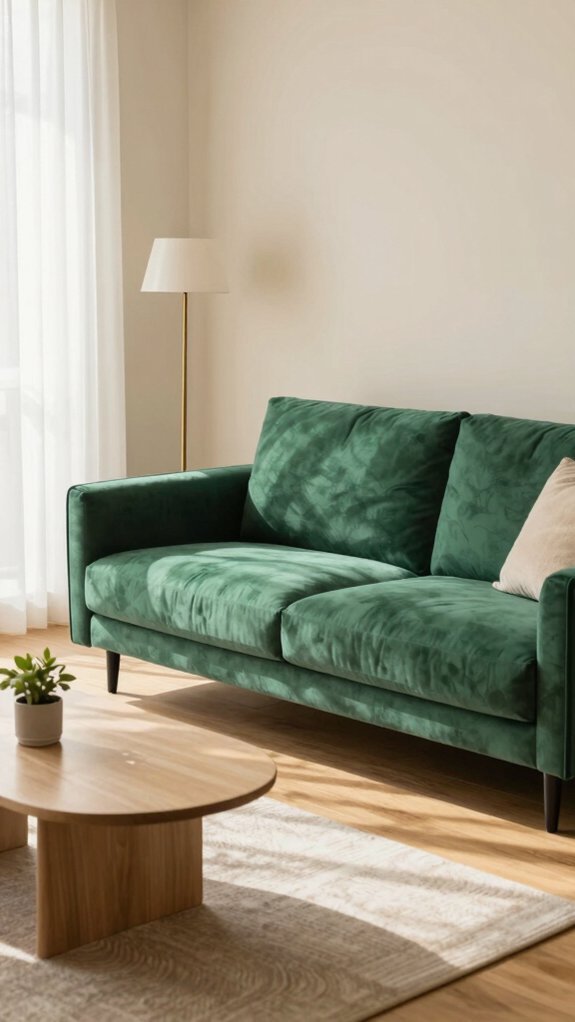
When I pair a green couch with neutral walls, I’m choosing a simple, reliable backdrop that lets the sofa take center stage without shouting for attention.
I lean toward beige, cream, or soft gray because they amplify the green’s vibrancy while keeping the room calm and balanced. Lighter neutrals brighten smaller spaces, making them feel airy, and textured neutrals—think linen curtains or a soft wool throw—add depth without competing.
For color harmony, I match accessory tones to the wall warmth so pillows and rugs tie everything together.
Start by sampling paint near the couch, then try swapable accents to test moods. Small changes, like a textured pillow or a lighter shade, can shift the whole room to welcoming and serene.
Wood Tones That Complement Green
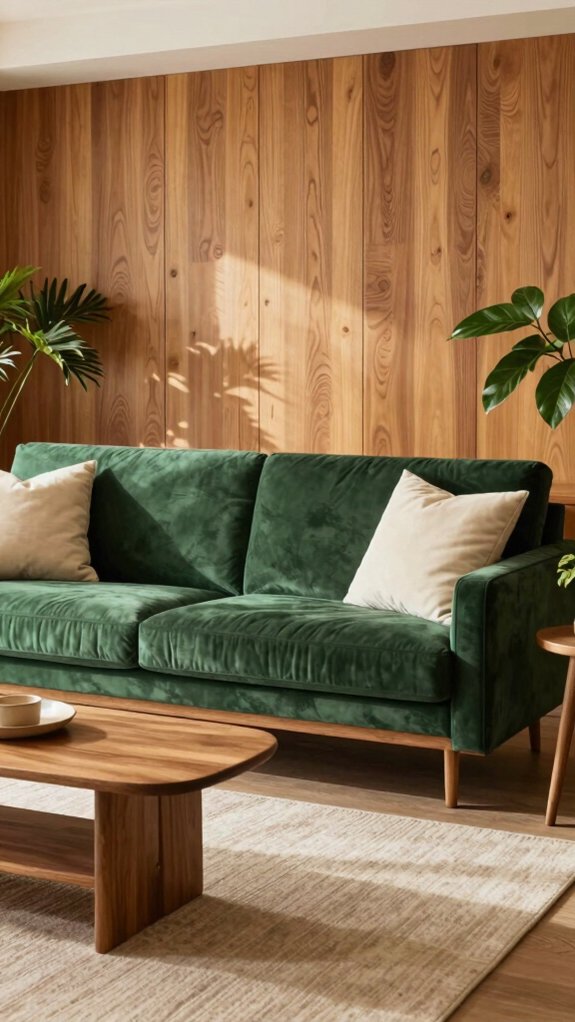
Because wood brings warmth and texture, I like pairing a green couch with carefully chosen wood tones to make the room feel grounded and inviting.
I suggest oak or ash for a fresh, airy vibe with soft greens, and walnut or cherry for depth when the sofa is a richer green.
Think of wood color combinations as a palette: light pine with sage feels breezy, while dark walnut with forest green reads elegant.
Use furniture material choices like a slatted oak coffee table, walnut shelving, or a cherry accent chair to introduce grain and contrast.
Mix tones sparingly—two or three at most—so the space stays cohesive.
These choices create a layered, comforting room where everyone feels at home.
Accent Pillow Color Ideas
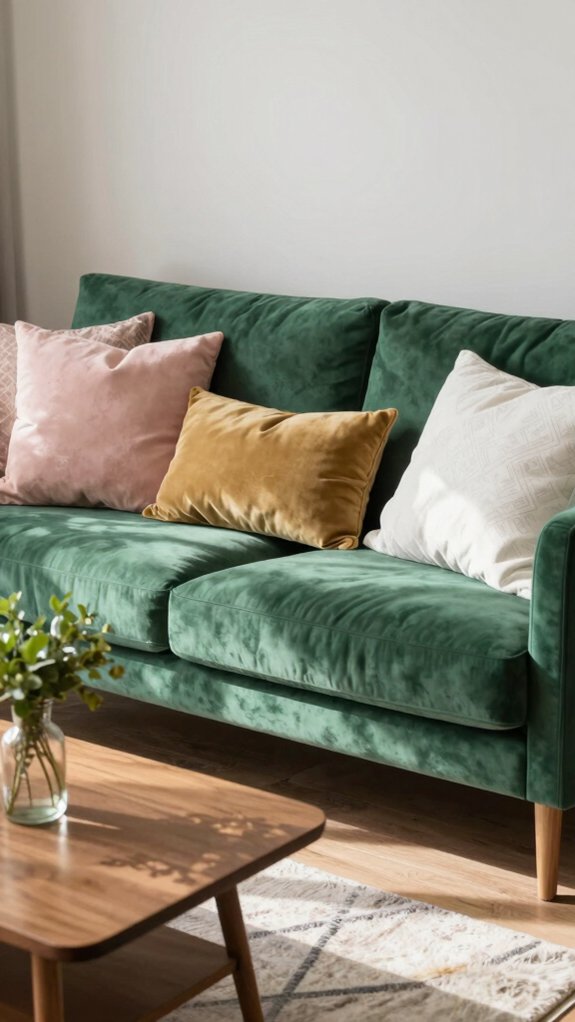
Now that you’ve picked wood tones to anchor the room, let’s talk about pillows—the small details that make your green couch feel finished and cozy.
I like starting with neutral pillow fabric options like beige or cream to balance the sofa; they let the green sing while creating a calm backdrop. Then I add a few bold colors—mustard yellow or deep navy—for energy and contrast, placing them near neutrals so nothing feels overwhelming.
Textured pillows in linen or velvet bring warmth and depth, and mixing patterns—floral with geometric—creates a playful, collected look. For cohesion, I include varied greens in different shades.
Use simple layering techniques: base neutrals, then texture, then one bold accent to tie everything together.
Coffee Table Styling Tips
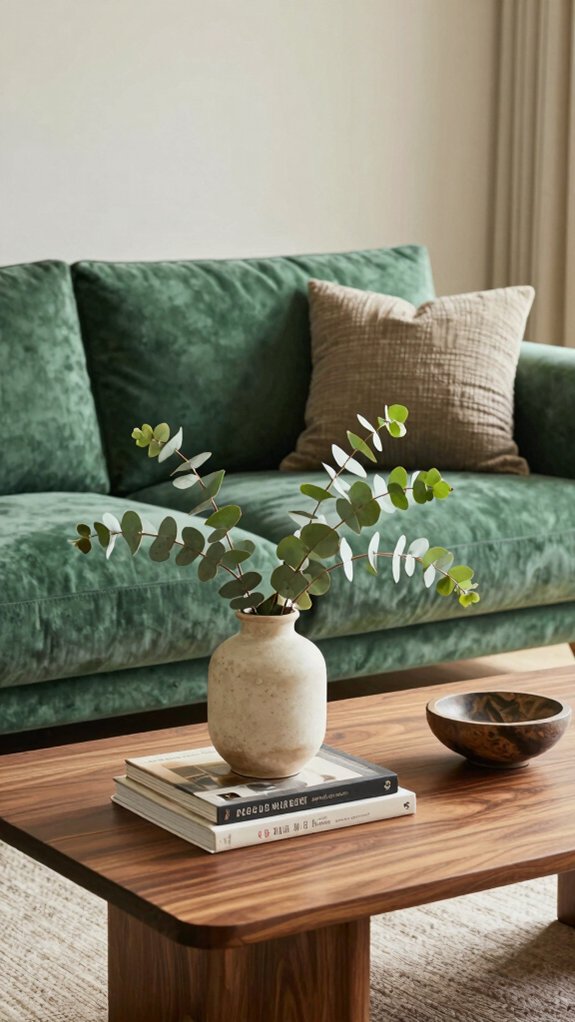
If you want your coffee table to feel like a natural extension of the green couch, pick a surface that complements the sofa—warm wood for a cozy look or glass and metal for a lighter, airier feel—and then style it with purpose.
I start by thinking about coffee table materials so the base becomes part of the room’s story.
Then I mix decorative element combinations: a stack of books, a candle, and a small potted plant create texture and warmth.
I use a tray to corral smaller things and add a tall vase or sculptural object for height.
Change one seasonal piece now and then—flowers or a themed accessory—to keep the table inviting and balanced.
Wall Art That Matches a Green Sofa
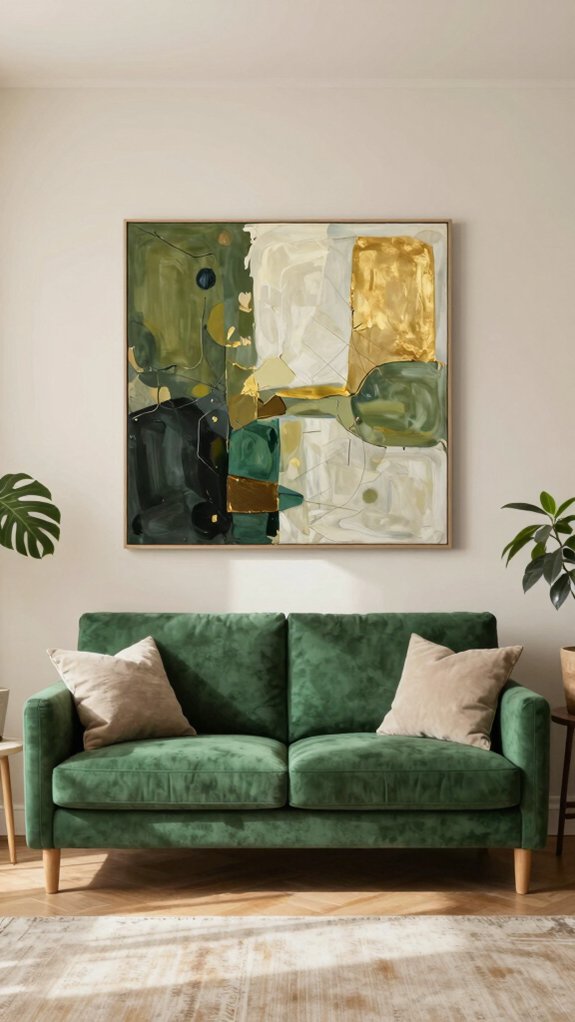
When I pick wall art for a green sofa, I think about balancing color, scale, and mood so the pieces feel like they were chosen for the room, not plopped in at random.
I usually start with color harmony: pick prints that echo the sofa’s undertone or introduce complementary warm neutrals, mustard yellow, or deep blues to lift the space.
For a calm vibe, botanical prints or nature-inspired pieces reinforce that fresh connection. If you want contrast, try bold patterns or textured artwork to add depth against a solid couch.
Scale matters too—an oversized piece or a curated gallery wall with mixed frames and art styles makes a confident focal point.
Match palettes closely, and arrange thoughtfully so everything feels welcoming.
Lighting That Enhances Green Tones
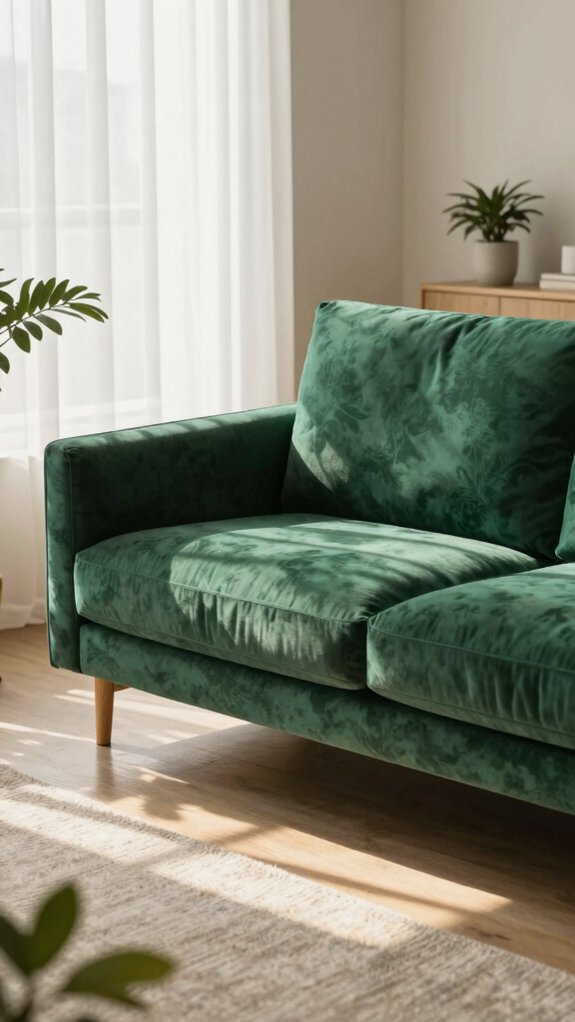
How do you make a green sofa look even more inviting? I choose warm lighting fixtures—soft yellow or amber bulbs—to boost the sofa’s vibrancy and make the room feel cozy.
Start with a pendant light in a gold or brass finish over the seating area; it adds elegance and gently reflects green tones so the couch becomes a clear focal point.
Layer floor lamps, table lamps, and wall sconces so shadows soften and depth appears. Use dimmable LED lights to adjust ambient brightness for morning sun or evening lounging.
Place a mirror opposite windows to amplify natural light and warmth. Together these steps create a welcoming, balanced space where your green couch truly belongs.
Rug Selection for Balance
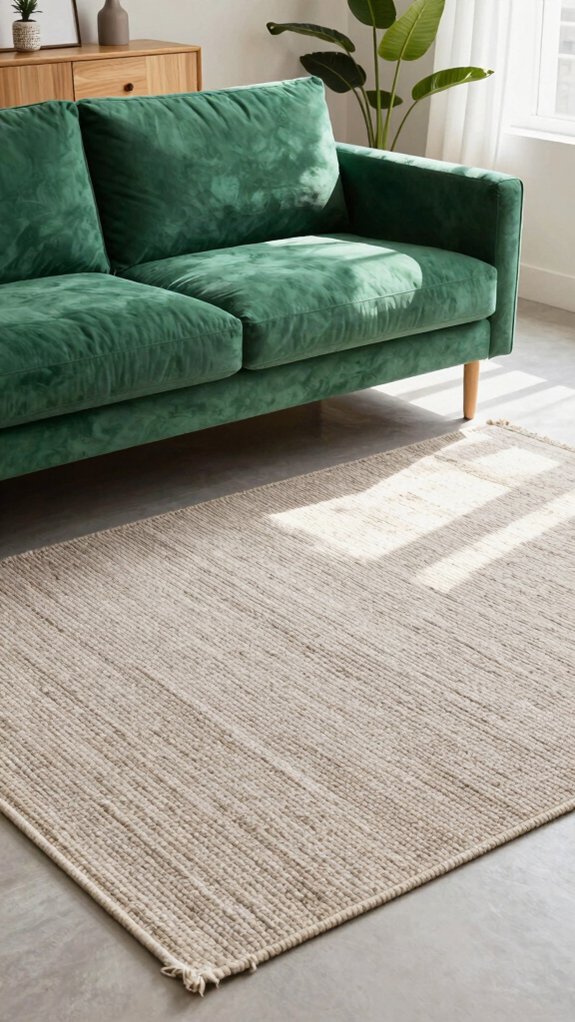
Choosing the right rug can make your green couch feel grounded and intentional, so I usually start by thinking about balance: pick a neutral base like beige or cream to calm the sofa’s vivid color, or reach for a subtly patterned rug that echoes the green in small doses to tie the room together.
I consider rug materials and color psychology to create warmth, texture, and emotional balance. A textured woven or low-pile shag adds depth; a subtle pattern provides cohesion without crowding the eye. Size matters too—anchor seating by placing front legs on the rug for harmony.
Here are three quick guidelines I follow:
- Choose neutral tones or soft patterns.
- Prefer textured, durable rug materials.
- Verify rug size anchors the seating area.
Plants That Blend Naturally
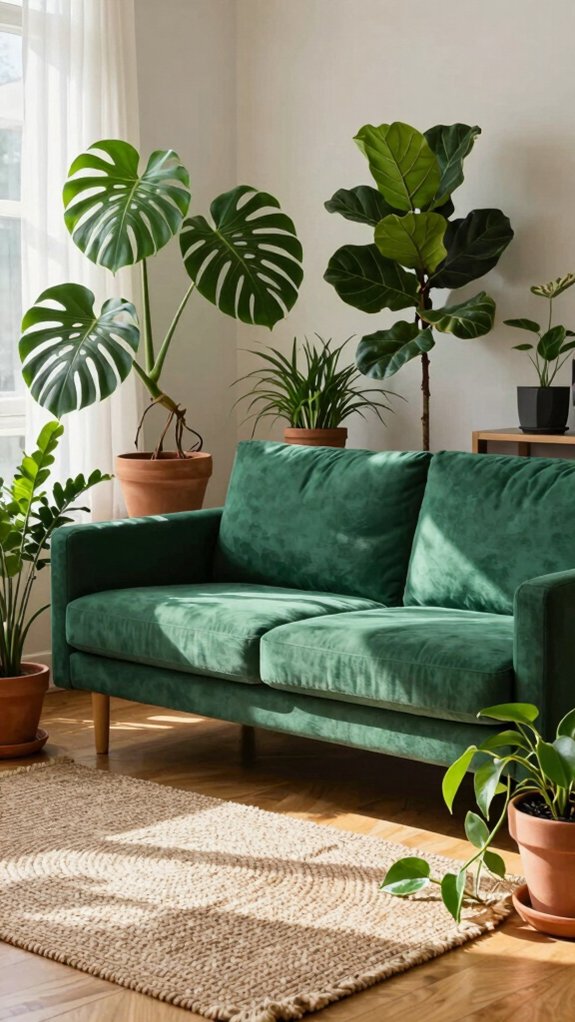
After you’ve anchored the seating with the right rug, I like to bring in plants to make the green couch feel like it belongs to a living room, not a showroom.
I pick plant types like pothos, snake plants, and peace lilies for easy care and a calming vibe, then add statement foliage—monstera leaves or soft ferns—for contrast.
I arrange pots in earthy terracotta or woven baskets to echo the couch’s warmth. For depth, I use height variations: tall floor plants beside the sofa, medium pots on side tables, and a few hanging plants or shelves with trailing vines.
Finally, I swap in fresh flowers seasonally so the room stays lively and welcoming.
Metal Accents for Contrast
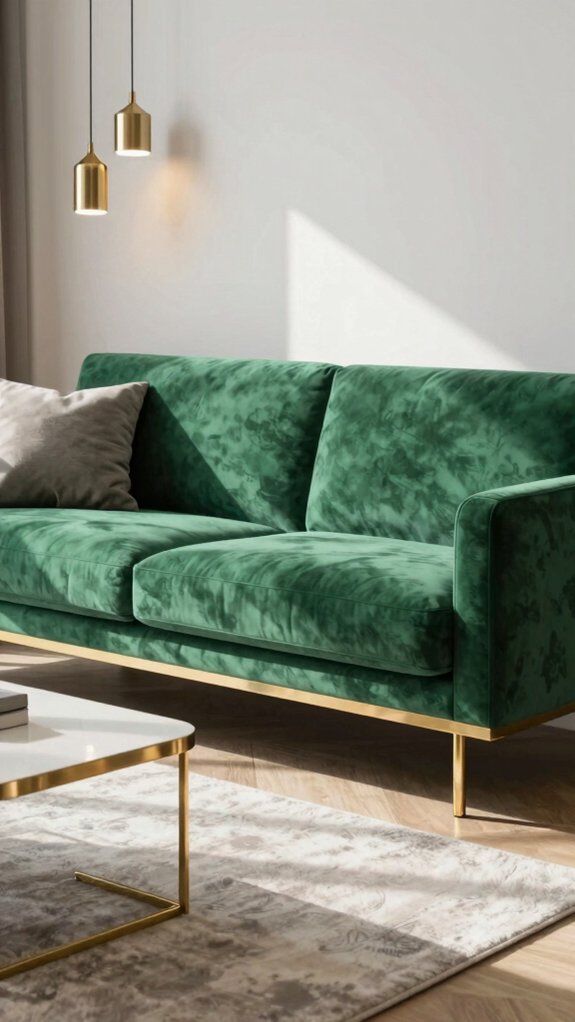
When I want to add sparkle and structure to a room anchored by a green couch, I reach for metal accents—they cut through the softness and give the space a polished edge.
I love how metal finishes like warm brass or cool matte black create subtle accent contrasts, making the green feel lively and intentional. Mirrors and framed art in metal tie the room together, and small reflective pieces lift the light so everyone feels welcome.
- Use brass or gold for warmth and elegance that complements deep greens.
- Pair matte black with shiny gold to build depth and visual interest.
- Add metal side tables or accessories to reflect light and brighten the seating area.
Throw Blanket Styling
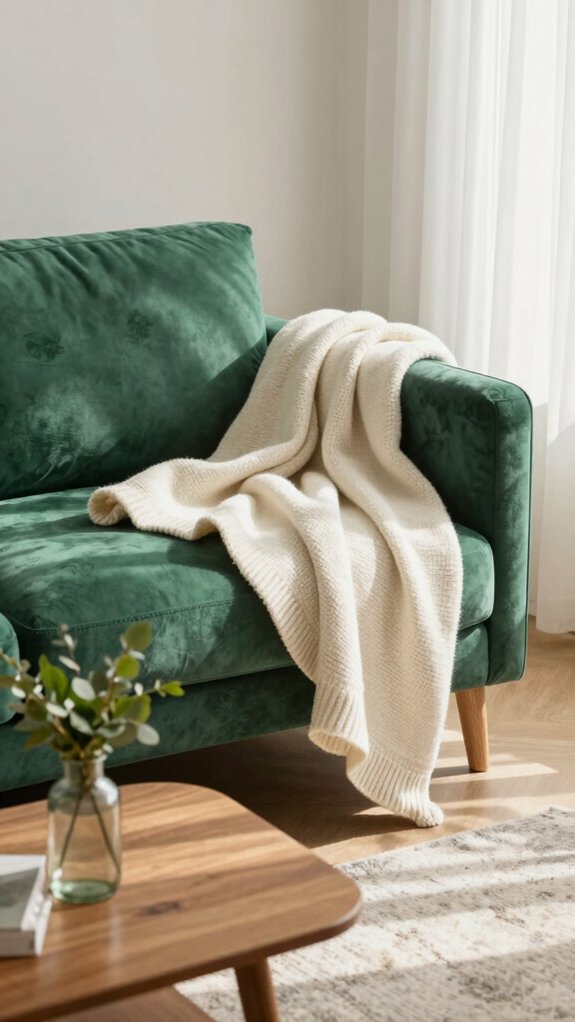
If I want my green couch to feel cozy and styled without looking staged, I reach for throw blankets in complementary colors and interesting textures that do two jobs at once: they add warmth and make the sofa look intentionally edited.
I like mixing throw blanket textures—chunky knit for casual layers, plush velvet for a touch of luxe—and choosing throw blanket colors like soft beige or vibrant mustard to play against the green.
Drape one casually over an arm and layer another folded at the back for depth.
Patterned options—botanical or geometric—bring personality and tie other room elements together.
These simple, deliberate choices invite people to sit, stay awhile, and feel part of the space.
Modern vs Vintage Green Couch Styles
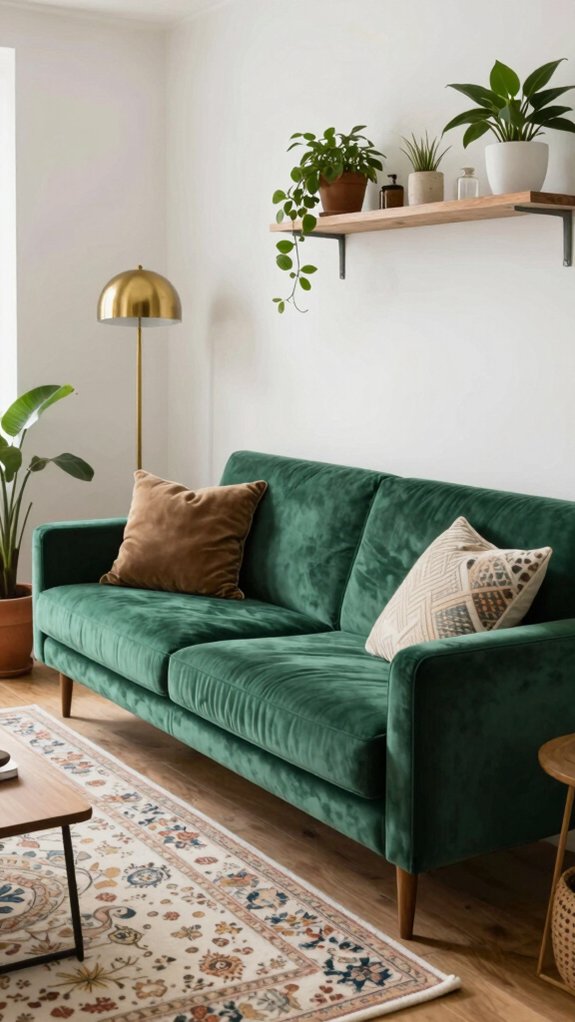
Though I love a sleek modern silhouette, I also have a soft spot for vintage pieces, and choosing between a modern or vintage green couch comes down to the mood you want to create and how you live in the space.
I lean into modern aesthetics when I want bold emerald velvet, clean lines, and modular comfort that fits active, social homes.
For quieter, cozy gatherings I pick vintage charm—Chesterfield tufting or curved arms in sage or olive that tell a story.
Here are three quick ways to decide:
- Consider use: kids and parties favor modular modern pieces.
- Think texture: velvet or leather feels contemporary; tufting feels historic.
- Mix styles: pair a vintage couch with modern accents for balance.
Small Living Room Layout Tips
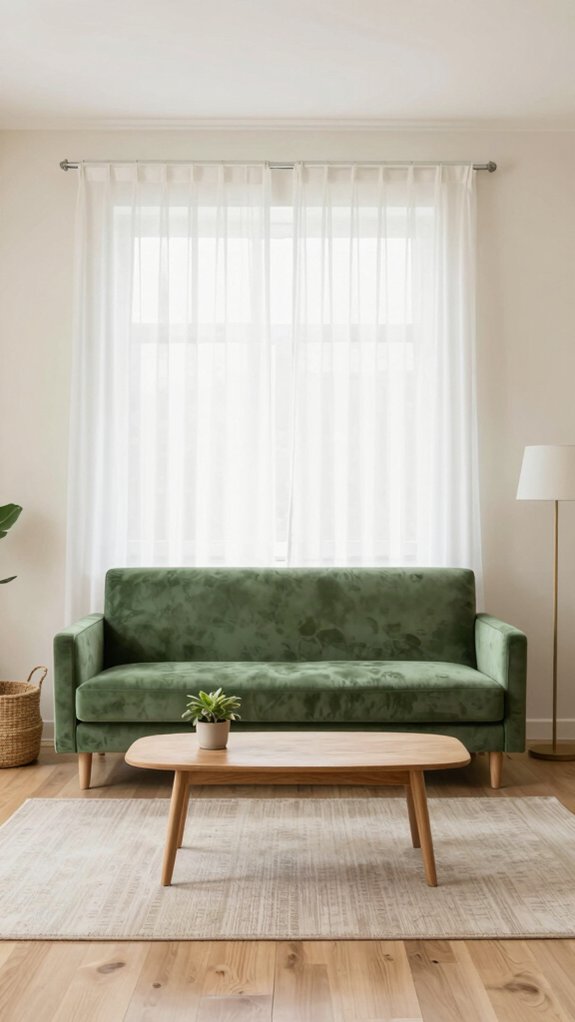
I love how choosing between modern and vintage green couches sets the mood, and now I want to help you make that mood work in a small living room.
Start with layout optimization: place a lighter-shade green couch against a wall to open sightlines, then use vertical storage like tall bookshelves to keep the floor clear and show off personal items.
For seating arrangements, try an L-shape with a compact armchair or a U-shape if you have a narrow bench that doubles as extra seating and storage.
Add a coffee table that converts to seating and tuck boxes beneath the couch for hidden storage.
Finish by hanging a mirror across from a window to reflect light and make the room feel larger and welcoming.
Earth-Tone Decor Pairings
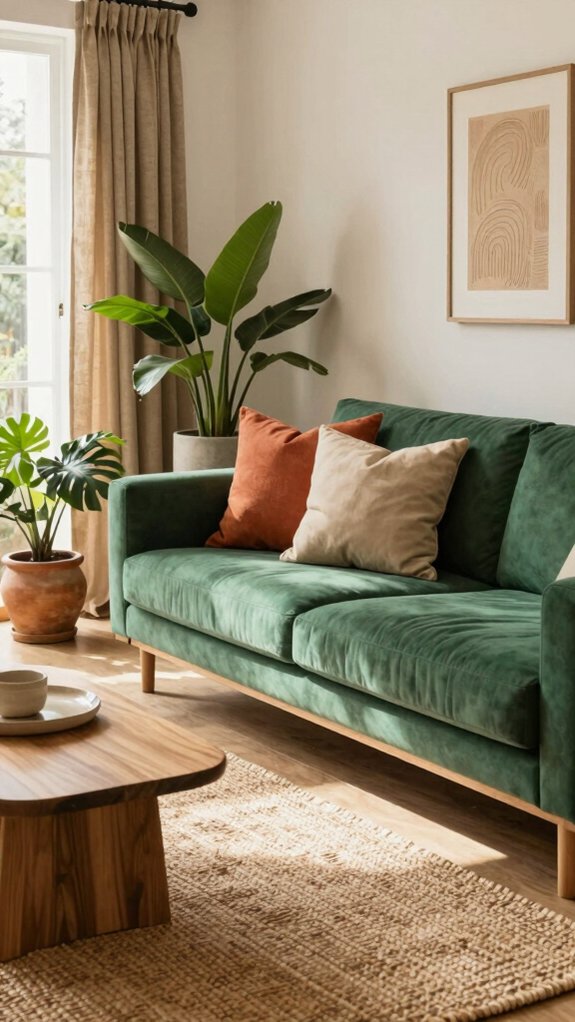
While a green couch already brings a fresh, natural vibe, pairing it with earth tones will make the whole room feel grounded and cozy, and I’ll show you how to do that step by step.
I like to anchor the sofa with terracotta, warm browns, and soft beige so the green reads calm, not overwhelming. Wooden furniture with rich finishes ties everything together, and I layer earthy textures—woven rugs, linen curtains, ceramic bowls—for depth.
- Use wooden coffee tables and shelves to connect the green couch to the room.
- Add pottery, muted botanical prints, and nature inspired accessories for subtle interest.
- Introduce mustard or rust accents to warm the palette and create balanced contrast.
These choices make the space feel welcoming and shared.
Keeping the Look Timeless
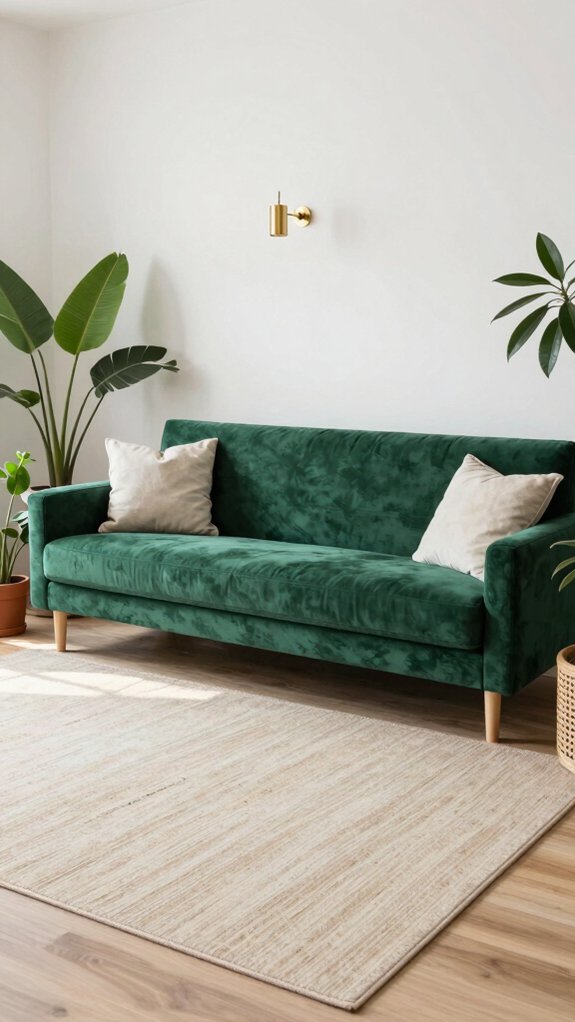
You’ve already grounded your green couch with warm terracottas and natural woods, so now let’s make sure that fresh look lasts for years.
I pick muted sage or olive upholstery as a base because those tones age gracefully and play well with many styles. Start with a cohesive palette of neutrals plus one or two complementary shades, then add depth with layered textures — a plush rug, woven throws, and mixed fabrics.
Anchor the space with timeless patterns like subtle stripes or classic florals, and choose classic accessories such as elegant lighting and framed artwork to enhance without shouting.
Swap small accents seasonally, keep larger pieces simple, and you’ll create a welcoming room that stays balanced and beloved over time.