


You can calm a busy living-dining layout fast by tightening sightlines and cutting clutter, wow! Start with a plush sectional, a solid rug, and warm drapes to soften echo and anchor the room. Then add closed storage, like a credenza or built-ins, to hide chargers, napkins, and random stuff. Want more impact? Acoustic art panels and divider screens can quietly zone the space while keeping it open, and the best trick’s still ahead.
Key Takeaways
- Limit visual clutter with fewer colors, finishes, and patterns so the living-dining space feels calmer instantly.
- Anchor zones with a deep sectional and tight conversational clustering to organize sightlines and reduce restlessness.
- Use rugs, drapes, and upholstered seating to soften hard surfaces and quiet the room visually and acoustically.
- Add bookcase walls, closed storage, or dense credenzas to hide clutter while keeping the layout open.
- Layer warm, indirect lighting and translucent partitions to define areas without creating glare or blocking daylight.
What Causes Visual Noise in Living Dining Layouts
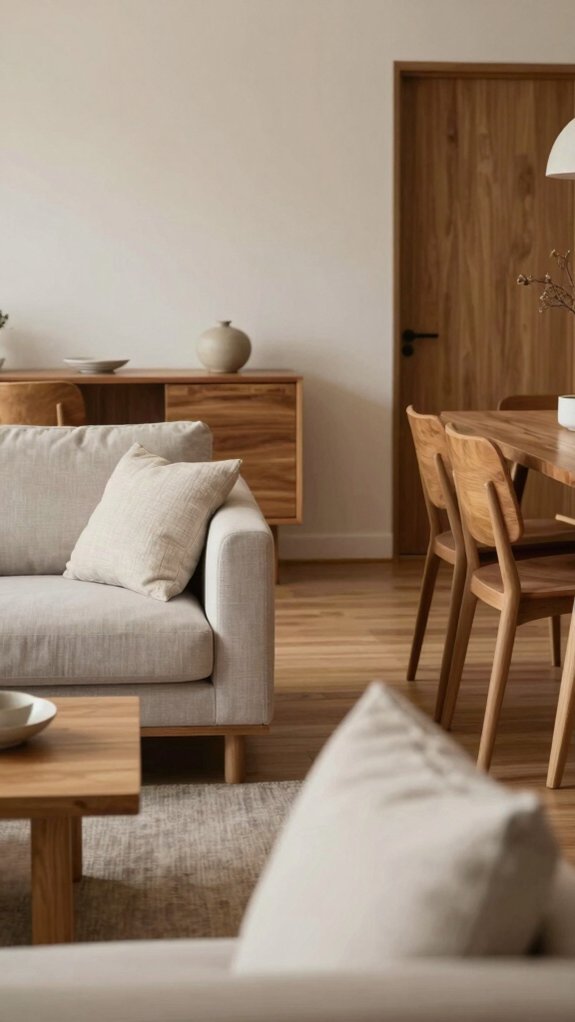
When a living room and dining area share the same open space, visual noise can sneak in fast!
You notice it when busy art, patterned chairs, and crowded shelves all fight for attention. Without strong sightline control, your eyes bounce around, and the room feels restless instead of welcoming.
Mixed heights, oversized furniture, and weirdly matched scale can throw off the rhythm, too!
Add clutter zones on sideboards or counters, and even tiny items start shouting.
The biggest culprit? Too many colors and finishes.
Color harmony and finish coordination help you calm the whole scene, so your space feels like it belongs together, not like a decor debate!
Start With Soft Seating and Clear Sightlines
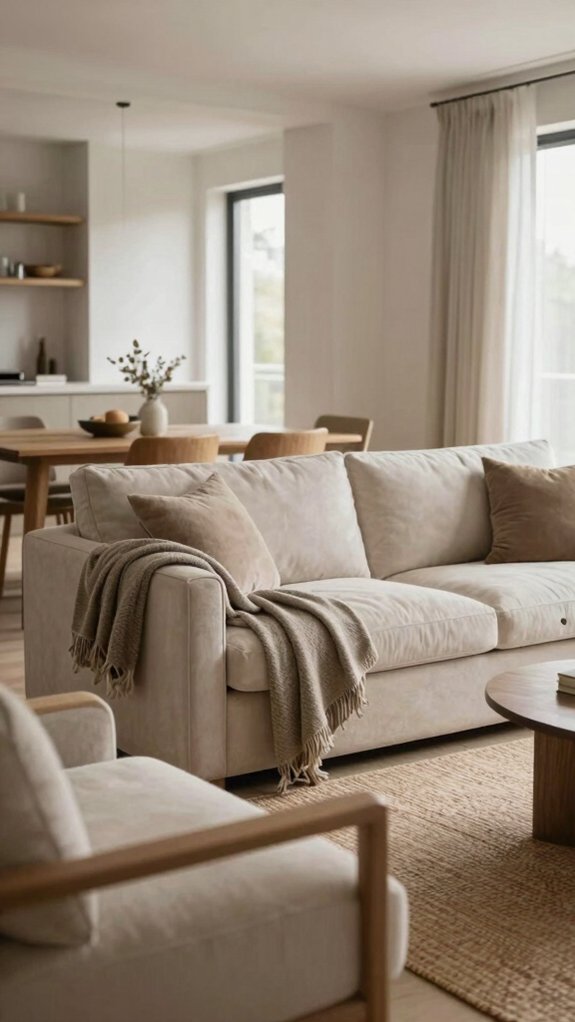
Soft seating can calm a living-dining combo fast, because plush sectionals and padded chairs soak up some of that hard-surface bounce and make the whole room feel friendlier. You’ll feel it right away, like the space finally took a deep breath!
- Use layered upholstery for a cozy, grounded look.
- Place a deep sectional perpendicular to the island.
- Keep conversational clustering tight, not scattered.
- Pick dense consoles or credenzas to mark zones.
- Choose solid shelves, not airy metal frames.
That setup clears sightlines, cuts spillover from the kitchen, and helps guests spot the heart of the room without visual static. Nice, right?
Use Rugs and Drapes to Quiet the Room
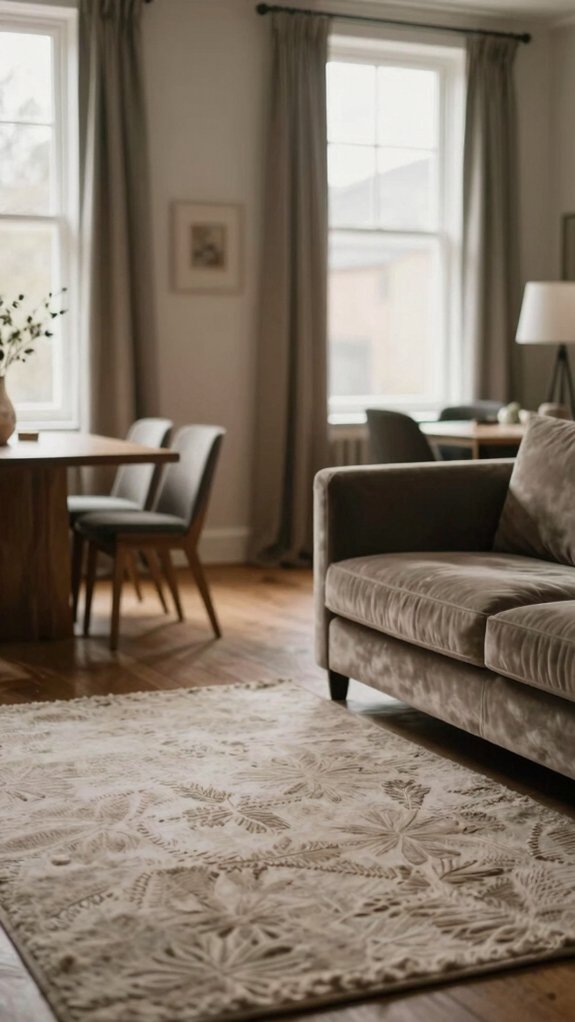
Great news—you can tame that lively echo with soft layers underfoot, starting with a generous wool rug under the dining table, and even adding a runner or underlay where chairs scrape and feet tap.
Floor-to-ceiling drapes work like sound-soaking curtains, catching chatter before it bounces around the room, and velvet or thick linen usually does the trick without making your space look sleepy.
If your room still feels a bit “boing,” try upholstered chairs or a textile wall hanging next, because those little extras quietly mop up the last bits of bounce.
Rug Layers Underfoot
Even in a lively living-dining space, you can dial down the racket fast with a few cozy layers underfoot!
- Try a generous wool rug under your table; it softens footstep noise.
- Pick cut-pile styles, since they damp sound better than loop pile or flat weaves.
- Add a second rug in the lounge, with a size that fits the zone, for quieter chats.
- Use foam rubber padding if you want extra impact control without fuss.
- Mix in Color layering and clutter free staging, so the room feels calm and yours.
That’s a warm, easy win, and your crew’ll notice it right away!
Drapes That Soften Echo
Pull the room together with drapes that do more than just look nice, because thick fabric can help hush that bouncy echo in a living-dining space fast!
Choose floor-to-ceiling velvet or thick linen, and let them cover the whole window, no tiny gaps, please.
You’ll catch sound before it bounces back, which helps with Lighting glare too.
Pair them with a big wool rug under the table, then add pillows and upholstered chairs for extra texture contrast.
That mix soaks up footstep noise and softens chat, so your space feels calmer, warmer, and more like yours.
Add Acoustic Art Panels as Stylish Focal Points
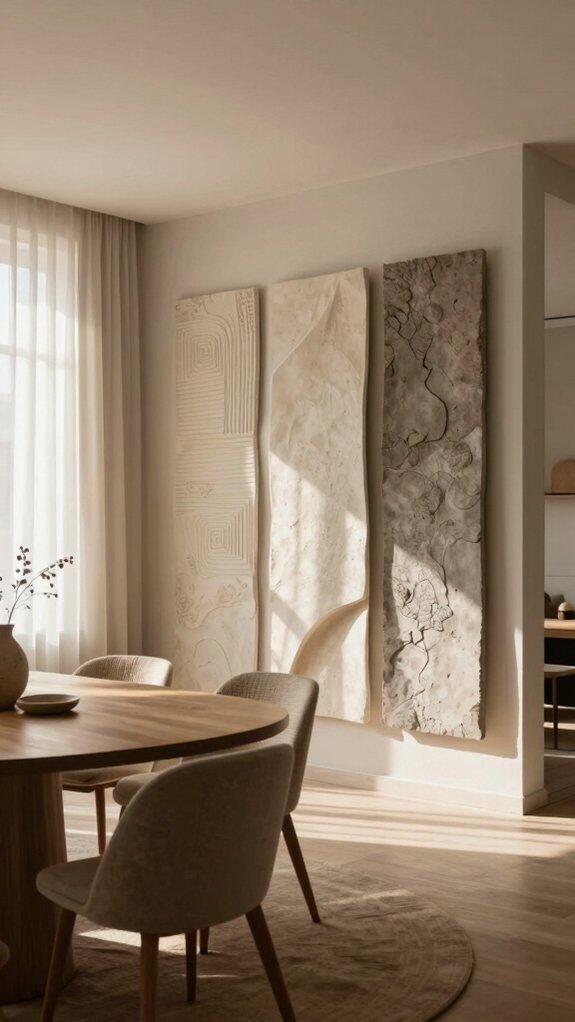
If your living-dining room feels a little too lively, acoustic art panels can work like a sneaky design upgrade that also hushes the echo! You get color cohesive artwork that looks intentional, not tacked on, so your space feels like it belongs to you.
Try Modular panel placement on echo-prone walls, especially where voices bounce.
- Fabric-wrapped panels
- Photo or themed prints
- High NRC picks, around 0.85+
- Clustered gallery-style
- Key bounce zones covered
You can install them in a weekend, and the cost stays friendly.
Best part? Conversations feel clearer, and your room gains a polished, “wow, this works!” vibe.
Build Bookcase Walls and Open Shelving
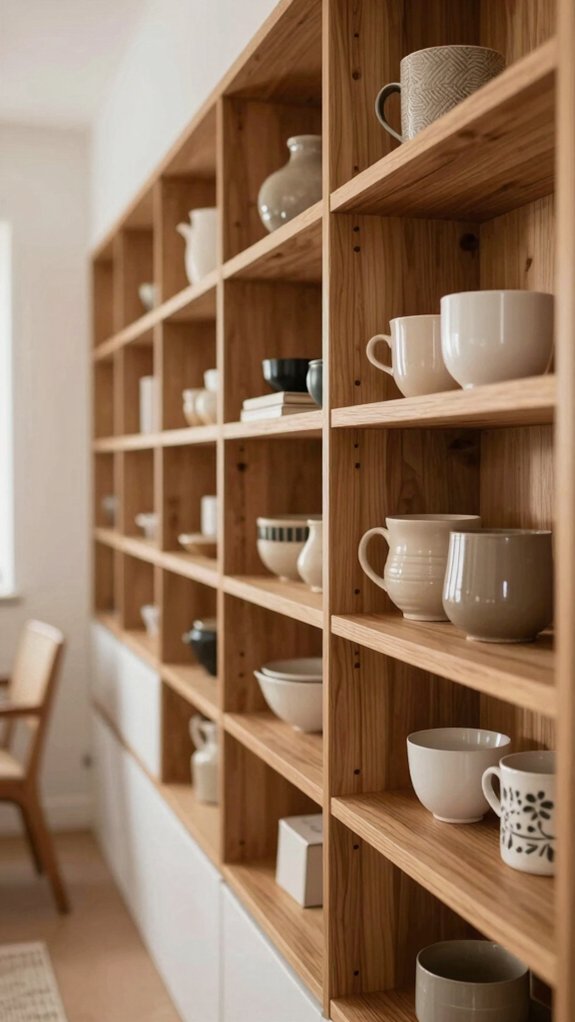
As your living-dining area starts talking a little too loudly, bookcase walls and open shelving can step in like a smart, stylish bouncer!
You don’t need a full wall, just sturdy, full-height shelves packed with books, baskets, and a few wool decor pieces.
Choose wood-backed units or ones with acoustic backing, then vary shelf depths to break up sight lines and tame echo.
It’s a beginner-friendly DIY that feels cozy, not cramped, and usually costs less than a remodel.
Add Privacy curtains, acoustic curtains, if you want extra softness.
Best part? Your space still feels open, just calmer and more in sync.
Divide Living and Dining Zones Without Walls
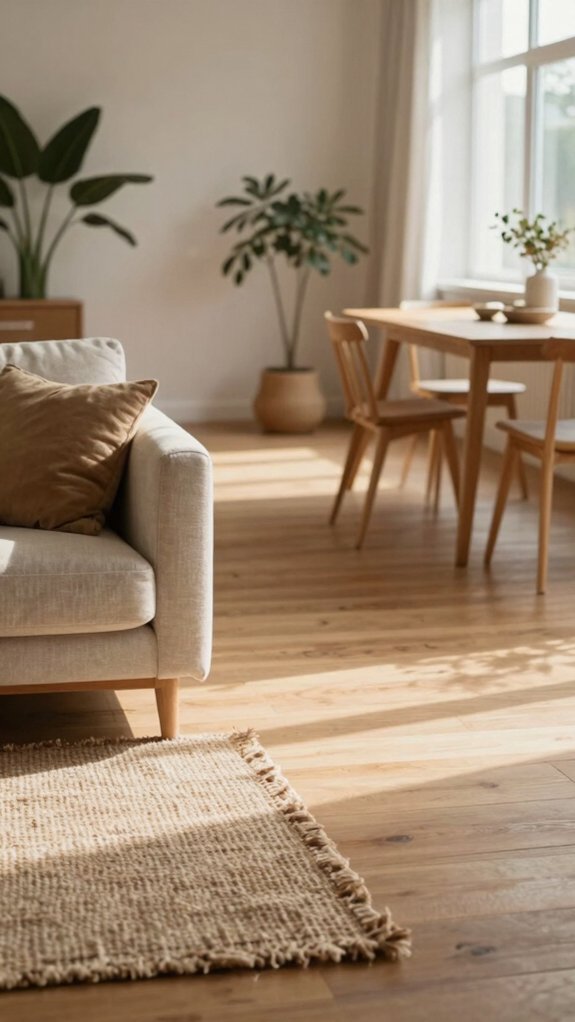
When you want your living room and dining area to feel separate without building a full wall, smart dividers can do the job beautifully!
- Try a felt screen for a cozy, soft hush.
- Slide in frosted-glass pocket doors for a bright, private feel.
- Set a walnut console between zones, it calms echoes.
- Add a deep sectional near the kitchen, and watch sight lines soften.
- Layer rugs, boards, and textiles along the Decorated Threshold for clearer conversation.
Mix these with a Soundproof Window nearby, and you’ll keep the flow open, friendly, and totally inviting. Your home starts feeling like your crew’s spot—easy, warm, and shared!
Choose Furniture That Shapes the Space
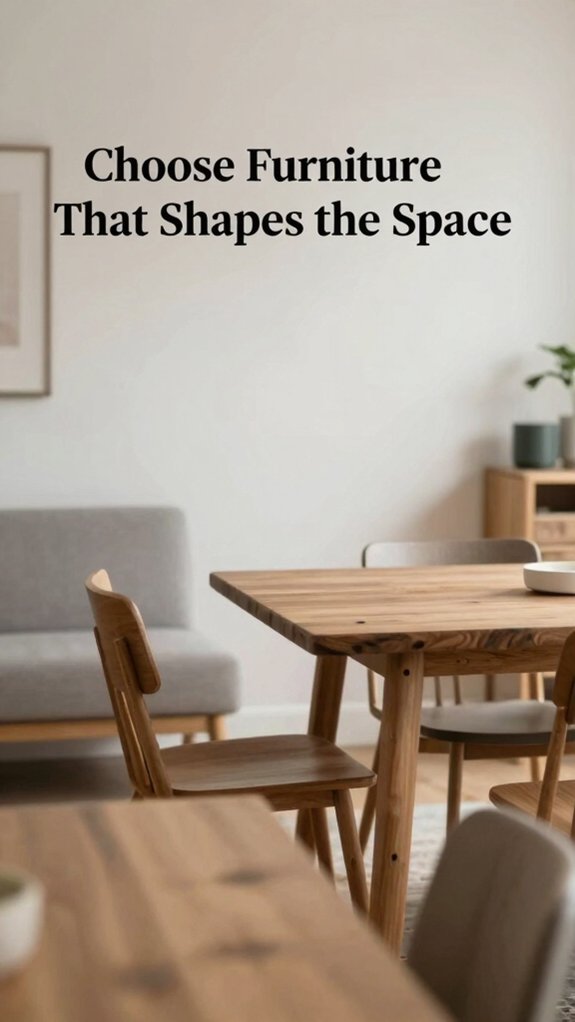
Even without adding more walls, you can make your living and dining area feel beautifully organized by picking furniture that does the heavy lifting for you!
A deep sectional, plush chairs, and a wool rug create microclimate seating that soaks up chatter and softens the room fast.
Next, add a solid walnut shelf or low credenza; its weight steadies the layout and hides the “where do I put this?” clutter.
For bigger rooms, use modular acoustic zones: place bulky pieces perpendicular to the kitchen island, then layer textiles under each area.
You’ll guide traffic, calm echoes, and make everyone feel right at home!
Manage Echo With Sound-Rated Ceilings
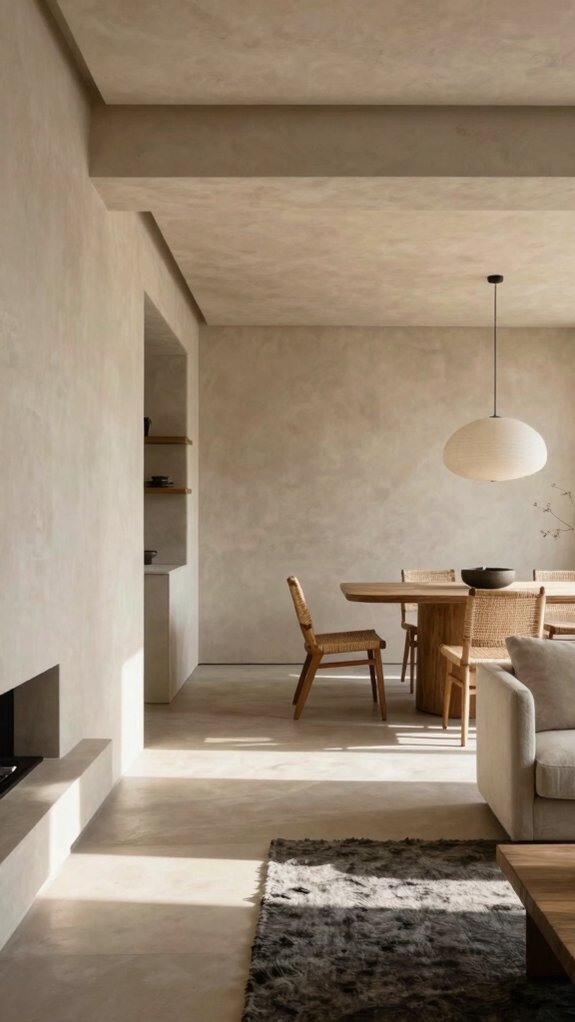
If your living and dining area sounds a little too lively, the ceiling might be the culprit, because it’s usually the biggest hard surface in the room.
- Pick sound-rated tiles with NRC/CAC ratings.
- Hang a ceiling cloud retrofit above the dining zone.
- Use mineral fiber panels for an easy upgrade.
- Keep finishes matte, not shiny.
- Skip curved soffits that bounce sound around.
You’ll calm echo fast, and your Zone acoustics will feel friendlier, like everyone finally got a seat at the same table!
A simple retrofit can help you hear smiles, not chatter, without tearing the room apart.
Use Texture to Soften Hard Surfaces
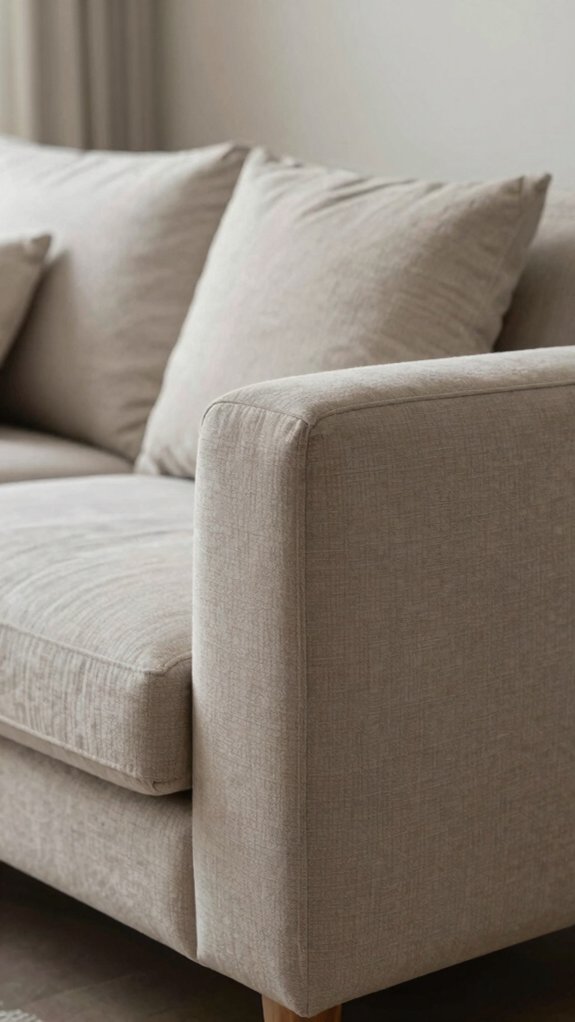
Now that the ceiling’s helping hush the echo, look down and around, because hard shiny surfaces can still make your room feel a bit like a noisy cafeteria!
Swap glossy tile or bare stone for a wool rug with cut-pile fibers, and you’ll notice less bounce and more comfort underfoot.
Next, choose matte finishes on cabinet fronts and tables, so the room stops flashing at you.
Add felt wallings or fabric-hung panels, and use heavyweight drapes, plush pillows, and upholstered chairs to soak up stray sound.
It’s a simple, friendly way to make your dining space feel calmer, warmer, and more like your crowd.
Place Lighting to Calm the Room
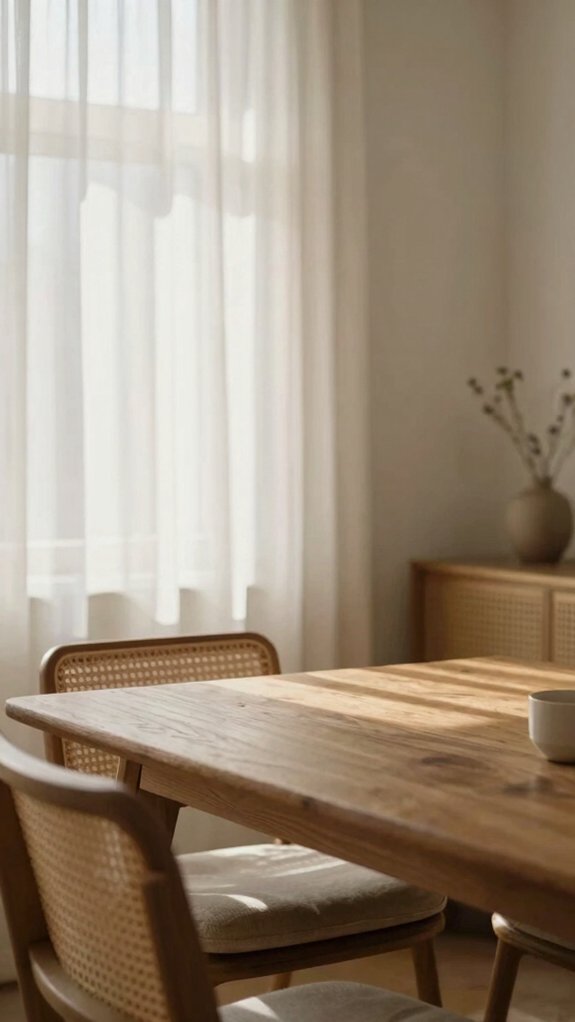
Bright light can make a living-dining room feel jumpy fast, so you’ll want to soften glare with wall sconces, cove lights, or diffused fixtures that don’t stare you in the face like tiny suns!
Layer your ambient lighting with a few task and accent lights, and the room feels calmer, more even, and way easier on your eyes.
Add dimmers, keep the warm glow around the table, and suddenly your space feels cozy instead of shouty—nice, right?
Soften Bright Glare
When the room feels a little too shiny or “on stage,” you can calm it down with lighting that works with the space instead of fighting it.
Try warmer color temperature bulbs, around 2700–3000K, and use dimmer control so you can hush the brightness fast, wow!
- Aim fixtures upward to soften ceiling reflection.
- Skip direct sightlines that bounce off glossy tables.
- Use wall-washers for a gentle glow.
- Choose beam direction that hugs walls, not eyes.
- Match softer light to dining, balanced light to living.
Pick high-CRI bulbs, too; colors look natural, and your space feels like it belongs to you.
Layered Ambient Lighting
If the room still feels a little too loud, layer the light instead of dumping it all from one spot—wow, that tiny shift can make a big difference!
You’ll want ceiling glow, wall wash, and a low cove or lamp, so bright spots don’t crowd one corner.
Use glare control with spaced, diffused cans, and aim for indirect brightness across walls and ceilings, not straight down at the table.
Add dimmer controls, then keep warm dimming gentle and steady, so the living and dining sides feel like they belong together.
Nice, calm, and way less fussy!
Hide Clutter With Built-Ins and Consoles
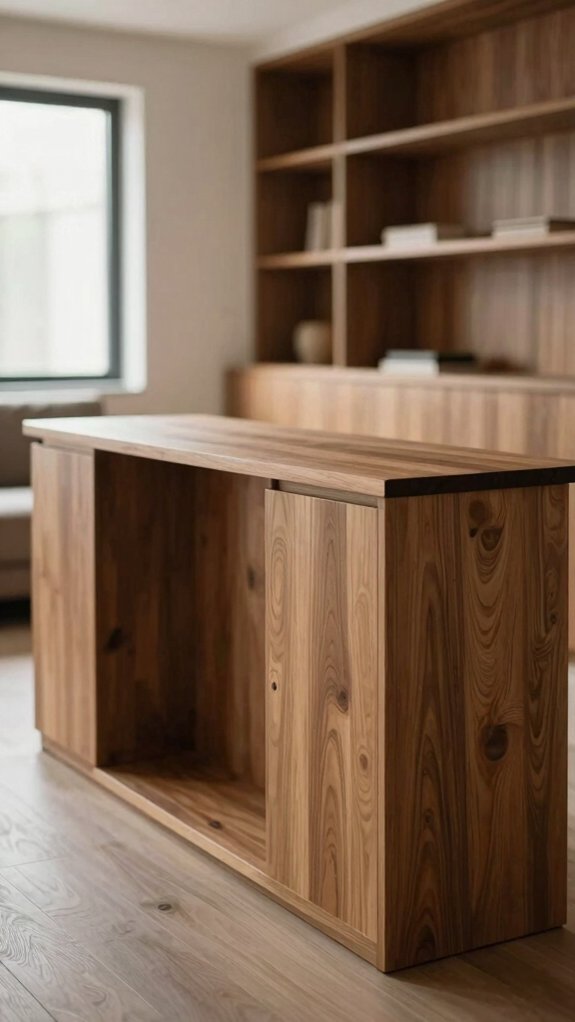
Built-ins and consoles can do a lot more than just stash random stuff out of sight—they can act like quiet little heroes in a busy living-dining room! With Cabinet clutter control and Console sound buffering, you’ll feel more settled fast.
- Try a solid walnut credenza for dense, calm storage.
- Use closed cabinets to hide stray chargers and napkins.
- Place a deep console between zones to soften chatter.
- Add one long wall system for a clean, linked look.
- Line panels with fabric backing for extra hush.
You’re not just tidying—you’re making a room that feels like it belongs to everyone, snacks and all!
Balance Privacy and Light in Open Plans
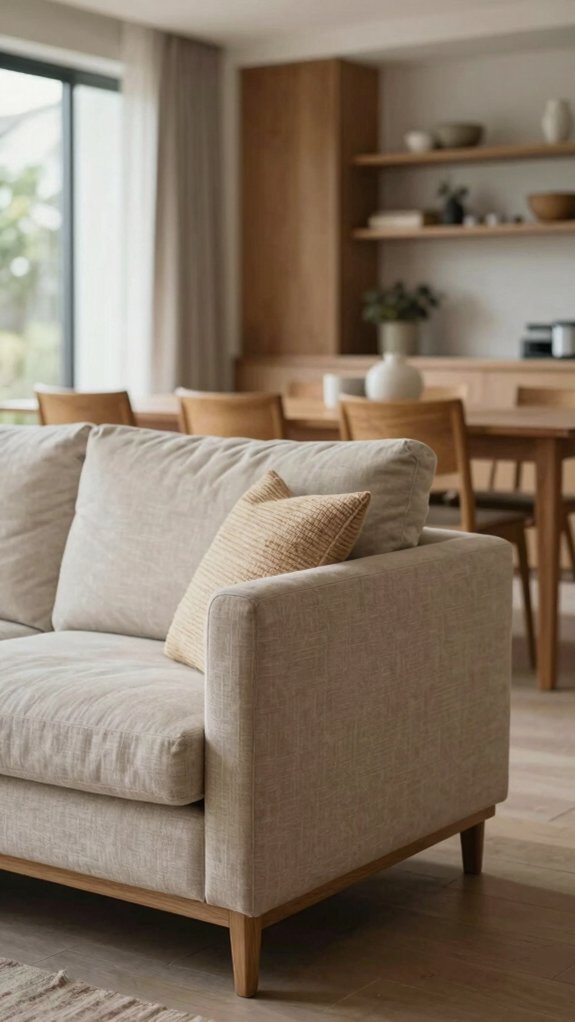
Open shelves and hidden storage can tidy up a room, but they don’t solve the big open-plan problem on their own: too much seeing, too much hearing, and not quite enough cozy! Start with sightline mapping, then try translucent dividers like frosted glass pocket doors or felt screens. They keep daylight moving while hiding busy corners, and they’re easier to install than full walls.
Next, use Color coded zoning with a deep sectional set perpendicular to the kitchen island. Add floor-to-ceiling drapes, and if you need real quiet, layer sound help behind the scenes. Best part? Sliding panels let you switch from party mode to hush mode fast!
Match Materials to Your Room’s Noise Level
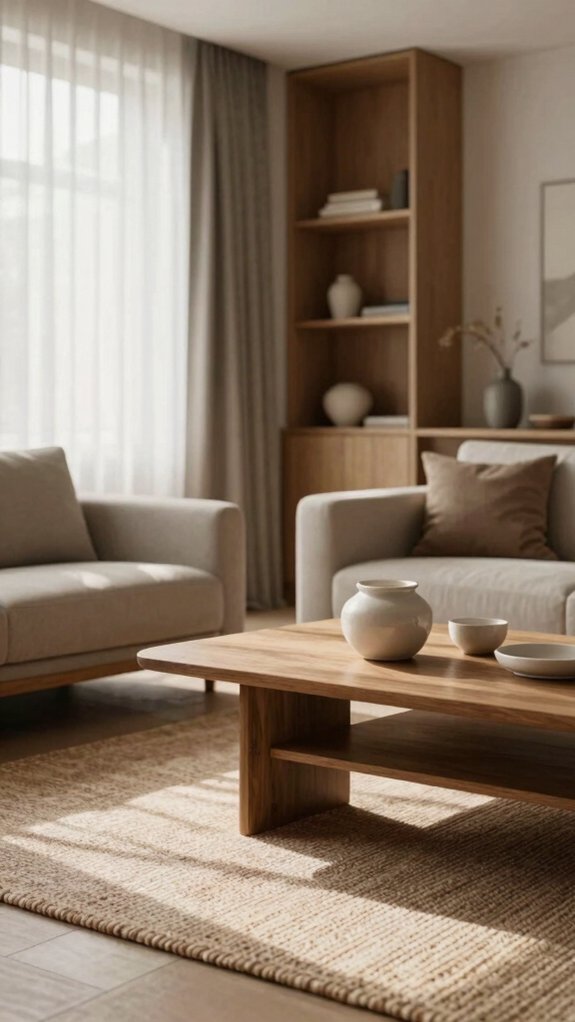
When your living-dining area sounds a little echo-y, the materials you choose can make a huge difference, and you don’t need a full remodel to start! For smart Material Matching, first spot your Noise Sources:
- plush wool rug underfoot
- velvet drapes by sunny glass
- fabric wall panel near chatter
- rugs and panels in the dining zone
- MLV behind drywall for thin walls
If the room feels busy, mix light absorption with a few lively, reflective spots. In hard-surface rooms, treat the ceiling first, since it throws sound everywhere.
Aim for NRC 0.85+, absorb first, and skip curved surfaces—they can make little sound hot spots!
Create a Calmer Living Dining Layout
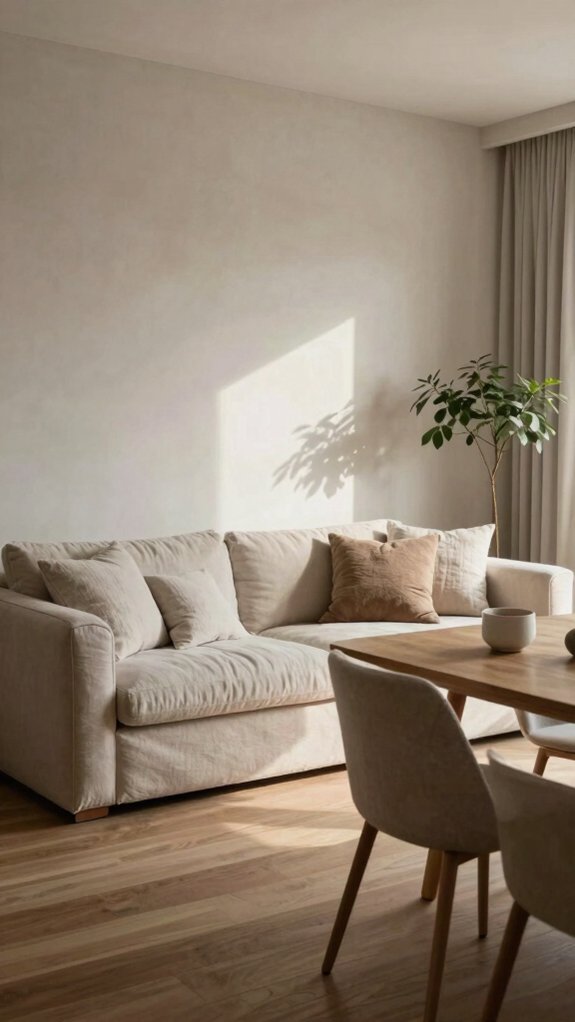
You can calm your living-dining layout by using furniture like a quiet little traffic cop—try a deep sofa, a credenza, or even a chair-back line to steer sound and break up those long, chatty sightlines.
Then add soft textures, like a wool rug under the table and heavy linen or velvet drapes, so the room doesn’t bounce every laugh and clink right back at you.
It’s a simple fix, and honestly, your space may feel less like a stadium snack aisle and more like a cozy hangout!
Furniture as Sound Buffer
Instead of letting every clink, chat, and kitchen swoosh bounce around like it’s auditioning for a concert, use your furniture as a sound buffer to calm the whole living-dining layout down. You’ll feel more at home when the room stops shouting back!
- Set a deep sectional across from the island.
- Park a sturdy credenza between zones.
- Pick solid walnut shelves, not airy metal.
- Break up long sight lines with massy pieces.
- Let upholstered seating help Reduce Speech Masking and Manage Room Tuning.
These moves don’t need walls, just smart placement, and they make your space feel welcoming, cozy, and easy to share.
Textiles That Soften Noise
As soon as the hard surfaces in a living-dining combo start bouncing sound around, textiles jump in like the quiet heroes of the room! You can improve room acoustics fast with smart textile placement.
Start with a thick, low-pile rug under the table, then add another in the living area. That layered fabric thickness helps with echo control, so chats feel clearer.
Next, hang floor-to-ceiling drapes in linen or velvet; they catch those sneaky reflections before they skip away.
Finish with pillows, upholstered chairs, and wall hangings. You won’t soundproof everything, but you’ll soften the room and belong in it.