


For a home gym that actually gets used, pick a spot you pass every day, like a spare-room corner or bright living area slice. Sketch the layout first, then leave the middle open, add rubber or cork flooring, and use pegs, cubbies, and a towel hook for fast setup. Soft lights, mirrors, and calm colors make it feel friendly, not like a storage cave. Get the basics right, and the rest gets easier—there’s more smart setup ahead.
Key Takeaways
- Choose a room you already pass daily, like a bedroom corner or spare room, so workouts fit normal routines.
- Keep the floor open with clear movement lanes, grouped zones, and minimal clutter for safer, easier sessions.
- Use practical storage close to hand for towels, bands, bottles, and weights so setup takes little effort.
- Add soft lighting, mirrors, and calm finishes to make the gym feel inviting and usable every day.
- Pick joint-friendly flooring and adjustable equipment so the space works for both energetic and low-motivation days.
Choose a Home Gym Space You’ll Use
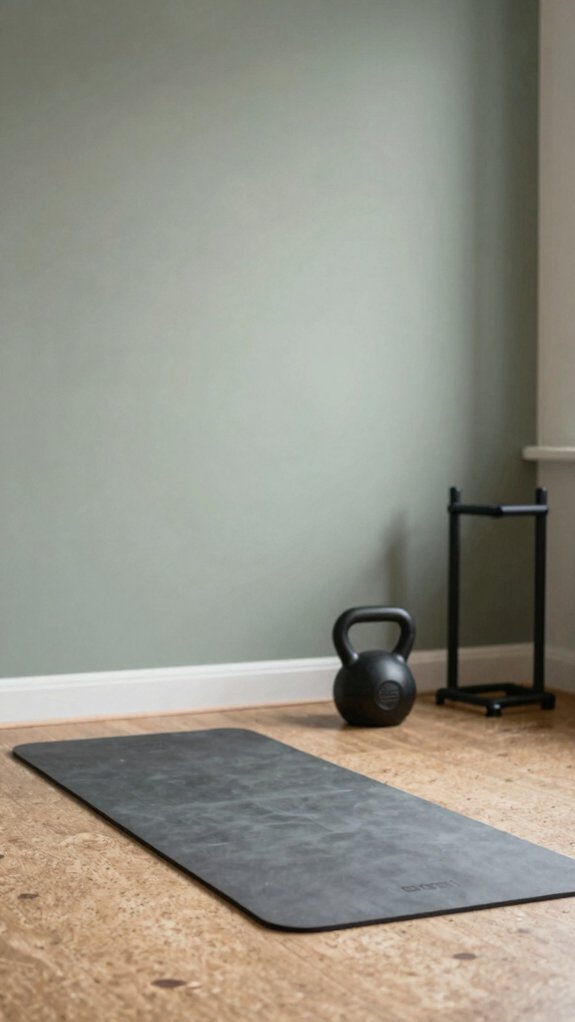
Where should your home gym live? Pick a spot you already pass each day, so it feels like part of your life, not a field trip. A bedroom corner, spare room, or living area slice can give you a walk in workflow that fits your routine.
Look for soft light, or add sconces, and keep routine friendly storage close by: pegs, cubbies, and shelves. Those daily habit cues cut the “where did I put that?” game. Leave clear space to move, then finish with mirrors and a calm palette for a distraction free setup. You’ll walk in, smile, and start!
Design for Daily Use, Not Motivation
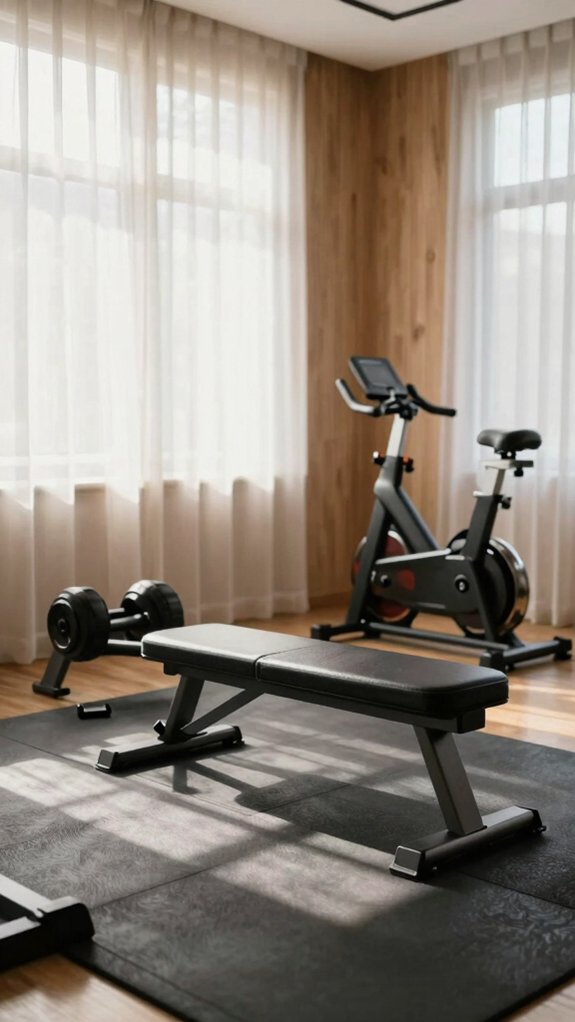
Make your home gym work on ordinary days, not just your super-motivated ones, so you can grab your gear fast, move safely, and actually keep showing up—no treasure hunt for the kettlebells, thank you!
Use open space between stations, simple zones for cardio and strength, and comfy flooring that makes lingering feel easy, not like a punishment.
Add small helpers like a water spot, towel hook, and softer lighting, and you’ll turn “maybe later” into “let’s go” much more often.
Real-Life Function First
When you design a home gym for real life instead of for “future super-motivated you,” everything gets easier fast! You’ll feel like you belong in your own space, because it fits your routine, not some fantasy version of it.
- Ergonomic key placement: keep towel, water, phone, and bands in a reach zone.
- Safety first equipment spacing: leave open floor so you move without bonking plates, ouch!
- Use wall pegs, cubbies, and simple zones, so gear goes back fast.
- Pick softer lighting and cushioned flooring; your joints and mood will thank you.
Keep It Open
Even a tiny bit of open floor can change the whole feel of your gym, because clear walking paths let you move freely, dodge dumb accidents, and keep workouts from feeling like a maze of gear! You don’t need a trophy room, just room to breathe, lift, and belong.
| Move | Result |
|---|---|
| Multi zone zoning | One calm room, many uses |
| Clear equipment routing | Fewer stumbles, smoother flow |
| Wall pegs/cubbies | More floor, less clutter |
| Mirrors + soft light | Bigger, friendlier vibe |
Keep only the necessities out, tuck the rest away, and let the space stay open. A split layout can still feel connected, especially with a low divider. Nice, right?
Make It Easy
To keep your home gym working on busy days, design it for your real routine, not your “I’ll totally feel motivated at 5 a.m.” fantasy! Build routine consistency with a barrier free setup that supports workout flow.
- Leave open floor space so you can move safely, even when you’re tired.
- Use soft, layered lighting, because harsh bulbs don’t cheer anyone up.
- Hang balls and stash kettlebells where your hands naturally go.
- Create one gear station for towels, water, bands, and ropes.
Add a mat and towel spot, and you’ll get clear decision making, less fuss, and a room that feels like it belongs to you!
Plan the Layout Before Buying Equipment
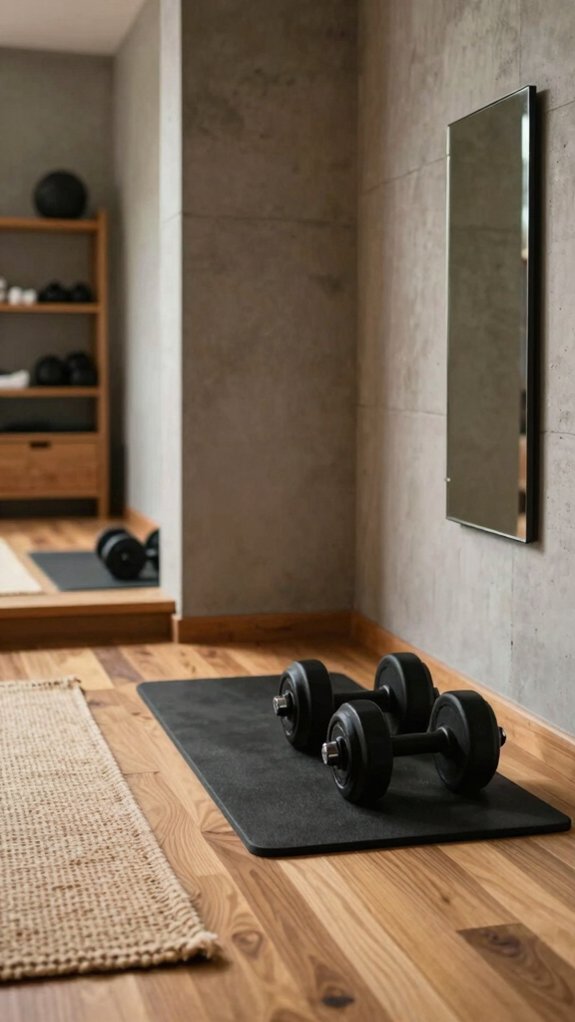
Before you buy a single machine, sketch your room and map the path you’ll walk, from grabbing gear to putting it back—no one wants a dumbbell traffic jam!
Leave open floor space where you’ll actually move, then mark zones for weights, cardio, and stretching so your setup feels roomy instead of crowded.
Measure storage and clearances next, because the best home gym trick is often the sneaky one: keeping the stuff you use most within easy reach while the big pieces hug the walls.
Map Movement Paths
When you map your movement path first, your home gym starts to feel smart instead of squishy, and that’s a big win! You’re creating Safety clearances, equipment spacing, plus Training lanes, flow efficiency, so your sessions stay smooth.
- Sketch warm-up, lift, cardio, and stretch spots.
- Leave a practical working zone around each station.
- Put gear where you use it, like bands, mats, towels, and water.
- Check sight lines so you can see the next move fast.
That little plan helps you step, lunge, and rotate plates without a goofy bump.
Then buy gear that fits the route, not the other way around.
Leave Open Floor Space
Now that your movement path is mapped, it’s time to give that plan some breathing room, because a great home gym needs open floor space, not a maze of stray gear and toe-stubbing surprises!
Start by keeping one primary mat area clear, then tuck kettlebells, stability balls, and other bulky stuff into smart storage solutions.
Durable flooring helps that open zone feel solid, while a split layout keeps strength, cardio, and stretch work from crowding each other.
If you add a treadmill, choose one that tucks away neatly.
Finish with mirrors, lighting setup, and soundproof upgrades, and wow—your room feels bigger!
Measure Storage And Clearances
Grab a tape measure and sketch the room first, because a smart home gym starts with space, not impulse buys! Map gear zones, then keep at least 3 feet of open circulation around your main lift area.
- Mark doors so they swing free.
- Plan peg storage, cubbies, and shelving.
- Add access clearance for treadmills and bikes.
- Use gear labeling to protect your storage workflow.
When you leave negative space, your room feels open, friendly, and ready for the crew vibe.
That tiny step saves you from a storage-room gym, plus fewer bumps, trips, and “oops, my shin!” moments.
Leave Enough Open Floor Space
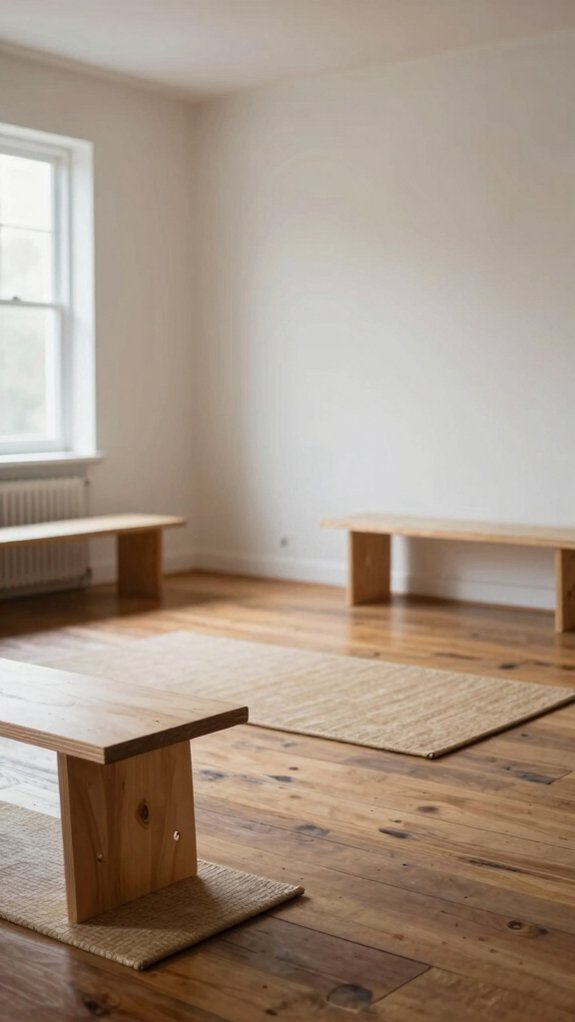
Even the fanciest home gym can feel clunky fast if the floor gets crowded, so you’ll want to leave some real breathing room! Start by zoning workout flow: keep clear lifting lanes wide enough for your stance, and cluster gear into one or two neat zones. That way, you can step, stretch, and switch moves without dodging bench corners like you’re in a tiny obstacle course.
Use wall pegs for stability balls and cubbies for kettlebells and bands, and keep the middle open. Less clutter means safer switches, faster circuits, and a room that feels welcoming, not squished.
Pick Durable Flooring That Feels Good
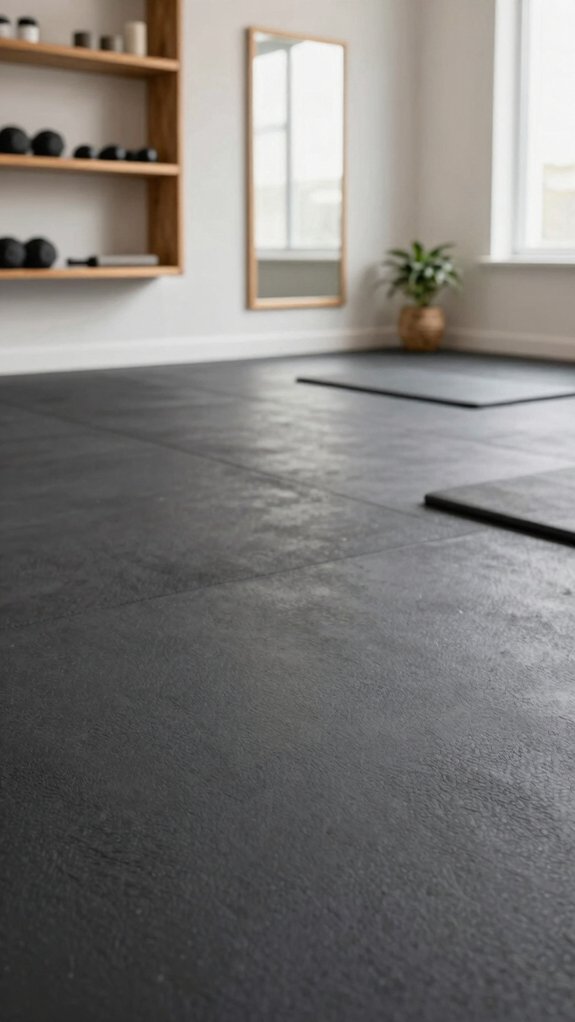
With the floor cleared, the next big win is choosing a surface that can handle all that movement without feeling like a punishment! You want rubber, cork, or wood-like gym flooring that cushions jumps, quiets steps, and helps your joints feel invited back tomorrow.
- Rubber mats: easy to clean, great for lifting.
- Cork: comfy, warm, and friendly for soundproofing options.
- Wood-like gym surfaces: smooth, steady, and stylish.
- Foam tile durability: decent for light work, but check wear first.
If you’re building over concrete, treat the floor like gear, not decor.
A good one keeps you training on strong and recovery days!
Use Color to Set the Tone

Color can totally change how your home gym feels, so choose it on purpose—bright, bold walls or a fun wallpaper can make cardio feel way more alive than plain neutral paint, wow!
If your space is small, try a little yellow on the ceiling or as a trim accent, since it adds energy and can make the room feel bigger without turning it into a neon box.
Want a calmer vibe instead? Go with soft black-and-white tones and warm textures, or even a deep blue that feels cozy and focused, and keep clutter low so the color does the heavy lifting.
Bold Color, Bigger Energy
When your energy is running on empty, a bold wall or wallpaper can do some sneaky heavy lifting for you!
In home gym rooms, you can use color to rally your crew vibe and make sweat sessions feel less lonely.
Try:
- A mural with waves or motion lines.
- A yellow ceiling for extra lift.
- Bright accents on one wall.
- Tying it all to your soundproofing upgrades and mirror placement, so the room feels intentional.
Local-art murals can add faux sunshine, and a warm ceiling opens the space up.
That’s a tiny trick with big wow!
Calm Neutrals, Clear Focus
If bold walls gave your home gym room a burst of pep, calmer shades can help it lock in and stay focused. Use black, white, and soft neutrals for muted motivation, then add accent cueing with one warm stripe or mat color. Keep neutral boundaries on floors and storage, so your eye lands on form, not clutter.
| Choice | Result |
|---|---|
| Soft white walls | Feels open |
| Mirror | Adds light |
| Cool tones | Calm yoga vibes |
| Small accent | Sets mood |
| Quiet cubbies | Faster setup |
For tiny rooms, reflect light. A single tone-setting backdrop, like Simply White, keeps you in the groove—nice!
Bring in Natural Light
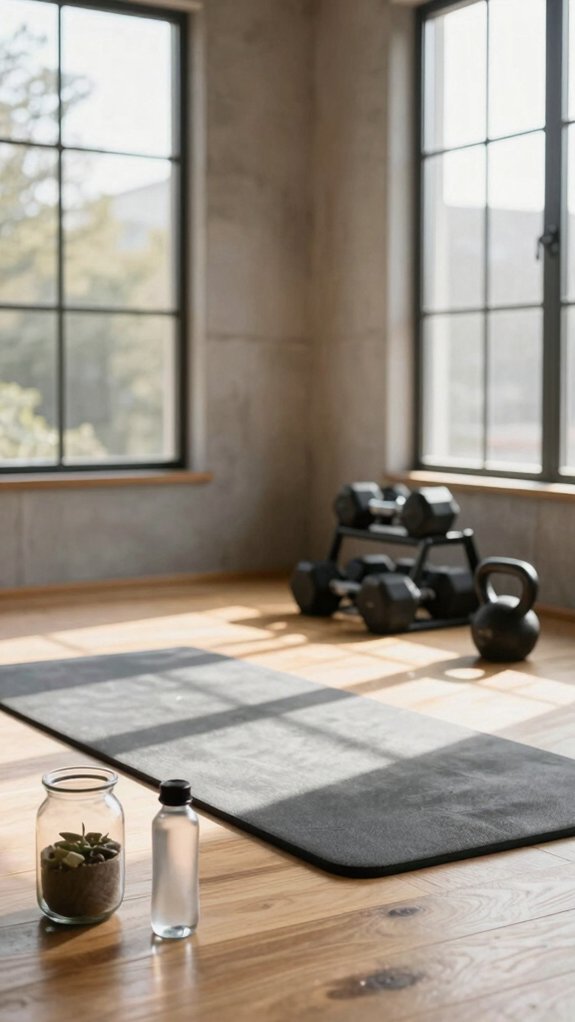
Even a great home gym can feel a little sleepy without daylight, so start by putting your workout zone where the sun shows up first in the day. You’ll feel more at home, and your crew will too! Ventilation planning and ceiling fan choice matter, but daylight leads the way.
- Set the gym by real windows, or a light well.
- Use mirrors to toss sun deeper inside.
- Keep tall gear out of the light path.
- In low-window rooms, use bright LEDs on dimmers.
That open, sunny feel helps you show up again and again—no pep talk needed!
Make Lighting Work for Early Workouts
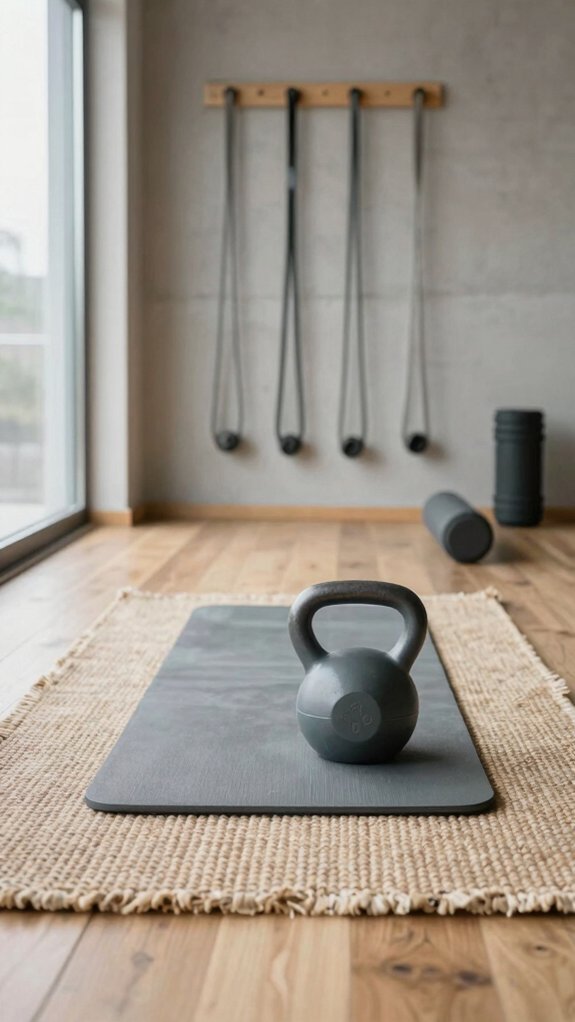
Before your 5 a.m. workout even starts, your lighting can set the mood, and trust me, that matters! Skip harsh overhead bulbs and build warm up lighting with sconces or bright LED layers that feel like a friendly nudge, not an alarm bell.
Create dimmable zones: one brighter spot for cardio or form work, one softer corner for stretching and recovery. If your room gets dark, pair daylight-style LEDs with gentle accents, so you stay alert without that interrogation-light vibe.
Finish with instant on switches, so you just walk in and go, no fumbling, no excuses, just your crew-first consistency.
Add Mirrors to Open Up the Room
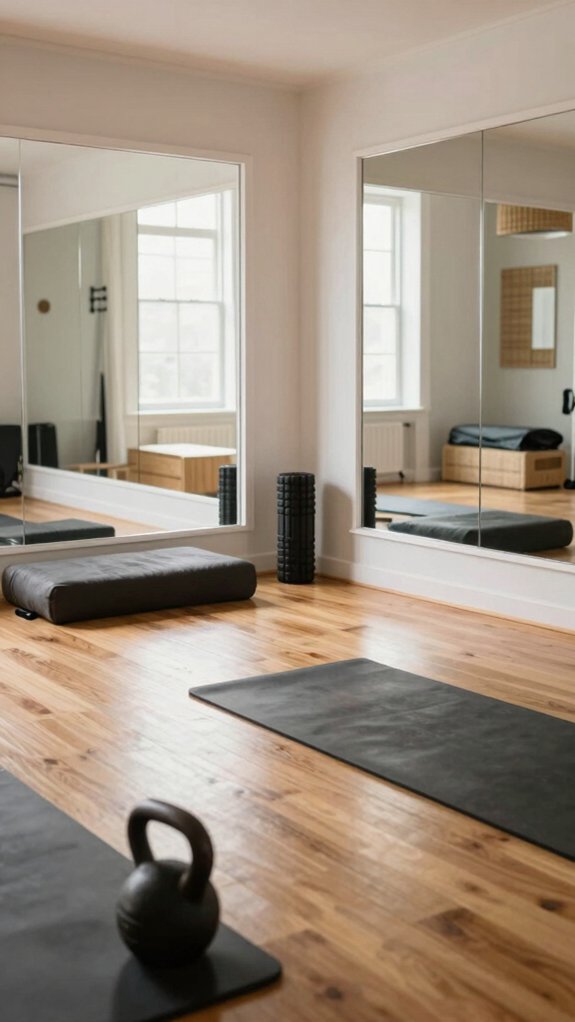
Add a mirror to your home gym, and wow, the room can suddenly feel bigger, brighter, and way less packed with gear. It’ll bounce light around like a pro, so even a tiny corner feels open instead of cave-like, which is a nice win on those early mornings.
Best part? You can check your form while adding a bit of style, so your gym feels more like a real room and less like a sad storage spot.
Reflect Light and Space
When you want your home gym to feel bigger without knocking down a single wall, mirrors are the magic trick! With smart Mirror placement and light direction, you can bounce daylight across finishes and make the room breathe.
- Hang one opposite a window.
- Use wall-mounted glass near darker walls.
- Pair it with storage balance, like cubbies.
- Keep visual clutter low for a cleaner look.
You’ll get better form checks, safer reps, and a space that feels like your crew belongs there. Tiny room? Big energy!
Add Depth and Personality
Mirrors don’t just make your gym look bigger, they can give it a whole new personality, too! Start with one well-placed mirror, or go bold with a full wall, and watch natural light bounce around your Home Gym Rooms like it paid rent. Use textured finishes, Personal mirror accents, and Reflective material options to keep the look interesting, not busy.
Pick shapes that fit your vibe, then mount mirrors at workout height for quick form checks. Add Layered lighting effects and a clean black-and-white palette with warm touches, and you’ll get depth, safer flow, and a room that feels like yours.
Build Storage Into the Home Gym
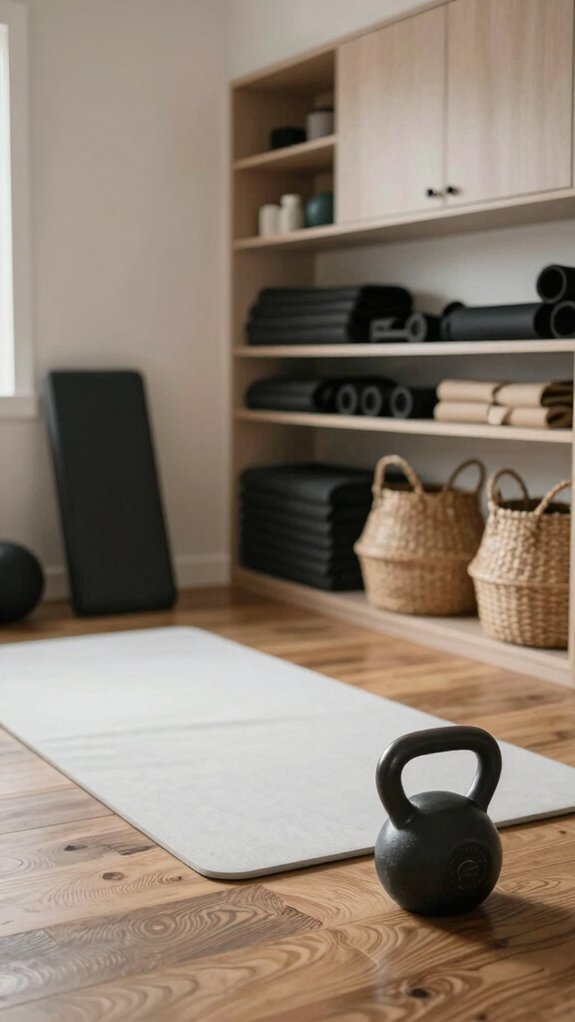
A great home gym doesn’t just need good equipment, it needs a smart place for all the little stuff too! With Zoned organization, you can stash bands, towels, ropes, and bottles where you grab them fast, and visibility cues help you see what’s missing.
Your workout routines feel smoother, and your clutter habits stay in check—nice!
- Use built-in cubbies for daily gear.
- Add wall pegs to keep floors open.
- Try sliding doors for bulky stuff.
- Build a tiny refreshment station.
When everything has a home, you’ll put it away faster, feel calmer, and keep showing up.
Create Separate Cardio and Strength Zones
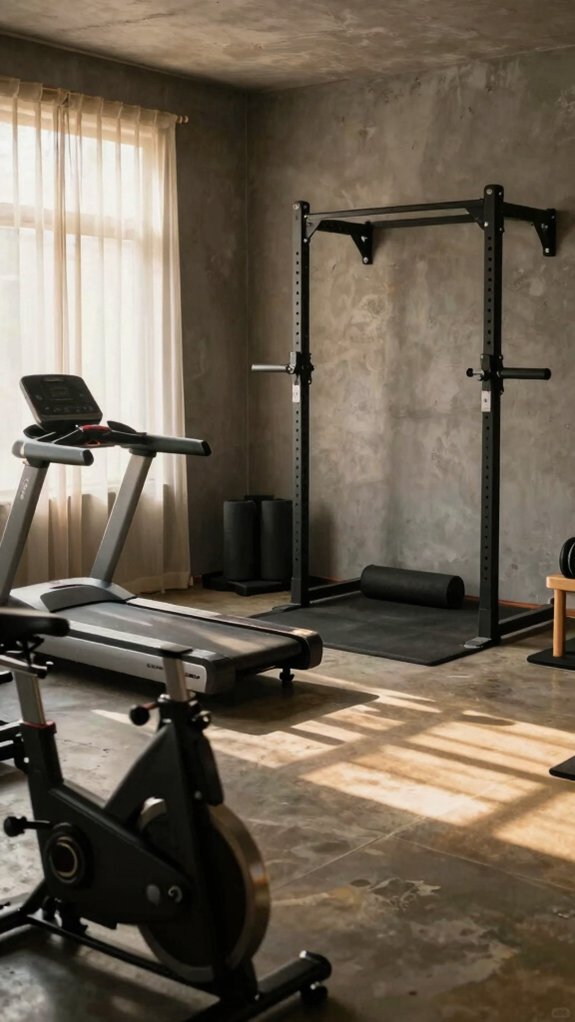
If you split your gym into clear cardio and strength zones, workouts start to feel way smoother, and your space stops tripping over itself!
You’ll build a zone workflow that feels welcoming, with visual boundaries from a rug, paint shift, or a simple divider.
Put the treadmill or bike in one lane, and keep racks and dumbbells in another, so you’ve got clear movement paths and less awkward zigzagging.
Use dedicated storage on the strength side, like cubbies and pegs, to keep gear from wandering.
Add softer light for lifting, brighter light for cardio, and, wow, even a sliding panel can keep things tidy!
Keep Gear Visible and Easy to Reach
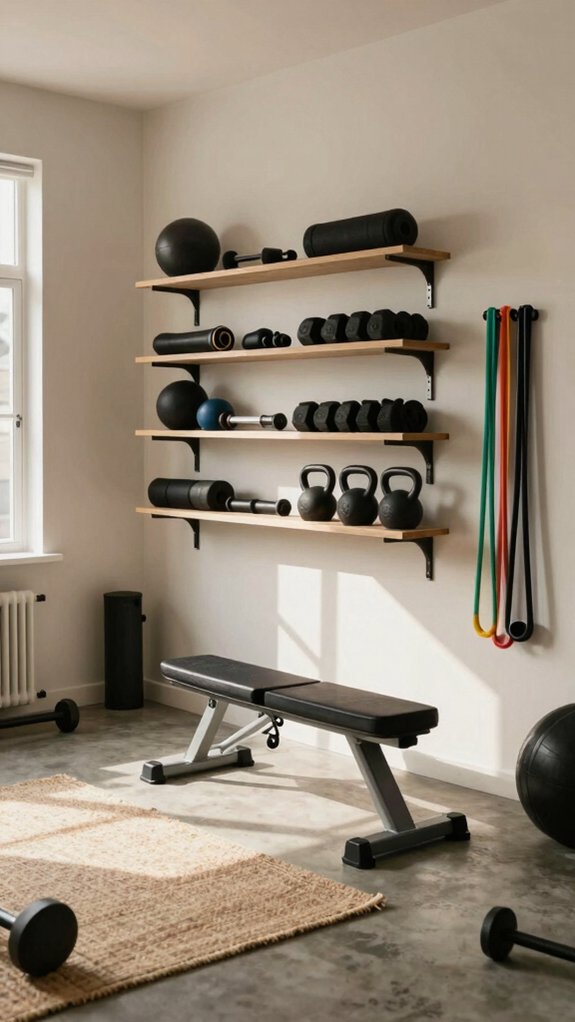
Along the walls, keep the gear you grab all the time right where you can see it, because hunting for a resistance band isn’t a workout move anyone asked for! You’ll feel right at home when your space stays open, friendly, and easy to use.
- Mount pegs and cubbies at eye level for bands, balls, and small tools.
- Make gear zones for towels, bottles, phone charging, and jump ropes.
- Slide big items, like a treadmill, out of sight with tuck-away storage.
- Place storage near your stretch or lift spot for fast setup.
That easy reach setup supports an audio friendly setup and smoother lighting timing, too!
Add Soundproofing for Quieter Workouts
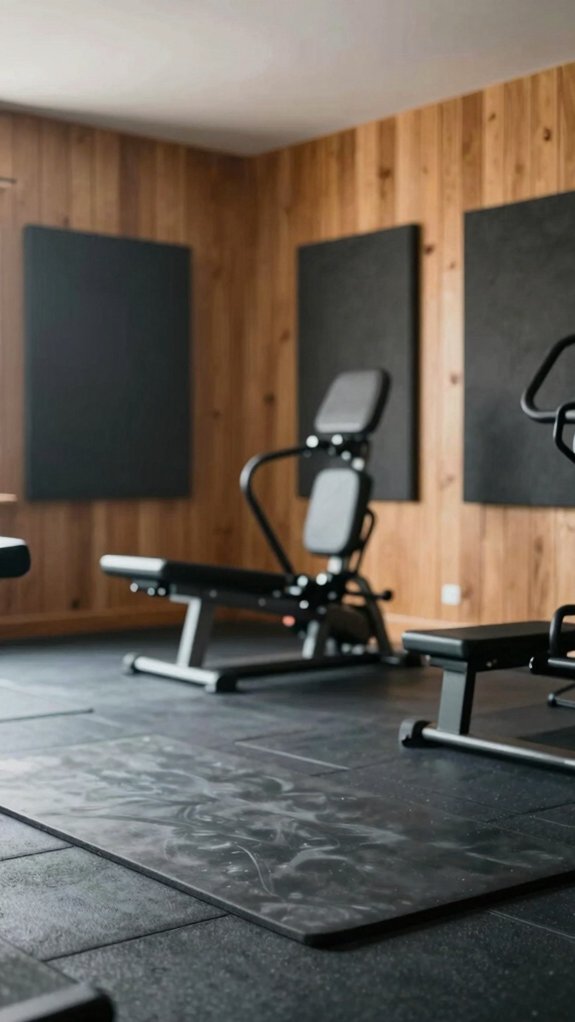
When your workouts get loud, your whole house hears the drama, so it pays to soften the sound before it bounces around like a runaway medicine ball!
Start with quiet flooring, like rubber or cork mats, under free weights to reduce floor vibration and keep your reps friendly to the downstairs crew.
Next, add thick rugs or wall paneling with fabric-backed panels, which are cheap, easy to hang, and great for trimming echoes.
For the biggest payoff, try ceiling absorption with an accent panel or drop-ceiling tiles, then seal door gaps with acoustic caulk.
You’ll get calmer workouts, less noise, and happier neighbors—nice!
Make the Gym Part of Daily Life
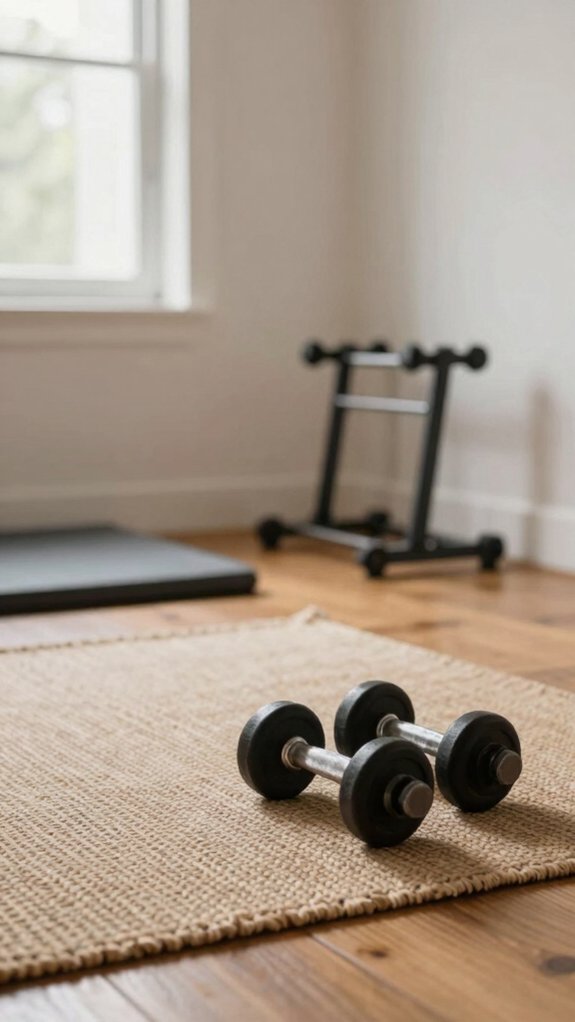
Make your gym feel like it belongs in the house, not like some weird bonus room you only visit on rare occasions!
Put it where you pass by it every day, like behind glass doors or French doors, so it stays in your sight line and quietly says, “Hey, time for a quick workout.”
Keep the setup easy to reach and ready to go, with clear zones, simple storage, and a water-and-towel spot, because the less fuss it takes, the more likely you’ll actually use it.
Blend With Everyday Spaces
Tucked beside the kitchen, hallway, or even the living room, a home gym can feel like part of everyday life instead of a lonely corner full of gear. You’ll fit in faster when the space matches your house, and wow, that makes showing up easier!
- Use Smart storage, hidden organization, with baskets and wall hooks.
- Pick Low maintenance finishes, easy upkeep so cleanup stays quick.
- Add glass or French doors for an airy, friendly feel.
- Keep clear paths, mirrors, and calm colors, so your wellness zone says, “Come on in!” not “Do not enter.”
Keep It Always Visible
Beside the living room, down a bright hallway, or right behind a pair of French doors, your home gym works best when you see it every day—because seeing it helps you choose it, even on “I’ll start Monday” mornings!
Keep it in your daily path, not tucked away like mystery luggage.
Use wall-to-wall sight lines, open spacing, and cohesive finishes so it feels like part of home, not a storage corner.
Add mirrors, warm light, and visible shelves for towels, bands, and water.
Those Wayfinding cues and daily reminders make setup easy, the room welcoming, and your next workout feel like yours!
Use Wallpaper, Mural, or Art for Energy
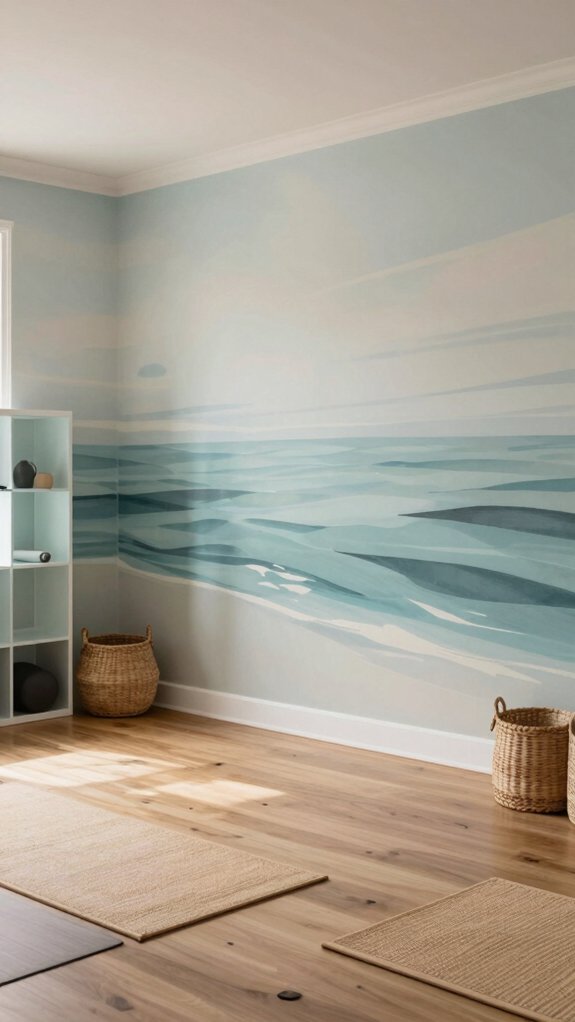
If your home gym feels a little too much like a blank box of sweat and good intentions, wallpaper, mural, or art can change that fast! You’re not decorating just to look cute, you’re building belonging and momentum.
- Try vibrant wallpaper, like a kaleidoscopic print, for instant cardio energy.
- Commission a local mural with waves, light bursts, and organic lines.
- Add yellow paint, even overhead, for faux sunshine.
- Match art continuity with layered lighting and energy accents; use bold strokes, and tie colors to nearby fabric.
That’s how you break the gym stereotype, and make the room greet you back!
Repurpose the Right Room for a Gym
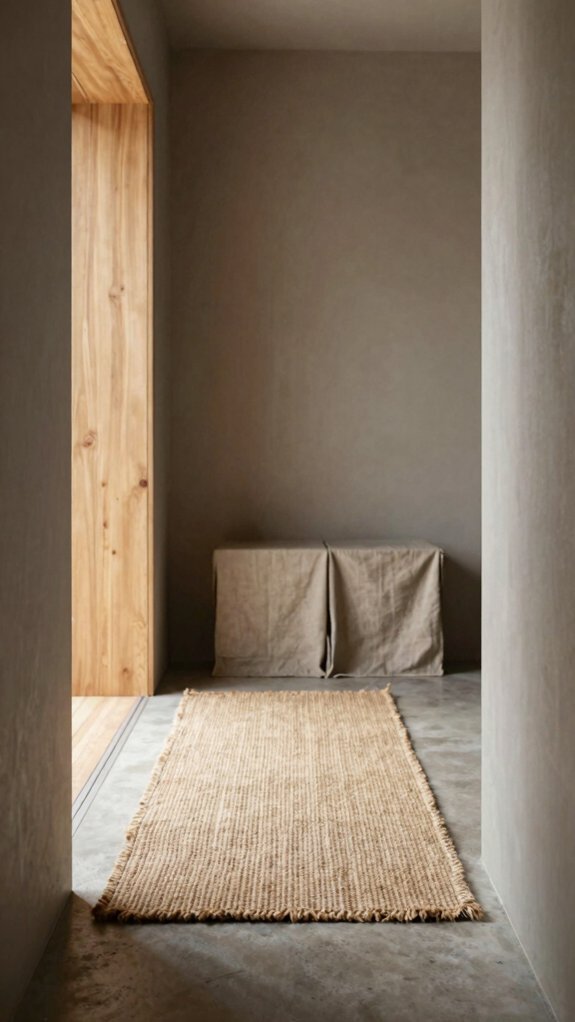
Now that your gym walls have some personality, let’s pick the room that actually makes you want to show up!
Start with the space you already use well, maybe a spare bedroom corner, an unused living room, a bright attic, or a barn conversion.
Good Lighting choices and soft finishes help you feel at home, while a mirror adds depth and a friendly vibe.
If you want more mobility space, choose an airy, uncluttered room for stretches and low-impact work.
Add pegs, cubbies, or built-ins, and keep a simple split plan with a low wall to separate sweat from daily chaos—nice!
Match the Gym to Your Home’s Style
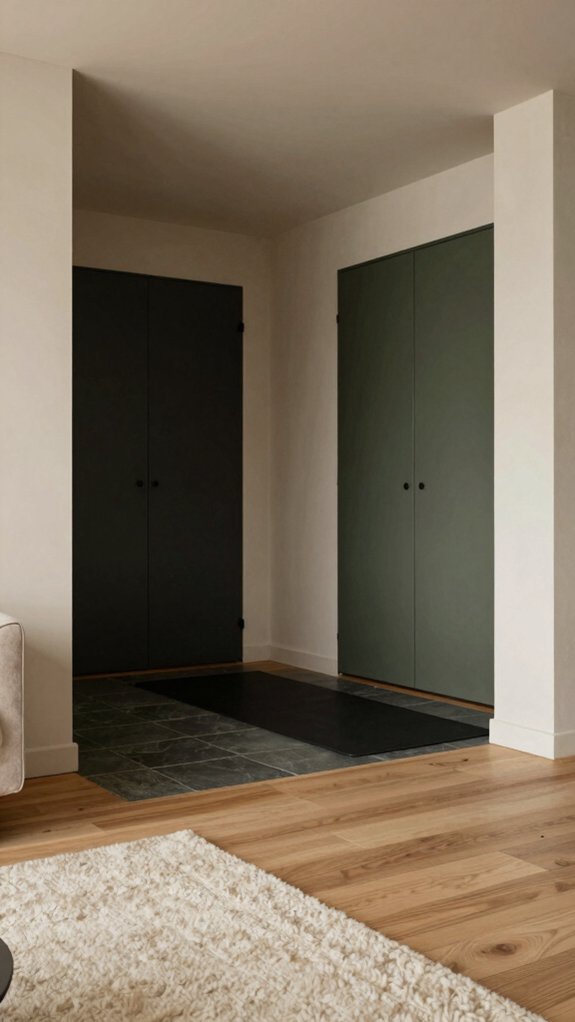
To make your home gym feel like it truly belongs, tie its look to the style you already love in the rest of your house—think black-and-white “adult zen,” warm wood tones, or even a moody deep blue that feels calm instead of cluttered.
You’re not building a rogue corner of equipment; you’re creating a room that fits right in.
Try this:
- Use Sculptural Storage, like cubbies or pegs.
- Match finishes to nearby rooms.
- Add one Wallpaper Accent for energy.
- Keep lighting soft and welcoming.
That way, your gym feels familiar, stylish, and easy to return to!
Add Finishing Touches That Invite You Back
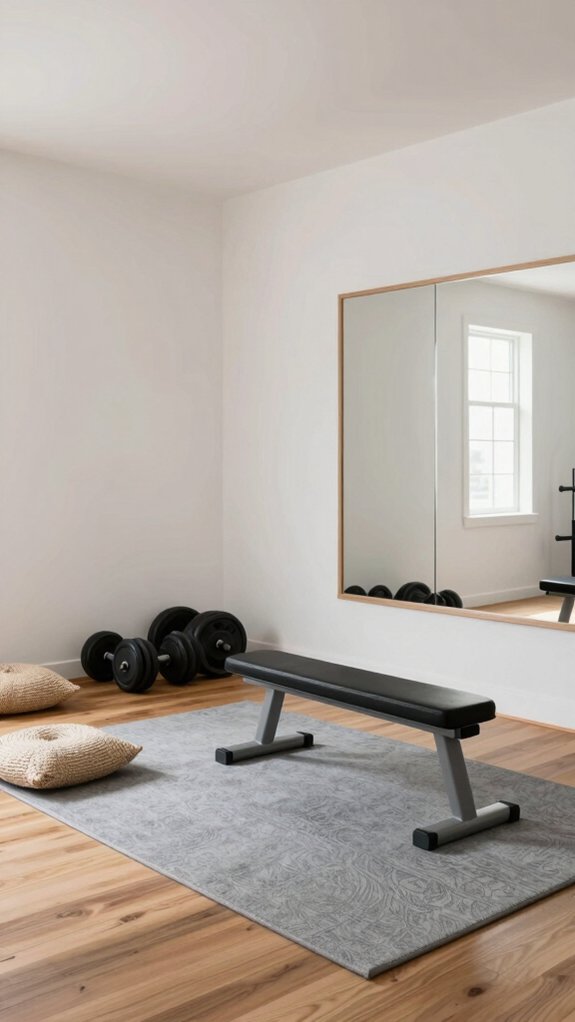
Keep your cohesive palette calm, maybe black and white or an adult-zen mix, then add practical decor that does double duty, like mirrors, a towel spot, and a water caddy.
Want a bigger vibe? Try bold wallpaper, a yellow ceiling, or a local mural with wave-like motion.
Swap harsh lights for gentle sconces, and you’ll feel ready for a 5 a.m. session—no pep talk required!
Create a Home Gym That Fits Your Routine
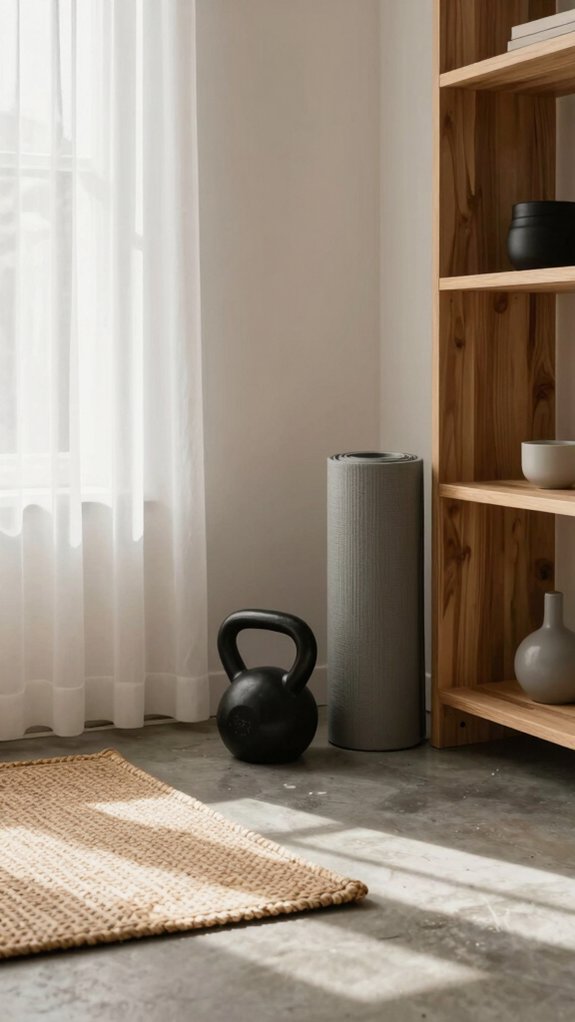
A pretty gym is great, but a room that actually matches how you work out? Start by mapping your week into zones: strength, cardio, and stretch/recovery. That way, your space fits your real life, not your fantasy life!
- Put wall pegs, cubbies, and built-ins where you reach first.
- Choose adjustable, joint-friendly tools for hard days and easy days.
- Leave clear floor space for fast swaps and safer movement.
- Add warm lights, mirrors, and a soft mat so you want to stay.
Routine tracking gets easier, and habit triggers feel natural. You’ll belong in your own gym—every day!