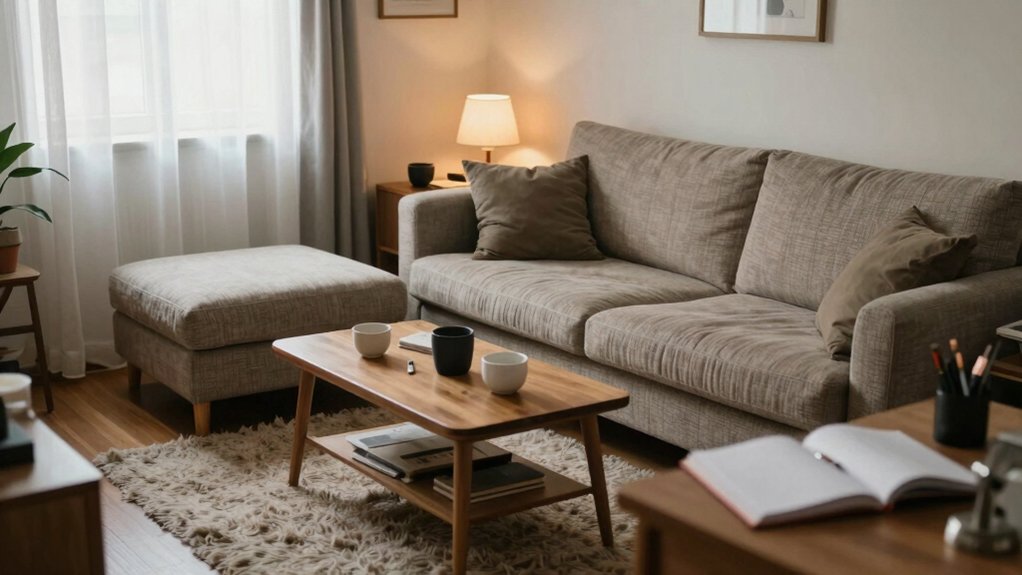

You can make a small living room work for real life by mapping your main path first, then choosing just 2–3 daily jobs like TV time, reading, or quick meals. Keep sofas and chairs on a rug, use slim side tables, and leave 60–90 cm for easy movement. Add a mirror, warm lamp, and one cozy nook, and you’ll get a room that feels calm, useful, and surprisingly roomy—wait till you see the next trick!
Key Takeaways
- Map doors, windows, and walk paths first, then choose one focal point and keep seating clear of traffic.
- Build the layout around 2–3 daily jobs, like TV time, reading, and quick meals, so paths don’t collide.
- Use a rug to define the seating zone, with sofa and chair fronts on it for a grounded, usable arrangement.
- Keep furniture scaled for movement: slim side tables, a right-sized coffee table, and 60–90 cm of clearance.
- Reduce visual clutter with light walls, restrained colors, a few textures, and storage pieces that hide everyday mess.
Map Your Main Path First
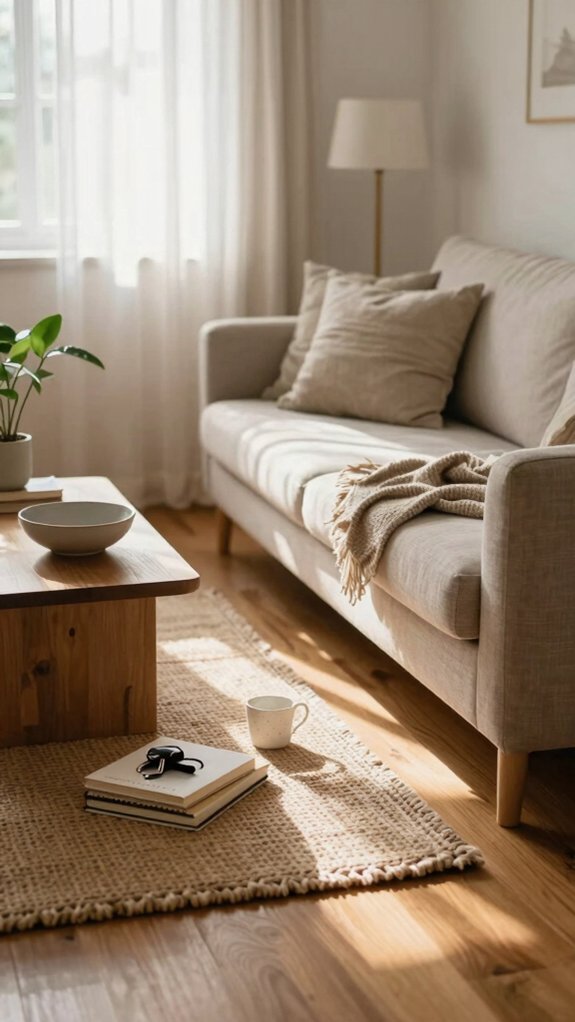
Before you move a single pillow, map the path you walk most, because in a small living room, flow matters more than stylish decor!
Grab paper, a pencil, and your floor plan, then mark doors, openings, and windows.
This quick sketch shows traffic flow and doorway positioning, so you can keep the sofa off your main route.
Next, choose one focal point, like a TV or fireplace, and let seating hug the outside edge.
In open spaces, add a rug to claim your zone.
If the room still feels off, shift the biggest piece first—tiny changes can save the whole vibe!
Choose a Layout for Daily Routines
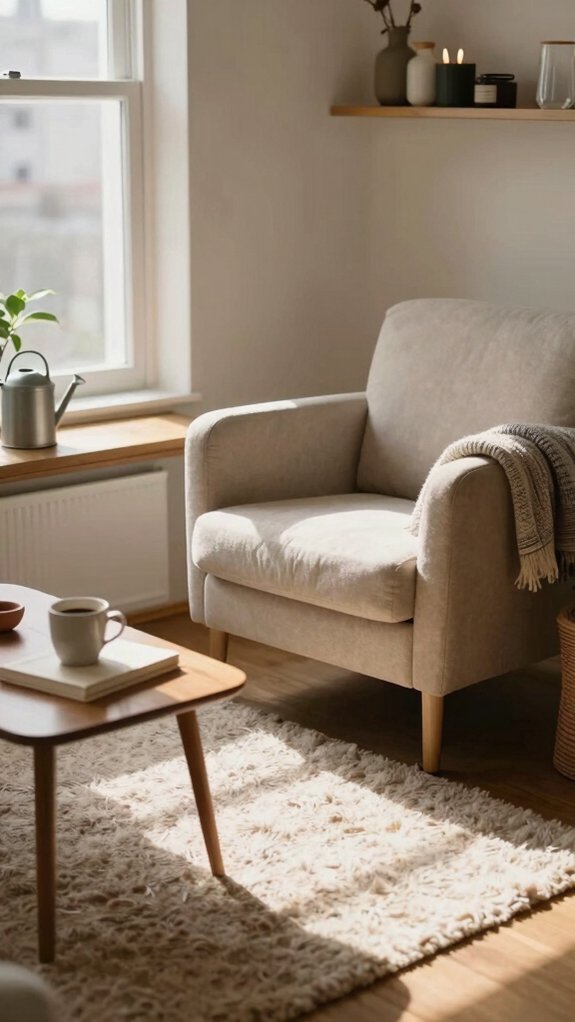
Now that you’ve mapped the path your feet take most, it’s time to make the room work for real life, not just for looks!
Pick 2–3 daily-use jobs, like TV time, reading, or quick meals, then let the layout keep those paths from crashing into each other.
If friends drop by, a loveseat and accent chair can flip into guest mode fast, no puzzle pieces required!
For evenings, face seating toward the TV or fireplace and let a big rug grab the front legs.
Need an entry to lounge route? Try traffic smoothing tricks with a console for keys and a turned chair.
In open spaces, angle furniture inward—done!
Zone Seating Around How You Use It
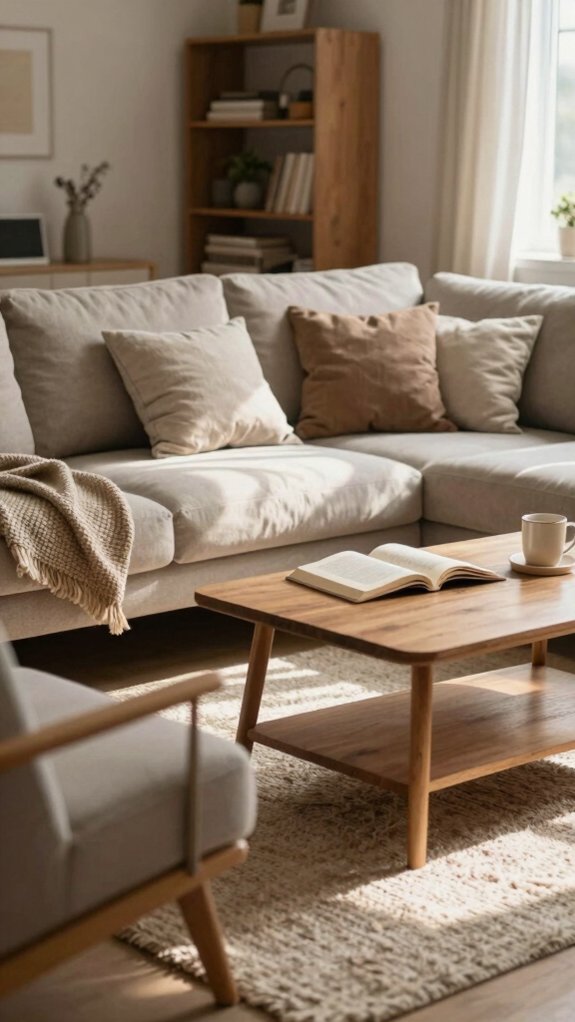
A smart little living room works best when it has just 2–3 daily jobs, and each one gets its own comfy spot—no gymnastics required!
Start with Rug boundaries: place the sofa and chair fronts on the rug, then you’ve got an instant hangout zone that feels clear and cozy.
If TV nights are your thing, face the main sofa toward the screen and keep side tables slim, so Traffic flow stays easy.
Want a reading nook? Add one chair, a lamp, and a tiny table near the window for Reading comfort.
For guests, use Seating flexibility, like a loveseat or stools.
Nice, right?
Use Color to Shape the Space
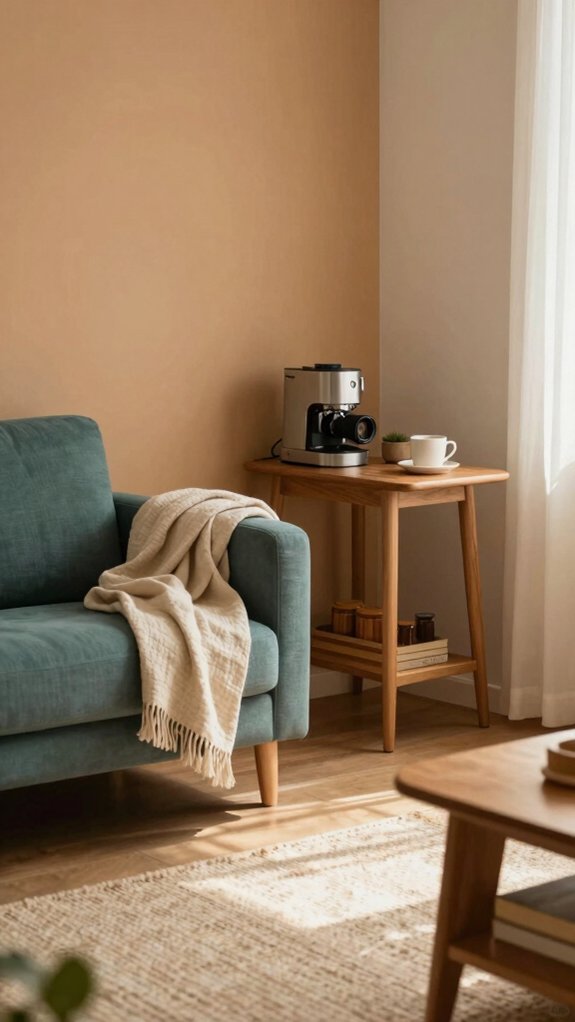
When a small living room starts to feel busy, color can quietly take the wheel and make everything look more put together!
Start with light wash walls in warm whites, alabaster, or sand, so the room stays airy and friendly.
Satin paint helps light bounce around without feeling too heavy.
Then try Color zoning with moody accents, like a deep blue bookcase or olive fireplace surround, to nudge the eye where you want it.
Add warm highlight moments with a yellow chair or baked cherry pillow, and use a limewash wall on one vertical surface.
The room feels cozy, clear, and welcoming—nice, right?
Size Furniture to Fit the Room
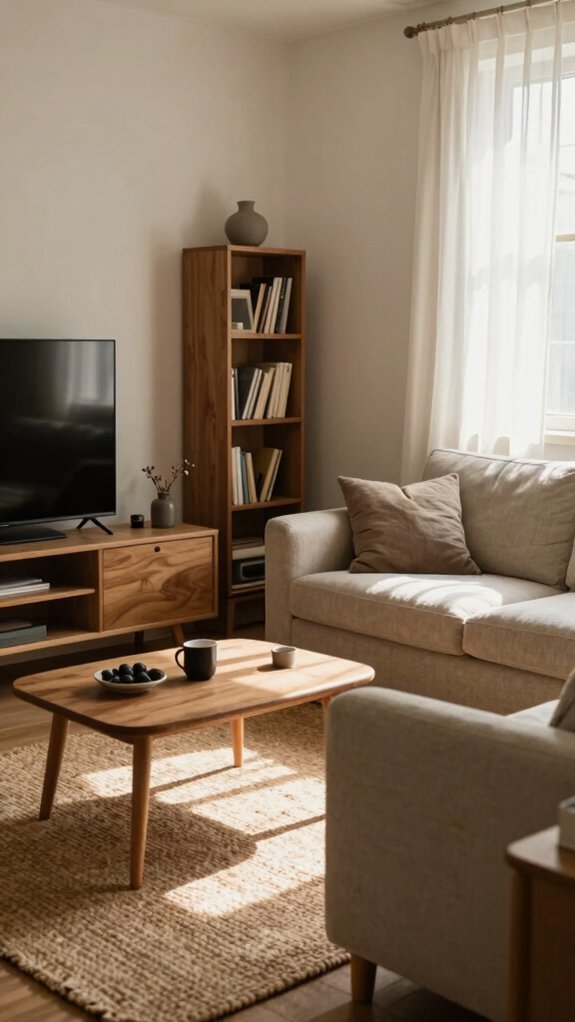
How do you make a small living room feel roomy without giving up comfort? Start with sofa fit planning and Measure clearance, then keep 60–90 cm of walk space so everyone can move like they belong there.
- Do a Rug scale check: the sofa’s front legs should rest on it, and 170 × 240 cm often works.
- Watch Coffee table proportion, or skip it for a round one that softens the path.
- Pick Low profile seating and an Accent chair leggy style for Corner flow sizing. That seating balance scale makes your space saving layout feel easy, friendly, and just right!
Make Storage Part of the Layout
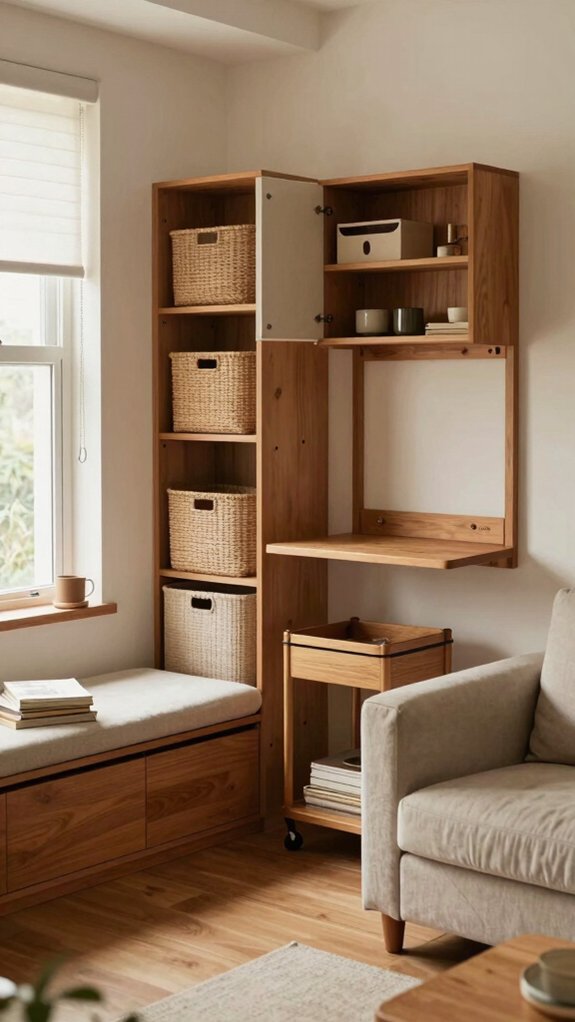
Storage can do more than hold stuff, it can shape how you move through the room, too! Put built-ins beside or behind your seating, and you’ll keep books, remotes, and those “where did I put that?” items close at hand without zigzagging across the space.
Then add closed cabinets or a slim media console where the mess happens, and boom, your room feels calmer, cleaner, and way more finished.
Built-Ins As Boundaries
Along the sofa line, built-ins can do more than hold your stuff—they can quietly define the borders of the whole room, and that’s a tiny layout trick with big wow factor! You get cozy seating alignment, cleaner sightlines, and way better clutter control.
- Start with a shallow bookcase or cabinet behind the sofa, using wood panels and shelves.
- Add media niches and wire hiding, so cords and remotes disappear fast.
- Keep one finish across the wall, and the living zone feels like it belongs together.
That same line can meet your dining or entry area, and boom, your small room feels calm, smart, and welcoming!
Storage That Shapes Flow
When every inch counts, your storage can do double duty and keep the room moving beautifully!
You can tuck hidden clutter systems into walls or behind the sofa, so remotes, chargers, and kid stuff vanish fast.
Smart cabinet placement matters too—keep a clear 30–36 inch path from seats to doors, and never let storage pinch the walkway.
Then, add closed cabinets for daily mess and open shelves only for your favorite decor.
For a clever finish, try a round coffee table with under-shelf storage or lift-top ottomans near the edges.
Nice, right?
Keep the Room Feeling Light
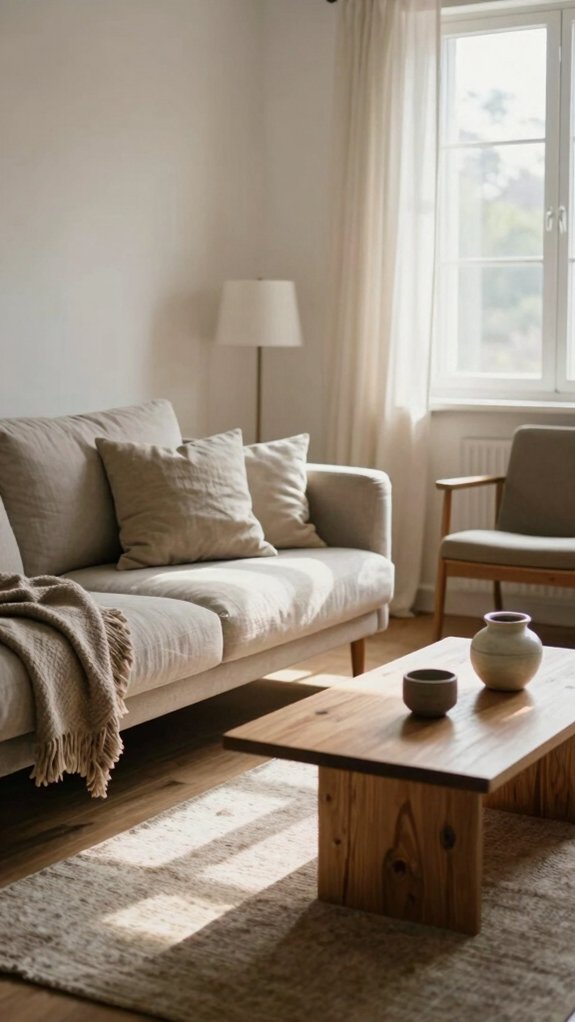
To keep a small living room feeling light, start with the backdrop: pick a calm wall palette that works together, like warm white, creamy vanilla, or soft taupe, so the room catches daylight and doesn’t feel like it’s wearing a heavy coat.
- Use floating shelves and slim, lifted furniture for easy flow.
- Add warm lighting, flexible seating, and airy textures, plus light curtains.
- Tuck away hidden clutter, then finish with reflective accents and a rug that anchors the seats.
Nice, right? You’ll get a room that feels open, friendly, and ready for real life.
Let Windows and Mirrors Open Things Up
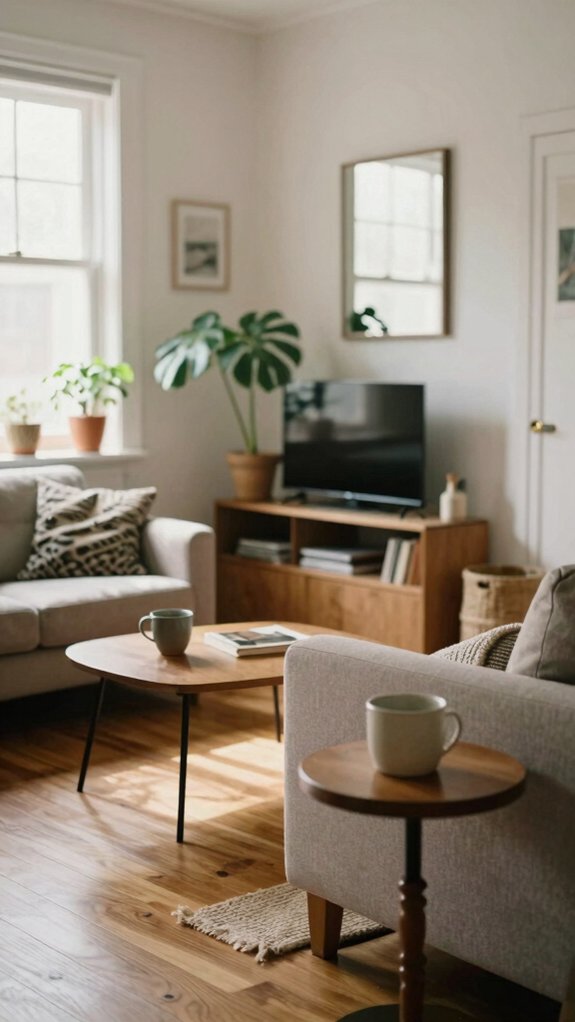
Windows can do a lot of heavy lifting in a small room, so keep your furniture low and your sightlines open, and let that daylight travel without bumping into a chunky chair—easy win!
Next, try a mirror across from a window or even behind a lamp, because it bounces light around like it’s getting paid for it, and a slim frame keeps the whole setup feeling light.
If your walls are painted in warm white or creamy tones, you’ll get a brighter, softer glow that makes the room feel bigger fast, and honestly, that’s a pretty sweet little trick.
Mirror Placement Tricks
A well-placed mirror can work a little magic in a small living room! You’ll love how it opens the space and makes your corner feel like part of the crew.
- Put one across from, or slightly angled to, a window. It rebounds daylight deeper in, and the seating zone feels wider.
- Choose a large mirror, about 24–36 inches wide or more, instead of tiny clusters. You get less visual clutter and better reflective sightlines.
- Hang it at eye level, then check mirror glare control by reflecting a soft lamp, not bright clutter. If shelves sit nearby, tuck the mirror between them and the window for one smooth light path.
Frame Windows Well
When you frame the window well, the whole room starts to breathe a little easier!
Try slim Roman shades or sheer curtains for outdoor light control, and they’ll keep the view soft while letting light spill across the floor.
Paint nearby walls in warm white, cream, or slate with a satin finish for easy thermal balance tips and less visual weight.
Float a low-back sofa toward the glass, then anchor it with a big rug so the space still feels connected, not chopped up.
For the best surprise, place a mirror across from the window, and wow, daylight travels farther fast!
Boost Natural Light
Even a tiny living room can feel brighter and bigger, and you don’t need a renovation to make it happen! Start with smart Window treatments options and airy sheer curtain styling, then let the sunshine do the heavy lifting.
- Hang a large mirror across from the window, or near it, so light bounces farther in. Cheap, easy, wow!
- Pick reflective floor choices, like light rugs or glossy accent placement on tables and frames, to keep brightness moving.
- Use satin paint, low furniture, and soft whites or taupe, then add a warm lamp for evening glow.
You’ll feel right at home!
Layer Texture Without Adding Clutter
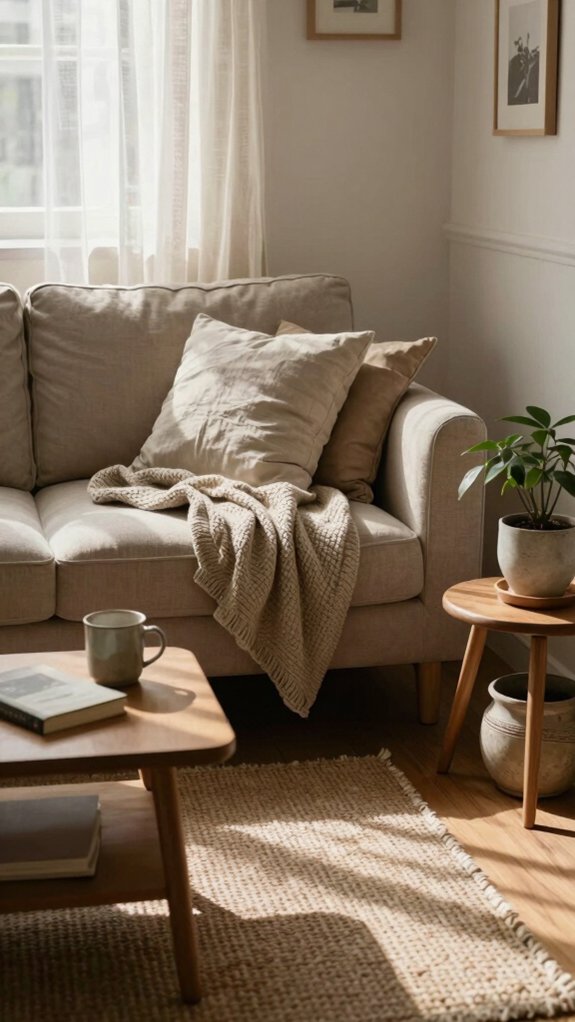
Texture can make a small living room feel cozy and polished, but too many little things can turn it into visual confetti fast!
You can lean on texture repetition, intentional contrast, and palette restraint, keeping to 2–3 neutral tones so the room feels calm and connected.
Try a boucle throw, a woven rug, and ribbed ceramics, then stop there—seriously, your shelves don’t need a party.
Use patterned cushions or one accent chair for rhythm, while walls and curtains stay simple.
Finish with storage integration, like a textured ottoman or baskets, so softness shows up, and clutter stays tucked away.
Build In a Cozy Nook
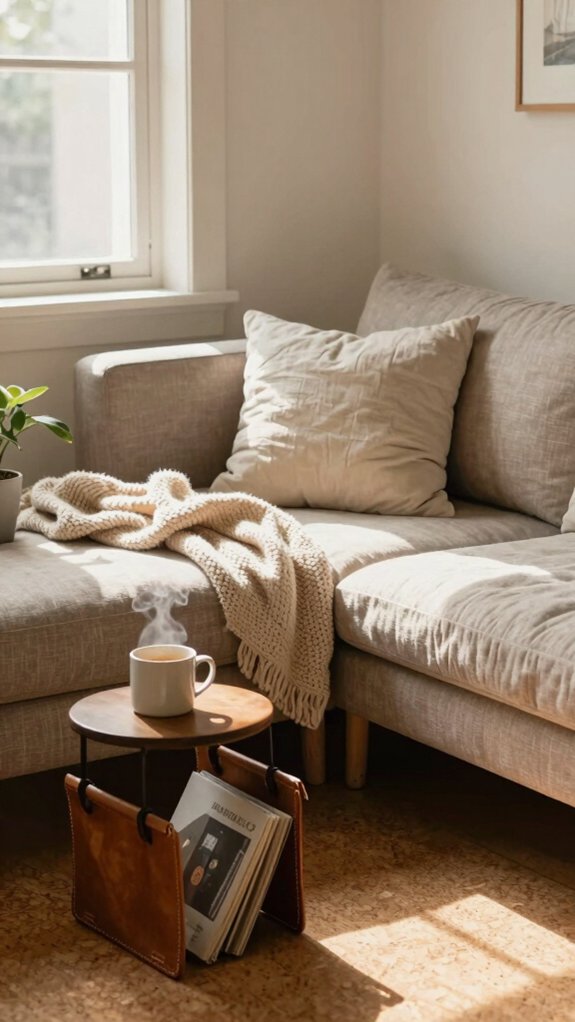
Got a lonely corner or alcove? Turn it into a cozy reading nook with a low chair, a small bookshelf, and a side table, and suddenly you’ve got a soft seating zone that feels like a tiny escape.
Add a warm floor lamp or wall sconce, then finish with a rug, throw, or even curtains if you want a little privacy—because yes, your living room can absolutely have its own mini hideout!
Reading Corners
When your living room feels a little too busy, a reading corner can swoop in like a tiny retreat! You can make it feel like home, not just a spare spot, with texture variety and a calm lighting mood. Try:
- Tuck a boucle or velvet armchair into a quiet alcove, then add a side table for tea, glasses, or your latest page-turner.
- Use a wall sconce or fabric-shade lamp for a soft pool of light, so the room stays relaxed.
- Finish with a narrow shelf, throw, and rug, and leave a clear 90 cm path.
Soft Seating Zones
A small living room can feel surprisingly roomy if you give one daily habit its own soft seating zone**—think morning coffee**, evening reading, or that “I just need five quiet minutes” moment!
Focus on micro habits, and you’ll create calm routines that fit your life.
Pick a low-profile plush chair or tiny loveseat, then add an end table so your mug, phone, or book stays close.
Layer a wall sconce with a floor lamp or shaded lamp for a warm glow.
In an alcove, built-in seating with hidden storage keeps clutter out.
Finish with a small rug, and your cozy hideaway feels like home!
Mix Style With Practical Pieces
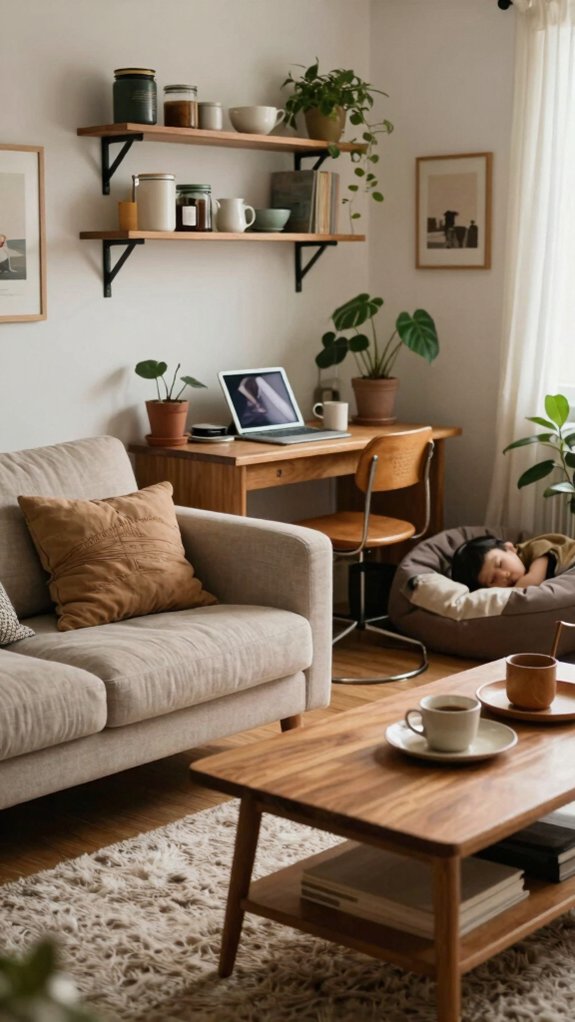
Style and function can totally share the spotlight in a small living room, and honestly, they work better together than apart! You can keep your space chic and easy to live in with practical anchor styling, so the room feels welcoming, not cramped. Try this:
- Pair a low-back sofa with a right-sized rug, and let movement stay smooth.
- Mix a loveseat, one accent chair, and a slim side table for cozy, clutter-free reach.
- Add vintage lighting pairing, plus a storage coffee table, so style hides the mess.
That’s the sweet spot, friend!
Add Personal Details That Work Hard
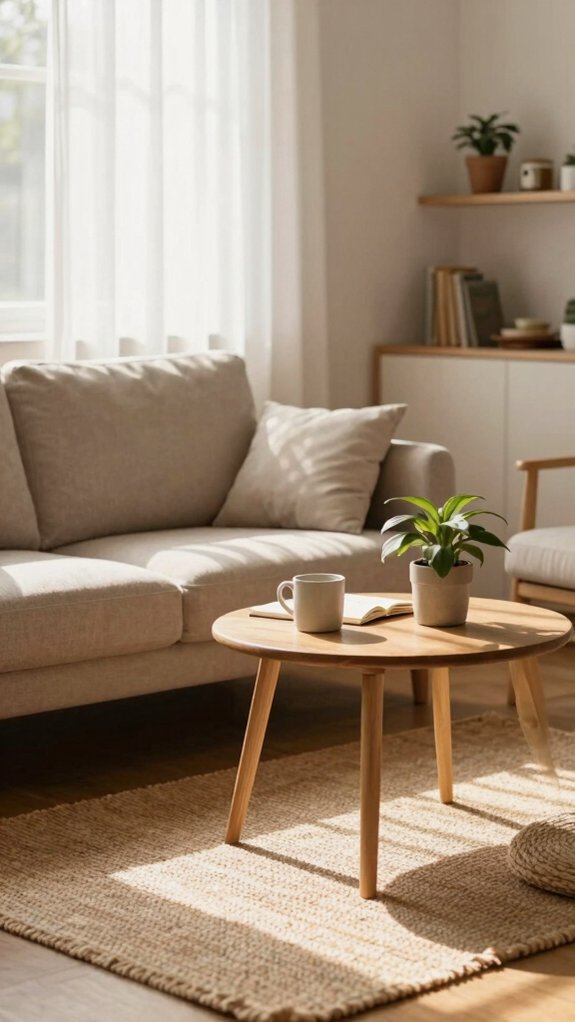
Even in a tiny living room, your personal stuff can do serious work—if you give it a job! Use meaningful photos, then prioritize easy access with a few shelves, books, and framed keepsakes on one end table.
| Idea | Materials | Result |
|---|---|---|
| Photos | Frames | Warmth |
| Accents | Tray | Easy swaps |
| Storage | Cabinet | Hidden cords |
| Seating | Ottoman | Extra spot |
| Zone | Rug | Cozy feel |
DIY? Try a vignette: gather 3 items, arrange fast, and keep surfaces clear. Display seasonal accents, but maintain tidy surfaces so the room still breathes. The best trick? A storage ottoman—cheap, simple, and secretly heroic!
Adjust the Layout for Real Life
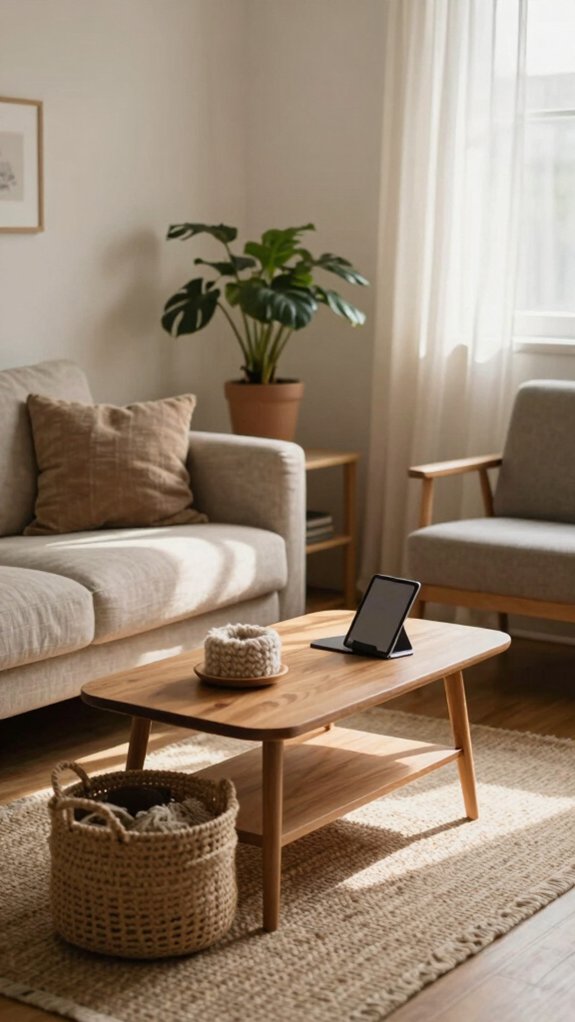
Your living room layout should work like a friendly little traffic cop, guiding people where they need to go without creating a pileup!
Start with 2–3 daily priorities, then shape the room around them for real usage and daily comfort.
- Pick one focal point, like the TV or fireplace, and zone the area with a rug.
- Anchor seating near doors or windows, and float a low-back sofa if sightlines matter.
- Use flexible furniture, like a loveseat, chaise, or stools, and keep pieces scaled.
Measure first, buy second, and let practical flow make your small space feel like home!