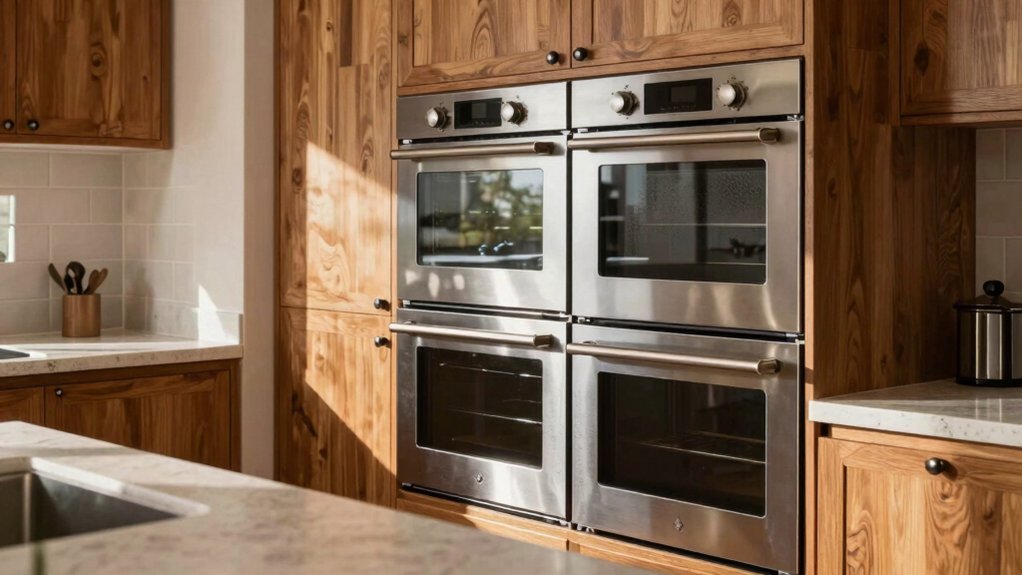

Choose your wall oven layout by watching traffic flow first, then leave room for doors, drawers, and a handy landing spot. A single oven keeps weeknight meals simple, while a double oven helps you bake and roast at once, wow! Put the oven near the cooktop for fewer hot-pan trips, and use an end counter or L-shaped nook for safe transfers. Smart placement keeps cooking calmer, faster, and way less clumsy—there’s more clever setup ahead.
Key Takeaways
- Map traffic flow and cabinet clearances so oven doors, drawers, and people can move without blocking the kitchen.
- Place wall ovens near the cooktop with a landing counter beside them for safer hot-pan transfers.
- Choose a single wall oven for compact, everyday cooking and a double oven for flexible two-temperature meal prep.
- Use convection, rapid preheat, and adjustable racks to speed cooking and improve oven workflow.
- Combine range and wall oven zones in larger kitchens to separate quick stovetop tasks from baking and roasting.
How to Choose a Wall Oven Layout
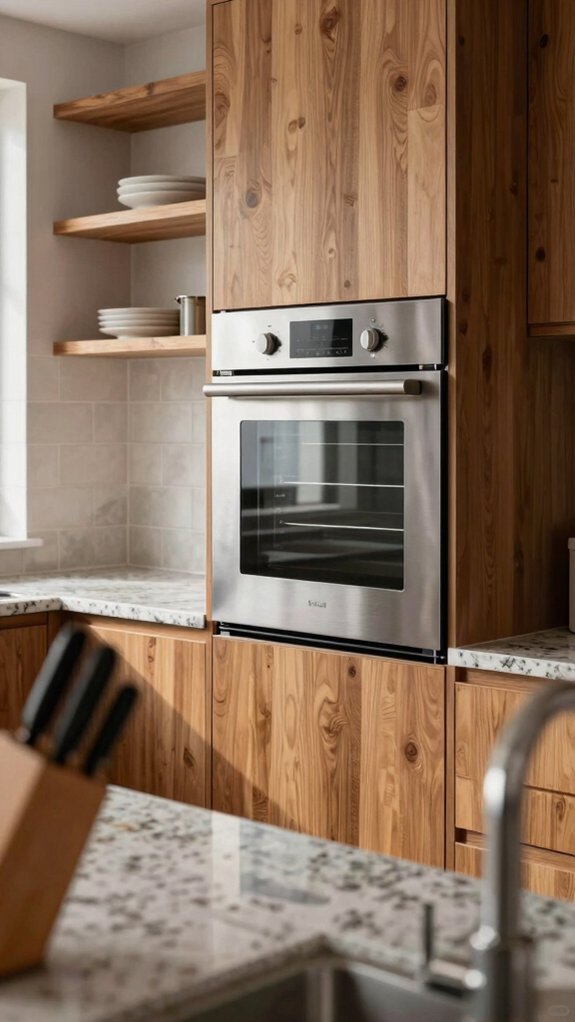
How do you pick the right wall oven layout without turning your kitchen into a traffic jam? Start with traffic flow mapping, then check Cabinet clearance planning so doors, drawers, and people all have room to move. Choose a single oven for one-dish meals or a double if you juggle two temps like a pro!
Place the oven near your cooktop, ideally at a counter end with a landing spot beside it, so hot pans travel less.
If you want a sleek look, stack units neatly, coordinate cabinet doors, and tuck the tower beside pantry storage. Finish by matching fuel, size, and safety features to your routine.
Single Wall Ovens for Everyday Cooking
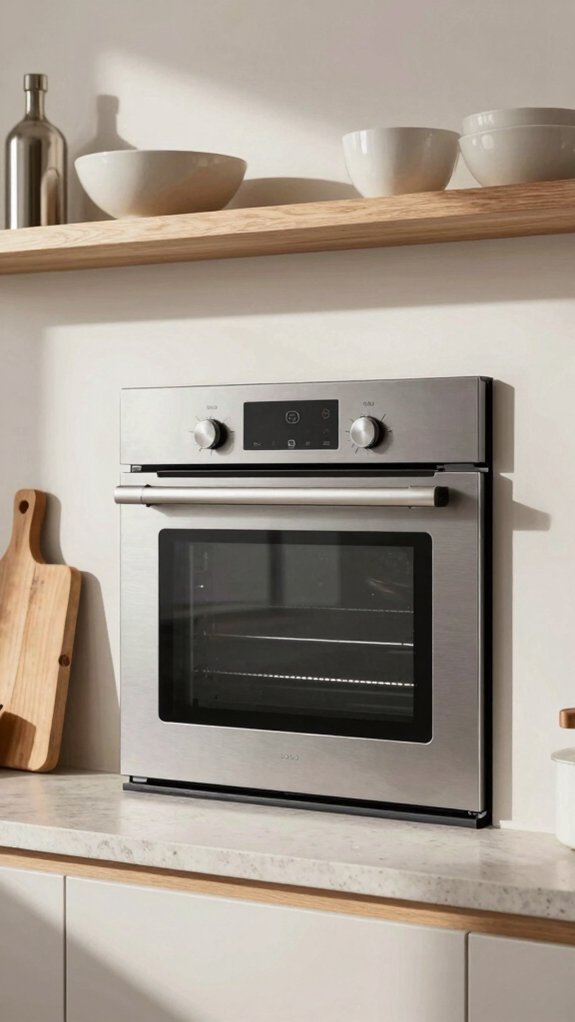
Because everyday cooking usually doesn’t need a giant setup, a single wall oven can be the sweet spot—it gives you one dedicated cavity in a compact cabinet, so weeknight lasagna, roasted veggies, and Sunday cookies all have a home without eating up extra space.
Nice, right!
With Kitchen workflow planning, you keep the oven close to prep zones, and countertop clearance tips help your staging area stay open and calm.
You’ll love how one temperature fits one recipe at a time, so baking feels less fussy.
Add adjustable racks, easy-clean finishes, and you’ve got a friendly setup that just works.
Double Wall Ovens for Faster Meal Prep
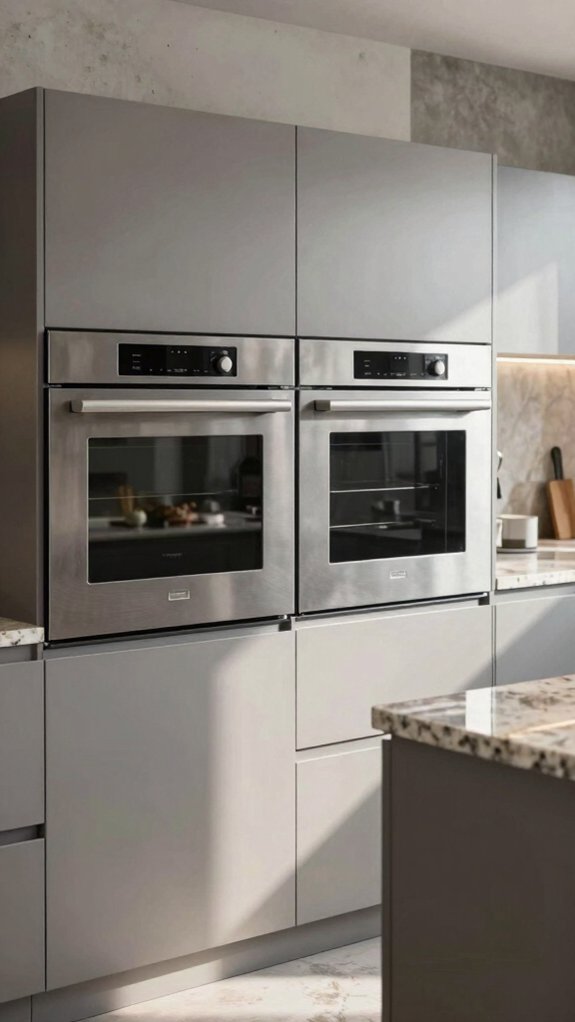
If a single wall oven works nicely for everyday meals, a double wall oven takes things up a notch for busy kitchens! You get meal timing control, plus real retuning savings, because both cavities cook at once.
- Roast chicken below.
- Bake rolls above.
- Slide trays to the nearby counter.
- Let convection or rapid preheat speed things up!
With hot dishes moving straight to the landing spot, your cooking zone stays smooth and friendly. On hectic nights, you’ll feel like part of a well-run kitchen crew, not a solo act juggling pans. Dinner lands sooner, and everyone wins!
Range and Wall Oven Layouts for Large Kitchens
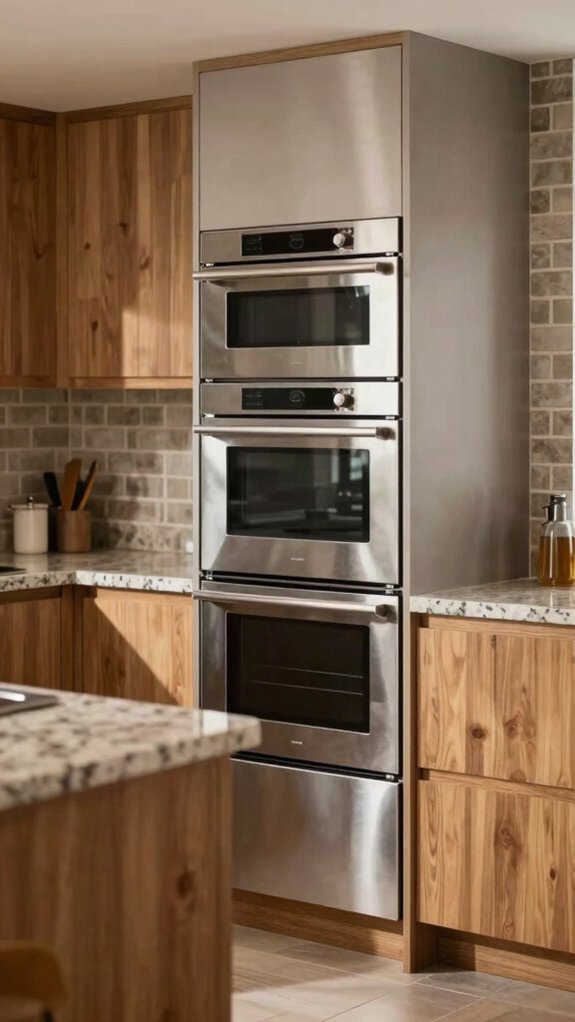
In a large kitchen, a range and wall oven layout can feel like having two chefs on the same team, and that’s a very good thing!
You get two cooking zones: the range for quick stir, simmer, and sear jobs, and the wall oven for baking, roasting, and holiday trays.
This setup gives you extra capacity without crowding in stacked units.
Look for Convection options, steady oven temperature stability, and smart cooktop safety clearances so you can move with confidence.
Even better, a perpendicular landing counter makes hot-pan handoffs easy.
Tucked into cabinetry, the wall oven keeps your kitchen looking polished and welcoming—nice, right!
Placing Wall Ovens Near the Cooktop
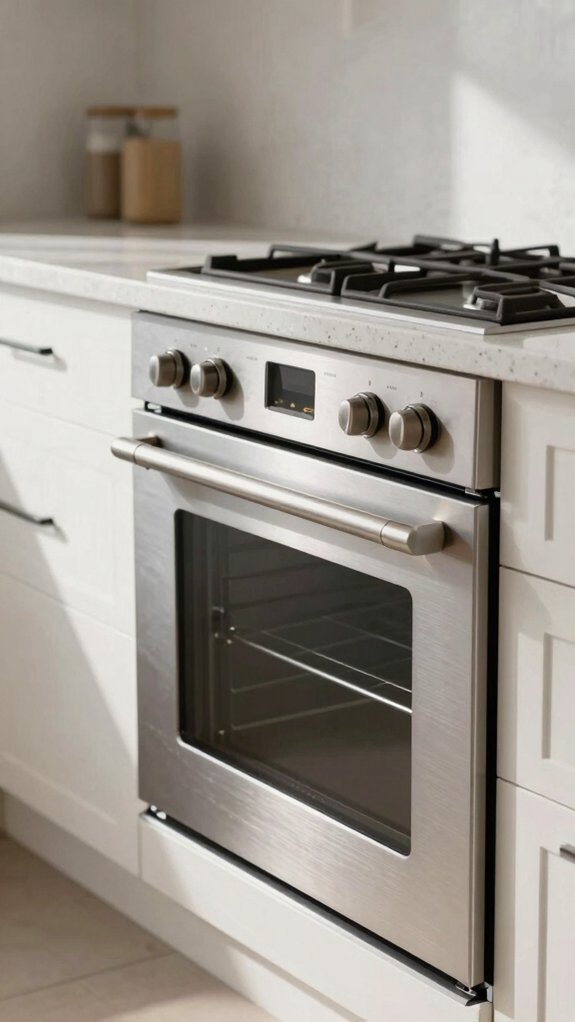
When you place your wall oven stack near the cooktop, you create a tight little cooking zone, so you can move pans, trays, and finished dishes without doing a kitchen marathon.
An end-of-run setup works especially well, since it gives you side counter space for landing hot items, and yes, your hands will thank you!
If you can, line it up with a perpendicular counter or an L-shaped layout, because that extra landing spot makes the whole setup feel slick and easy.
Cooktop Adjacency
Tucked near the cooktop, your wall oven stack can turn the whole area into a true cooking zone, and that’s a game-changer! You’ll walk less, move faster, and feel like you belong in a pro-level kitchen.
- Picture hot pans gliding straight from skillet to oven.
- Add a landing counter beside the door for easy set-down.
- Check door swingclearance so nothing bumps your flow.
- In L-shaped layouts, use the other run as your stash spot.
With double ovens, this setup shines even more, because you can slide dishes to a perpendicular counter and keep dinner rolling. Simple, smart, and seriously satisfying!
Complete Cooking Zone
Because your wall oven stack sits close to the cooktop, you can turn that stretch of counter into a true Cooking Zone—no marathon walks with hot pans, no awkward back-and-forth, just smooth, fast movement from oven to pan and back again! It feels like your kitchen’s cheering section, and honestly, that helps.
| Layout | Move | Win |
|---|---|---|
| End run | Add drop-off space | Easy unloading |
| L-shape | Split zones smartly | Stay together |
| Nearby ovens | Open to counter | Fast access |
To enhance clearance, keep a multi task landing beside the oven; it’s your instant drop-off spot, so dinner doesn’t wait.
Why Landing Space Matters Beside Wall Ovens
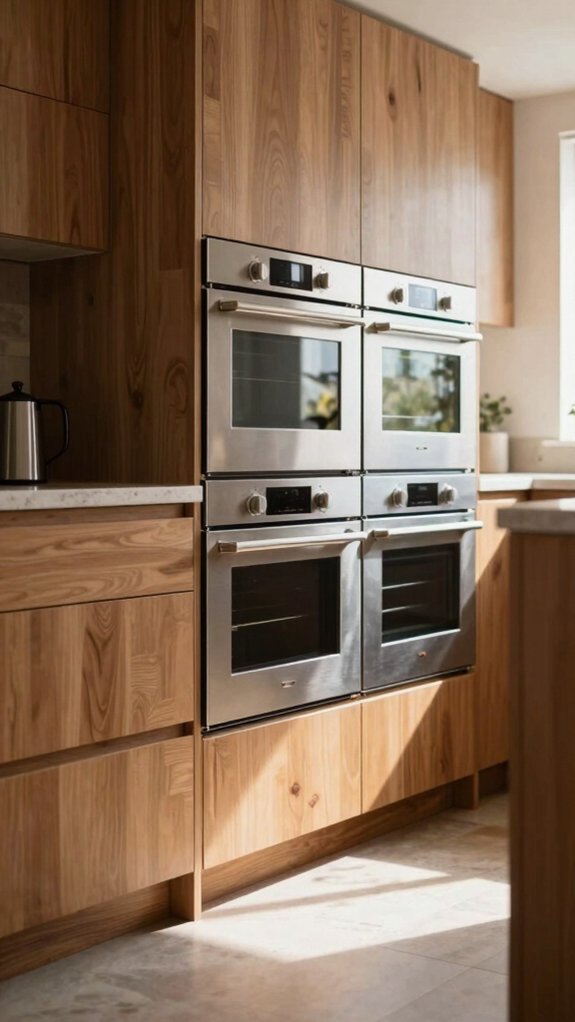
Landing space beside your wall oven gives you a safe spot to set down hot pans right away, so you’re not juggling a heavy dish like it’s a game show!
It also keeps your workflow smooth, because you can move from oven to counter without making a traffic jam in the kitchen.
And with double ovens, that handy landing zone beside the door swing can be the real hero, letting you unload fast and keep cooking without the awkward reach—nice!
Landing Space Benefits
When you pull a hot casserole out of a wall oven, a nearby counter can feel like your best friend! Landing space boosts your kitchen traffic flow and gives you a spot for hot dish staging, so you’re not balancing pans like a circus act.
- Drop-off zone: set trays down fast.
- Plating spot: spoon, slice, and cover in place.
- End-of-run helper: define your cooking zone neatly.
- Layout win: in L-shapes or stacked cabinets, you keep space close and calm.
That little counter makes your routine smoother, friendlier, and easier to love, especially on busy nights!
Safe Oven Transfers
A hot pan shouldn’t need a cross-country trek, so it helps to plan a little drop-off counter right beside your wall oven! You’ll feel calmer when you’ve got a safe landing spot for casseroles, cookies, and roasting pans, because quick transfers cut down on wobbling and spills.
Keep oven door clearance in mind, and place that counter on the hinge side or just beside a double stack. Transfer clearance planning works best when the oven sits at the end of a counter run, or inside a cooking zone, where your path stays short and easy.
Even corner ovens need nearby counter support—no juggling act required!
How Tall Pantry Walls Balance Oven Depth
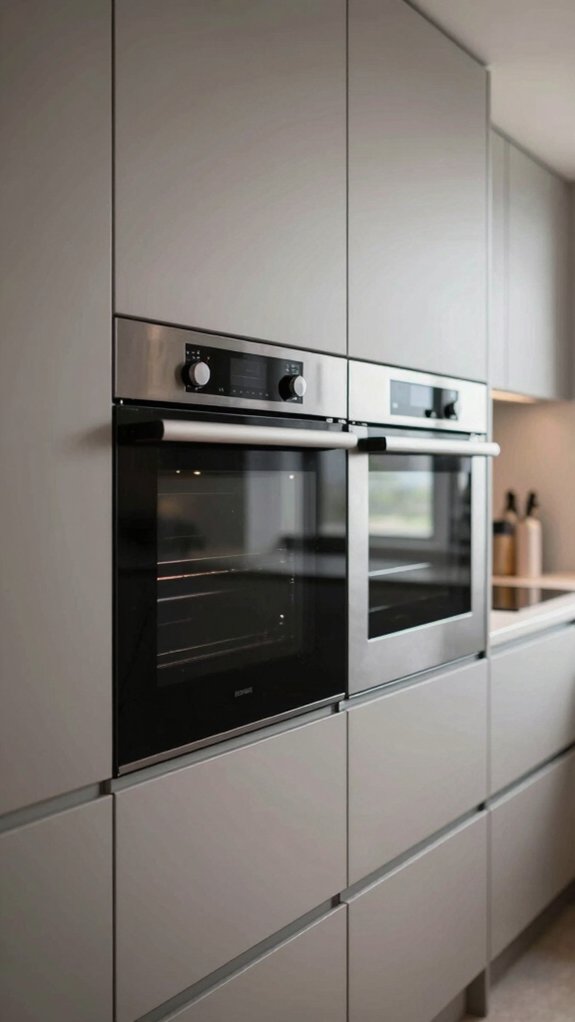
- Picture pullout pantries flanking the oven.
- Imagine cabinet fronts gliding in one straight row.
- Try recessing the oven about 6 inches, if needed.
- Notice how the oven nestles in, neat and friendly.
That setup boosts workflow, storage, and smiles!
Corner Wall Oven Layouts That Save Space
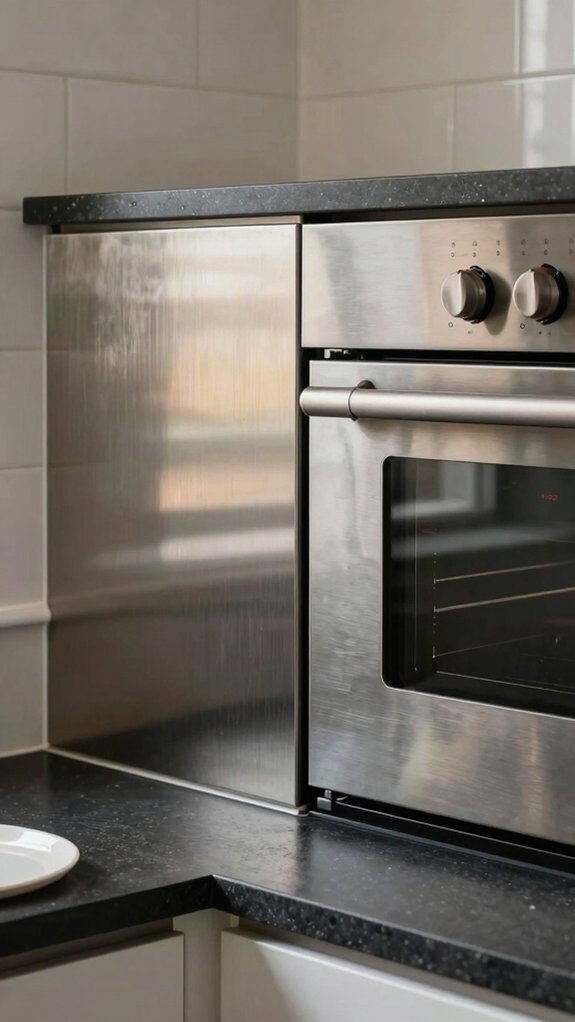
Tucked into a corner, a wall oven can quietly save a surprising amount of space, especially in kitchens where every inch counts! You’ll love how it tucks in neatly, keeps the room open, and still feels like part of the team.
| Benefit | Why it works |
|---|---|
| Recessed corner fit | Cuts visual bulk |
| Handle clearance access | Doors swing more comfortably |
| Nearby pantry depth | Balances the look |
Try a recessed double oven, set back by about 6 inches, and pair it with matching tall cabinets. You get cleaner lines, better flow, and more prep space—pretty smart, right?
How to Choose Between Single, Double, and Combo Ovens
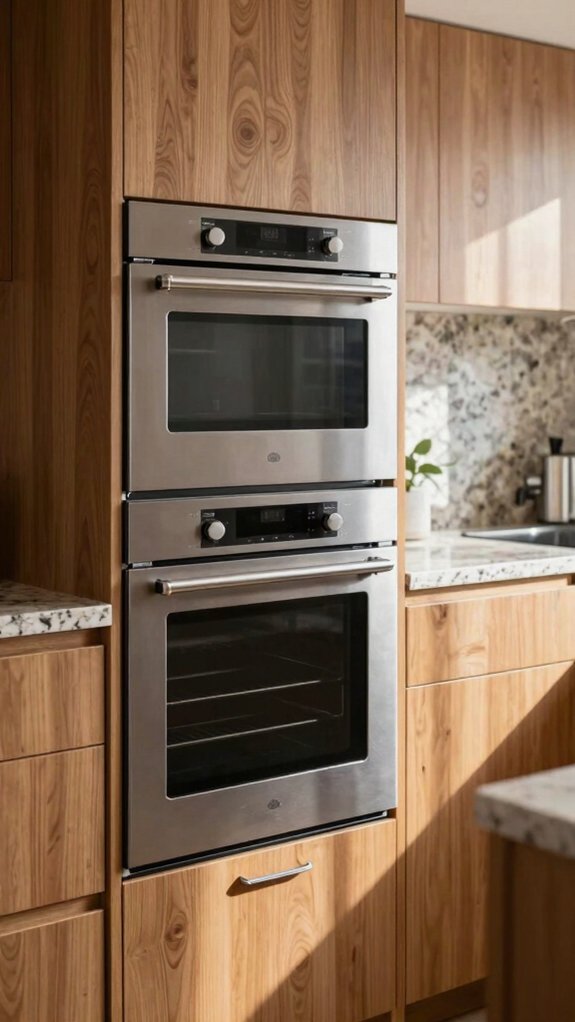
Choosing between a single, double, and combo oven can feel a little like picking the right superhero for your kitchen—each one has a different strength!
- Single: great for solo dinners, smaller spaces, and easy controls.
- Double: perfect when you juggle roasts and cookies at once.
- Combo: best for a two-zone flow, with stovetop action plus baking power.
- Big meals: turkeys and sheet pans usually need more room.
Think about your workflow priorities, timing management, staging efficiency, and multitask planning.
If you like less back-and-forth, double and combo ovens help you fit in, cook smarter, and feel right at home!