

I’ve put together 17 timeless kitchen ideas you can use now and years from today: start with neutral foundations like creamy white or soft gray paired with a muted accent, choose Shaker-style cabinets and durable counters like quartzite or soapstone, mix warm wood and stone for texture, layer ambient, task, and accent lighting, pick simple backsplashes like subway tile or porcelain, keep symmetry in the layout, and avoid flashy trends—keep going and you’ll find specific tips for each element.
Key Takeaways
- Choose classic Shaker-style cabinets in creamy white or soft gray for enduring versatility and easy updates.
- Pair natural materials—wood cabinets and stone countertops—for warmth, longevity, and evolving patina.
- Use a restrained neutral palette with one muted accent color to keep the space calm and adaptable.
- Layer lighting: ambient, task, and accent fixtures to ensure functionality and a welcoming atmosphere.
- Select durable floors (hardwood or porcelain) and simple backsplashes like subway tile for timeless practicality.
Neutral Color Foundations
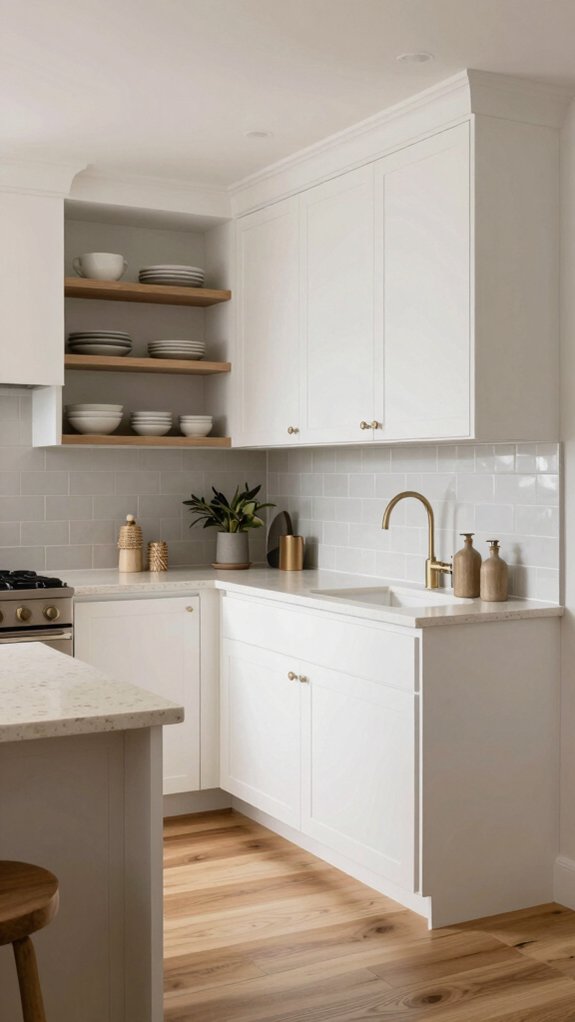
When you’re planning a kitchen that’ll feel fresh for years, I’d start with a neutral foundation—classic whites and soft grays are a safe bet and, not surprisingly, nearly half of renovators prefer them for cabinets. I’d lean into color psychology by choosing creamy whites or warm earth tones to soften starkness, or pick new neutrals like muted greens or blues for walls to add subtle personality. For aesthetic harmony, balance painted surfaces with natural wood or stone to bring warmth and texture. Soft, muted palettes avoid design fatigue and suit both modern and traditional styles, so you won’t tire quickly. Tip: test samples in different light, and mix one warmer accent with your neutrals to keep the space inviting and grounded.
Classic Cabinet Styles
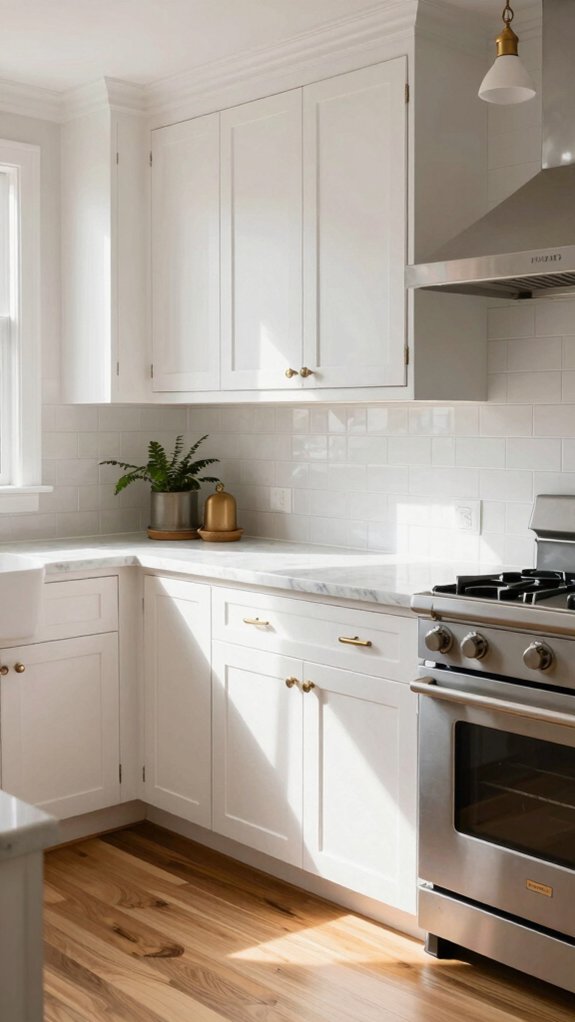
Although classic cabinet styles never go out of fashion, I still like to think of them as a toolkit you can mix and match to fit any kitchen mood. I often recommend Shaker cabinets for their clean recessed panel; they’re versatile, welcoming, and suit families who want timeless calm. For an elegant look, choose standard overlay doors in dark neutrals — they bridge classic and modern with ease. Fluted detailing adds subtle vertical texture without shouting, and mixing painted perimeter cabinets with a stained island gives a cohesive yet interesting feel.
| Style | Feature | Tip |
|---|---|---|
| Shaker | Flat recessed panel | Keeps lines simple |
| Standard overlay | Traditional paneled doors | Works with dark neutrals |
| Fluted | Vertical texture | Adds quiet sophistication |
High-Quality Natural Materials
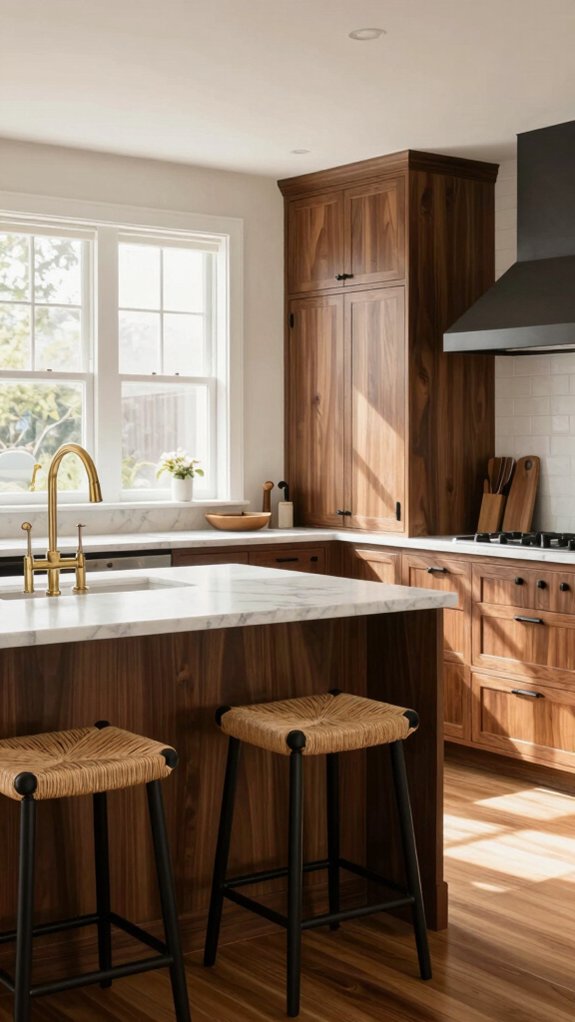
Because quality materials set the tone for the whole room, I like to start a kitchen plan by choosing wood and stone that will age gracefully and feel welcoming for years, not just seasons. I favor wood cabinetry—Shaker or similar—for its warmth and lasting style; it creates belonging and layers of character as it ages. For countertops I compare quartzite and soapstone: quartzite resists scratches and keeps a classic look, soapstone develops a soft patina. I always look for sustainable sourcing so our choices feel good ethically as well as visually. Mix finishes and the texture variety of grain, veining, and smoothed surfaces to add depth. Practical tip: sample materials together in your space and live with them for a few days.
Balanced Lighting Design
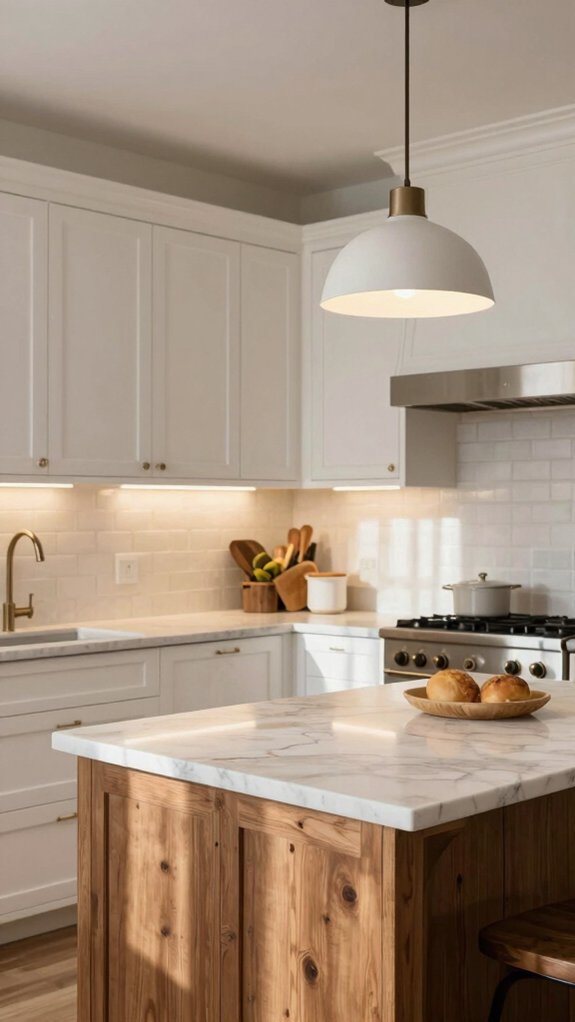
To make a kitchen feel both welcoming and work-ready, I focus on balanced lighting that layers ambient, task, and accent sources so every corner has the right light for the job. I start by planning ambient lighting to wash the room evenly—recessed fixtures, a geometric chandelier, or linear pendants set the mood and tie the space together. Then I add task lighting where we actually work: under-cabinet strips, directed pendants over islands, and focused fixtures at prep zones. I consult architectural lighting design specialists when placement feels tricky, and I choose durable, high-quality products so the investment lasts. Finally, subtle accent fixtures highlight art or open shelving, creating a cohesive, inviting kitchen that feels like home.
Simple Backsplash Choices
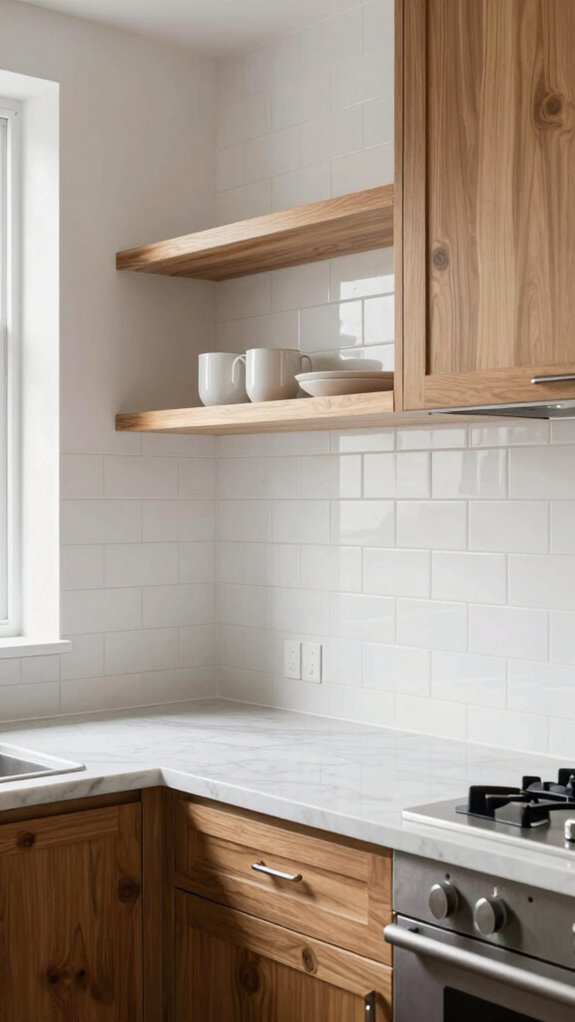
Good lighting makes your countertops pop, and a simple backsplash finishes the look while protecting surfaces, so I like to keep things clean, practical, and pretty. I choose backsplash materials that endure — natural stone or porcelain feel elegant and stay low-maintenance, and handmade tiles in neutral tones add warmth without shouting. Subway tiles are my go-to for lasting appeal; their soft tonal runs and classic tile patterns bring subtle texture and order. Simple geometric patterns brighten a space and make everything feel cohesive, which helps a kitchen welcome family and friends. Here are visuals to imagine how these choices come together:
- Warm cream subway tiles with soft grout lines
- Matte handmade tiles in beige tones
- Polished porcelain slabs behind stove
- Small hexagon geometric mosaic
- Natural stone strip accent
Functional Layout Planning
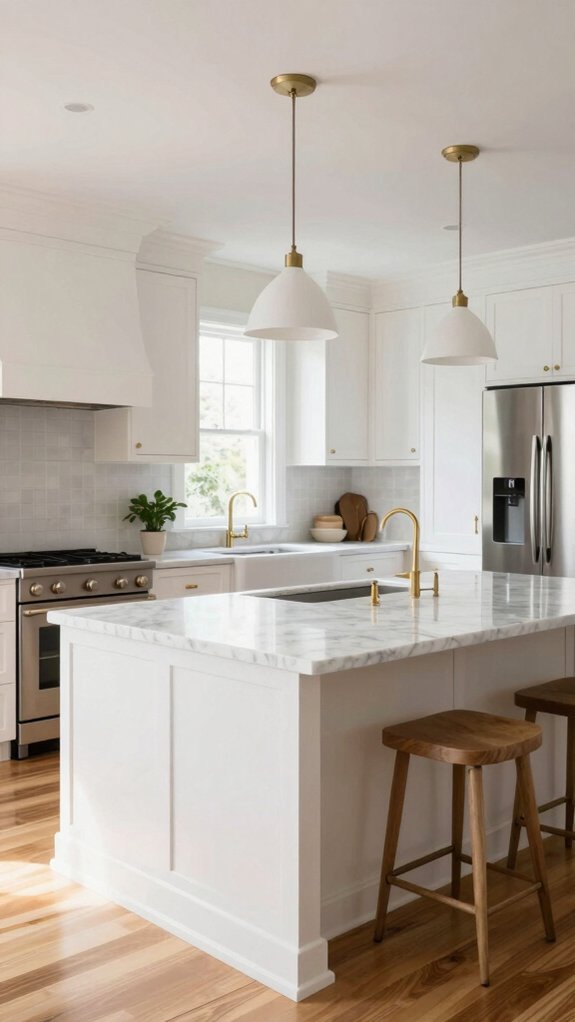
When I plan a kitchen layout, I start by sketching the work triangle—sink, stove, and fridge—and I make sure those three points sit close enough to cook without wasting steps but far enough to avoid crowding; aim for clear, direct lines between them and keep each leg comfortable for the tasks you do most. I also think about kitchen ergonomics and workflow efficiency, placing a roomy prep area with generous counter space near the sink and stove. Open shelving boosts accessibility and feels welcoming, while built-in storage like pull-out shelves and deep drawers keeps counters calm. Keep traffic paths at least 36 inches wide so people can move without bumping into each other. These choices create a friendly, practical kitchen where we enjoy cooking together.
Subtle Hardware Selection
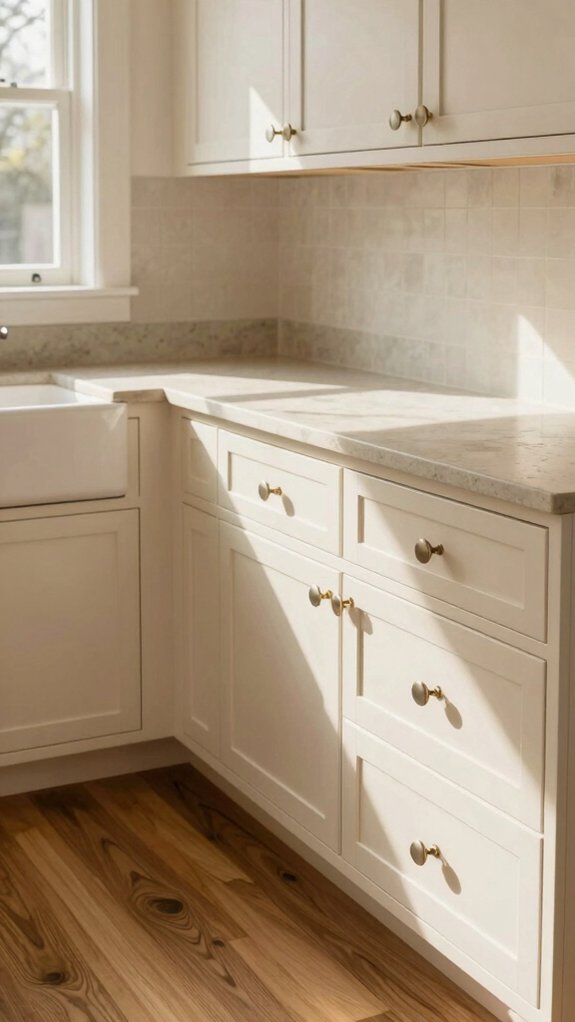
Hardware is one of those small choices that can quietly lift a kitchen from plain to polished, and I always start by thinking about finish and feel. I choose timeless hardware materials like polished nickel, antique brass, or bronze because they look elegant and stand up to daily use. Subtle shapes—simple knobs, bar pulls, or round handles—let classic cabinets breathe and keep the design impact calm and cohesive. I test weight and balance, since solid-feeling pieces signal real craftsmanship and add value. I also mix a vintage-inspired knob with a modern faucet to personalize without chaos. Here are tactile images to picture as you decide:
- A cool polished nickel bar pull under morning light
- A warm antique brass round knob on shaker doors
- A heavy bronze handle in my palm
- A slim brushed pull on a drawer
- A matched pair catching reflection
Wood Accents for Warmth
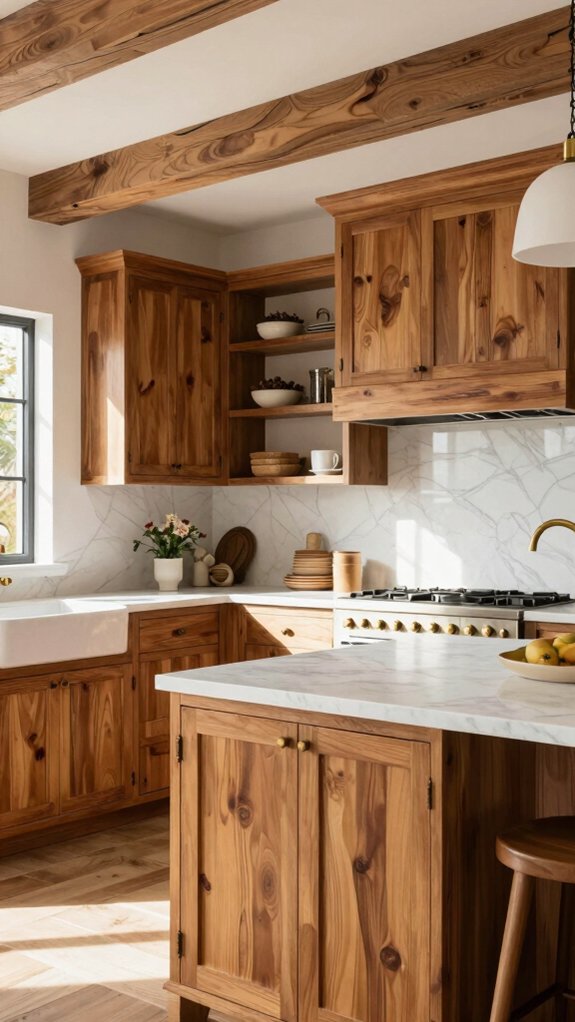
Wood brings a kind of quiet hospitality to a kitchen, and I love using wood accents to make a space feel lived-in and welcoming. I often choose wood species like oak or walnut for cabinetry and reclaimed pine for open shelving, since each brings distinct grain and warmth. Stained cabinets blend with many palettes, while fluted panels or moldings lift the room with subtle elegance. For sustainable choices, pick durable, responsibly sourced woods that age well. Practical maintenance tips matter: wipe spills quickly, oil butcher blocks regularly, and avoid harsh cleaners on finishes. Small details—matching grain direction, balanced accents, and simple hardware—help a kitchen feel cozy and shared, inviting folks to linger.
Minimal Countertop Styling
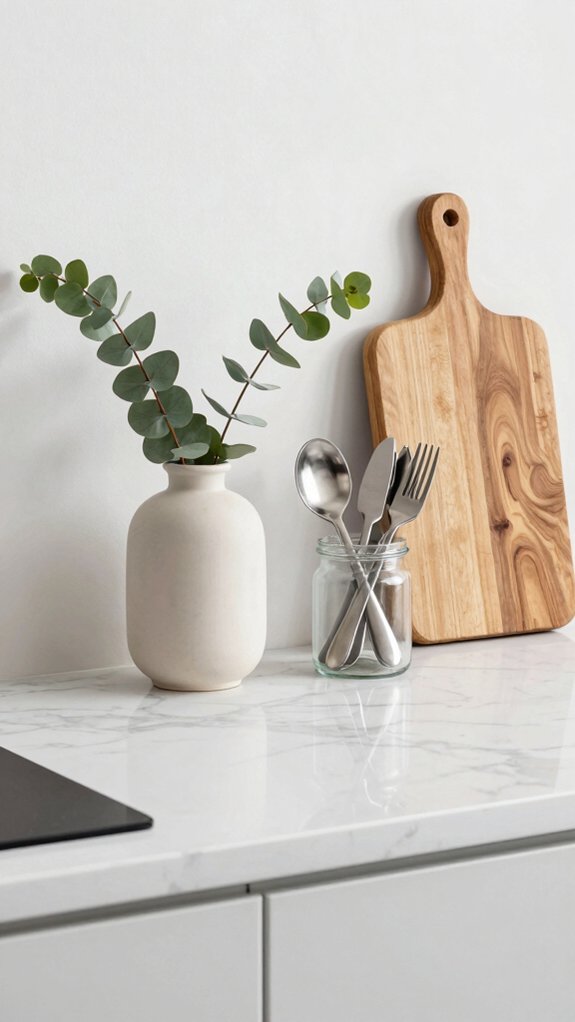
After you add warm wood accents, I like to keep the countertops calm so the room feels both lived-in and easy to work in. I focus on countertop organization first: tuck gadgets into drawers and use built-in storage so surfaces stay clear for cooking and company. A light stone or quartzite top becomes the quiet backdrop, letting a few decorative accents shine without competing.
To help you picture it, here are simple items I place thoughtfully:
- A single stylish cutting board leaned against the backsplash
- A low vase with fresh sprigs near the sink
- A small ceramic jar for everyday utensils
- A neatly folded tea towel beside the stove
- A compact tray holding salt, oil, and a wooden spoon
These choices welcome you while keeping things efficient.
Open Shelving in Moderation
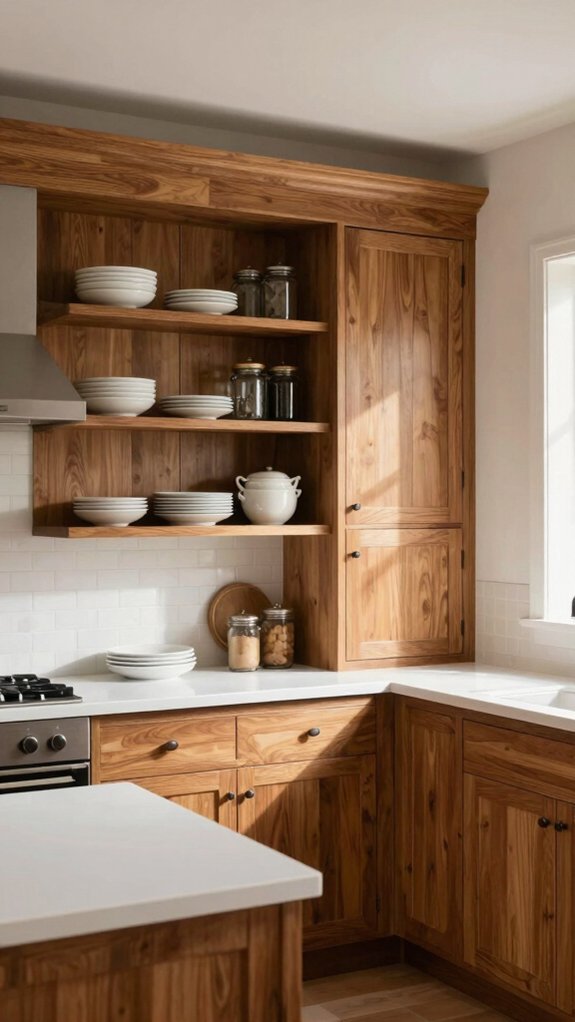
If you want a kitchen that feels airy but still tidy, open shelving in moderation is a smart move — I like to treat it like a curated little gallery rather than extra cabinet space. I recommend placing everyday plates and mugs on lower shelves so you and guests can reach them easily, while reserving higher shelves for decorative bowls or plants that add personality. Cluster similar items together and leave breathing room so the eye can rest; that spacing is the key to avoiding visual clutter. Mix heights and scales—tall vases with short bowls—to keep things lively but cohesive. Add simple lighting under shelves to spotlight favorites and create a warm atmosphere. Taken together, these steps help your kitchen feel welcoming and well-ordered.
Integrated Appliances Look
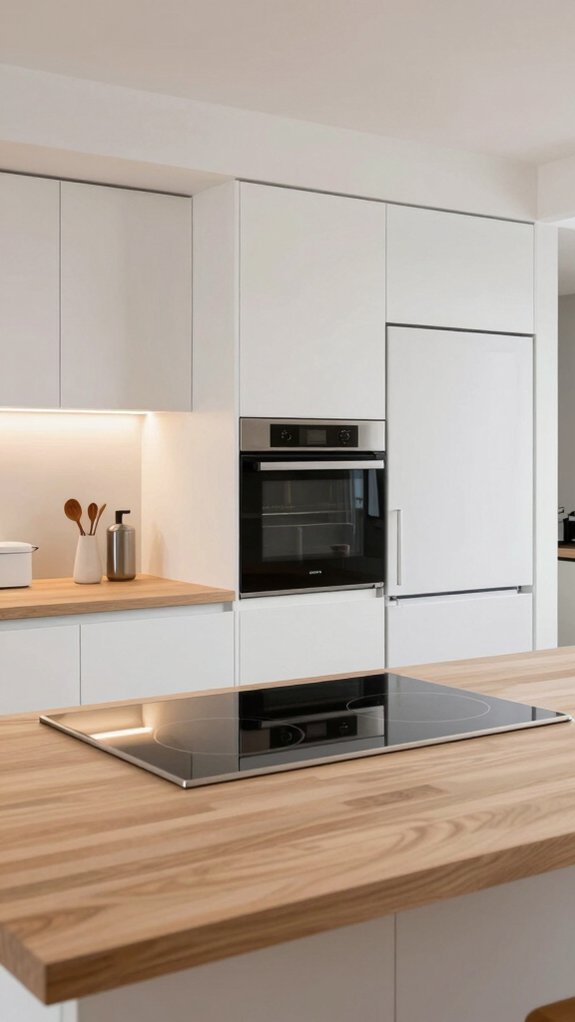
When you want a kitchen that reads calm and collected, I favor built-in appliances because they let your cabinetry do the talking while the fridge, dishwasher, and oven quietly do the work. I love appliance integration for the way it creates a cohesive, welcoming space where everyone feels at home. Panel-ready units hide hardware, reduce visual clutter, and make sightlines smooth so conversation and cooking flow together. Choose models with modern features so you get design efficiency without sacrificing function. Here are images I imagine when planning:
- A continuous run of shaker cabinets with a hidden fridge
- A dishwasher masked by a matching door, humming softly
- Oven stack with flush panels and simple pulls
- A tidy counter revealing only sleek handles
- A calm, ordered kitchen that invites company
Elegant Yet Practical Flooring
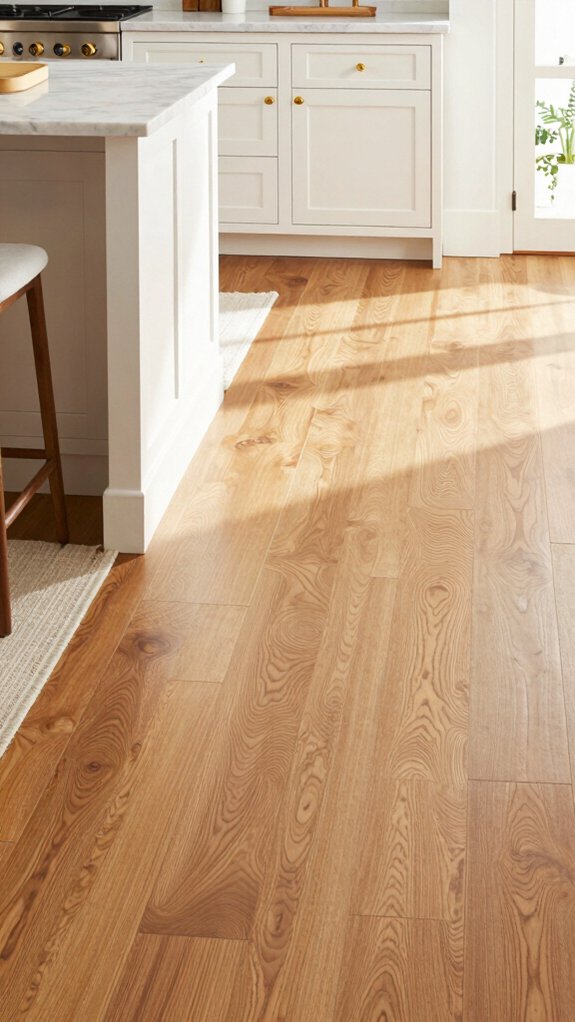
Having appliances that blend into cabinetry sets a calm tone, and the floor plays just as big a role in keeping that peaceful feeling while standing up to daily life. I like hardwood for warmth and character; engineered wood gives that look with added moisture resistance, so it’s smart for kitchens. Natural stone—slate or travertine—adds texture and unique color, making the room feel curated. Porcelain tile copies stone or wood but handles spills and traffic exceptionally well. Choose light tones or subtle patterns to open the space and invite company.
For practical decisions, compare flooring materials by durability and upkeep, and follow simple maintenance tips: sweep daily, wipe spills fast, and reseal stone when needed.
Soft Contrast Color Pairing
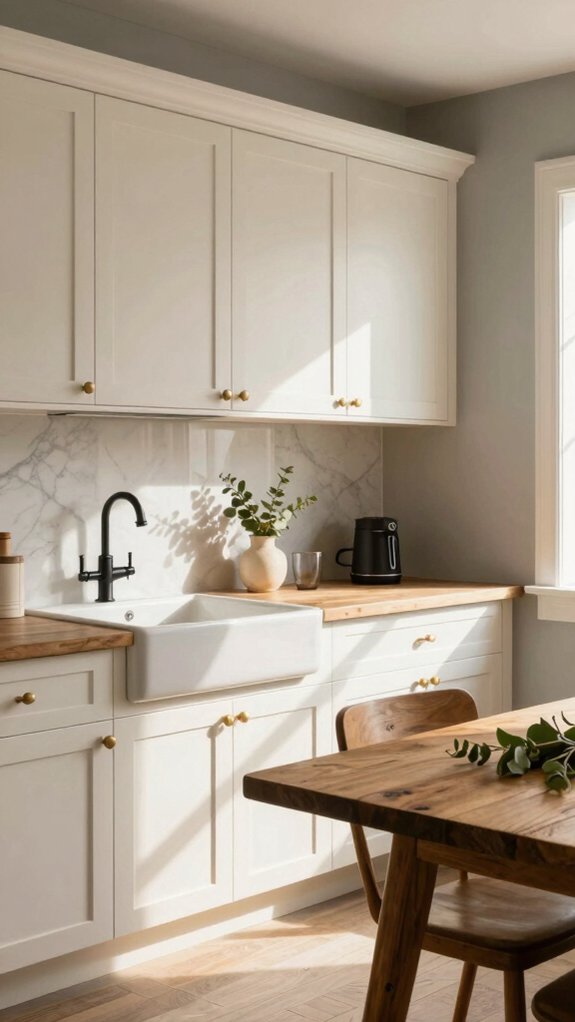
Because soft contrast keeps things subtle yet interesting, I like to start by picking two or three muted shades that work together—think soft grey with creamy white, or a dusty blue paired with warm taupe—to create a peaceful backdrop that still reads as layered and intentional. I use color psychology to choose tones that feel calm and welcoming, and I balance warmth and coolness so the kitchen feels like home. Soft contrast gives design flexibility: you can swap textiles, hardware, or accents without a full remodel. Try pairing painted lower cabinets with stained wood uppers or a pale backsplash against gentle countertops to add depth while keeping things timeless.
- soft grey cabinets with creamy white trim
- dusty blue island, warm taupe walls
- pale marble counters, muted wood shelves
- matte brass pulls, brushed nickel fixtures
- linen curtains, textured neutral rugs
Traditional Meets Modern Touches
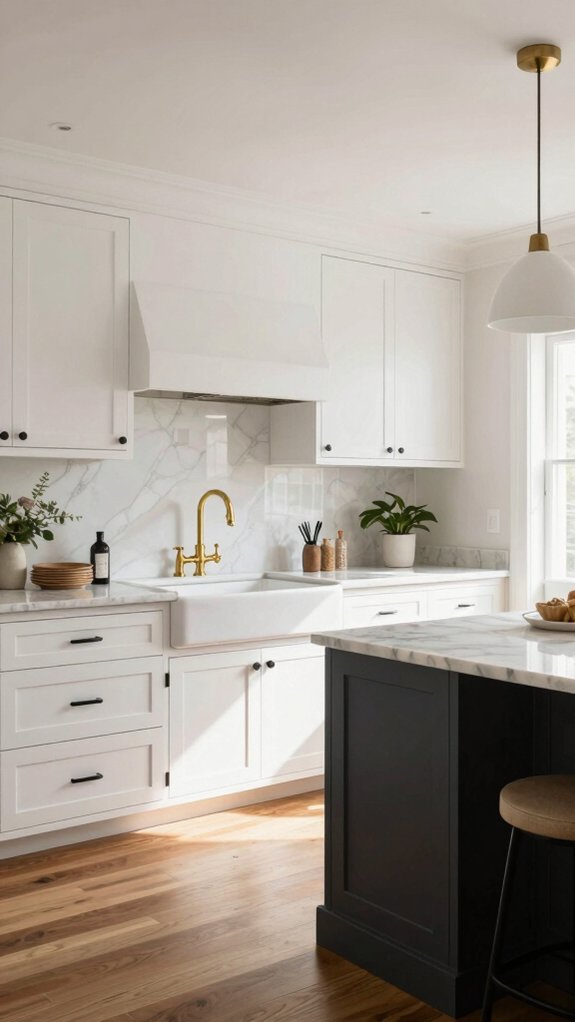
Blending old-world charm with clean, modern lines is one of my favorite ways to give a kitchen personality without overwhelming the space, so I usually start by anchoring the room with a classic element—think Shaker cabinets or a fluted pantry door—and then layer in contemporary finishes like matte black hardware, efficient appliances, or quartz counters. I like pairing shaker cabinets with simple, warm paint and fluted detailing on lower doors to whisper tradition while keeping sightlines fresh. Add vintage lighting above an island to create a cozy focal point, then balance it with modern finishes on faucets and pulls. Use natural materials—wood floors, stone accents—and keep colors neutral so every piece feels intentional, welcoming, and made to last.
Long-Lasting Countertop Materials
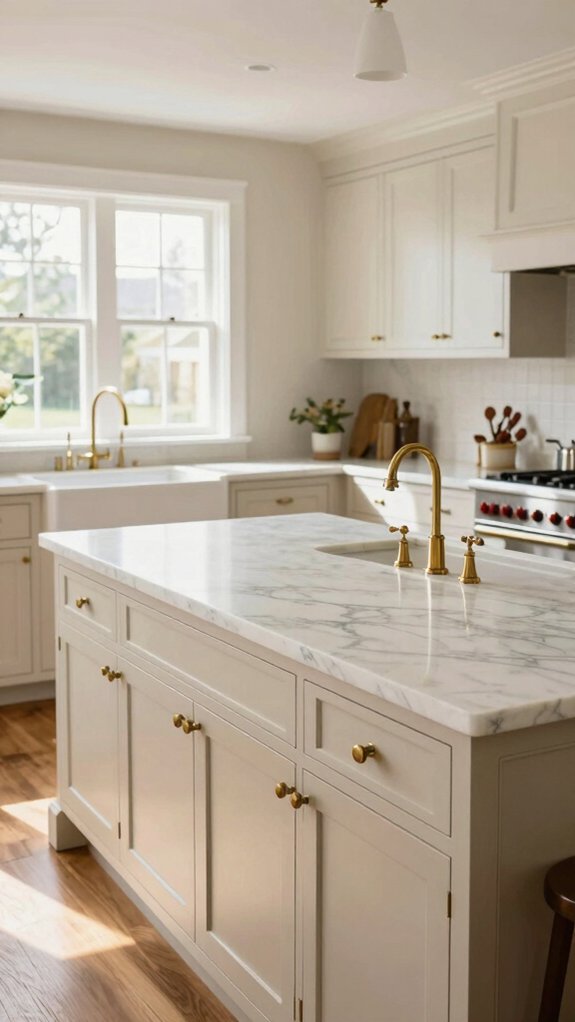
When I plan a kitchen that mixes classic shapes with modern details, I always pay special attention to the countertops, since they set the tone for both style and everyday use. I choose materials that last and welcome the people who gather there. Quartzite durability means you get marble-like veins with resistance to scratching and staining — great for busy homes. Soapstone aging gives a soft patina and handles heat, so it looks better with use. Granite offers one-of-a-kind patterns, and light quartz or porcelain brightens the room. I prefer straight-edge profiles for a clean, timeless feel.
- polished quartzite with subtle veining
- warm soapstone, softened edges
- speckled granite, natural depth
- white quartz, reflective glow
- slim straight-edge porcelain slab
Symmetry in Design Layout
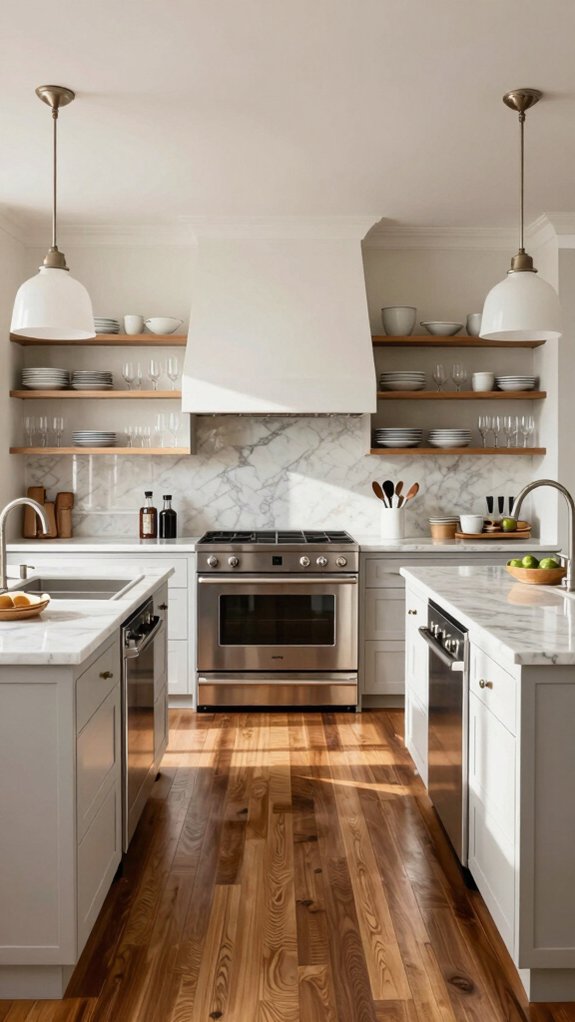
If you like a calm, ordered kitchen, symmetry is one of the simplest tools to get you there, and I often start a design by imagining a mirrored layout around a clear centerline. I find symmetry creates visual balance and makes a space feel welcoming, like everyone has a place at the counter. Match upper and lower cabinets, line up countertops and backsplashes, and center pendant lights over an island to draw the eye. That said, you can still welcome asymmetrical designs nearby—a single open shelf or an offset art piece adds warmth without breaking harmony. For workflow, place appliances and prep areas evenly so everything’s reachable. These practical steps keep the kitchen efficient, cohesive, and inviting for family and friends.
Avoiding Trend-Heavy Elements
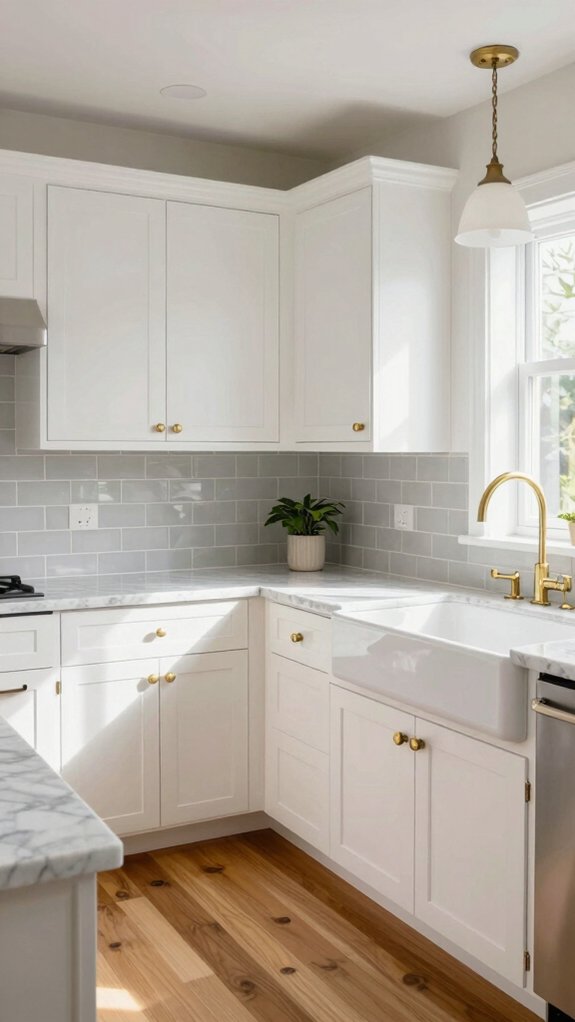
Symmetry gives a kitchen a calm, reliable feel, but I also like to anchor that order with choices that won’t feel dated a few years from now, so let’s talk about steering clear of trend-heavy elements. I focus on classic vs. contemporary balance: pick durable materials like natural stone and solid wood, and avoid quick fad finishes. Favor simple Shaker cabinets and neutral palettes—whites, soft earth tones, muted shades—so accessories can change without a full remodel. Use combined appliances and smart storage for function that endures. Watch for trend pitfalls like flashy hardware or loud tiles; choose subway tile backsplashes for timelessness. Together we can create a warm kitchen that feels like home, now and later.
- Warm oak island with stone countertop
- Shaker cabinet doors in soft white
- Subway tile backsplash in matte finish
- Hidden pull-out pantry and combined fridge
- Brass accent lamp, easily swapped