

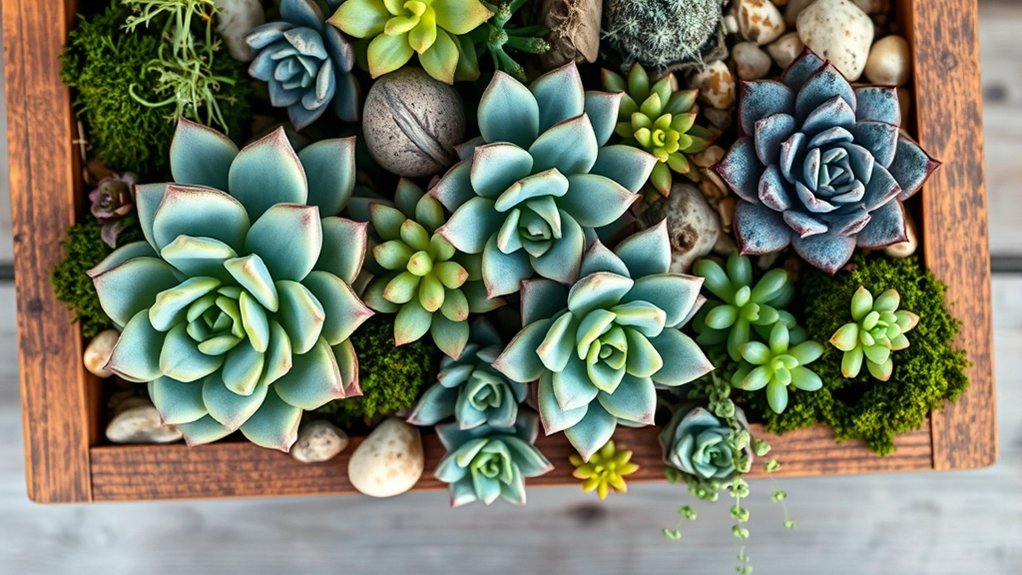
I love creating succulent arrangements that mix colors, textures, and fun containers to brighten any space. Try mounded centerpieces with taller plants in the middle and decorative pebbles on top, or go for a balanced symmetrical look using matching fillers around a standout succulent. If you want something playful, asymmetrical designs with trailing plants add depth, while fairy gardens bring charm in tiny containers. Pair these ideas with vintage pots or hanging planters, and you’ll uncover lots more ways to impress.
- Key Takeaways
- Mounded Succulent Centerpieces
- Symmetrical Arrangements
- Asymmetrical Artistic Designs
- Undersea-Themed Containers
- Color Palette Focused Arrangements
- Trifecta Design: Core, Complement, Character
- Pumpkin Succulent Centerpiece
- Tabletop Succulent Table
- Galvanized Platter Planter
- Mixing Textures and Succulent Types
- Pastel Color Groupings
- Contrasting Dark and Light Species
- Vintage or Upcycled Containers
- Miniature Fairy Garden Arrangements
- Dramatic Container Combos
- Hanging Succulent Planters
- Succulent Bowls for Indoor Decor
Key Takeaways
- Mix succulents with varied colors, textures, and heights for vibrant, dynamic centerpieces or asymmetrical artistic designs.
- Use themed containers like vintage teacups, ocean-inspired ceramics, or glass terrariums for creative and personalized displays.
- Incorporate contrasting succulents such as dark and light varieties to create eye-catching focal points with depth and energy.
- Add decorative elements like pebbles, driftwood, fairy figurines, or colored sand to enhance thematic and miniature arrangements.
- Employ hanging planters with macramé or unique vertical displays for space-saving and visually engaging succulent presentations.
Mounded Succulent Centerpieces
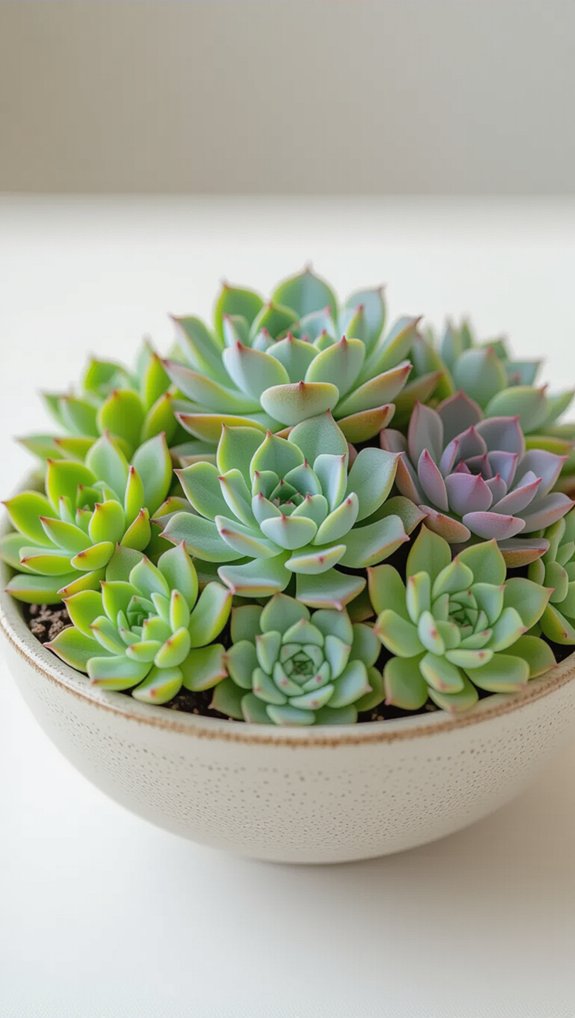
Although arranging succulents might seem straightforward, creating a mounded succulent centerpiece takes a bit more thought and care to really shine.
I love mixing succulents with varied colors and layered textures to build a vibrant, lush mound that feels alive. Using well-draining soil like cactus mix with pumice keeps roots healthy, while placing taller plants in the center adds depth.
Top-dressing with decorative pebbles not only looks great but helps retain moisture. I also enjoy switching up seasonal themes, swapping succulents to reflect the time of year, making each centerpiece feel fresh and inviting.
Symmetrical Arrangements
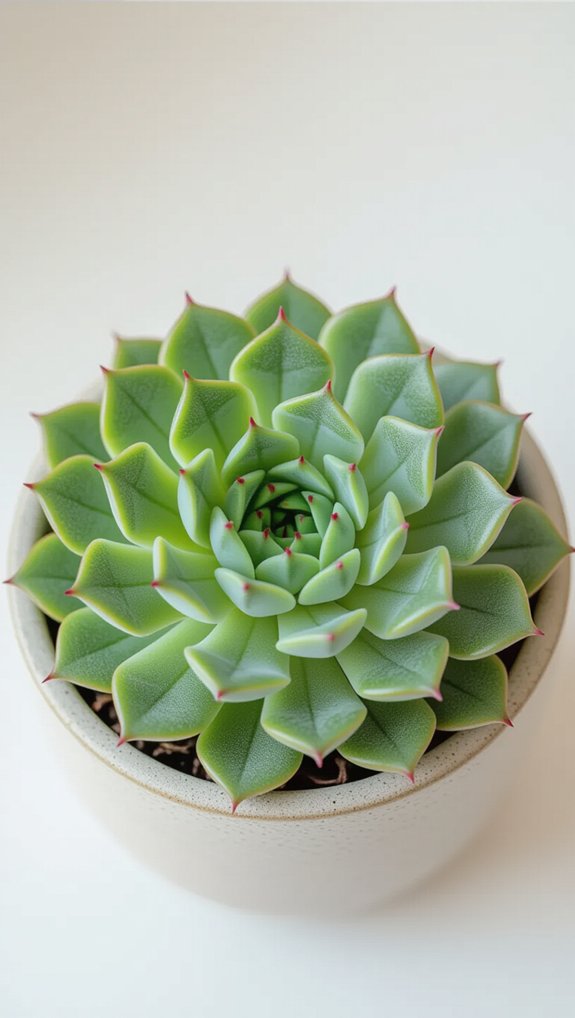
When you want a look that’s neat and eye-catching, symmetrical succulent arrangements are a fantastic choice.
I start by picking a strong central focal plant—my “thriller”—to anchor the design. Then, I add matching “filler” plants on each side, keeping their height and texture similar for a balanced design.
Using containers of the same size helps keep everything visually in sync. I also spread the same gravel top-dressing across the whole arrangement, which ties it all together.
Rotating and caring for the plants regularly guarantees they grow evenly, so your symmetrical display stays beautiful over time.
Asymmetrical Artistic Designs
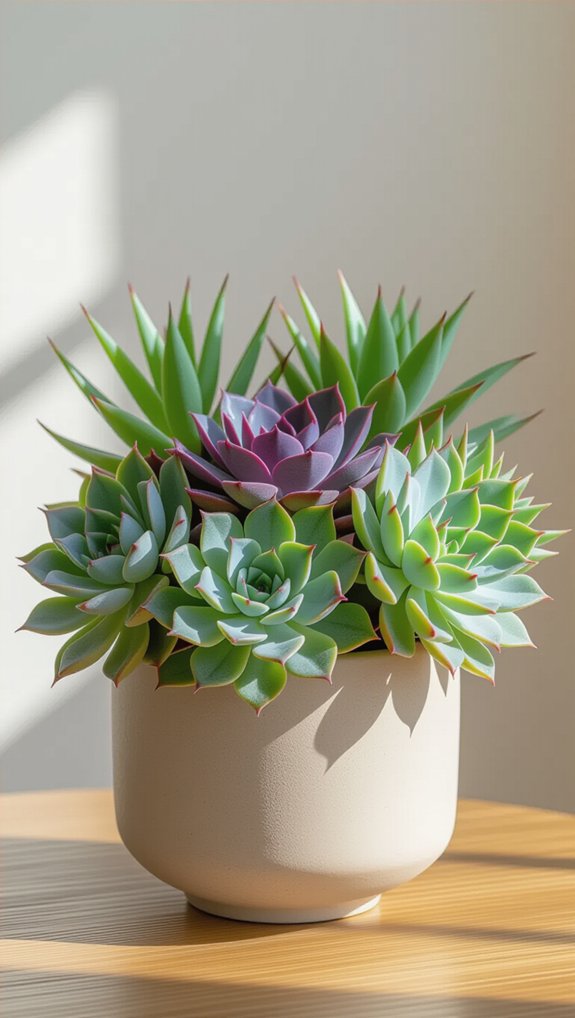
Symmetrical arrangements offer a polished and balanced look, but sometimes I like to shake things up with asymmetrical artistic designs that feel more free and lively.
I play with layered heights and organic shapes, placing a standout succulent off-center to create movement and visual interest. Trailing plants soften edges and add depth, cascading naturally over the container’s sides.
Mixing smooth, round leaves with spiky textures highlights each succulent’s uniqueness. Trying different container shapes also adds character.
This approach invites creativity and makes your arrangement feel fresh, energetic, and truly one-of-a-kind—like it’s alive and growing with personality.
Undersea-Themed Containers
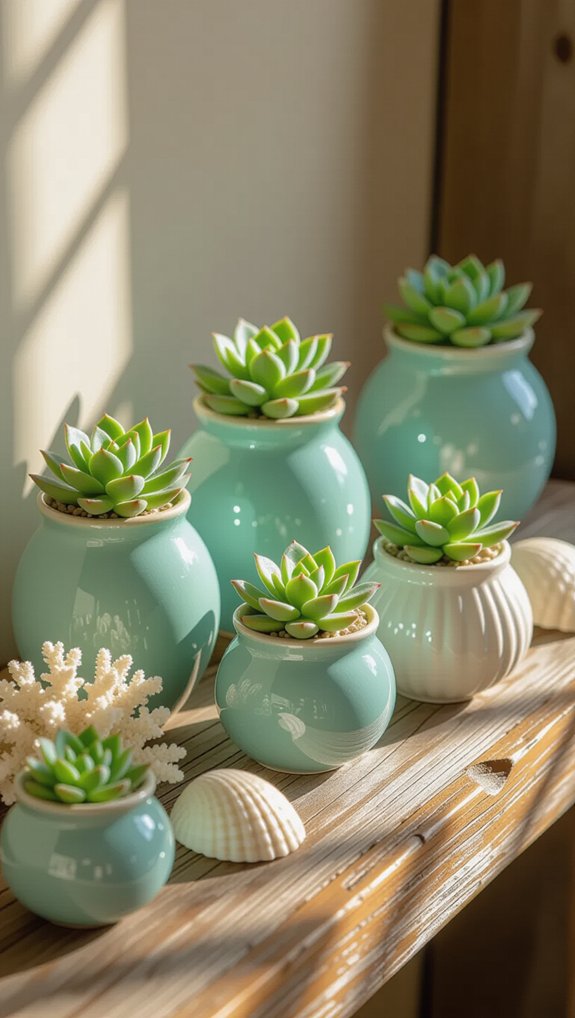
If you want to bring a splash of the ocean’s magic into your home, undersea-themed containers are a fantastic way to style your succulents.
I love using ocean inspired hues like blue and green ceramics or glass that fit perfectly with coastal decor.
Here’s how I create that underwater feel:
- Choose succulents with textures and colors resembling marine life, like blue-gray Echeveria.
- Add seashells, driftwood, or sand as natural accents on top.
- Try clear glass terrariums to show off layered soil and decorations, mimicking the ocean floor’s depth.
It’s a cozy, creative way to connect with the sea indoors!
Color Palette Focused Arrangements
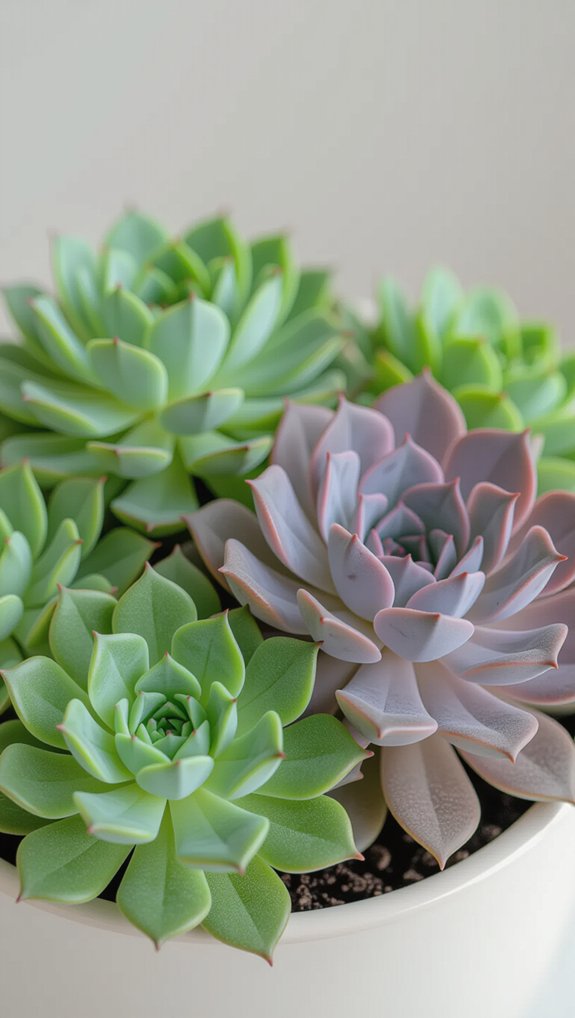
Although choosing succulents might seem straightforward, focusing on a color palette can transform your arrangement into a stunning visual masterpiece. I love using monochromatic palettes for a soothing vibe, mixing shades from light to dark within the same color family. Or, I go bold with complementary contrasts—think purples paired with yellows—to make my arrangement pop. Don’t forget texture! Different shapes add depth. Here’s a quick guide:
| Palette Type | Example Colors | Effect |
|---|---|---|
| Monochromatic | Soft greens, dark greens | Harmonious, calm |
| Complementary | Purple & yellow, red & green | Striking, vibrant |
| Seasonal Themes | Orange & brown (autumn) | Cozy, timely |
Try colored sand as a top-dress for a polished finish!
Trifecta Design: Core, Complement, Character
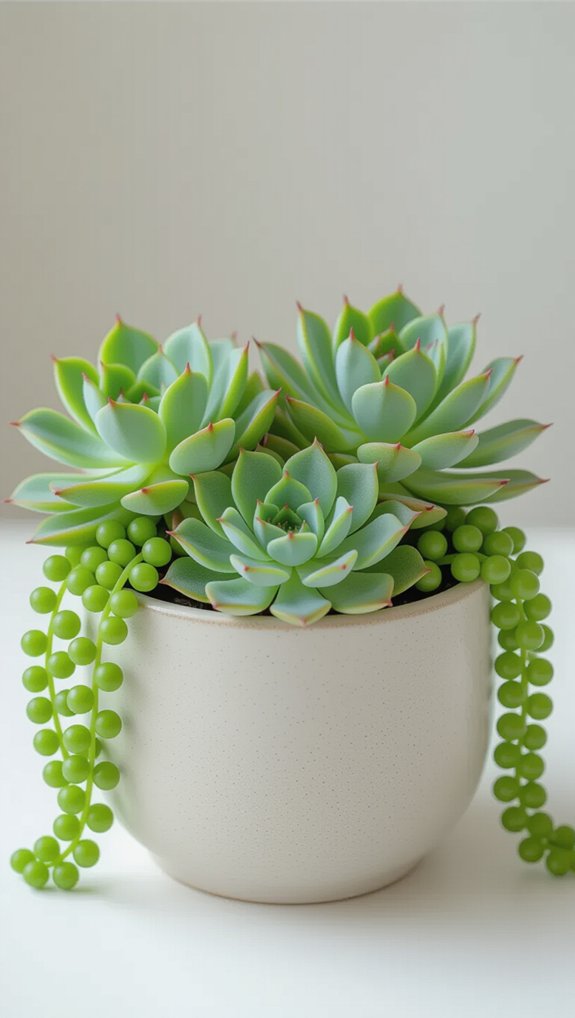
When I create succulent arrangements, I always start with the trifecta design because it helps bring balance and interest to the display. This method guides my core plant selection, filler plant options, and character plant ideas.
I focus on arrangement height variation and texture mixing techniques to keep things lively. Here’s my go-to approach:
- Choose a striking core succulent like Echeveria for visual impact.
- Add filler plants such as Sedum to soften and balance.
- Include character plants like String of Hearts for unique shapes and color contrasts.
These design balance tips boost visual interest strategies and make display maintenance advice easier to follow while honoring succulent care fundamentals.
Pumpkin Succulent Centerpiece
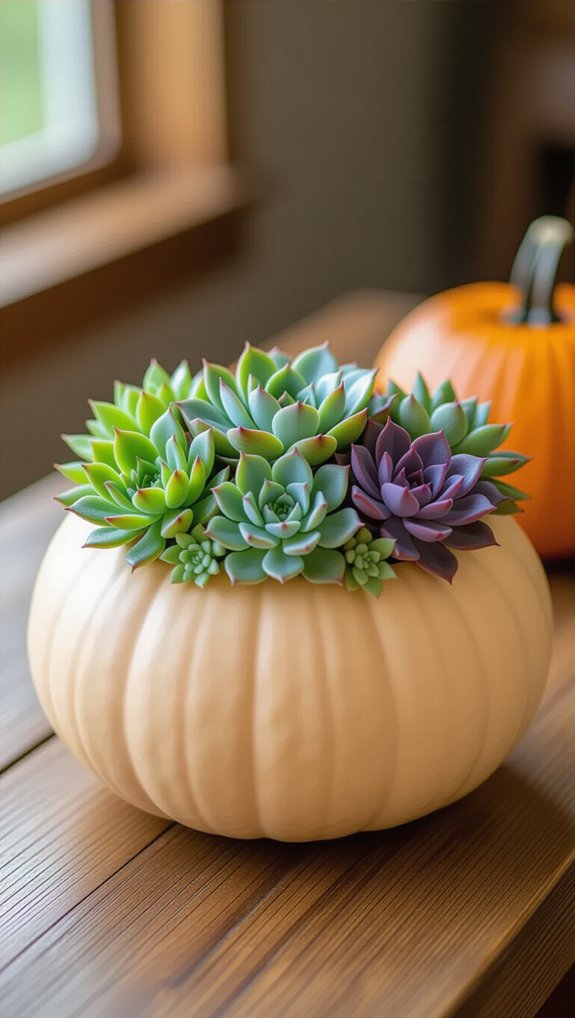
Bringing the trifecta design into a seasonal setting can really brighten up your space, and one of my favorite ways to do this is by creating a pumpkin succulent centerpiece.
I pick pumpkin varieties with smooth surfaces and flat bottoms to guarantee stability. After hollowing it out, I fill it with well-draining soil—cactus mix works best—to keep succulents happy and prevent rot.
Then, I arrange small succulents like Echeveria and Sedum for varied textures and colors. Placing the centerpiece in indirect sunlight keeps everything thriving.
It’s a cozy, creative way to celebrate fall together.
Tabletop Succulent Table
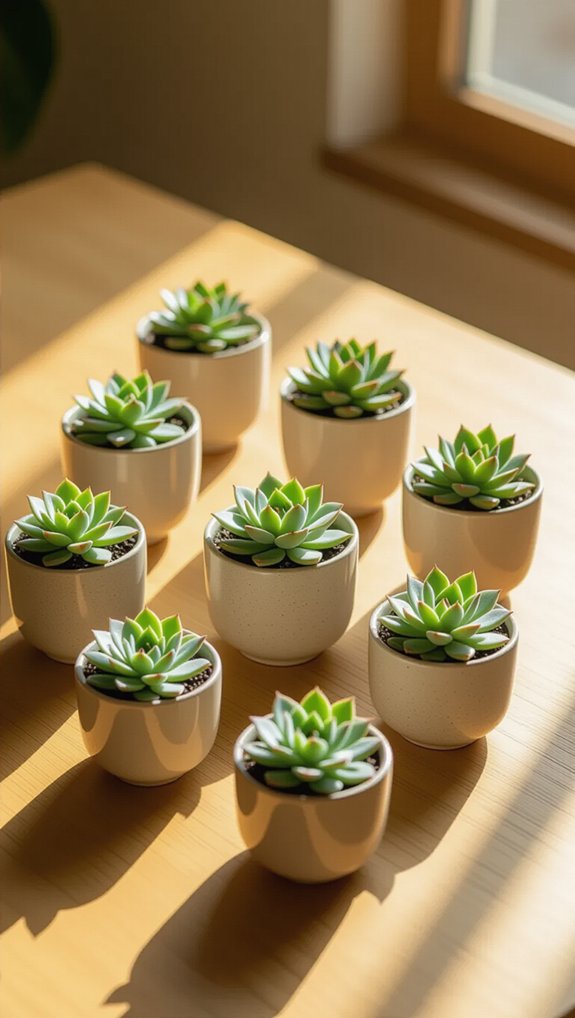
Creating a tabletop succulent arrangement is a fun way to add life and style to any room, and I love using the “thriller, filler, and spiller” method to make my designs pop.
It helps me combine colorful combinations and seasonal themes smoothly. Here’s how I do it:
- Pick a low, wide container and follow the 1/3 rule for balanced height.
- Use odd numbers of plants—like one tall thriller, two medium fillers, and a trailing spiller.
- Refresh the top-dressing with seasonal touches, like white sand for winter or warm pebbles for fall.
This approach makes every tabletop feel welcoming and vibrant!
Galvanized Platter Planter
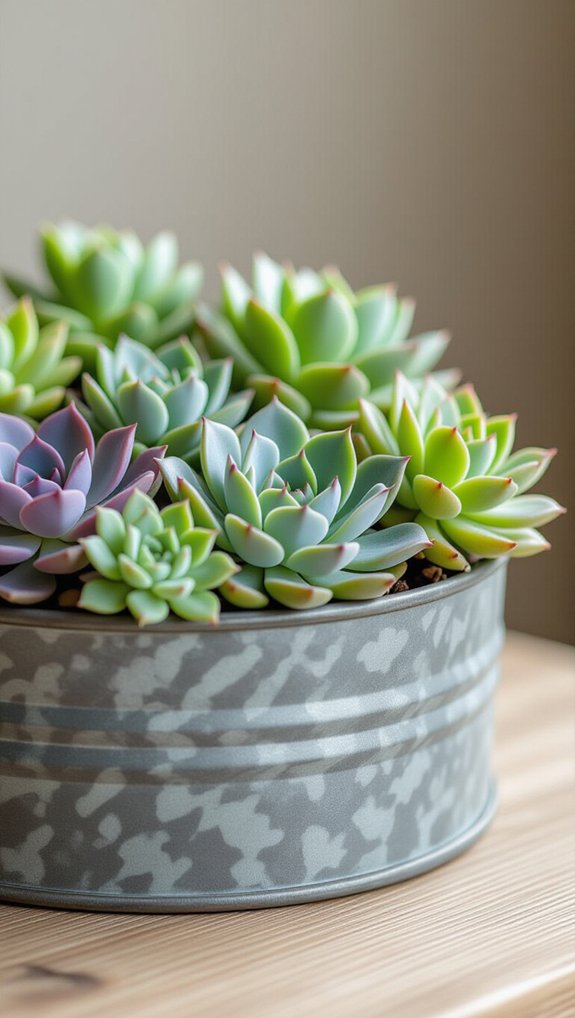
One of my favorite ways to showcase succulents is by using a galvanized platter planter—it brings a charming mix of rustic and industrial vibes that fit perfectly in almost any space.
The galvanized aesthetics give a cool, sturdy look that pairs well with colorful succulents. Since these platters are shallow, I add gravel first for drainage, then well-draining soil to keep roots healthy.
Planter maintenance is simple because it’s lightweight and easy to move, letting me refresh the display seasonally. Adding pebbles or sand as top-dressing really finishes the look, creating a cozy, inviting arrangement.
Mixing Textures and Succulent Types
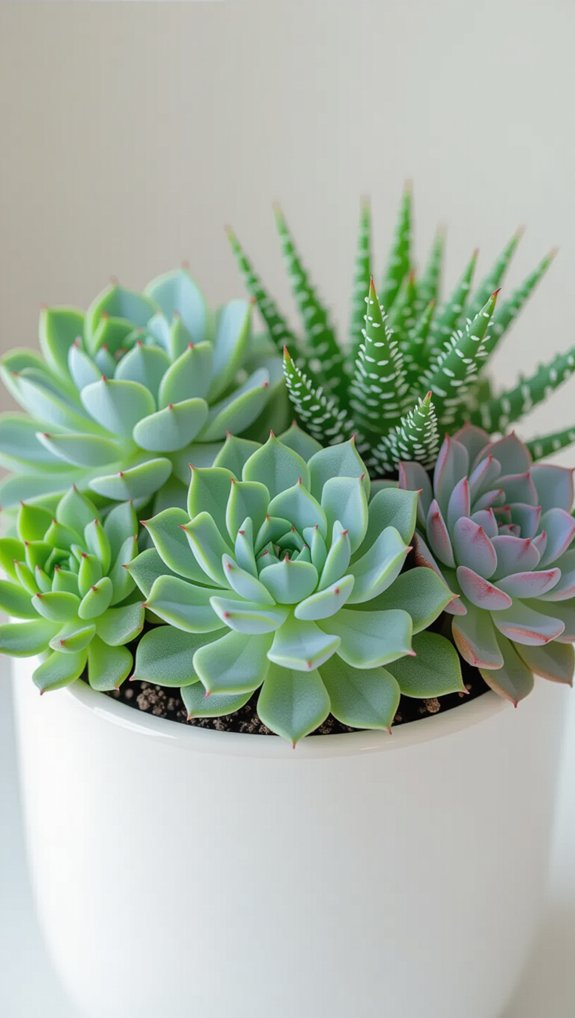
When you mix different succulent types and textures, your arrangements come alive with a unique charm that’s hard to beat. Achieving succulent harmony means balancing texture contrast and growth habits to create eye-catching displays.
Here’s how I like to do it:
- Combine rosette-shaped Echeveria with fuzzy woolly Senecio for soft and smooth contrasts.
- Pair upright Aloes with trailing String of Pearls to add layers and movement.
- Match succulents with similar care needs to keep the entire arrangement thriving.
This way, your display feels connected but lively, welcoming everyone who sees it into your green-loving community.
Pastel Color Groupings
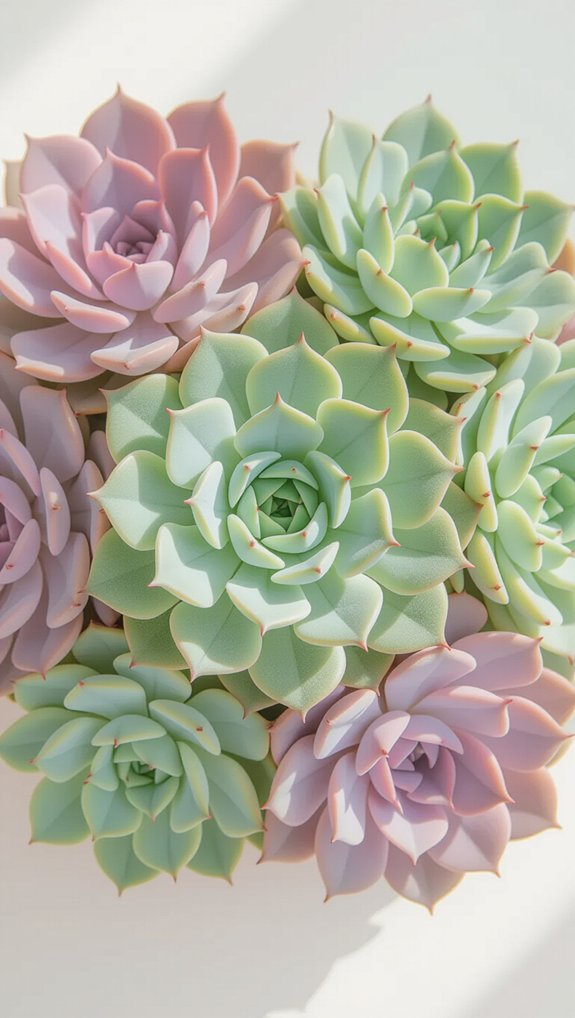
Soft pastel tones can bring a wonderfully gentle vibe to your succulent arrangements, especially if you want to create a calm and cozy corner in your home.
I love using a pastel palette with soft pinks, lilacs, light blues, and pale greens—they blend beautifully and offer soothing aesthetics.
Placing succulents in odd numbers, like three or five, makes the display feel natural and balanced. Pairing them with neutral containers, such as white ceramic pots or light wood, highlights their delicate hues.
For extra charm, I add light-colored gravel as top-dressing, which complements the soft colors and adds texture easily.
Contrasting Dark and Light Species
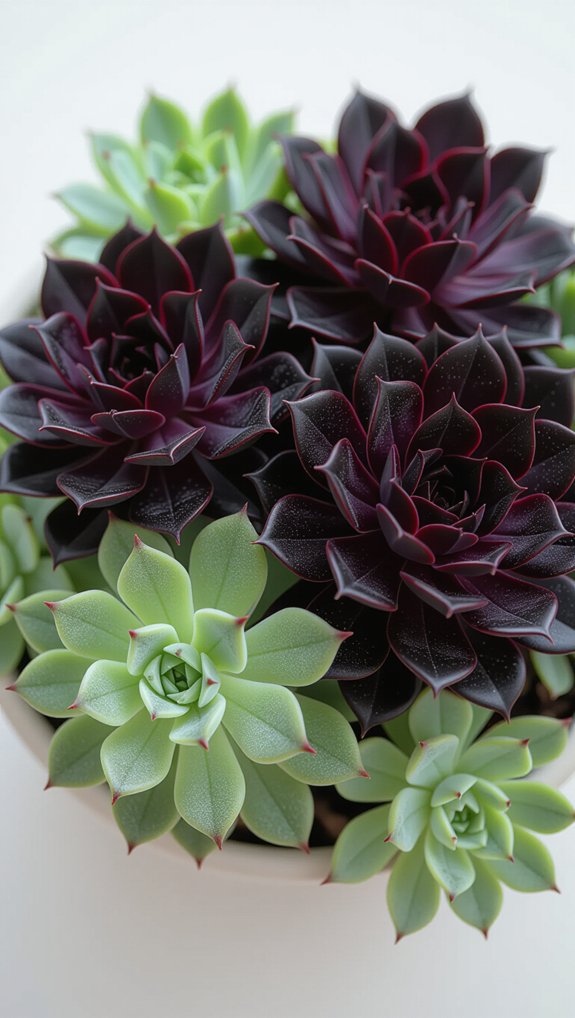
Although it might seem tricky at first, mixing dark and light succulent species can really make your arrangement pop with eye-catching contrast.
Embracing dark light combinations adds depth and energy to any display. Here’s how I approach it:
- Pair dark succulents like Echeveria ‘Black Prince’ with lighter ones such as Sedum ‘Angelina’ for striking visual interest.
- Combine contrasting textures, like smooth Aloe ‘Black Gem’ leaves beside spiky Haworthia, to create dimension.
- Use varied heights to guide the eye—tall dark plants with low light ones make vibrant focal points.
This balance invites warmth and belonging into your space.
Vintage or Upcycled Containers
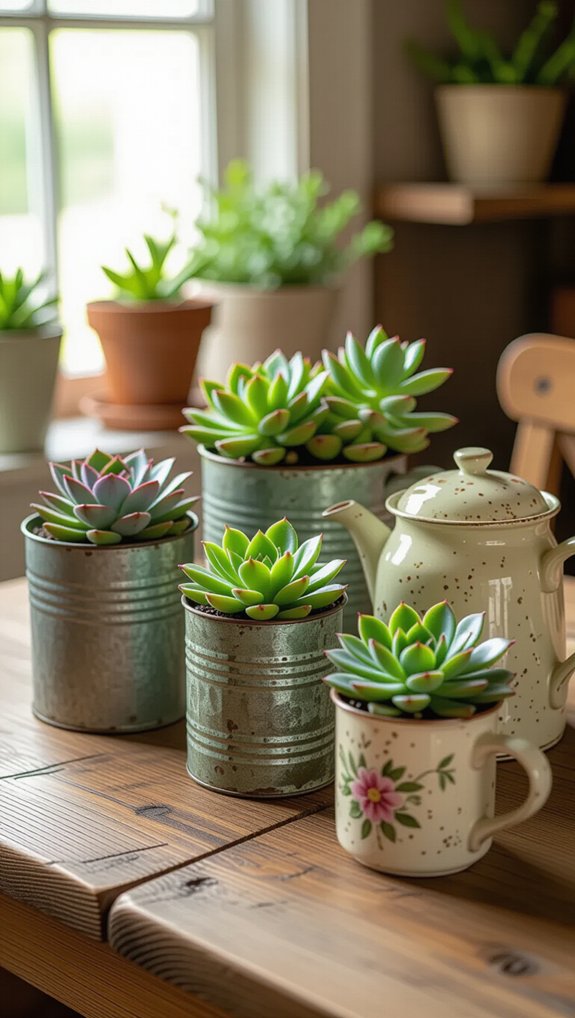
Since vintage and upcycled containers bring a unique charm to succulent arrangements, I love using items like old teacups, wooden crates, or glass jars to give my plants a fresh new home.
These repurposed materials add vintage aesthetics and encourage sustainable gardening. I always make sure to create proper drainage solutions to keep roots healthy.
Container creativity shines when I add decorative improvements like twine or paint, making each planter special.
Incorporating natural elements such as stones or driftwood helps tie everything together, blending textures and colors for a cozy, rustic vibe that feels just right for any space.
Miniature Fairy Garden Arrangements
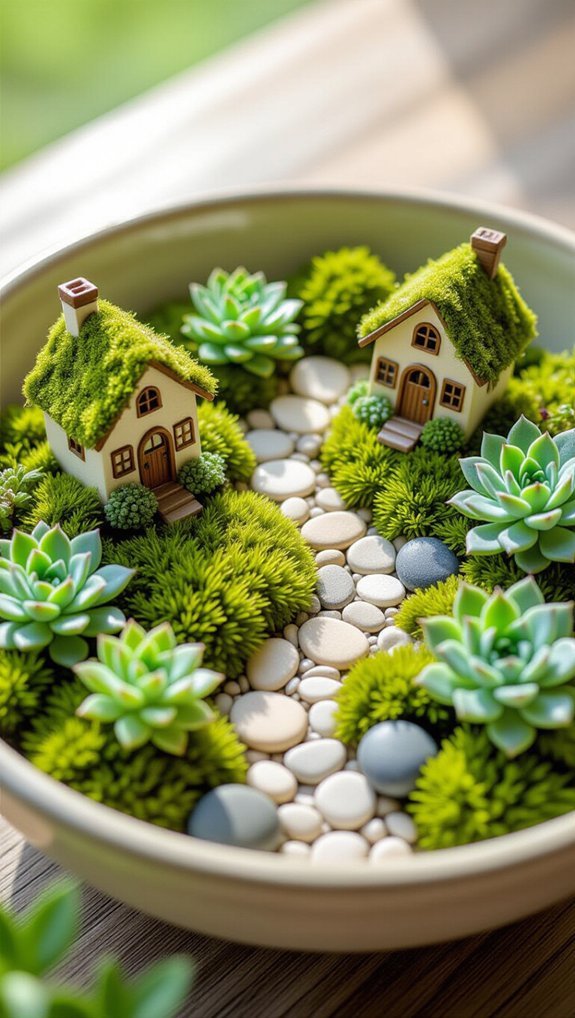
How can you create a magical little world right on your windowsill? Miniature fairy garden arrangements are the perfect answer! Start with small succulents like Echeveria or Sedum, positioned in shallow containers for easy care.
Then, add fairy figurines and whimsical accessories to spark imagination and charm. Here’s how I bring mine to life:
- Mix succulents with varied colors and textures for a lively look.
- Use tiny furniture and decorative stones to build enchanting scenes.
- Place your garden in bright, indirect light and rotate it weekly for even growth.
Together, these steps invite a cozy, magical vibe right into your home.
Dramatic Container Combos
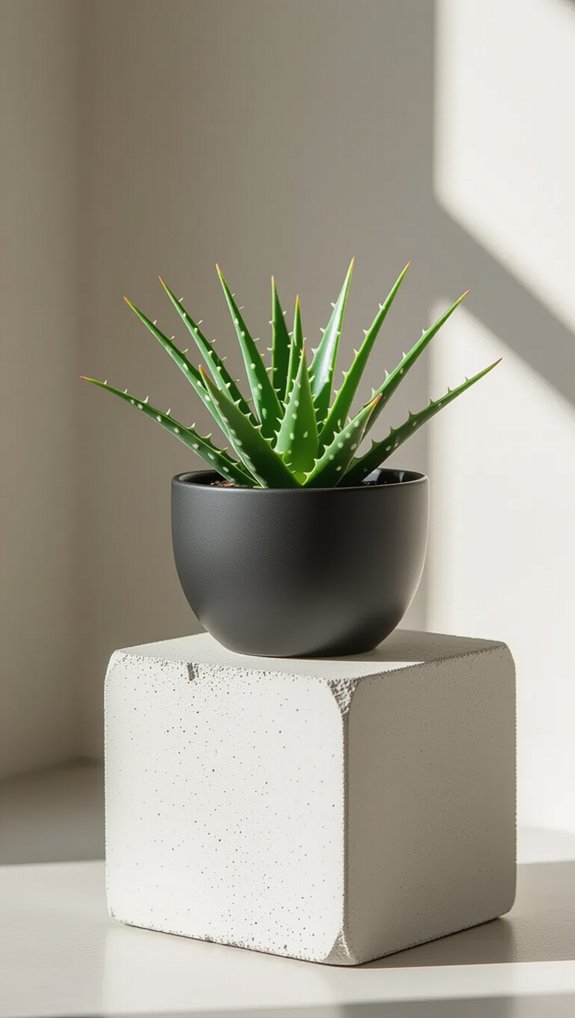
When you want to make your succulent arrangement truly stand out, picking the right containers can make all the difference. I love using colorful containerization paired with unique display techniques to create dramatic combos that feel lively and inviting. Mixing heights and shapes keeps things energetic, while contrasting textures add depth. Here’s a quick guide:
| Container Type | Height/Shape | Best Succulent Pairings |
|---|---|---|
| Vintage Teacup | Small, round | Echeveria + Sedum |
| Rustic Wooden Box | Tall, rectangular | Aloe + Haworthia |
| Ceramic Bowl | Medium, wide | Mixed textures & colors |
| Glass Terrarium | Tall, transparent | Pebbles + layered succulents |
| Concrete Planter | Heavy, geometric | Bold reds + soft greens |
Try these combos to craft your own stunning display!
Hanging Succulent Planters
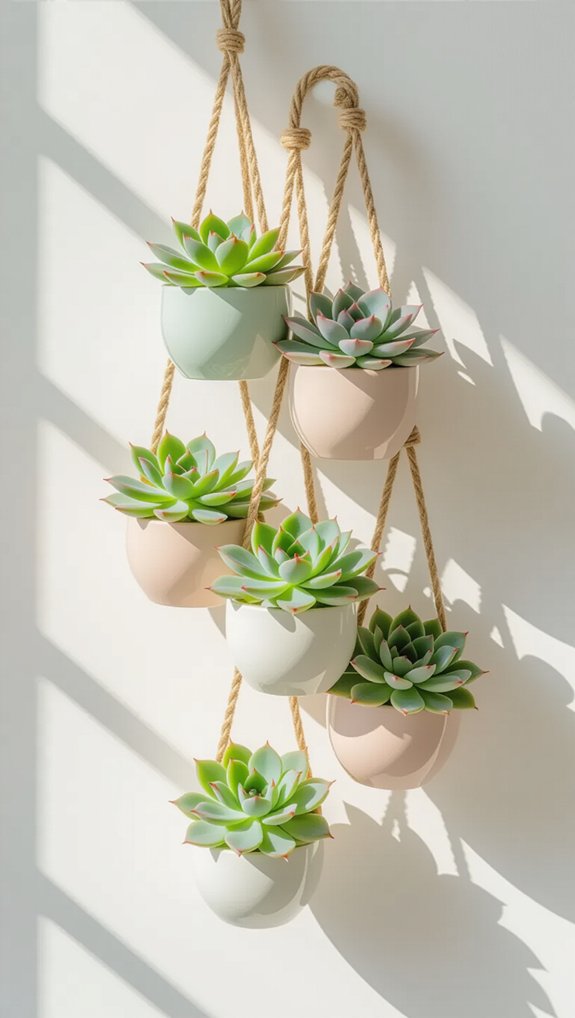
If you’ve enjoyed mixing and matching containers to create eye-catching succulent displays, you’re going to love how hanging succulent planters can add a whole new dimension to your space.
Hanging displays with macramé hangers bring charm and practicality, letting you water plants easily at the sink. Here’s what I’ve learned:
- Root succulents flat to keep them secure and prevent sliding.
- Rotate your hanging plants regularly for even light and healthy growth.
- Use squeeze bottles or turkey basters for precise watering without the mess.
These tips make hanging succulent planters a fun, creative way to connect with your plants and your space.
Succulent Bowls for Indoor Decor
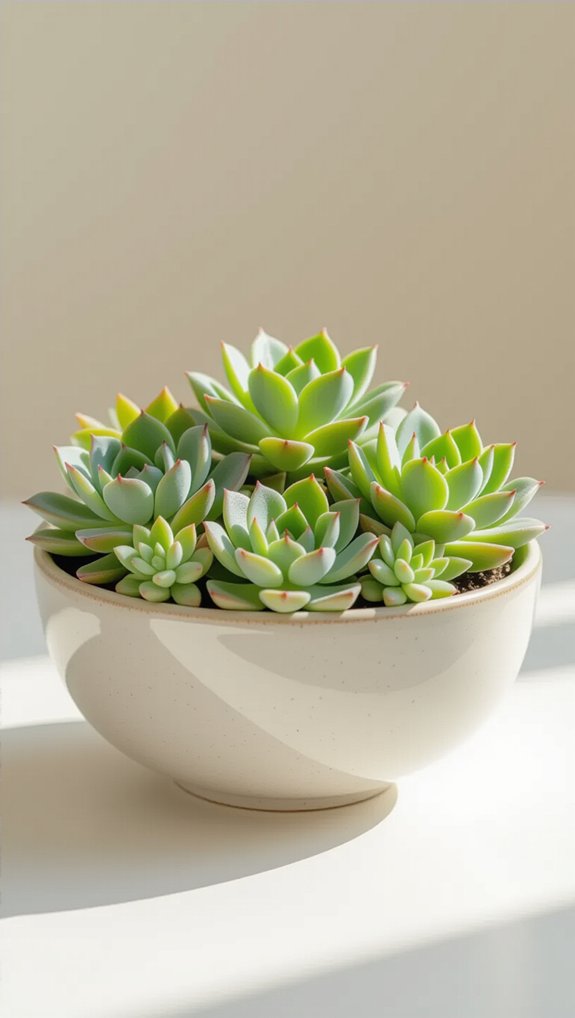
Although succulent bowls might seem simple at first glance, they offer a fantastic way to bring a burst of color and texture right into your indoor space.
I love using shallow, wide bowls filled with well-draining soil—a mix of cactus soil and pumice works great—to keep roots healthy. Adding decorative gravel on top not only looks nice but helps with succulent care by reducing moisture and pests.
Remember to rotate your bowl regularly so each plant gets enough indoor lighting and grows evenly.
These bowls create eye-catching centerpieces that make any room feel warm and welcoming.