
Small closets can totally work! Start by purging what you don’t wear, then measure width, depth, and rod height so you stop guessing. Swap bulky hangers for slim ones, add shelf dividers for folded clothes, and use hooks or a shoe rack to free up floor space. If you’re still cramped, a wardrobe rack or furniture like a bench or bed storage can save the day—and the smartest space trick might be waiting just ahead.
Key Takeaways
- Declutter first by sorting clothes into keep, donate, sell, and recycle piles, then inventory what you actually wear.
- Measure your space carefully, including width, depth, height, door swing, and obstructions before choosing storage.
- Use slim hangers, shelf dividers, and extender rods to double usable hanging and folding space.
- Add door hooks, over-the-door organizers, and shoe racks to keep bags, hats, belts, and shoes off the floor.
- Expand storage with peg boards, under-bed containers, and labeled overflow bins for seasonal items and extras.
Start With a Closet Clean-Out
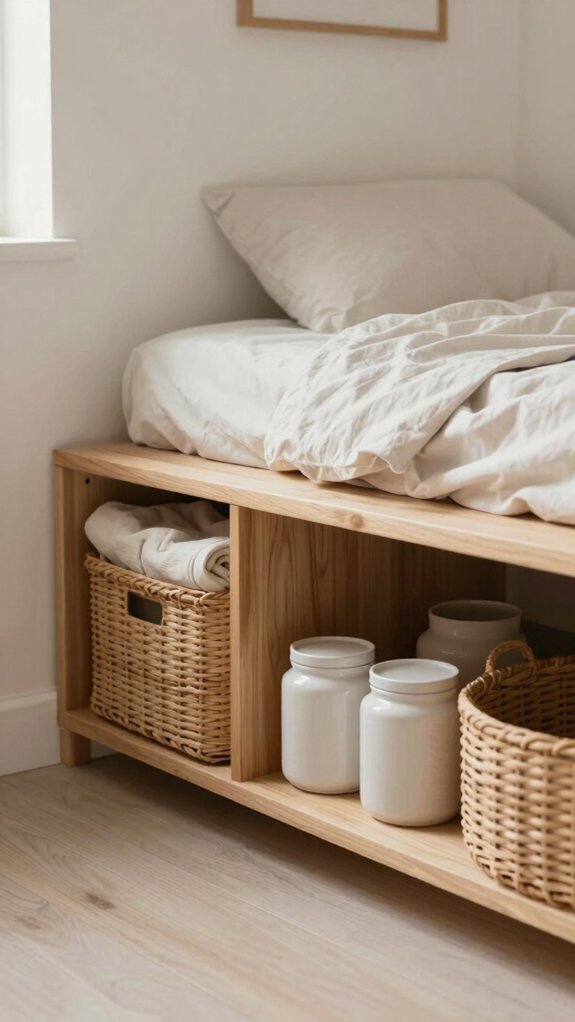
Before you buy a single bin or hanger, give your closet a fast clean-out—trust me, it’s the quickest way to make the whole space feel bigger right away!
Start a Seasonal Purge and sort every item into keep, sell, donate, and recycle piles.
That simple Closet Inventory helps you spot duplicates, forgotten favorites, and the jeans that haven’t seen daylight since last winter.
Use a Donation Strategy with a Labeling System so bags don’t mix up, and line up Donation Pickup early.
Then try Item Pricing Tips on extras you can sell.
You’ll feel lighter, organized, and more at home!
Measure Your Small Closet Space
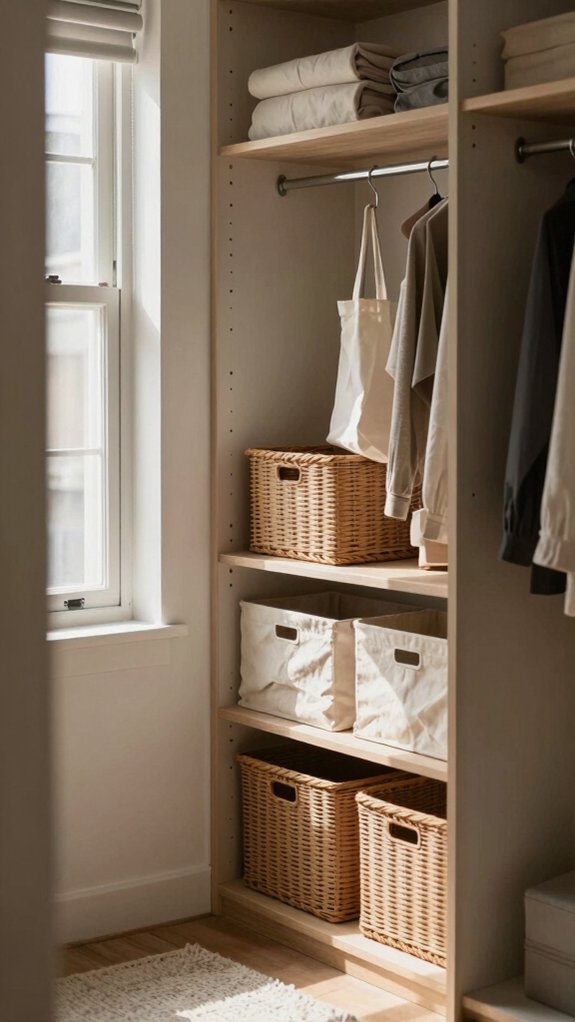
First, grab a tape measure and note your closet’s width, depth, and height, plus the space from the floor to the rod or shelves, so you know exactly what you’re working with—no guessing games here!
Then think about storage in real terms: hanging clothes need rod space, while folded items and shoes need shelf or basket room, and yes, even a tiny closet can fool you fast.
Don’t forget the sneaky stuff, like swinging doors and opening drawers, because the “available” space might be more like “nice try” space!
Closet Dimensions
When you’re sizing up a small closet, grab a tape measure and check the width, depth, and height, because those three numbers tell you what you’re really working with!
Good space planning starts here, and a quick obstructions check catches pipes, trim, or awkward corners before they ruin your plan.
Next, note ceiling slopes, rod-to-shelf heights, and door clearance, so you don’t buy a system that can’t breathe in your nook.
Measure shelf depth for folded things, too; 12–16 inches usually feels comfy.
If you dream of top storage, check reach, use a step stool, and keep it friendly for everyday life!
Storage Capacity Estimate
In a small closet, a tape measure can feel like a tiny superhero! Measure width, depth, and height, then estimate floor area and volume so you’re not guessing.
Count hanging pieces, note one rod or extra rods, and use vertical zoning if your ceiling gives you room.
For folded clothes, assign each shelf a footprint, and add dividers for labeling inventory.
Check door swing, rod drop, and reach height, because only reachable space counts.
If you’re still tight, plan for seasonal overflow in another spot, with humidity protection for stored items.
That way, your closet feels like a team, not a squeeze!
Choose the Right Hangers
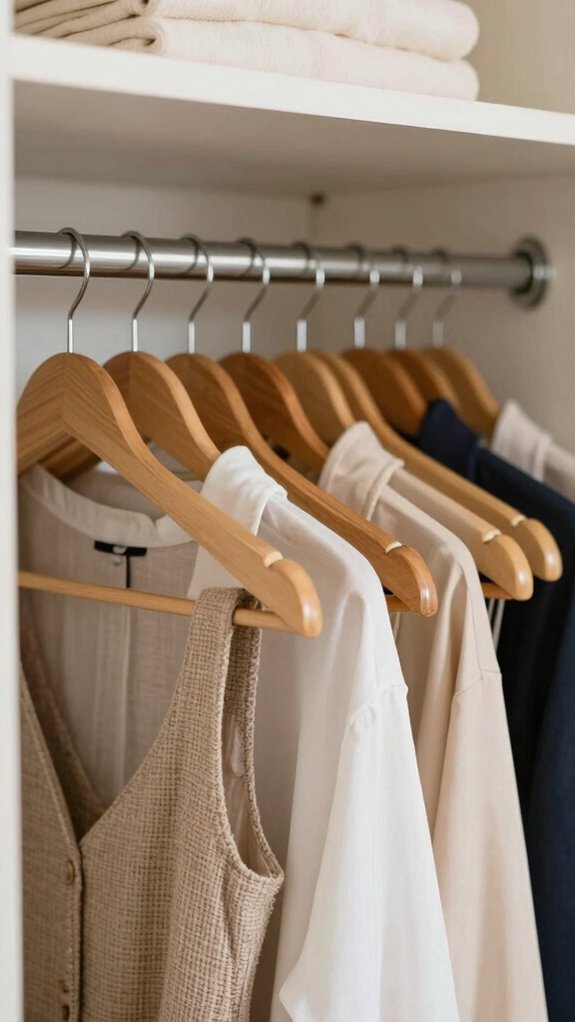
Swapping out chunky hangers can make a tiny closet feel like it suddenly got a bonus inch or two of breathing room! You’ll love how thin, flat styles let shirts and tanks sit closer together, with less awkward gap between them.
Pick trouser clips for pants, skirt hangers for skirts, and shoulder hangers for blazers so clothes keep their shape and your little wardrobe feels like a team.
Stick with matching hanger widths and hooks, too; it keeps the rod even and boosts Closet air circulation, while hanger rust prevention is easier when everything stays tidy.
Choose sturdy hangers for denim, lighter ones for tees, and suddenly you’ve got more room!
Add Shelf Dividers
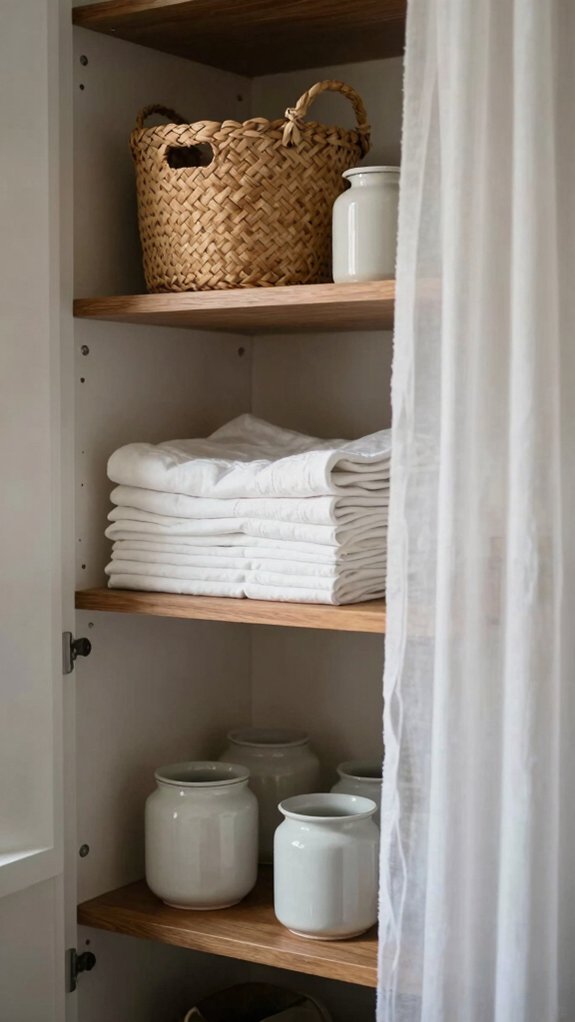
Shelf dividers are a tiny closet’s secret weapon, because they stop folded clothes from turning into one wobbly mountain of sweaters and socks!
- Measure shelf depth and height first, so your dividers fit your folded tees, knits, and intimates.
- Use them for scarves, hats, and bags-on-shelf, and you’ll spot what you need fast, no refolding drama.
- Try color coded labeling to create friendly zones, so everything feels easy to find.
- Pair that with a Seasonal rotation strategy, and your shelves keep moving with you, not against you.
You’re not cramming stuff in anymore, you’re building a closet that feels calm, clever, and totally yours!
Install Extender Rods
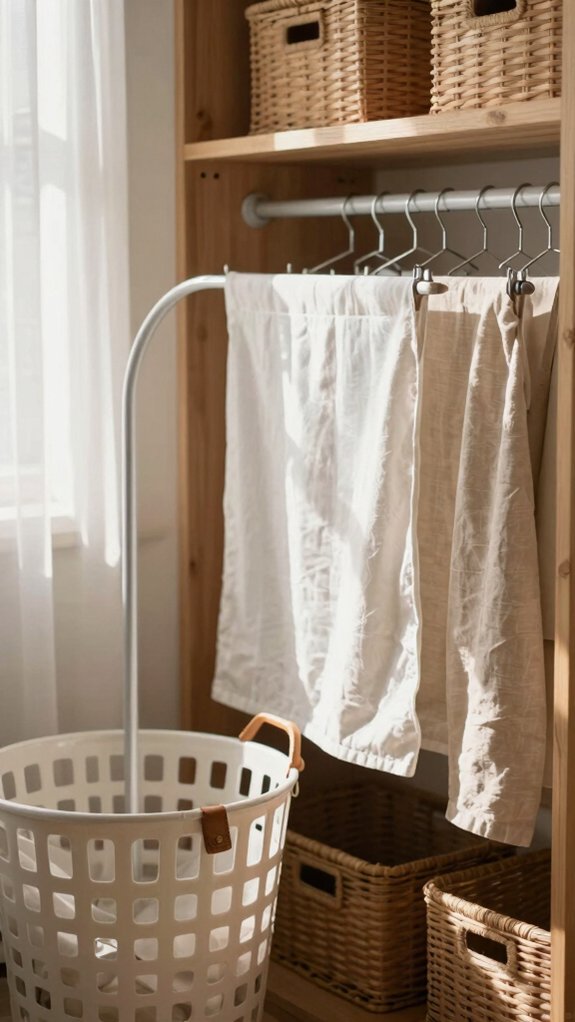
Extender rods are a clever little upgrade, and wow, they can give you extra hanging space without tearing up your closet or making a big mess.
You can use that upper area to create better rod organization, so shirts, pants, and jackets stop fighting for the same spot—nice, right?
With the right sturdy rod and a quick fit check, you’ll squeeze in more clothes and keep everything easier to grab.
Extra Hanging Space
When your closet feels packed tight but you’re not ready to tear the whole thing apart, an extra hanging rod can be a tiny miracle! It gives you vertical clutter reduction and a smart space saving hanger layout, so you can join the small-space crowd without the squeeze.
- Grab an extender rod, usually cheap and easy.
- Clip or hang it below your main rod.
- Use thin hangers, because bulky ones eat room fast.
- Hang shirts, pants, and light layers below, and save the top rod for long coats.
Just watch spacing, so nothing bumps. Suddenly, your closet breathes again!
Better Rod Organization
Adding a rod extender can turn a cramped closet into a much smarter setup, and it’s one of those small fixes that feels bigger than it looks!
You’ll need the extender, a screwdriver, and slim hangers. Mount it on your main rod, then check sliding rail spacing so shirts don’t bump the lower row.
Next, use hanger size optimization with thin hangers, and split your clothes by group, like daily wear below and extras up top. Keep the new rail high enough to reach, but not so high it wastes space.
Best of all, declutter first, so your closet feels organized, not stuffed!
Make Better Use of Vertical Space
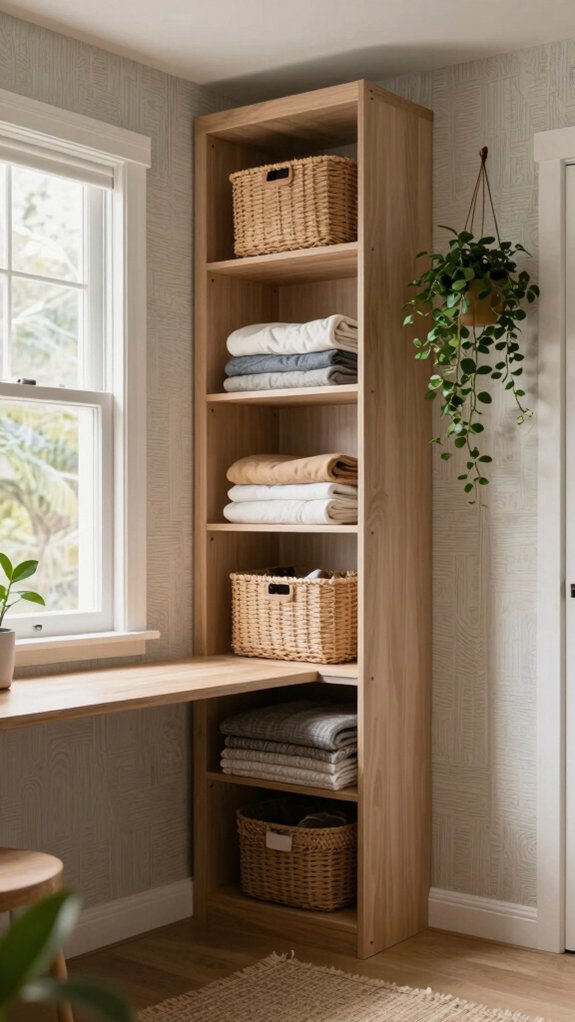
If your closet feels like it’s shrinking by the minute, look up—there’s usually a whole lot of unused space just waiting to help out! You can keep your crew of clothes happier with color coded organization, lighting for closets, rotating wardrobe basics, and ways to maintain storage zones.
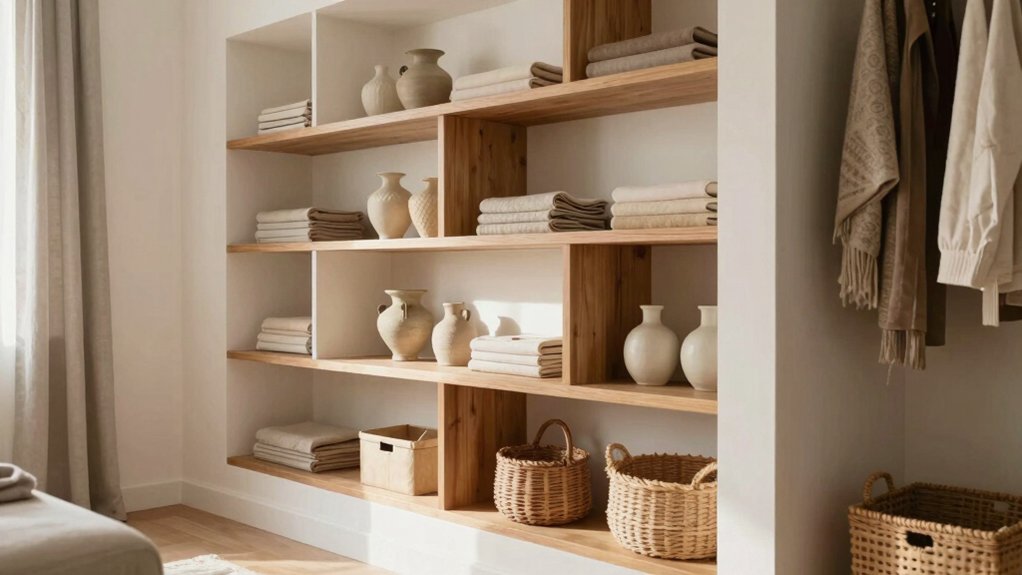
- Add tall shelves or wall cabinets for off-season stuff.
- Use a bookcase with bins for folded pieces.
- Try floating shelves for shoes, layers, or accessories.
- Keep a step stool nearby so high spots stay useful.
Need more room? Slide seasonal extras under the bed, then let your walls do the heavy lifting!
Use Storage Baskets for Small Items
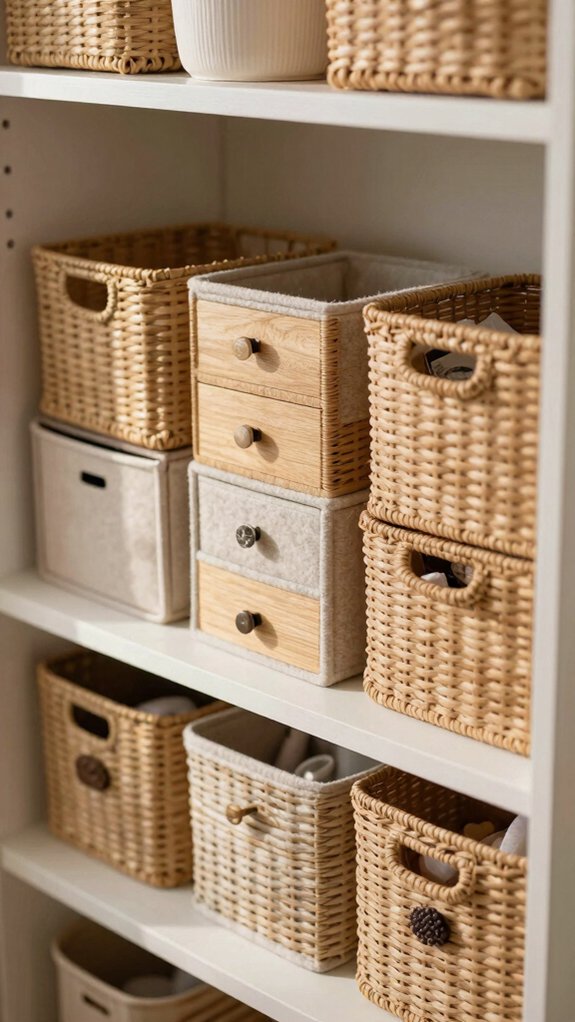
Storage baskets are a super easy win for small closets, because you can sort scarves, bags, umbrellas, and accessories into separate spots instead of letting them tumble into one messy pile.
Try shelf-adjacent or hanging-under-shelf baskets, and if you want things to stay neat, place them near the front edge so you can grab what you need fast—no treasure hunt required!
For an even cleaner setup, pair a few small baskets with shelf dividers, and you’ll keep everything grouped, visible, and way less likely to turn into a closet jungle.
Basket Types and Uses
A few well-chosen baskets can turn a messy closet shelf into a calm little system, and honestly, that’s a pretty big win! Use color coordinated baskets to make your space feel friendly, and try corner shelf organization for awkward spots.
- Divider baskets split folded shirts and accessories fast.
- Small storage baskets catch scarves, hats, and umbrellas before they wander off.
- Bin-like baskets with the same size keep bags and belts neat.
- Hanging-under-shelf baskets, if you’ve got room, hold grab-and-go items at eye level.
Place each basket near its matching clothes, and you’ll save time, reduce clutter, and feel oddly proud every time you open the door.
Smart Basket Placement
Tucked onto closet shelves, storage baskets can stop tiny items from taking over and making the whole space look busy in a flash!
You’ll feel instantly more in control when you group scarves, bags, and umbrellas into baskets that fit the shelf exactly, with hardly any gaps.
Put them beside shoes or folded shirts, so you can grab what you need without digging.
Want a clever upgrade?
Try hanging-under-shelf baskets to use dead space above your clothes.
Add color coded labeling, keep vertical access lanes open, and your closet starts feeling like your crew finally fits together.
Add Hooks for Bags and Accessories
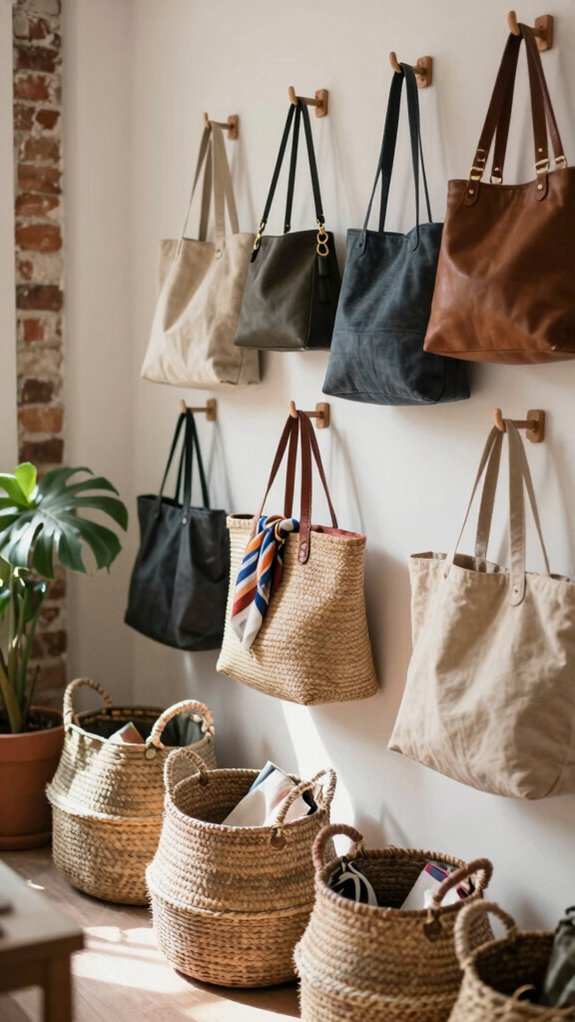
Right on the wall, a few simple hooks can save your closet from turning into a bag-and-belt jungle! Use small adhesive or Command hooks, and you’ll feel like you’ve joined the tidy crowd.
- Label your hooks so everyone knows where things belong.
- Try seasonal rotation: move off-season bags higher up.
- Keep bag weight light, so hooks stay put and happy.
- Accessory sorting works best when you add a second row for belts, scarves, and jewelry.
Hang daily picks near where you get ready, and stash extras farther away. Small change, big relief, less floor mess, more “I’ve got this!”
Store Hats on the Door
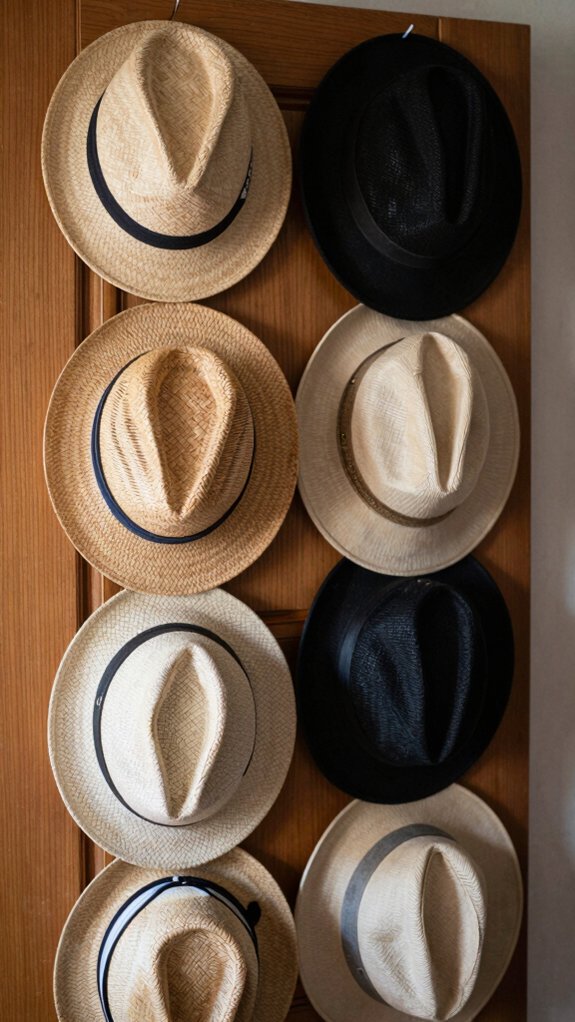
You can turn the inside of your closet door into a handy hat zone with over-the-door hooks or small grouped hooks, and it’s an easy way to keep caps and beanies right where you can grab them.
If you rent, Command hooks are a great no-drill fix, and they won’t leave your door looking like it lost a fight with a toolbox!
For the neatest result, keep the space for hats only, and add a few extra inside-wall hooks if your collection starts to multiply.
Over-the-Door Hat Hooks
On the back of a closet door, over-the-door hat hooks can work a little magic! You’ll free shelves, calm the clutter, and keep caps where your crew can grab them fast. Try this declutter approach:
- Pick a peg organizer with several hooks.
- Hang it securely, no drilling needed.
- Place it at a reachable height.
- Use seasonal rotation for rarely worn hats up top.
This setup keeps your hats in one friendly zone, cuts visual mess, and fits rental life, too. Busy mornings feel easier when everything has a home!
Inside Door Hat Storage
If those hats are already hanging neatly on the back of the door, great news—you can take that same idea a step ahead and move storage to the inside of the closet door! Use an inside-door hat organizer with hooks, and you’ll keep ball caps visible, tidy, and off your rods and shelves.
Choose one hook per hat so shapes stay crisp, not squished. If you rent, grab an over-door or door-mounted rack, no drilling, no drama! Place it near eye level for quick grabs, then try color coded hat rotation and seasonal hat storage. Your small closet suddenly feels like your crew’s clubhouse.
Put a Shoe Rack in Place
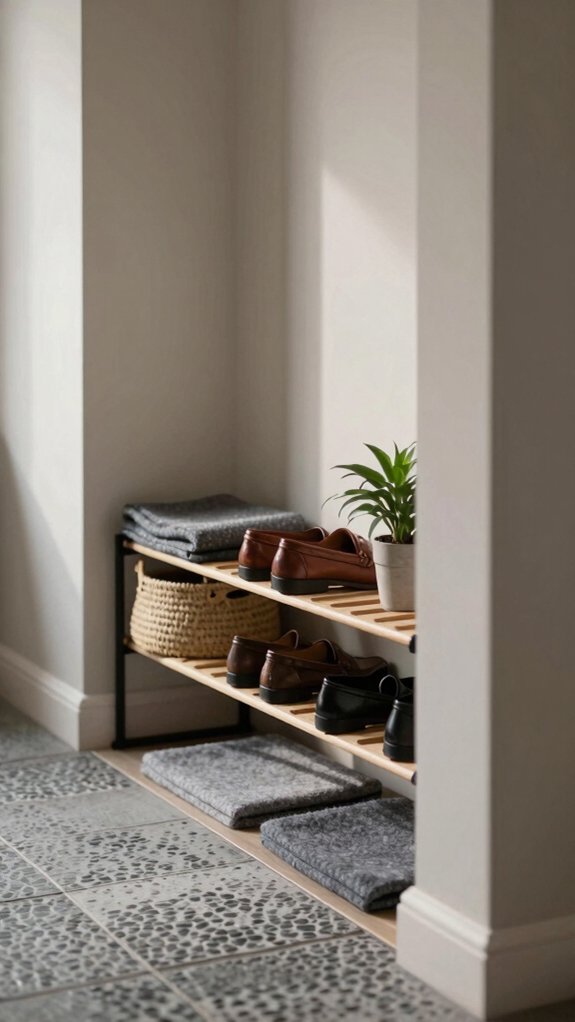
Shoes can turn a tiny room into a messy obstacle course in no time, so a shoe rack is one of the easiest fixes to make fast!
- Pick compact, colorful shoe bins for entrance clutter control.
- Try a freestanding rack if you don’t have a closet.
- Check the measurements first, so it won’t block your walkway.
- Rotate daily pairs up front, and stash off-season shoes elsewhere.
A slim multi-tier rack, like the Tower 6 Tier, can hold lots of pairs and even act like a mini table. Nice, right?
Keep it tidy, and your room feels calmer, friendlier, and way more yours.
Use the Closet Door for Storage
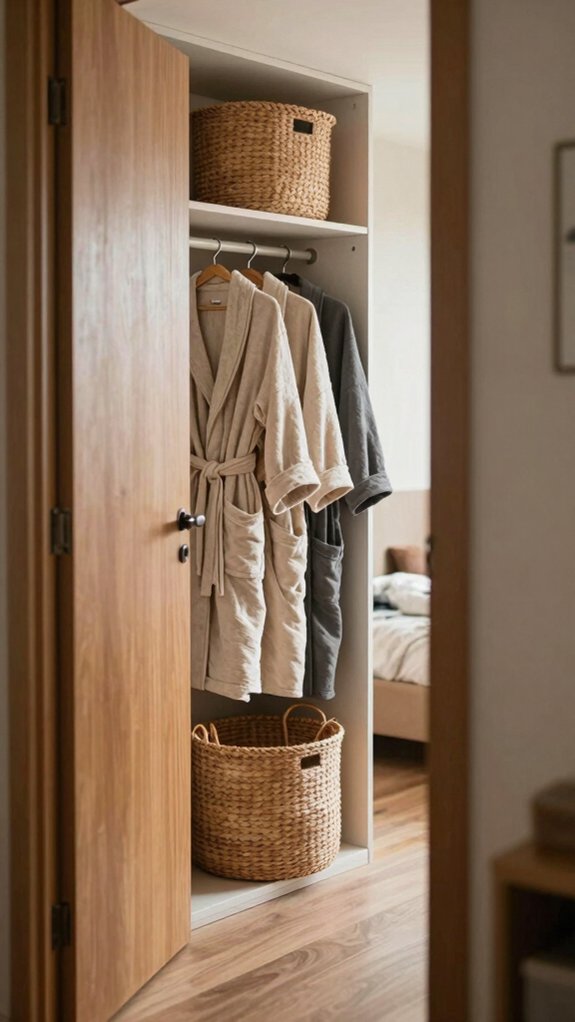
A tidy closet floor is a great start, but the door can pull even more weight for you—surprise! Add over-the-door organizers and hooks inside and out, and you’ll declutter faster without crowding shelves.
| Idea | Result |
|---|---|
| Door hooks | Bags, hats, belts stay handy |
| Removable hooks | Rental-friendly, no drilling |
| Slim organizer | Shoes or linens fit neatly |
| Mirror panel | Quick grab zone, less mess |
Measure first so the rack swings free. A snug fit keeps things calm, not clumsy. With a little Visual organization, your door works like a friendly helper, not a storage bully.
Try a Peg Board or Cork Board
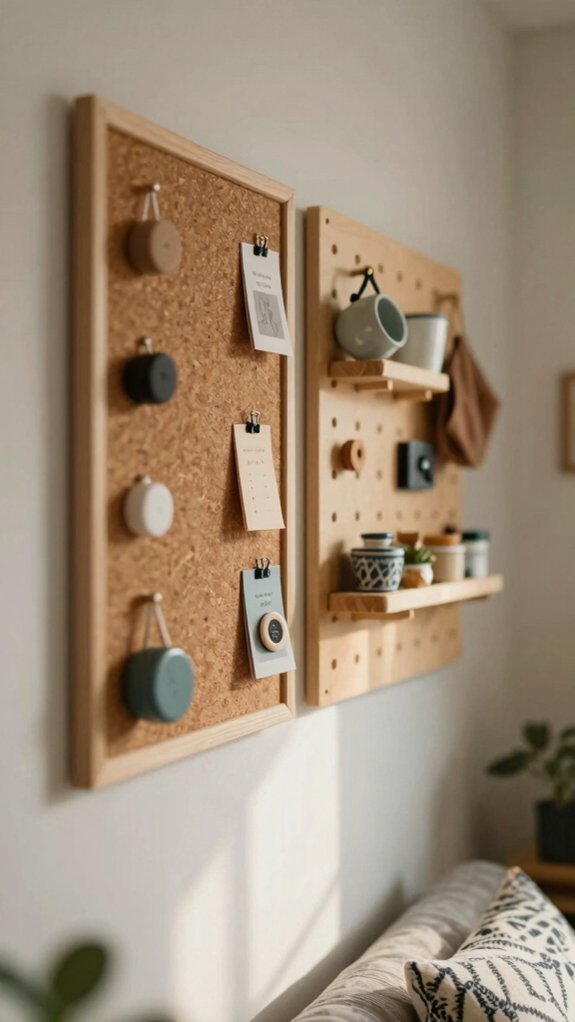
A pegboard can turn a blank closet wall into a neat little command center, with hooks, bins, and shelves that hold everything from bags to bulky accessories, and yes, it can take more weight than a cork board!
If you want a super quick fix, a cork board works great for pinning notes, small accessories, or flat extras without drilling a bunch of holes.
Mount either one behind the closet door or on a nearby wall, and you’ll free up floor and rod space fast—nice, right?
Peg Board Storage
Mounted right on the wall, peg board storage can turn that tiny closet into a super-flexible little command center! You can repurpose walls with renter friendly hooks, easy tool free storage, and smart vertical organization that feels made for your life.
- Start with a sturdy pegboard and a few pegs.
- Hang bags, belts, or hats where you can see them fast.
- Swap hooks as your stuff changes, so the setup grows with you.
- Use stronger pegs for heavier items, and keep lighter pieces on cork nearby.
It’s cheap, cheerful, and oddly satisfying—like your closet finally joined the group chat!
Cork Board Organization
If your closet keeps turning into a tiny jumble of scarves, jewelry, and random “I’ll deal with it later” stuff, a corkboard can be a total lifesaver!
Pin it inside the door or on a wall, add push pins, and use it for scarf display and light bags.
Sort items by category, like everyday pieces and seasonal swaps, so your accessory rotation stays simple.
This little setup gives you clutter prevention without eating shelf space, and it keeps everything easy to spot.
Need something sturdier? Try a peg board instead, especially for heavier bags.
Renters, use temporary mounts, and you’re set!
Store Overflow Items in Other Furniture
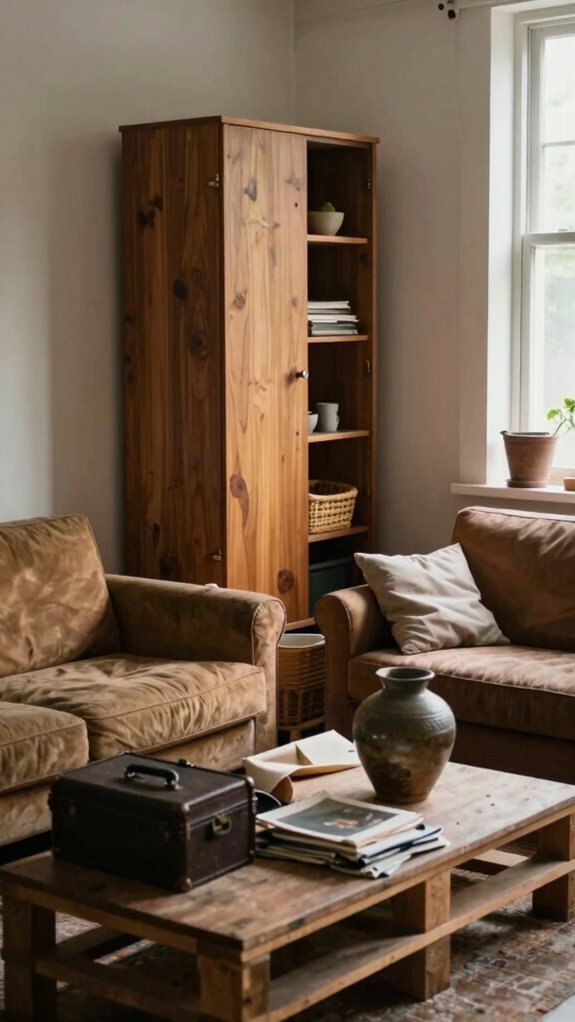
When your closet starts acting like it’s on strike, other furniture can step in and save the day!
Try these quick fixes:
- Use a dresser for overflow clothes, with baskets for shirts and foldables.
- Add an entryway storage bench for shoes, scarves, and a seat.
- Pick a storage bedframe with drawers for extra space.
- Set up a 6-tier shoe rack to free shelf room.
Start with a declutter timeline, then do Seasonal rotations, so only current items stay handy.
If you need more, try a shelving cabinet with a deep drawer.
You’ll feel organized, welcome, and a little less cramped!
Use Under-Bed Storage Containers
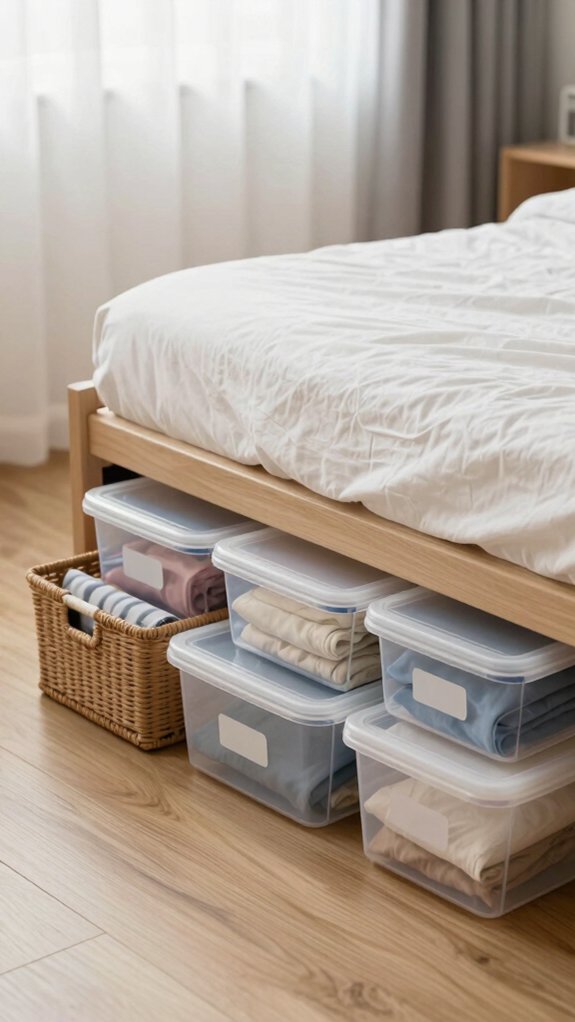
Under-bed space is like hidden bonus square footage just waiting to help out! Measure the clearance first, then pick long, low containers that glide in and out without snagging. Rolling wood boxes or slim bins can hold out-of-season clothes, heavy sweaters, extra bedding, and shoes, which frees your closet fast.
Want smaller stuff sorted too? Try drawer-style inserts for socks, underwear, gym clothes, and pajamas. Add color coded labeling so you grab the right bin in seconds.
If your bed sits too low, bed raisers can fix that. Keep up regular drawer maintenance, and rotate items seasonally for a cleaner, calmer room!
Add a Wardrobe Rack
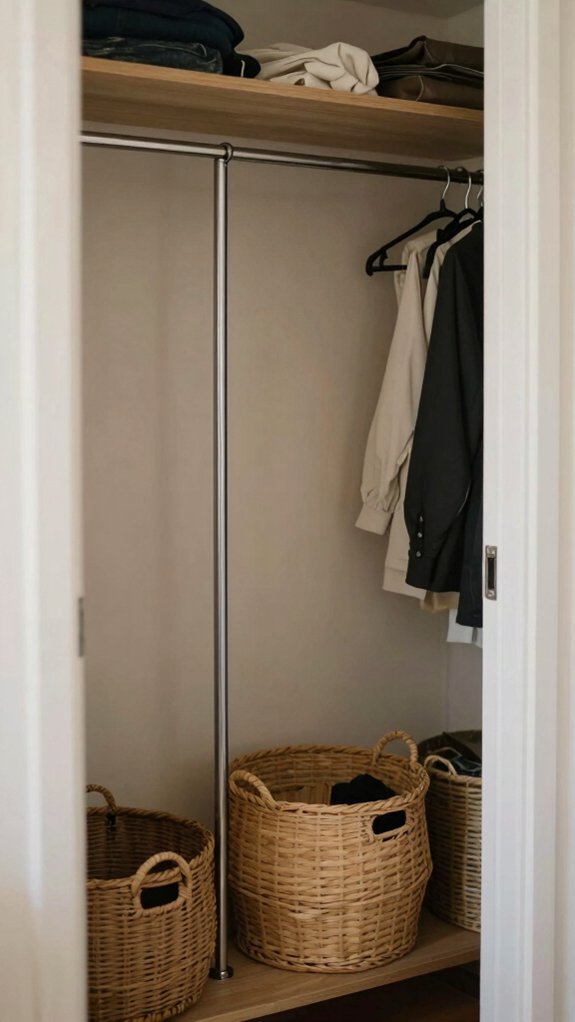
A wardrobe rack can be a total game-changer in a small bedroom, because it gives you closet space without forcing in a bulky built-in that eats up the whole wall.
- Pick your style selection first, so it matches your vibe.
- Choose a space saving design, like a portable rack or wall-mounted one.
- Measure height and width before you buy, so you don’t crowd the room.
- Look for shelves below the rail for folded clothes or shoes.
You’ll see everything at a glance, which makes clutter easier to tame, and that feels pretty darn great!
Turn Furniture Into Closet Storage
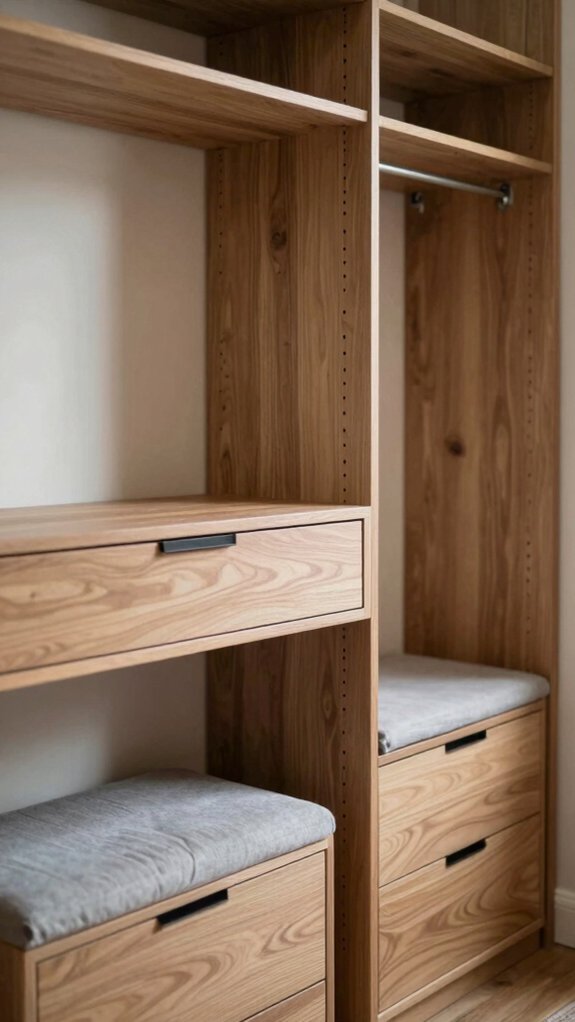
Instead of cramming in another clunky closet unit, you can turn regular furniture into smart storage that pulls double duty, and it’s honestly a small-space lifesaver! Declutter first, then measure priorities so every piece earns its keep. Try this:
| Piece | Best use |
|---|---|
| Ellis Cabinet | Folded clothes |
| Bench | Hidden shoes |
| Brimnes bed | Drawer storage |
| Bath cabinet | Mirror organizer |
| Tower rack | Closet inventory |
Create zones for daily grab-and-go items, and store seasonal extras in the deepest spots. A bench gives you a seat, the cabinet dresses like a closet, and the bed hides clutter. Easy, cozy, done!
Upgrade to a Custom Closet System
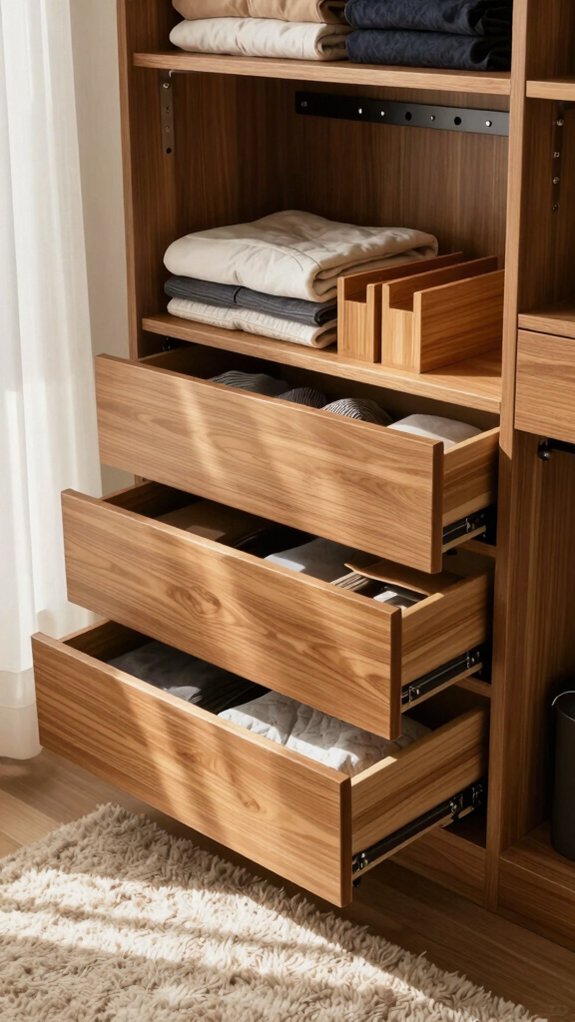
When your closet starts feeling like a game of Tetris gone wrong, it’s time to think custom! You’ll feel right at home with a setup that fits you.
Start by estimating cubic footage, then choose shelves and rods that match your folded clothes and hangables.
- Add shelf dividers and thin hangers to enhance airflow.
- Use extender rods and under-shelf shoe bins to maintain accessibility.
- Create zones with hooks and baskets to minimize clutter.
- Plan daily routines, then build around them, so your closet feels friendly, calm, and yours.
Use Offsite Storage for Seasonal Extras
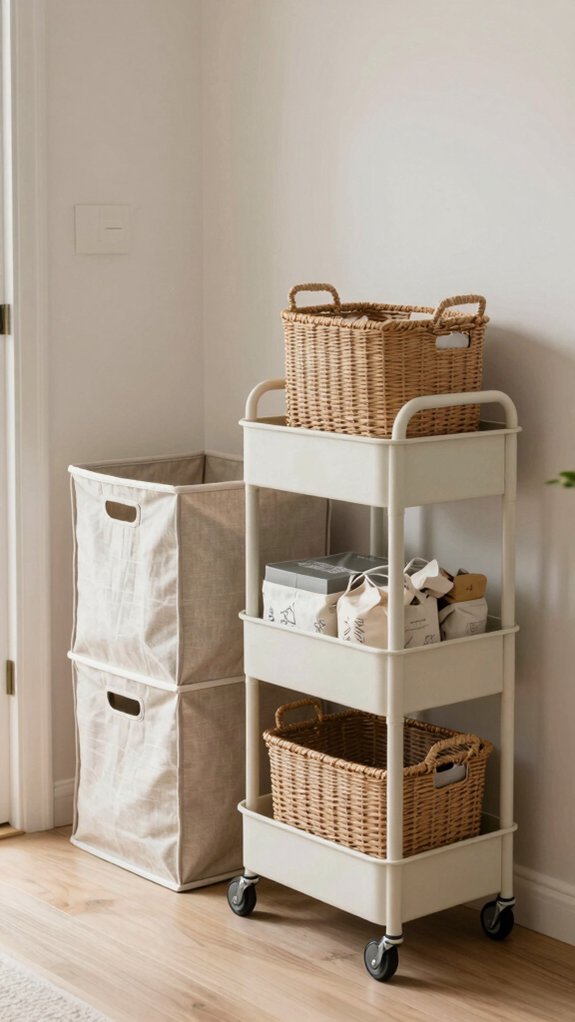
Once you’ve wrangled your closet into a neat little custom setup, the next big win is kicking those seasonal extras out of the way!
You can Organize seasonal bins, then label storage zones so your coats, boots, and swimsuits know where they belong. A climate-controlled unit keeps humidity steady, so mildew doesn’t crash your wardrobe party.
| Step | What You Need | Why It Helps |
|---|---|---|
| Pack | bins, labels | keeps items sorted |
| Store | right-size unit | saves money |
| Protect | security, control | guards fabrics |
Rotate early, move off-season stuff out, and free up room for today’s clothes. That’s a tiny-space victory, friend!