

Want privacy without turning your room into a cave? Try a DIY glass or polycarbonate panel, a slim open shelf, or a curtain hung partway across the room—easy, cheap, and bright! Use white or cream finishes, keep dividers perpendicular to windows, and stop solid panels short of the ceiling so light can float over. Add plants or slatted screens for a softer feel, and the best light-saving trick might surprise you next.
Key Takeaways
- Use translucent materials like frosted glass or polycarbonate to separate spaces while letting daylight pass through.
- Hang curtains partly across the room in light colors, creating soft privacy without blocking windows or light pathways.
- Build pony walls or short dividers that stop below the ceiling so light can float over the top.
- Try open shelving, slatted screens, or perforated panels for room zones that stay bright and airy.
- Place dividers perpendicular to windows and doors, and choose whites, creams, or sunny yellows for a lighter feel.
Why Natural Light Matters in Room Dividers
Natural light can totally change how a room feels—it makes everything look warmer, brighter, and a lot more alive, so your colors, plants, and favorite decor pieces can really pop! You deserve that cozy, happy vibe, and a good room divider helps you keep it.
With smart daylight privacy, you can shape your space without making it feel boxed in. Natural light can boost mood, energy, and even sleep, so you’ll feel better day and night.
Pick light-friendly materials for glare reduction, especially in sunny spots. In busy homes or small apartments, that bright, open look can keep everyone smiling.
Glass Dividers That Keep Rooms Bright
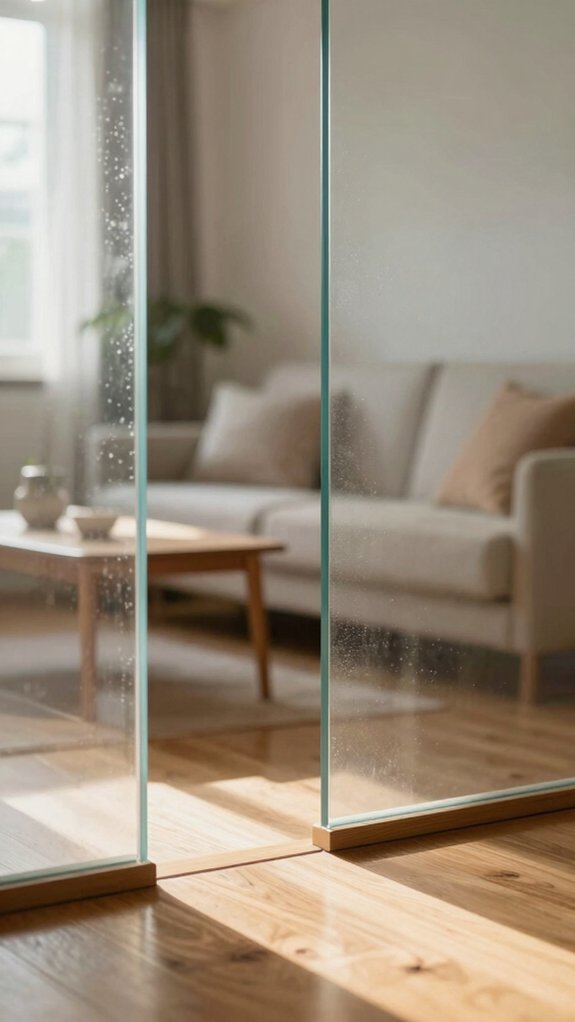
Glass dividers can keep your rooms bright and still give you a clear boundary, which is kind of the best of both worlds—hello, sunlight!
When you use thin, transparent glass, you let daylight travel through the space, so colors look richer and the whole room feels warmer and more open.
If you want a little more privacy, translucent glass or panels that stop short of the ceiling can soften views without trapping light in one lonely corner.
Why Glass Works
If you want to split up a room without turning it into a gloomy little cave, a glass divider can be a total game-changer! You get a clear boundary, but your space still feels open, friendly, and easy to share.
Thin panels save floor space, keep sightlines open, and help with ventilation needs, while also giving you a nice privacy balance.
Try frosted or translucent glass if you want a softer screen, because it still lets daylight spread and makes colors pop.
It’s beginner-friendly, looks sleek, and keeps your room feeling like your crew belongs there!
Light Flow Benefits
A room divider can do more than mark out a corner, it can help your whole space stay bright and happy-looking, too! You keep daylight flowing when you use glass, and your rooms feel bigger, friendlier, and less boxed in.
| Type | Light | Best use |
|---|---|---|
| Clear | Max | Shared spaces |
| Frosted | Soft | Quick privacy |
| Ribbed | Gentle | Hall edges |
| Slim frame | High | Tiny rooms |
| Perpendicular | Best | Door-window paths |
Try a simple DIY panel with safe glazing tips, plus note sound privacy tradeoffs. If you want a cozy vibe, lightly frosted glass works great, and it won’t turn your place into a cave!
Polycarbonate Dividers for Soft Privacy
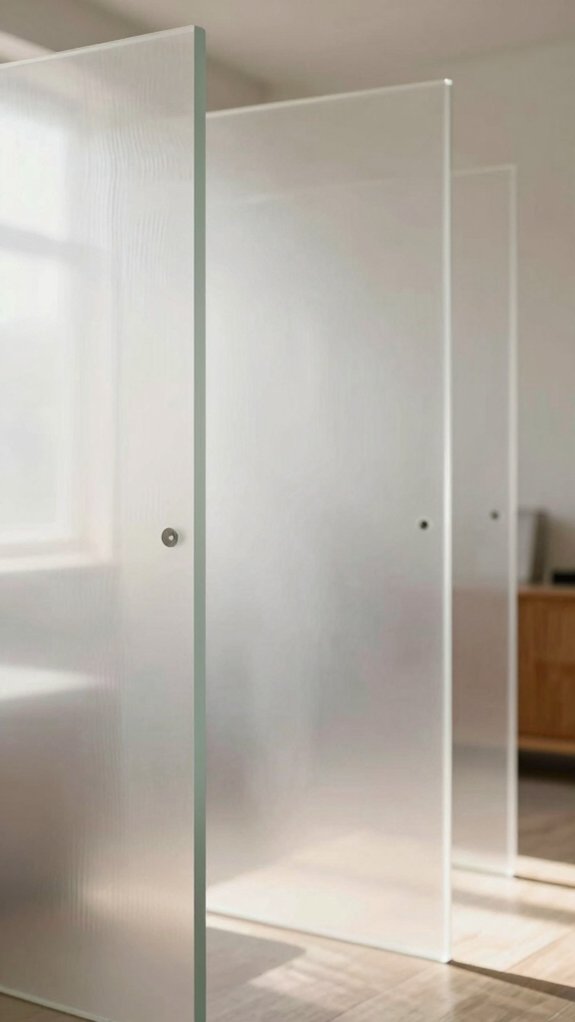
Polycarbonate dividers are a smart pick when you want soft privacy without turning your space into a cave. You get a clear physical boundary, yet daylight still glows through, so your room feels open and friendly.
For a quick DIY setup, use a portable panel, simple feet, and a few clips, then move it in minutes—easy!
Place it perpendicular to windows or doors, and pair it with whites or yellows to spread light even more.
Want a bonus? It can help with sound attenuation, and handy cable routing keeps cords tidy.
Nice, right?
Open Shelving That Barely Breaks Sightlines
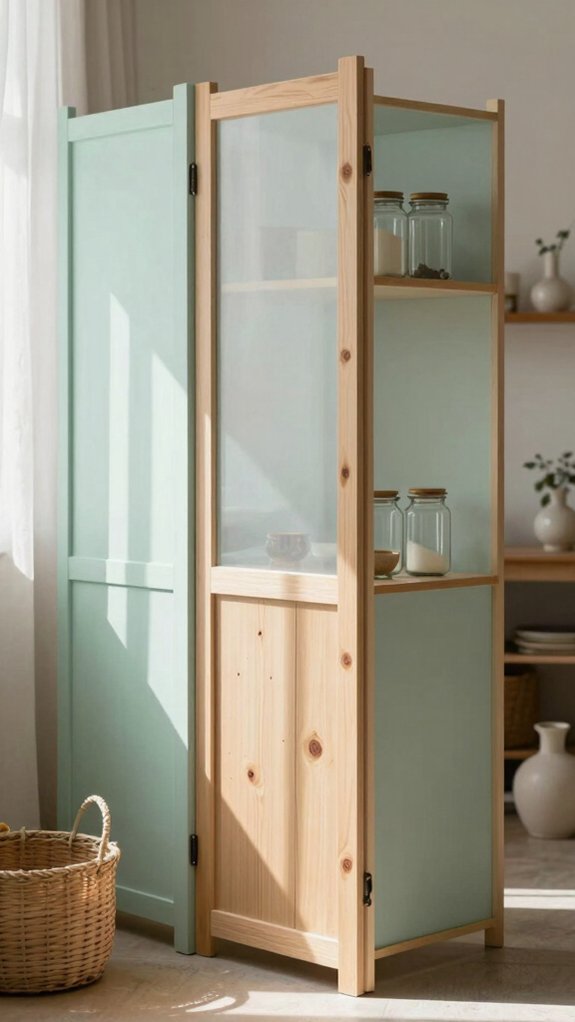
Open shelving can act like a light divider, and honestly, it’s one of the sneakiest ways to carve out privacy without making your room feel cramped.
You get a zone split, not a wall, so daylight still flows and your space feels friendly.
Grab a slim bookcase or showcase, a level, and a few brackets, then set it up with small layout tweaks.
Turn it perpendicular to doors or windows, and leave wide gaps between units.
Add books, baskets, and a few Boho styling tips, and you’ll contain clutter while keeping the vibe open.
Nice, right?
Modular Partition Walls With Windows
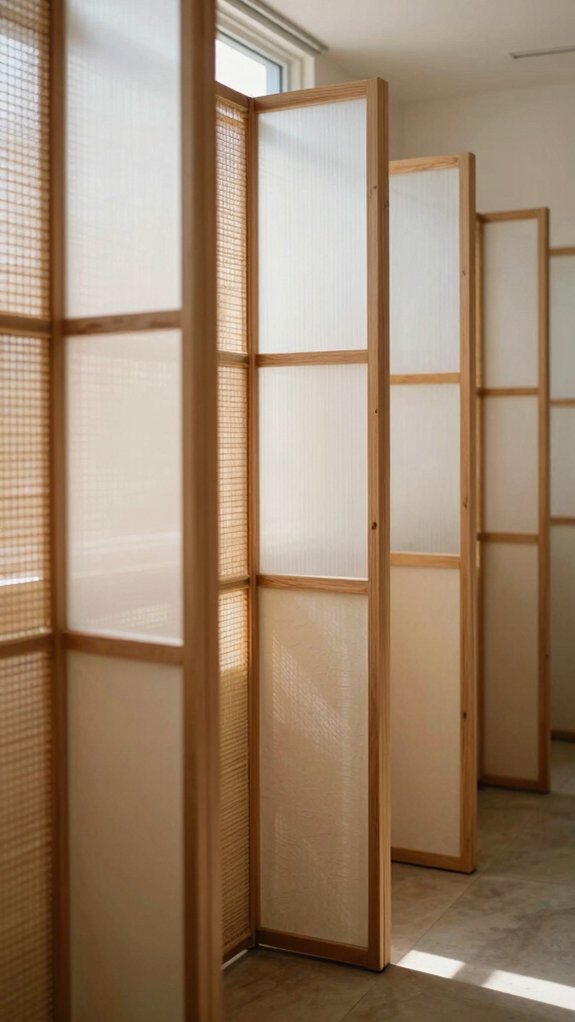
When you want real privacy but you don’t want your room to feel boxed in, modular partition walls with windows can be a total game-changer!
You can build one in a couple of hours with basic tools, like a screwdriver, and get solid separation without a full renovation.
Start with space planning basics, then place the wall perpendicular to doors and main windows so you keep daylight moving.
Add bright whites or yellows around it for a happier glow.
Need more hush? Try Soundproofing options in solid panels where privacy matters most, then use windowed sections everywhere else.
Clever, right?
Timber Slats That Filter Light
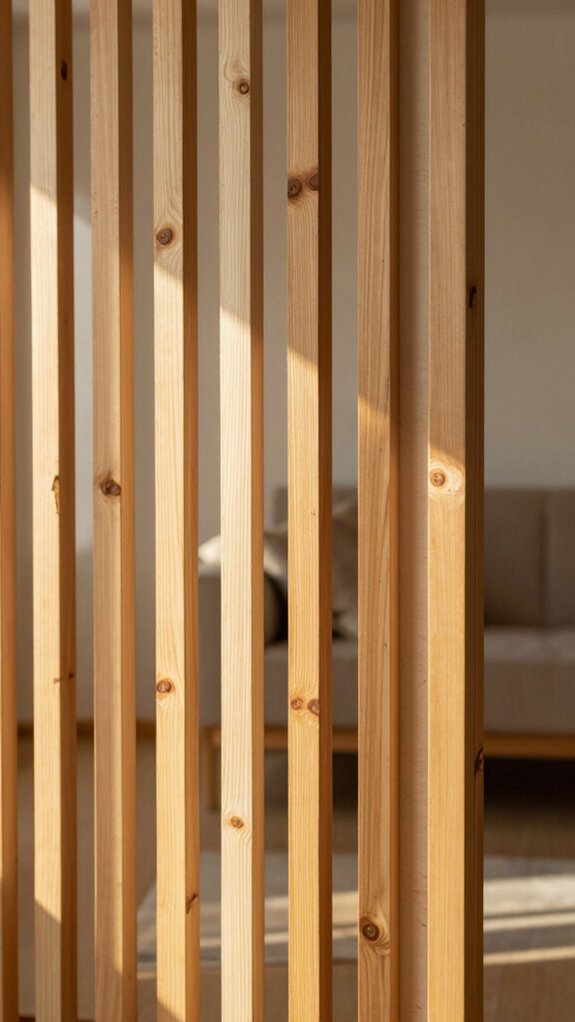
Timber slats are a smart way to split up a room, because you get privacy without turning your space into a cave—nice, right?
You can play with horizontal, vertical, or diagonal slats to let more or less light slip through, and that small tweak can make a big difference.
For the best airy look, set the divider near windows at a right angle and pair the slats with light walls so the room still feels bright and open.
Light-Filtering Slat Patterns
A slat divider can be a sneaky little hero for privacy, because it gives you a clear boundary without turning your room into a cave!
You can build privacy screening with timber slats set horizontal, vertical, or diagonal, and each layout changes how light slips through.
Use simple wood strips, a frame, and screws, then space the slats with care, because wider gaps feel more open and tighter ones feel cozier.
Light finishes or pale timber tones bounce daylight around, so the divider stays ventilation friendly and airy.
Want stronger coverage? Nudge the slats closer, but leave enough glow to keep things friendly!
Modern Airy Divider Design
With the right timber slat pattern, you can make a divider that feels modern and airy, not heavy or cramped!
You’ll love how daylight slips through the gaps, giving you privacy without turning your room into a cave.
Try simple timber, a few brackets, and easy DIY installation, then set the slats horizontal, vertical, or diagonal for the vibe you want.
Light finishes like white or pale yellow help bounce brightness around, and tighter spacing keeps faces private while still letting the space glow.
Bonus: acoustic slat benefits can soften noise, so your hangout feels calm, friendly, and just a little stylish!
Perforated Screens for Airy Division
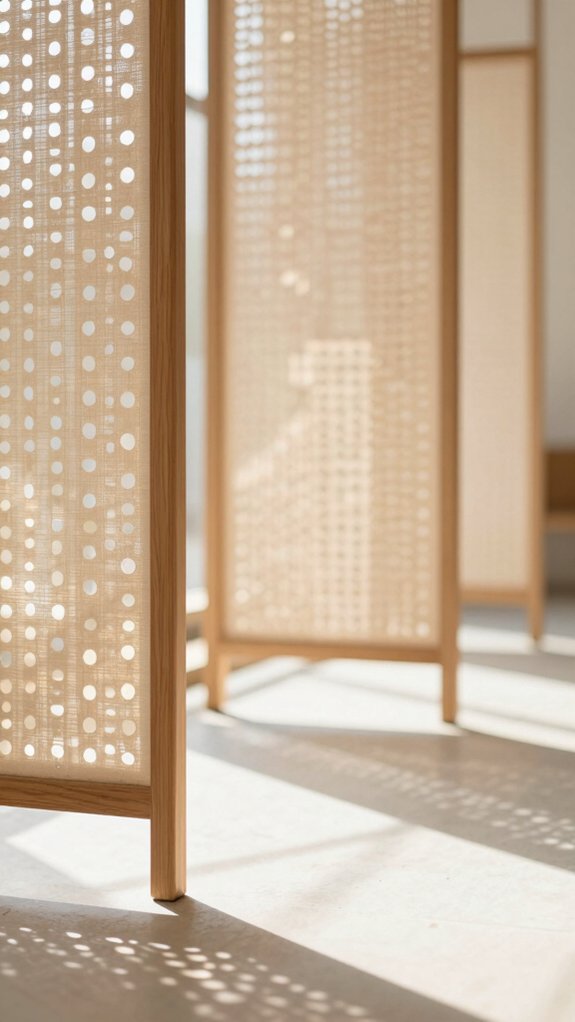
Because perforated screens let light dance right through them, they’re a smart DIY pick when you want privacy without turning your room into a cave!
You can build a hole pattern DIY panel from aluminum, steel, copper, or plastic, then mount it as modular paneling that fits your space.
Start with a sheet, mark your design, and punch or cut openings in stripes, grids, or custom shapes.
The result? A clear boundary that still feels friendly and open, with airflow and daylight staying in the mix.
Choose a looser pattern for the best glow, and your room’ll feel shared, not shut out!
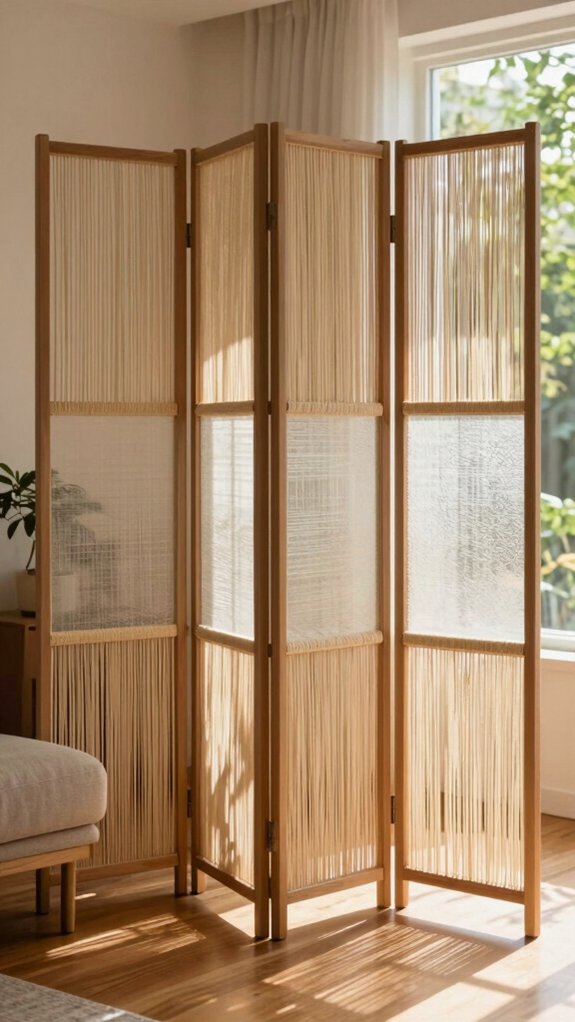
Macramé Curtains for a Light Touch
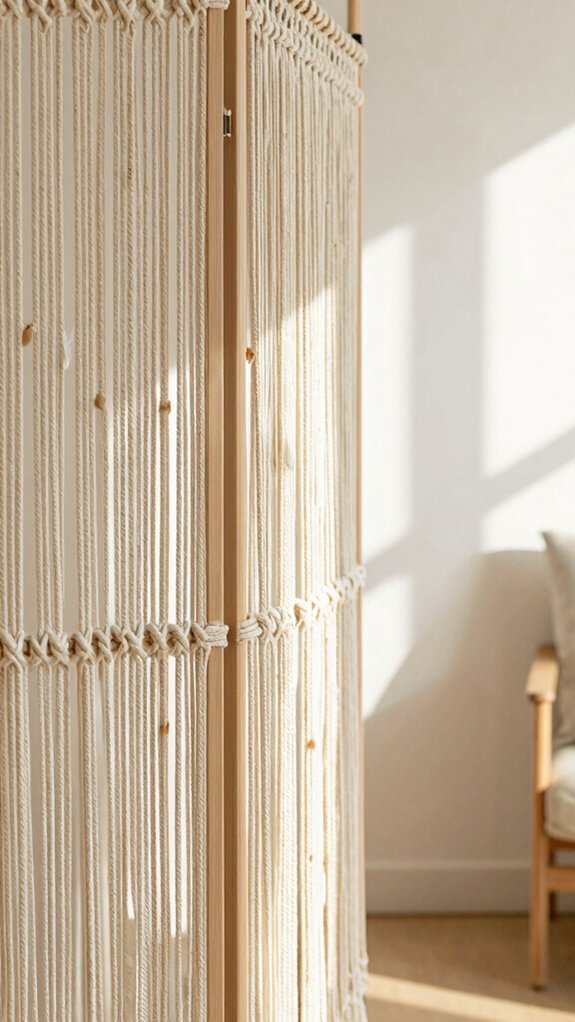
Macramé curtains give you a super-light way to split up a room, so you can mark a work zone or cozy corner without turning your space into a cave—nice, right?
Since they’re hand-woven and airy, they let sunlight slip through and keep your room feeling open, warm, and a little more playful.
If you love that boho look, this is a fun DIY that adds privacy without yelling, “Hey, I’m a wall!”
Macramé’s Airy Divide
If you want a divider that says “I’m here” without shouting it from the rooftops, a macramé curtain is such a fun pick!
It gives you Layered Textures and Flexible Styling, while keeping your room bright and friendly.
- Grab cotton cord and a simple rod.
- Tie or hang the curtain in minutes.
- Shift it when daylight changes.
- Enjoy a soft, private nook.
- Pair it with light walls and bright accents.
Because it’s airy, you get separation without that boxed-in feeling.
It’s a cheap, beginner-friendly win, and your space still feels like it belongs to you and your people!
Styling Boho Light Flow
A hand-woven macramé curtain can be such a pretty little trick for an open room! You’ll get Layered boho textures, plus a soft privacy screen that won’t slam the brakes on daylight.
Grab a ready-made curtain or knot your own with cotton cord, a rod, and two hooks. Hang it partly across the room, not wall-to-wall, and set it perpendicular to doors and windows. That keeps light pathways open, and the room still feels connected.
Pair it with whites or sunny yellows, and you’ll catch drifting sunlight patterns. Best part? It’s beginner-friendly, low-cost, and totally cozy!
Pony Walls That Define Without Darkening
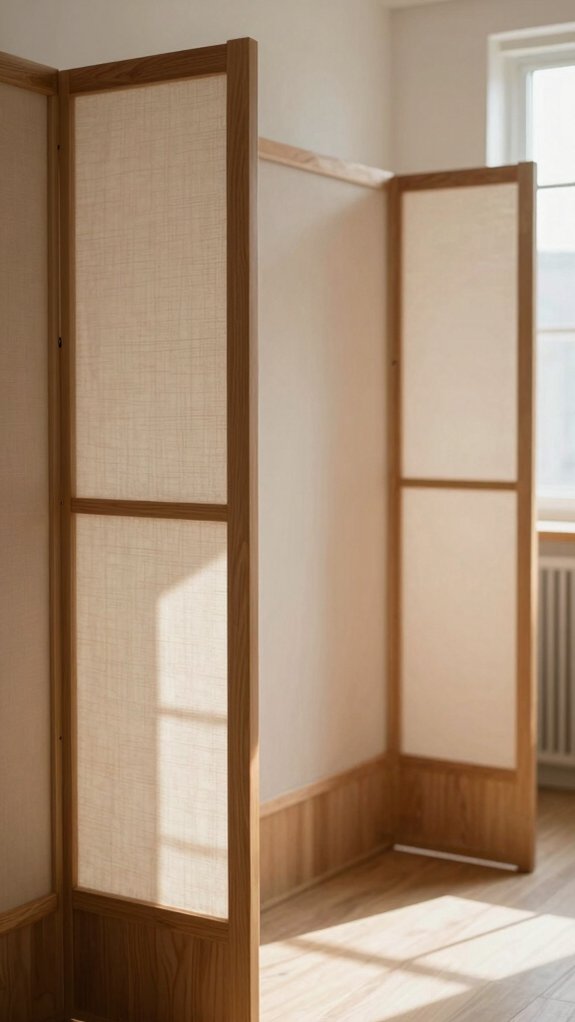
When you want privacy without turning your room into a cave, pony walls are a smart little trick! At about 4 feet tall, they mark zones, guide movement, and still let light float over the top. Try this:
- Use a simple wood frame and drywall
- Keep your Ceiling gap strategy in mind
- Follow Minimal obstruction guidance
- Set it perpendicular to doors and windows
- Paint it white or yellow for an airy glow
You can build one in a couple of hours, so it’s easy and budget-friendly. Best part? You get a cozy, welcoming split, not a dark wall.
Plants That Separate Spaces Naturally
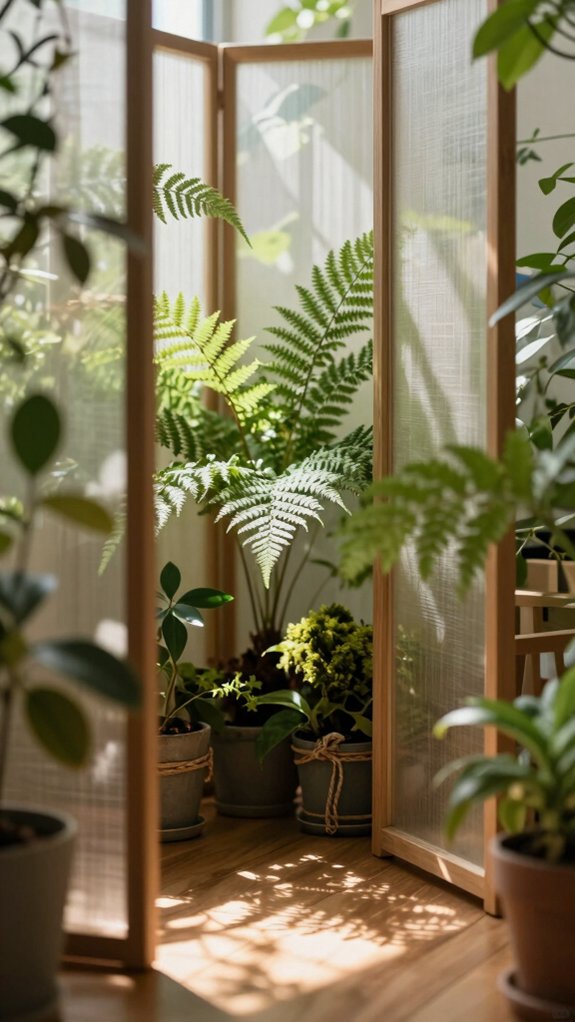
Plants can do more than look pretty—they can quietly split up a room and still let sunshine drift through, which is kind of magical! You get privacy without the cave-like vibe, and your space feels like it belongs to you.
| Plant | Role |
|---|---|
| Bamboo privacy | Tall, slim screen |
| Hanging plants | Soft overhead divider |
| Corridor greenery | Guided path edge |
| Palms | Airy wall effect |
| Dracaena | Dense, friendly buffer |
Try tall planters, a few clustered pots, and hangers near windows; they’re cheap, easy, and beginner-friendly. Keep them trimmed so light filters through, not shadows. Best part? Your work zone and lounge zone feel warm, leafy, and surprisingly welcoming—like the room just gave you a hug.
Use Light Colors on Room Dividers
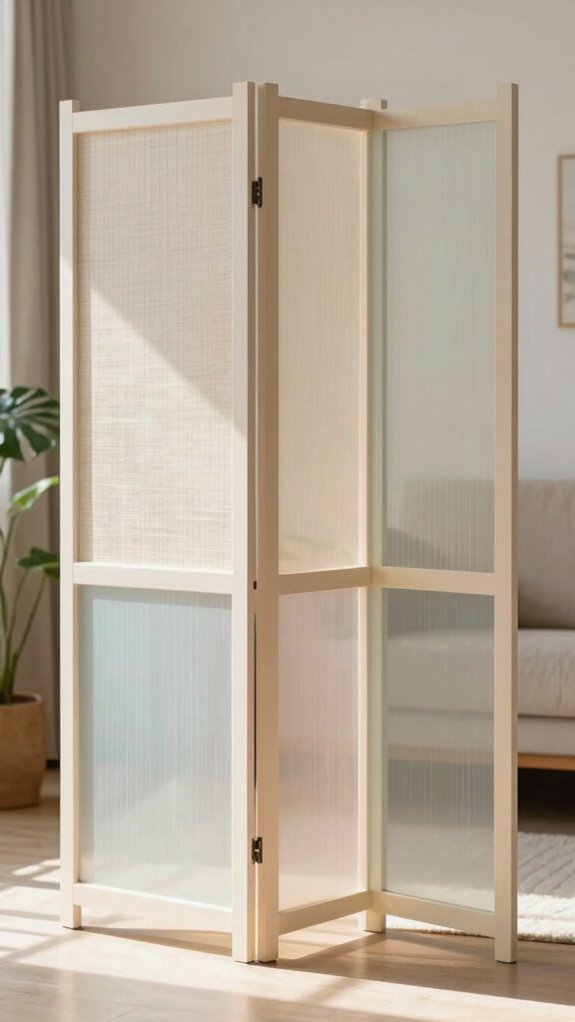
If your leafy divider already has the room feeling calm and cozy, the next easy win is color—go light, and let that divider work like a little daylight booster!
You’ll fit right in when your space feels open, not cave-like.
- Try whites, creams, or sunny yellows
- Skip browns, grays, and blacks
- Paint windowed panels in bright tones
- Use light colorways on polycarbonate
- Add matching trim for extra pop
Reflective surfaces bounce daylight around, so your divider feels friendly and bright.
Even cheap paint works, and the payoff is huge: more glow, less gloom, and a room that welcomes you in.
Place Room Dividers to Preserve Light
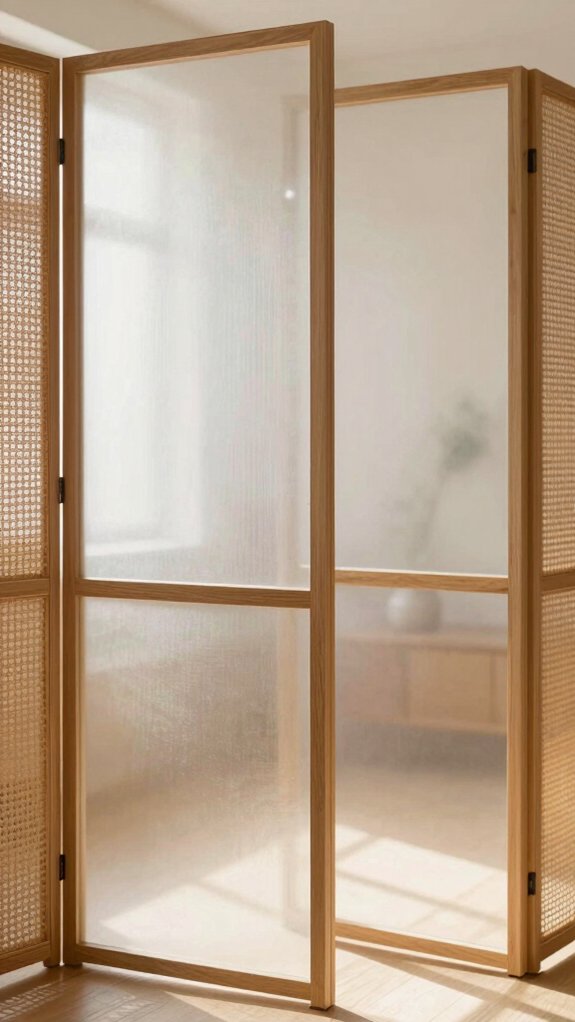
To keep your divider from eating up all that lovely daylight, place it perpendicular to doors and windows instead of lining it up side-by-side with them, and you’ll let way more light slip around the edges.
Great news: this trick’s cheap, easy, and roommate-friendly!
If you’re using solid modular panels, stop them short of the ceiling or add cutouts, so light can still wander through.
For smarter ventilation considerations and glare reduction, try translucent polycarbonate or glass.
With an L-shaped wall, keep the long leg away from the window line, and your cozy zone still feels bright, open, and inviting.
Small Tweaks to Boost Natural Light
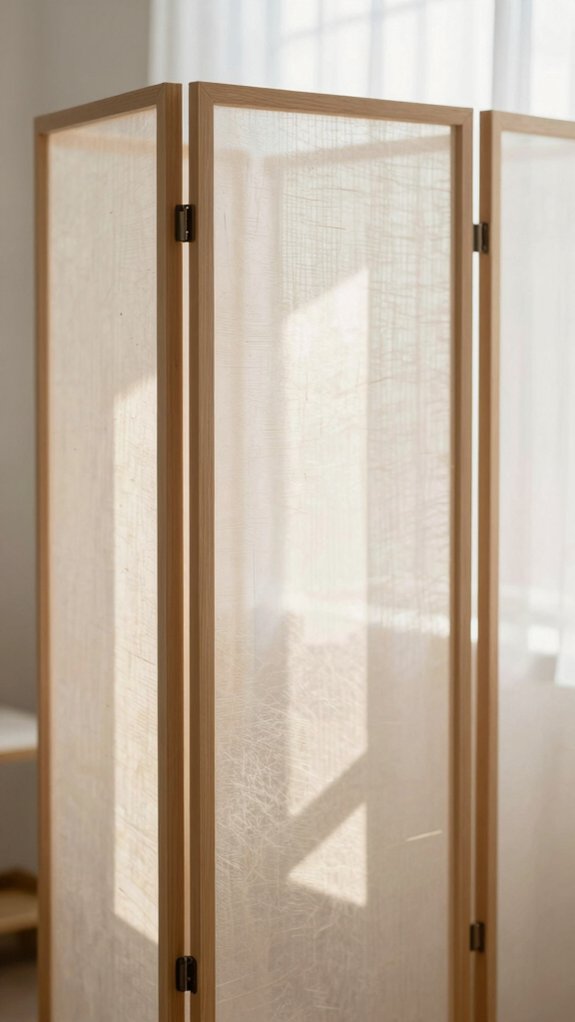
Bright colors can work a little daylight magic!
- Choose reflective finishes on panels and nearby walls; white or yellow bounces light, while dark shades soaks it up like a sleepy sponge.
- Refine panel placement by setting dividers perpendicular to windows and doors, so you don’t block the main light stream.
- For polycarbonate, angle it so soft light keeps traveling, not stopping at a gloomy wall.
- With slats or perforated screens, face the openings toward the window, and let light slip through.
- Shift chairs and desks toward the brightest side, and you’ll feel the room open up fast—tiny move, big glow!