
Choosing the right accent wall starts with the room’s natural focal point—sofa or fireplace in the living room, headboard in the bedroom, and table or sideboard in the dining room. In entryways and hallways, choose the first wall you see. For offices, bathrooms, and nurseries, highlight the desk, key fixture, or crib. Test samples in daylight and evening light, use washable paint where needed, and keep one accent per room. Ready for the smartest color-placement tips?
Key Takeaways
- Choose the wall naturally noticed first, such as behind a sofa, headboard, desk, crib, or across from an entry.
- Highlight architectural features like fireplaces, built-ins, sideboards, or distinctive bathroom fixtures.
- Keep surrounding walls lighter and use one primary accent wall per room for visual balance.
- Coordinate the accent color with furniture, bedding, curtains, tile, trim, and the room’s overall purpose.
- Test paint samples in daylight and evening lighting to reveal undertones, shadows, and changing atmosphere.
Living Room
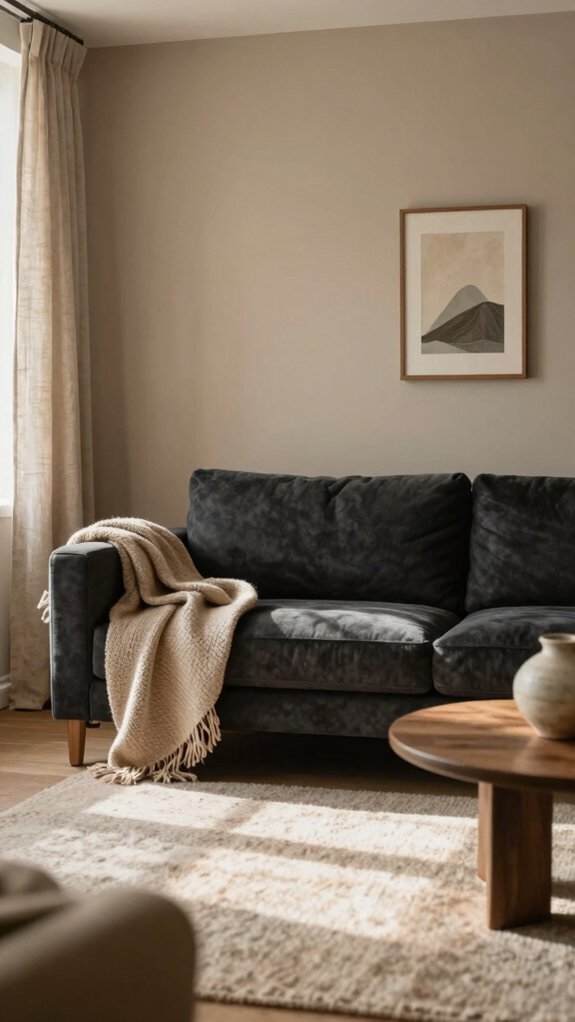
If your living room has a clear focal point, start there! Choose a wall behind the sofa or your fireplace/TV wall, so everyone understands the room’s visual anchor. These living room focal points make furniture placement feel natural and welcoming.
Next, match the wall to real life. A rich paint color or bold wallpaper suits conversation areas, while a washable finish helps when snacks mysteriously fly. Keep nearby walls calm, and try fireplace contrast for cozy drama.
Before committing, use wallpaper sample testing or paint swatches in daylight and evening light. Here’s the surprising trick: choose one primary accent wall; restraint makes the whole room feel connected!
Bedroom

In the bedroom, let the wall behind your headboard set the mood, because it naturally anchors the bed and gives the whole space a cozy focal point!
Check the room’s architecture first. If a window interrupts that wall, choose the nearby bed-adjacent wall instead, so the space feels balanced.
Keep surrounding walls light, especially if your neutral base feels a little flat.
Test samples directly on the chosen wall in daylight and evening light; undertones can surprise you!
Stick with one accent per bedroom, and match it thoughtfully with your bedding and curtains.
For a polished finish, use ceiling placement and headboard arrangement to keep everything visually connected!
Dining Room
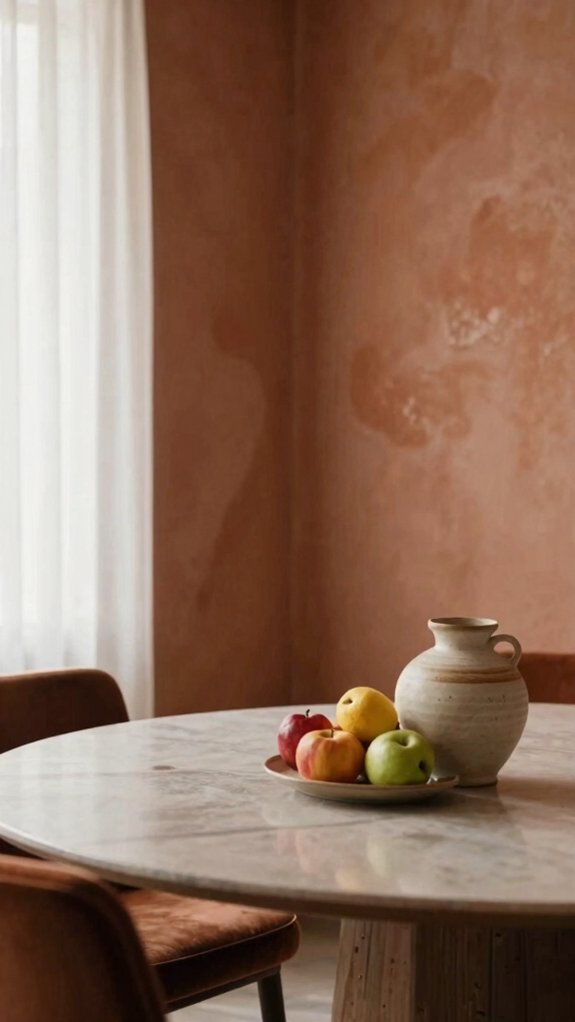
Choose the dining room wall that guests naturally notice when they enter or sit down, especially one framing a sideboard, built-in, or other architectural feature—it’ll instantly give the table a stylish backdrop!
For smart feature wall placement, paint one wall, especially in an open kitchen-living space. Try navy or jewel tone accents with crisp white trim, while solid paint keeps busy art from competing.
Use these Dining lighting tips: sample your color in daylight and warm evening glow. Careful color undertone testing reveals surprising red or blue shifts before you commit.
Gather swatches, a brush, and primer. Paint two coats, then step back—your table may suddenly feel like everyone’s favorite seat!
Entryway
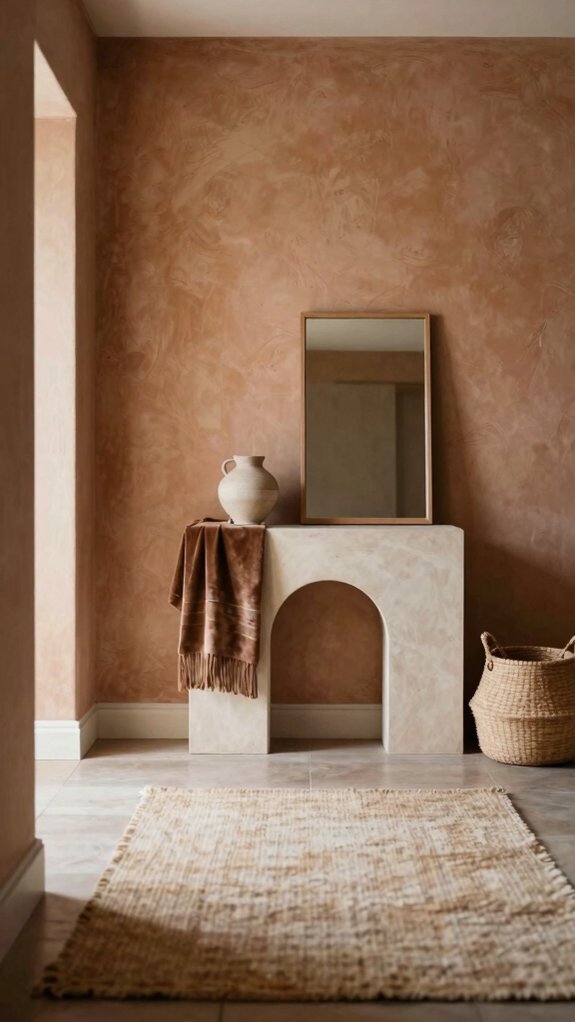
Entryways make a quick first impression, so start with the wall your eye lands on when you walk through the door—often the wall opposite it or the one with the most visual “anchor,” like a built-in nook, tall window, or striking architectural detail!
Try warm reds, oranges, or yellows for a friendly welcome, or choose blues, greens, or gray for calm.
Use these visual anchoring tips: let one built-in feature guide your Focal feature placement, and keep one accent wall in the sightline.
Before painting, try natural light testing and consider Entry lighting impact; shadows can change everything!
A small sample saves money and prevents surprises.
Home Office
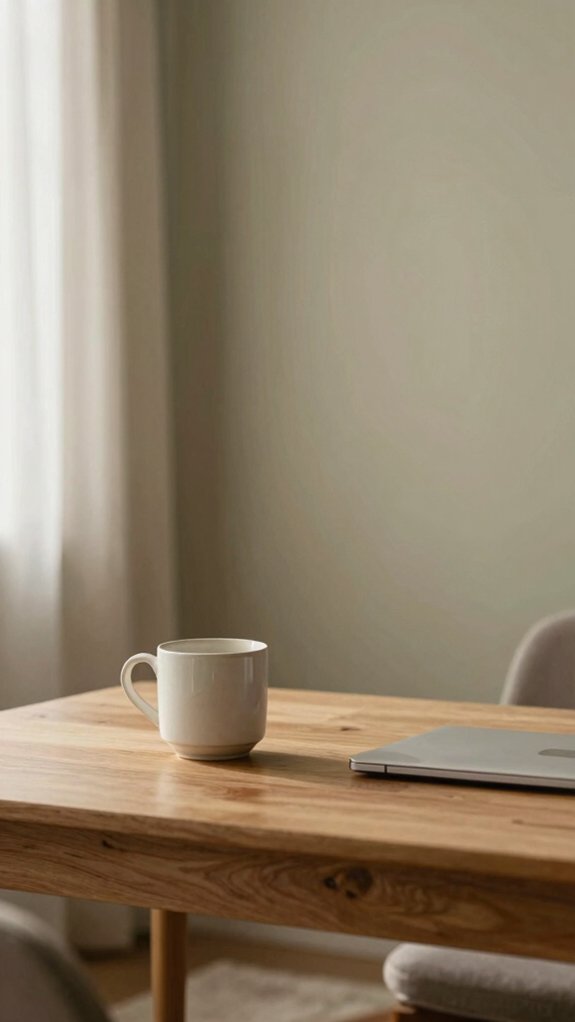
When you’re setting up a home office, start with the wall your eyes naturally find when you walk in—often the space behind your desk—so your accent color supports focus instead of competing with your daily view!
Cool blue-gray shades feel calm, while warm beige or soft yellow-red tones add friendly energy.
Check samples in daylight and under your usual lamp for Lighting Balance.
Keep busy shelves, monitors, and art from clashing with a simple wall.
- Match color to your work mood.
- Support an Ergonomic Layout.
- Anchor strong architecture.
- Contain bold patterns to one wall.
Best of all, test first—your perfect shade may surprise you!
Bathroom
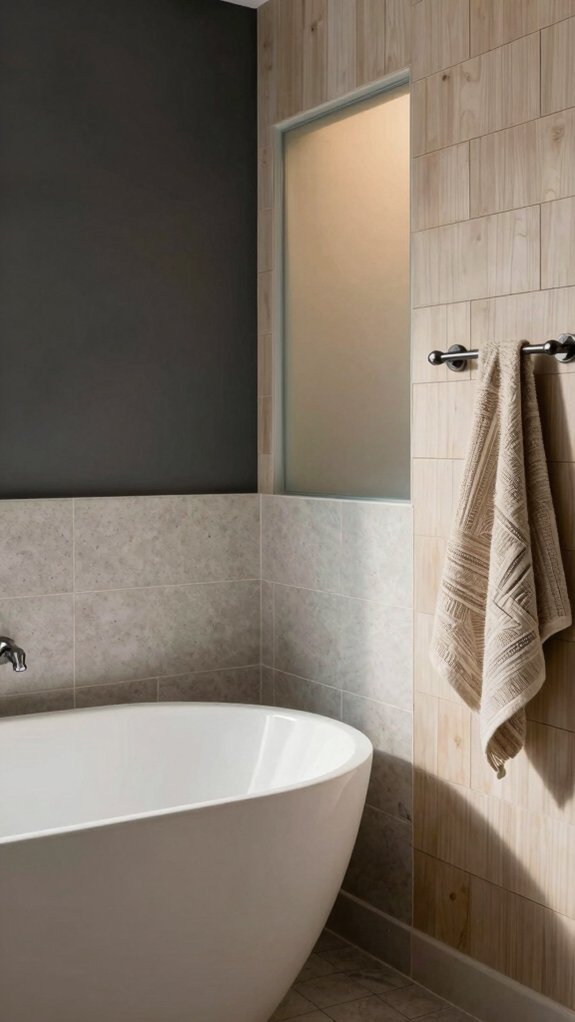
Bathrooms deserve an accent wall that makes the space feel finished, not just less blah! Choose the wall you notice first, often behind the toilet or across from the doorway, and connect its color to your tile or fixtures.
For a welcoming look, pick humidity safe materials, water resistant finishes, or subtle texture. If patterns already fill the room, keep your accent simple. Near the sink, easy clean wall surfaces make splashes less stressful.
Try lighting based color testing by viewing samples in daylight and under overhead bulbs. Here’s the surprising trick: a small, bold color can make even a tiny bathroom feel wonderfully complete!
Nursery
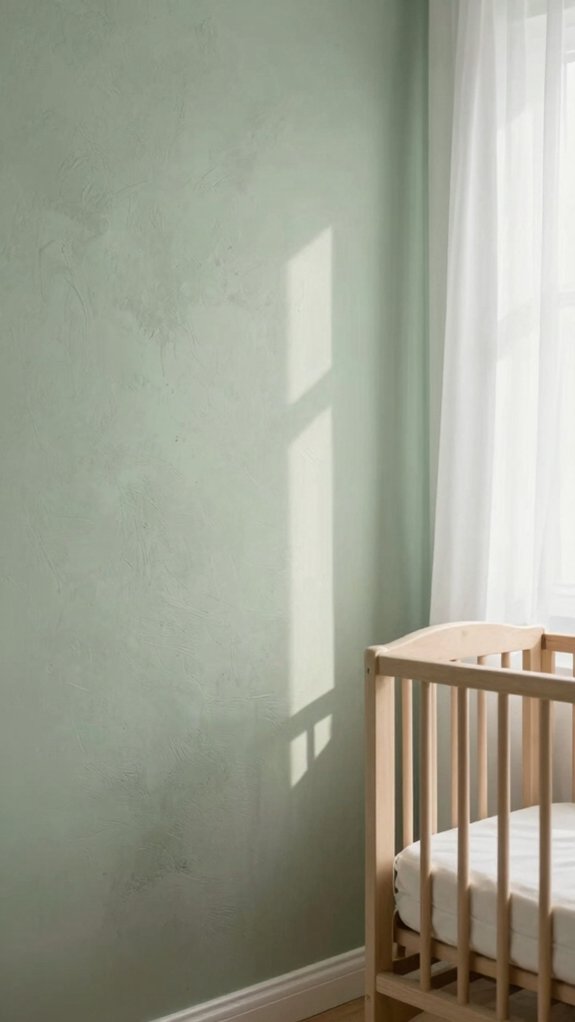
A nursery accent wall should feel calm, cozy, and a little magical, so choose the wall behind the crib or the one your eyes meet first when you walk in. It creates a sweet focal point without drowning the room!
Try these easy choices:
- Pick a calming palette: peach or muted yellow feels warm; blue or green feels serene.
- Test samples in daylight and evening light.
- Coordinate the crib headboard, rug, curtains, and bedding.
- Choose safe materials, like washable wallpaper.
Keep one statement wall, especially beside statement patterns. Match undertones to wood and flooring. Your little nest will feel welcoming, balanced, and wonderfully yours!
Hallway
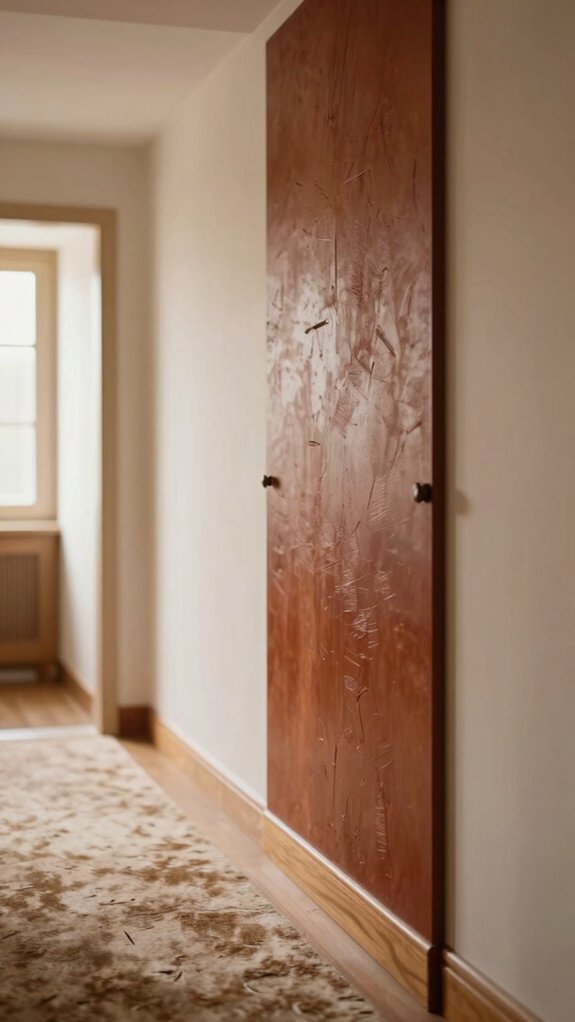
After creating a cozy nursery, turn your attention to the hallway—the first glimpse guests get of your home! Begin with sightline selection: choose the wall your entry naturally faces, not automatically the farthest one.
Next, use architectural anchoring. A built-in niche, ledge, or strong doorway plane can give your color a welcoming “home base.” If the corridor feels busy, skip an accent to prevent visual clutter.
For Paint testing, sample the actual wall. Watch lighting effects in daylight and artificial light, since hallways shift quickly. Choose warm undertones for coziness or cool gray-green for calm. Connecting bold rooms? Harmonize both—your strongest welcome may be subtle!